 View all 2 pages
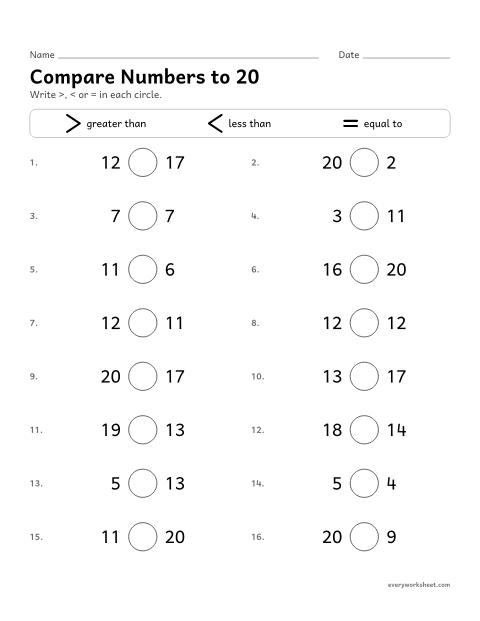
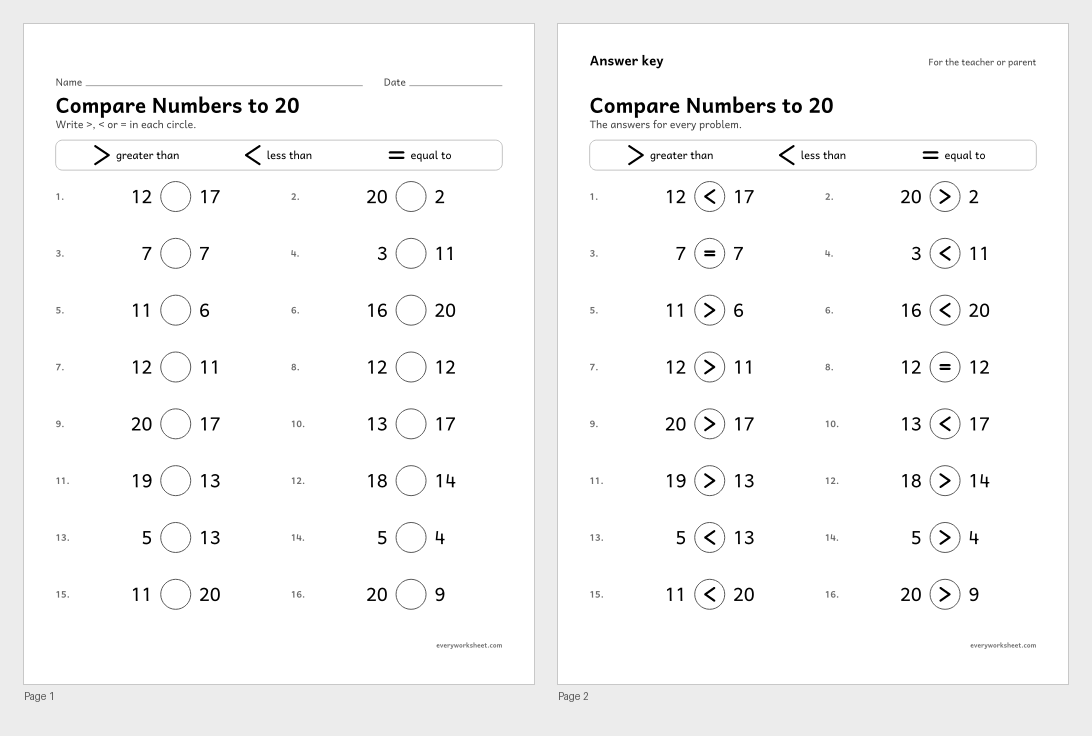
Compare numbers to 20
Comparing numbers to 20 with >, < and =
Answer key on page 2
2 pages64 KB
Compare numbers with >, < and = to 20, 50 and 100, compare tens and ones, order three numbers, and compare number sentences, with answer keys.
View all 2 pagesComparing numbers to 20 with >, < and =
Answer key on page 2
2 pages64 KB
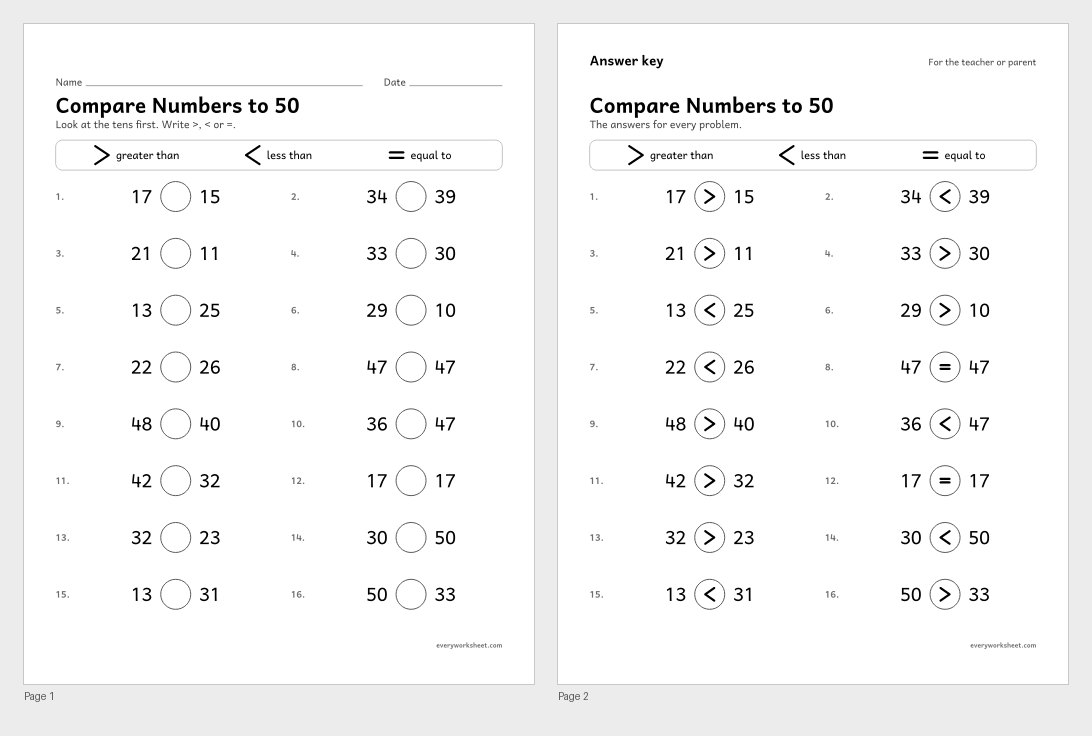 View all 2 pages
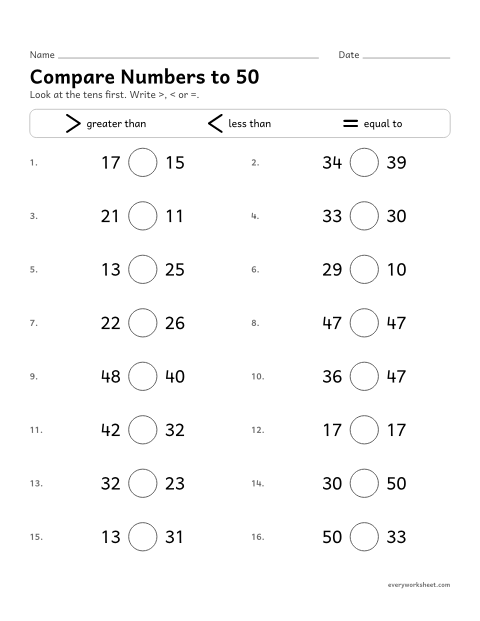
Comparing two-digit numbers to 50
Answer key on page 2
2 pages65 KB
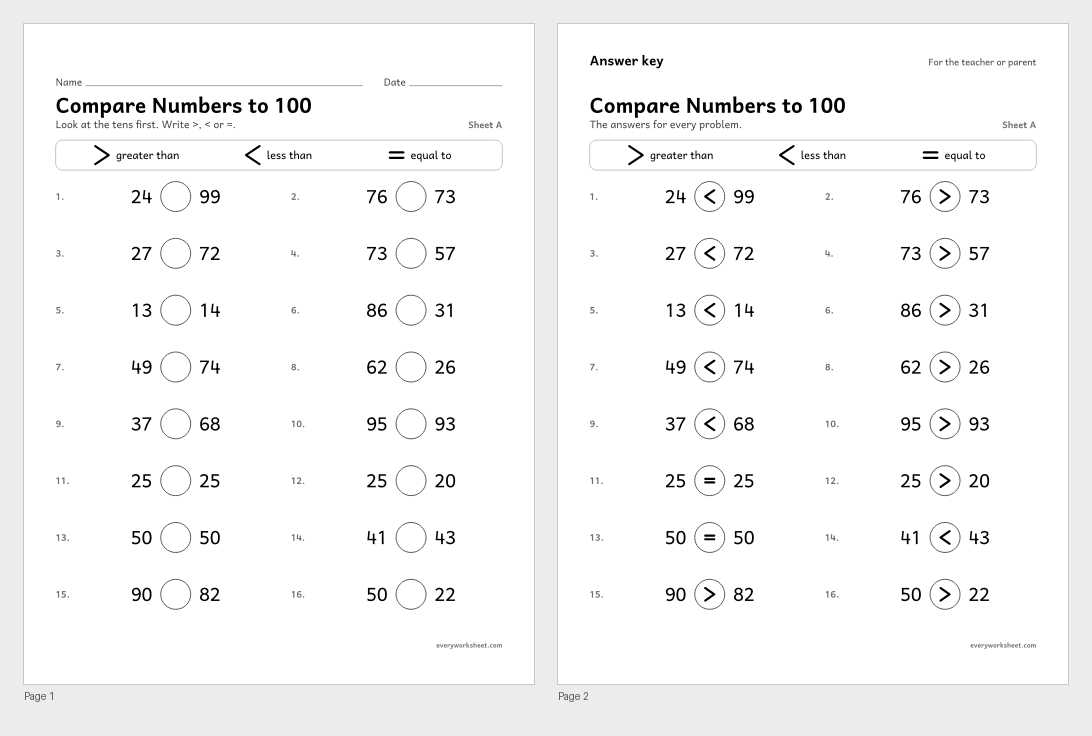 View all 2 pages
Comparing two-digit numbers with >, < and =
Answer key on page 2
2 pages65 KB
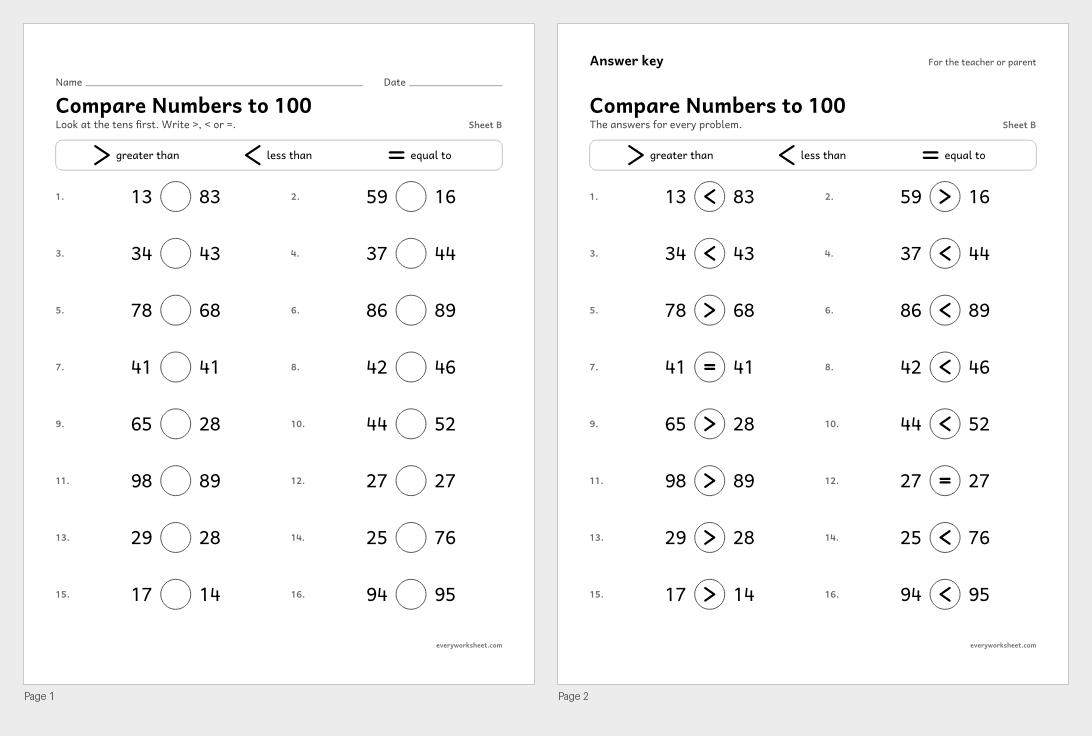 View all 2 pages
Comparing two-digit numbers with >, < and =
Answer key on page 2
2 pages65 KB
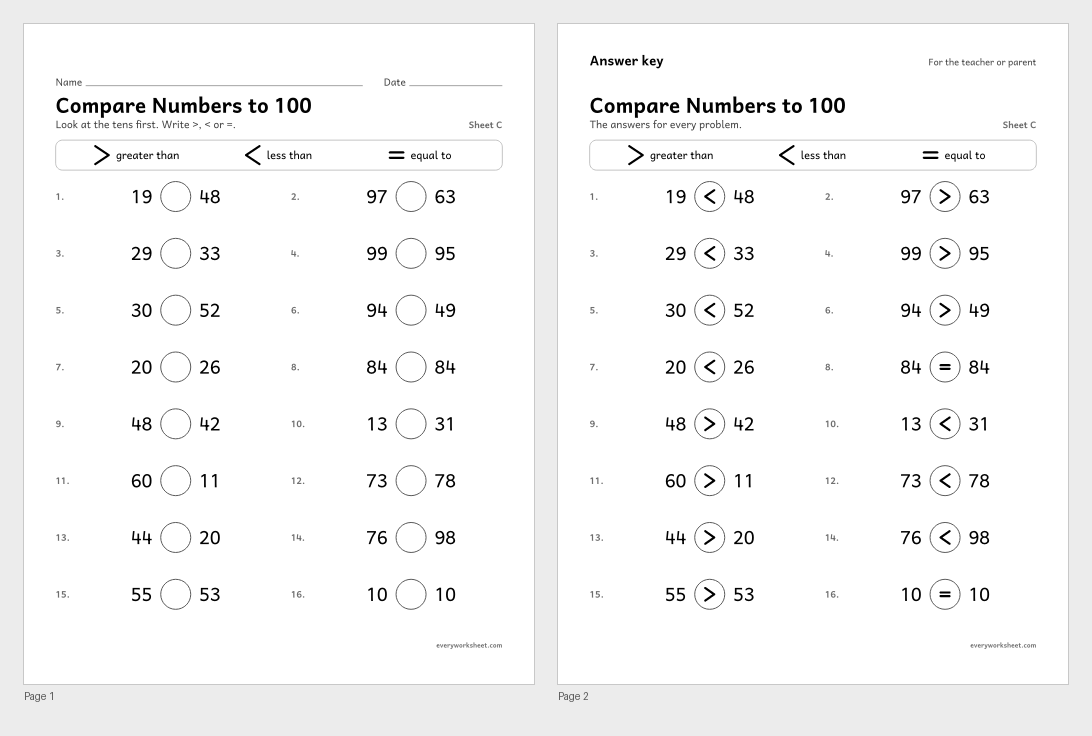 View all 2 pages
Comparing two-digit numbers with >, < and =
Answer key on page 2
2 pages65 KB
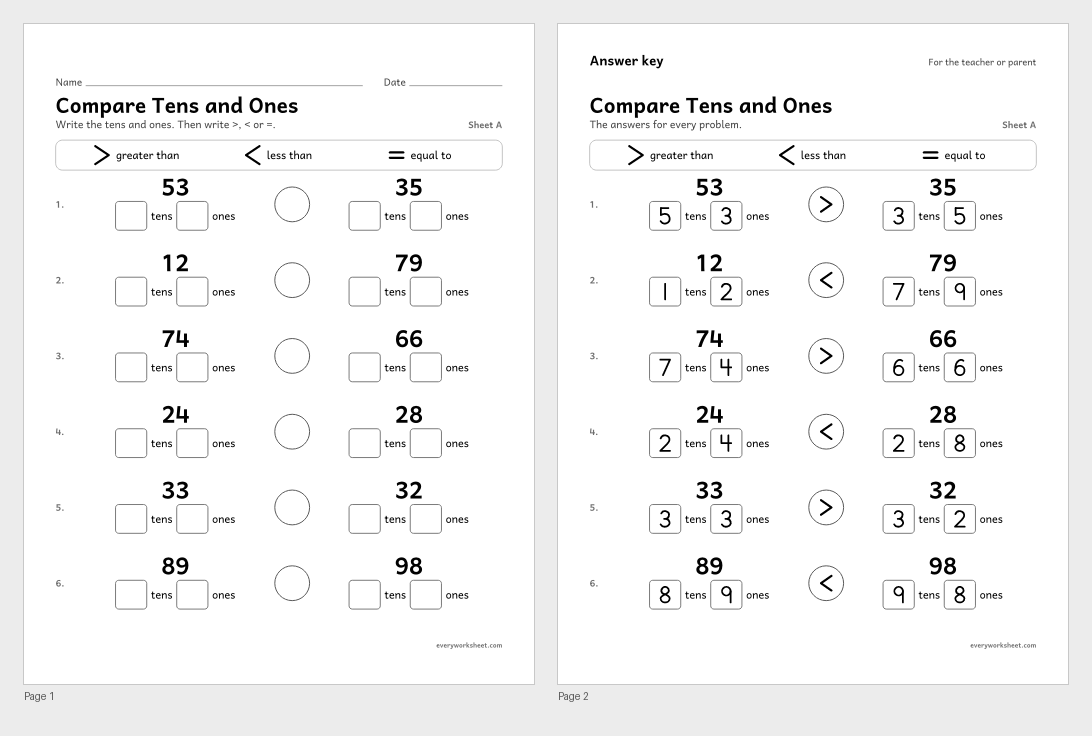 View all 2 pages
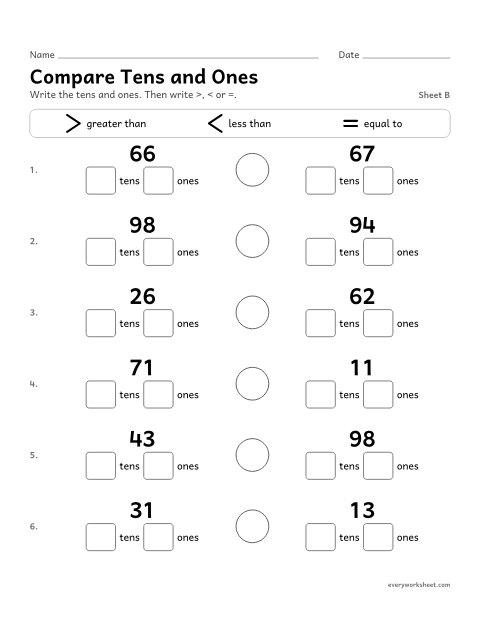
Comparing two-digit numbers by their tens and ones
Answer key on page 2
2 pages61 KB
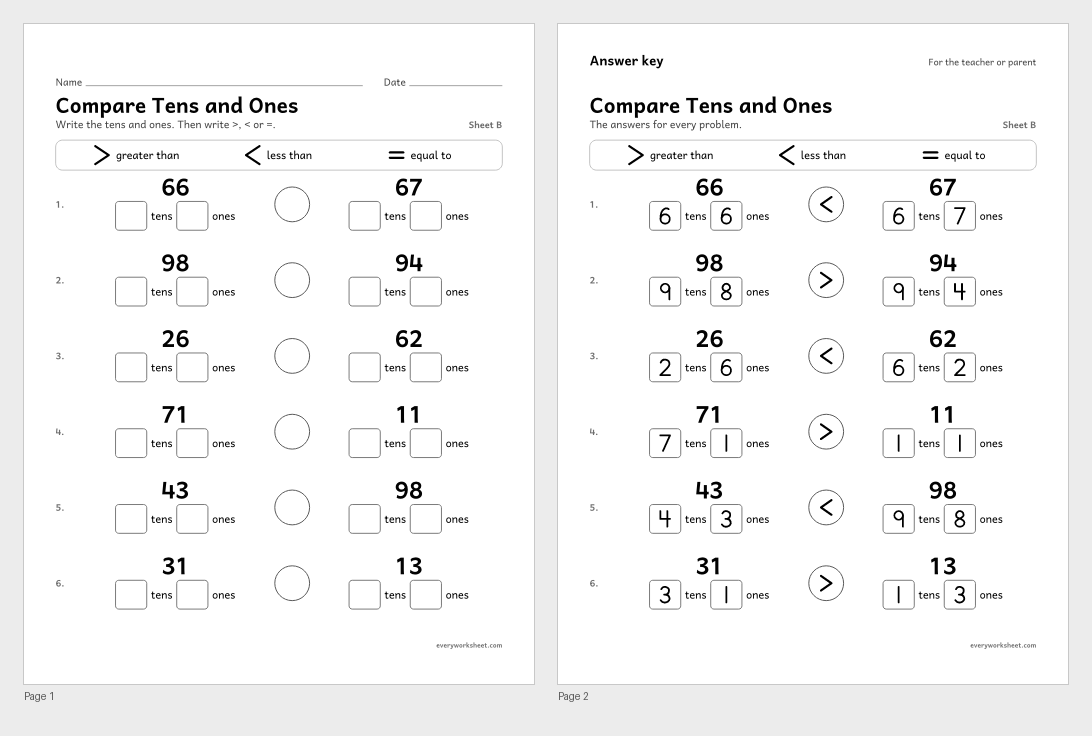 View all 2 pages
Comparing two-digit numbers by their tens and ones
Answer key on page 2
2 pages61 KB
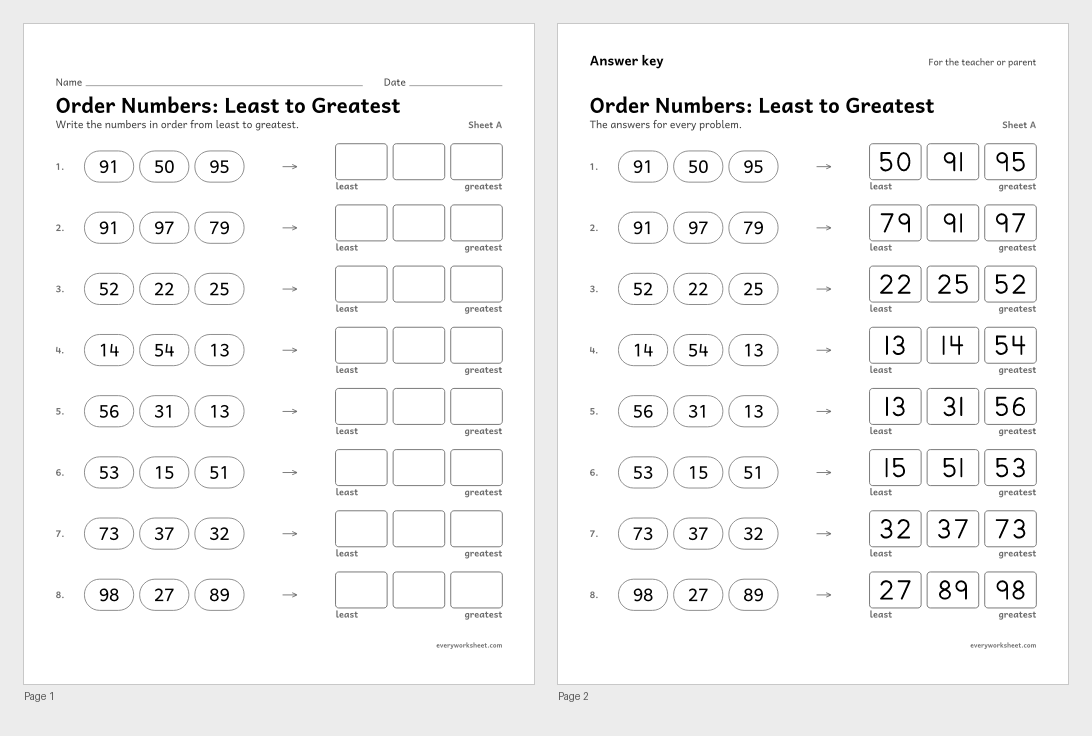 View all 2 pages
Ordering three two-digit numbers from least to greatest
Answer key on page 2
2 pages55 KB
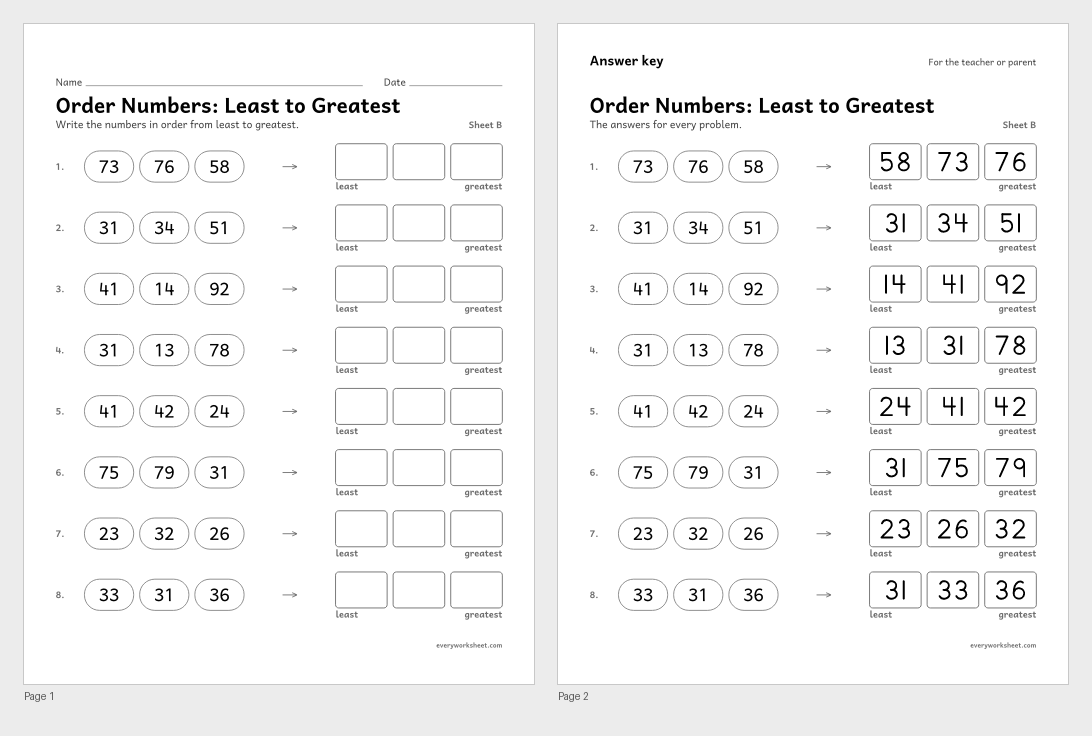 View all 2 pages
Ordering three two-digit numbers from least to greatest
Answer key on page 2
2 pages55 KB
 View all 2 pages
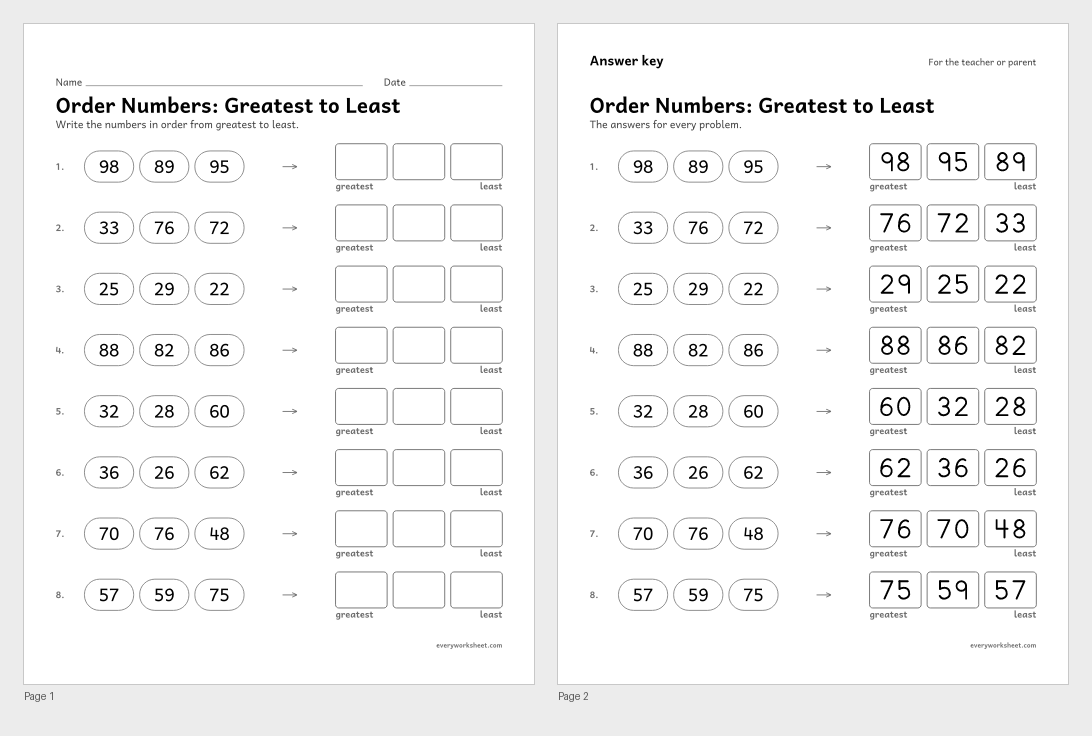
Ordering three two-digit numbers from greatest to least
Answer key on page 2
2 pages55 KB
 View all 2 pages
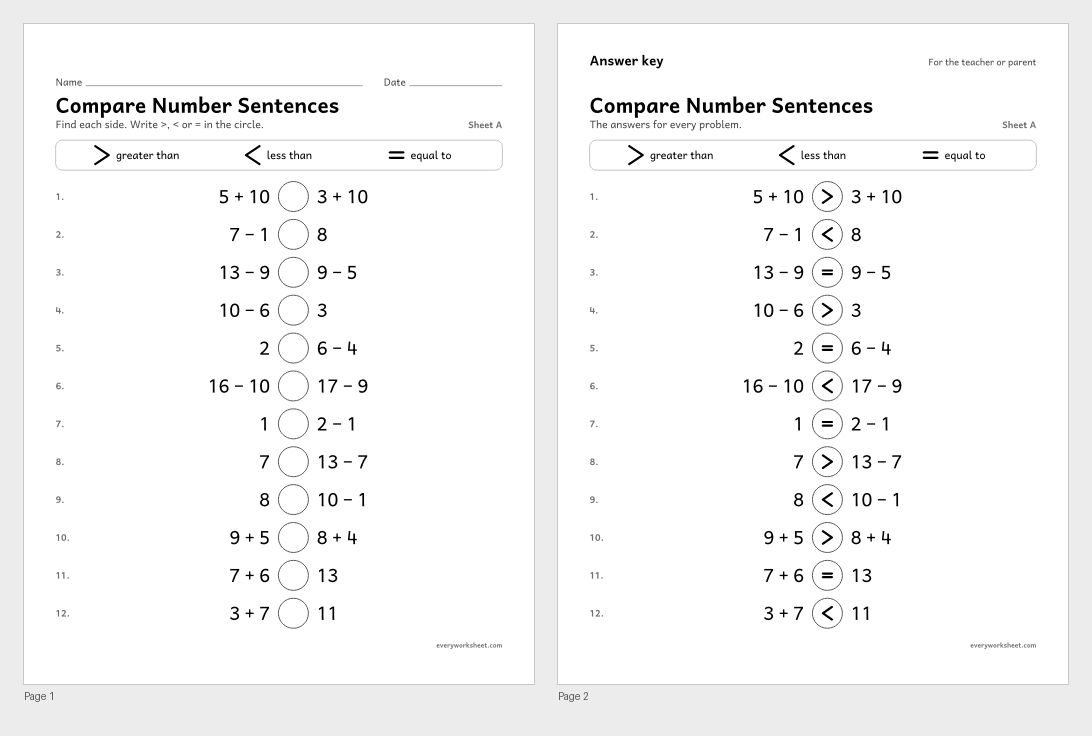
Comparing sums and differences with >, < and =
Answer key on page 2
2 pages78 KB
 View all 2 pages
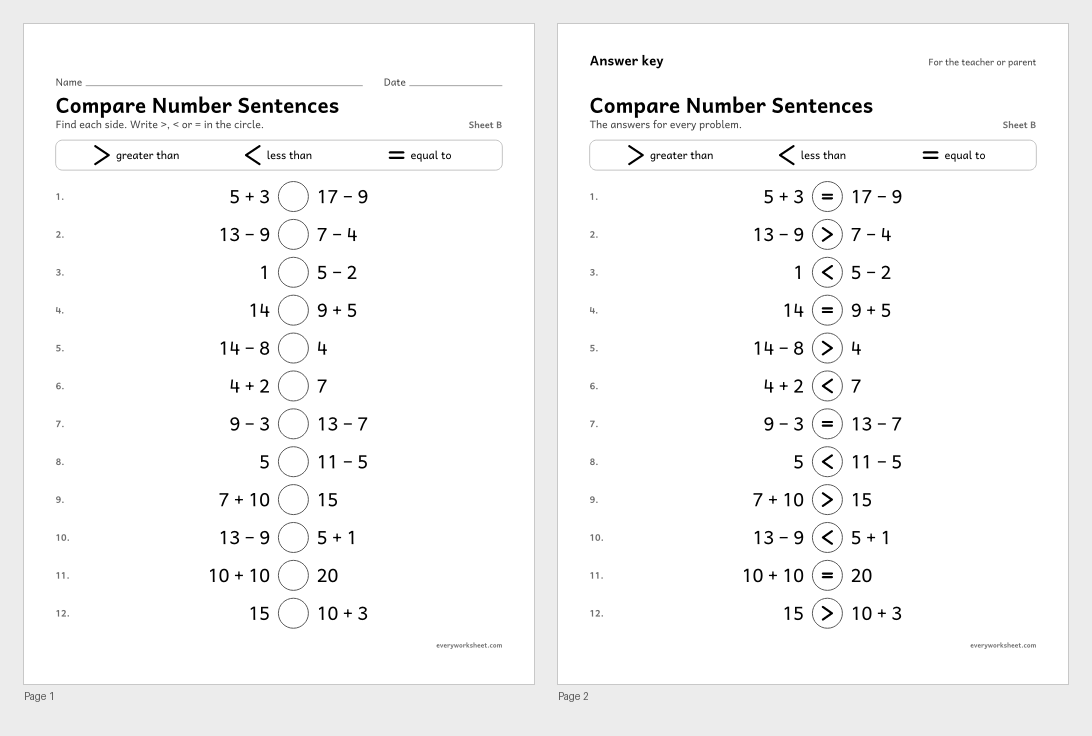
Comparing sums and differences with >, < and =
Answer key on page 2
2 pages78 KB
Print at 100% (actual size) for the cleanest tracing lines.
In first grade, children compare two-digit numbers by looking at the tens first and then the ones, and record the result with >, < or =. These comparing numbers worksheets build that skill step by step.
Pages start with numbers to 20, then to 50 and 100. The problems are chosen with care: many pairs share a tens digit, so children must look at the ones, and some pairs swap digits, like 47 and 74, so children cannot just look at the first digit they see. The tens and ones pages ask children to write how many tens and ones before they compare. Order pages put three numbers from least to greatest or greatest to least, and number sentence pages compare sums and differences like 7 + 6 and 13.
Each page has the symbols reminder at the top and an answer key on page 2. Pages print in black and white on US Letter or A4.
CCSS.MATH.CONTENT.1.NBT.B.3Compare two two-digit numbers based on meanings of the tens and ones digits, recording the results of comparisons with the symbols >, =, and <.CCSS.MATH.CONTENT.1.OA.D.7Understand the meaning of the equal sign, and determine if equations involving addition and subtraction are true or false. For example, which of the following equations are true and which are false? 6 = 6, 7 = 8 - 1, 5 + 2 = 2 + 5, 4 + 1 = 5 + 2.They look at the tens first. The number with more tens is greater. If the tens are the same, they compare the ones. Then they write >, < or = between the numbers.
The open side of the symbol faces the bigger number, and the point faces the smaller one. Read it left to right: 52 > 25 is '52 is greater than 25'.
Yes. Every page has an answer key on page 2 of the PDF.