 View larger
Contractions Worksheets
A contractions chart with matching, write the contraction, write the two words, cut and paste with a no-cut twin, sentences and a sort.
Download the contractions worksheets
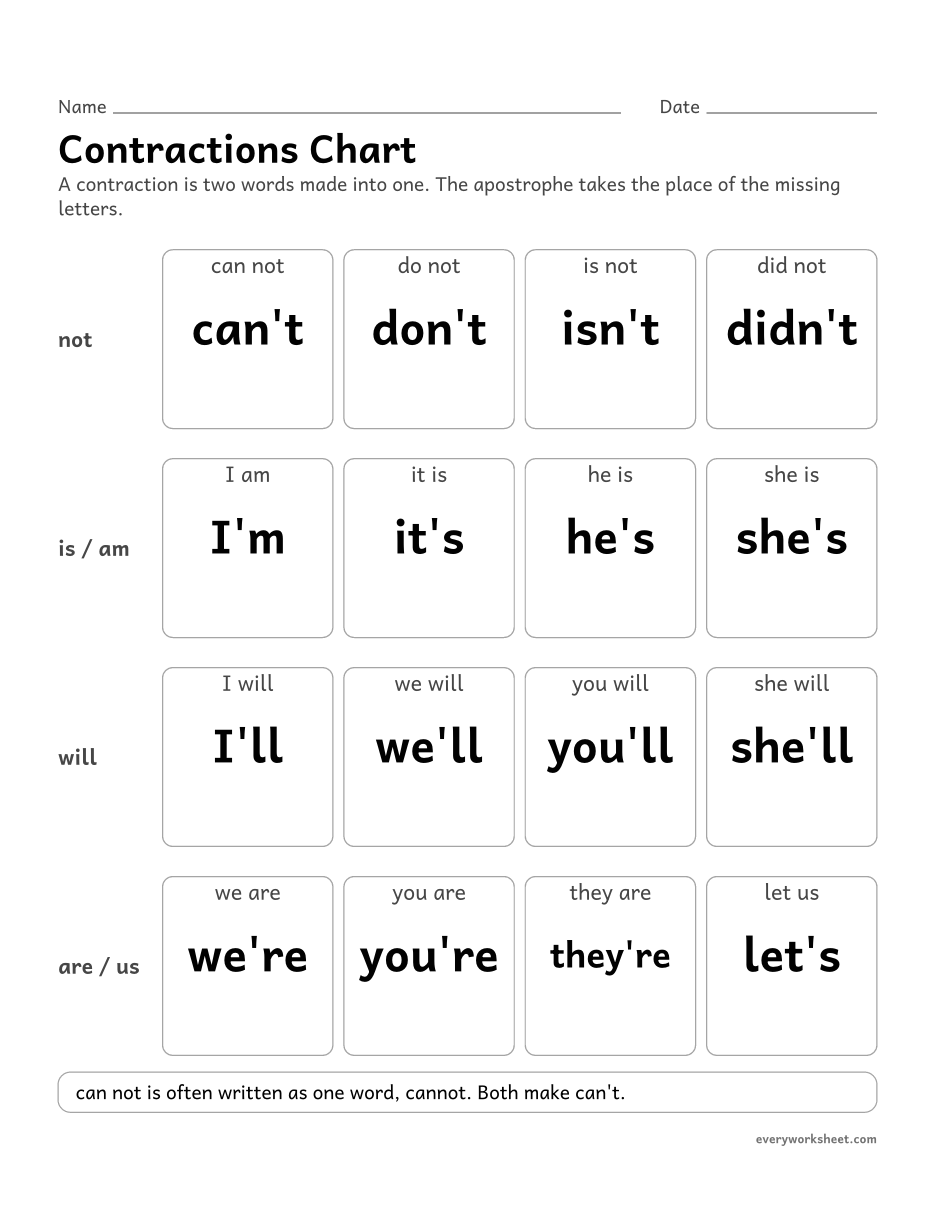
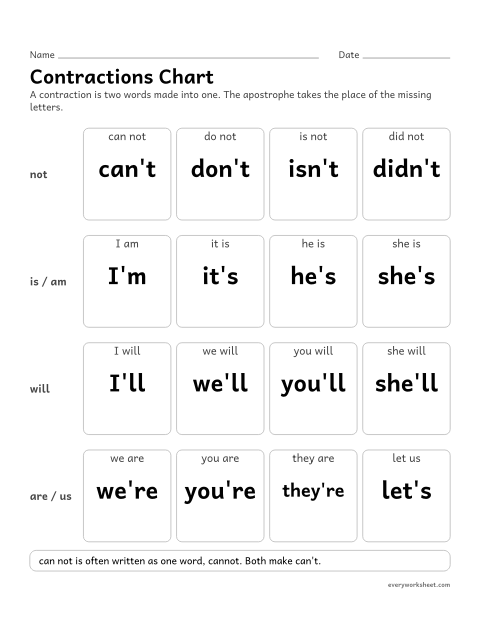
Contractions chart
 View larger
Match and write contractions
 View all 2 pages
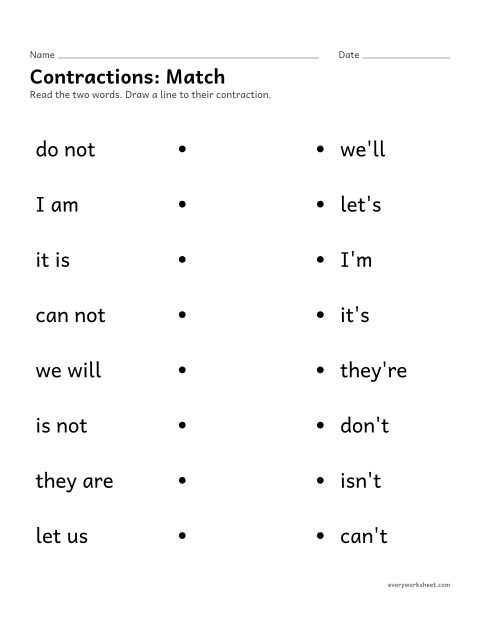
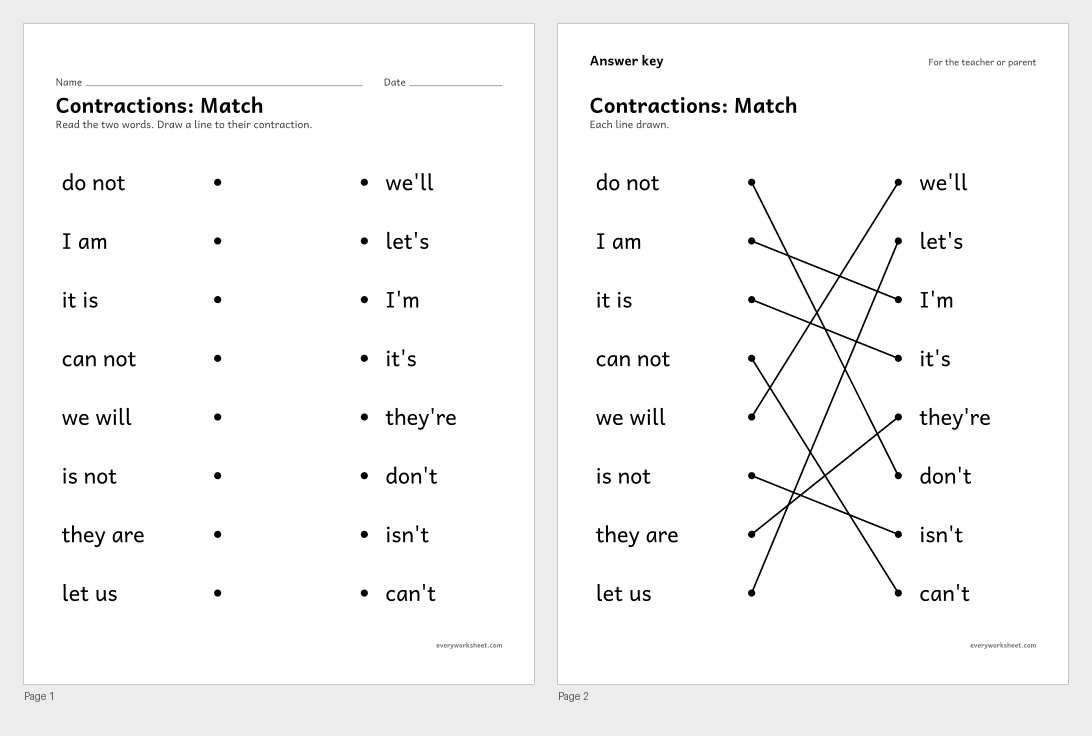
Contractions: match
Matching two words to their contraction
Answer key on page 2
2 pages27 KB
 View all 2 pages
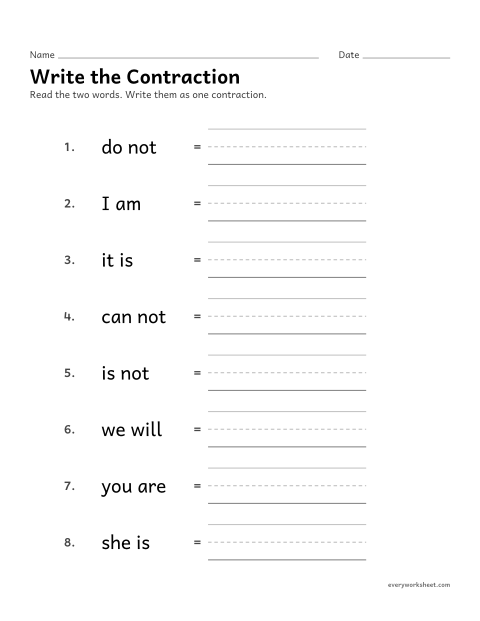
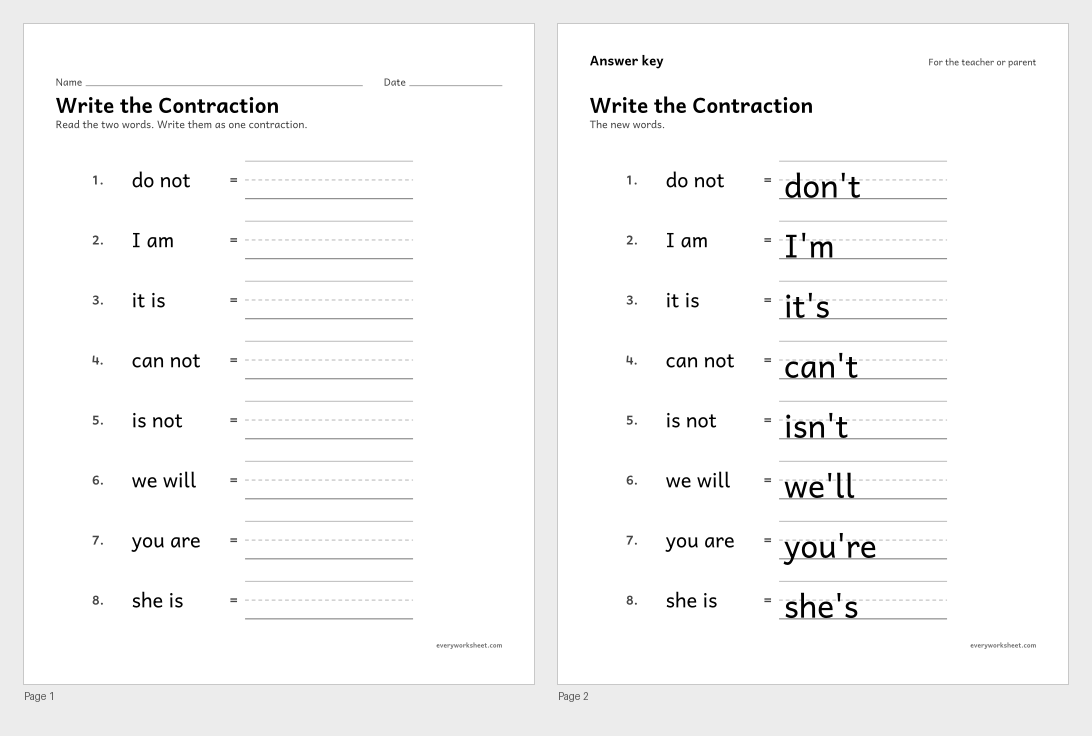
Write the contraction
Writing two words as a contraction
Answer key on page 2
2 pages46 KB
 View all 2 pages
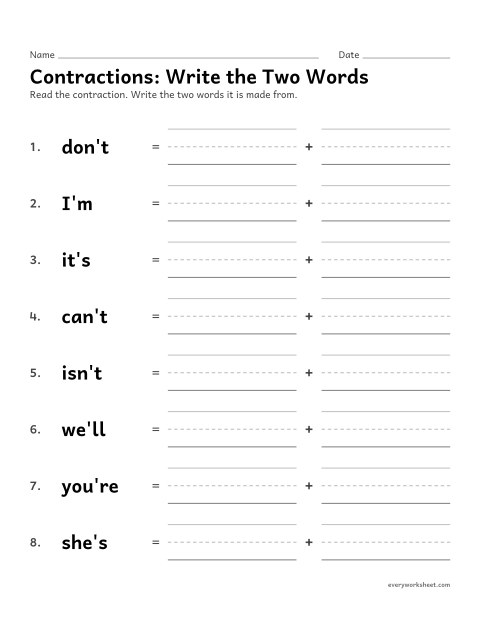
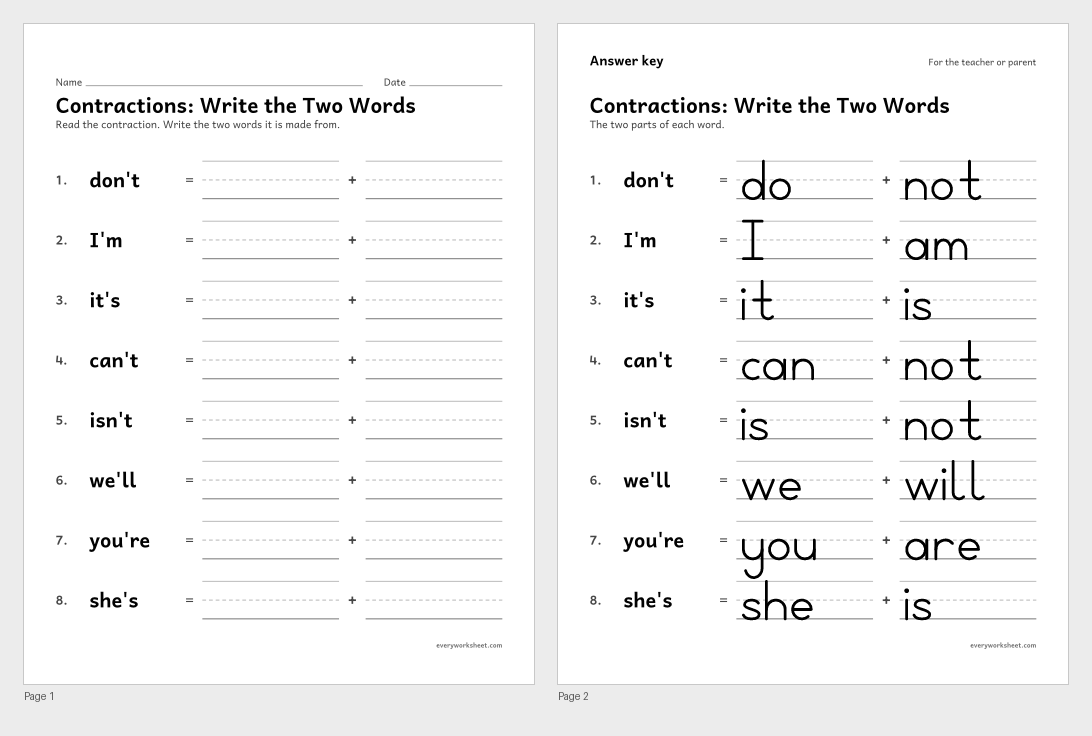
Contractions: write the two words
Writing the two words a contraction is made from
Answer key on page 2
2 pages49 KB
 View all 2 pages
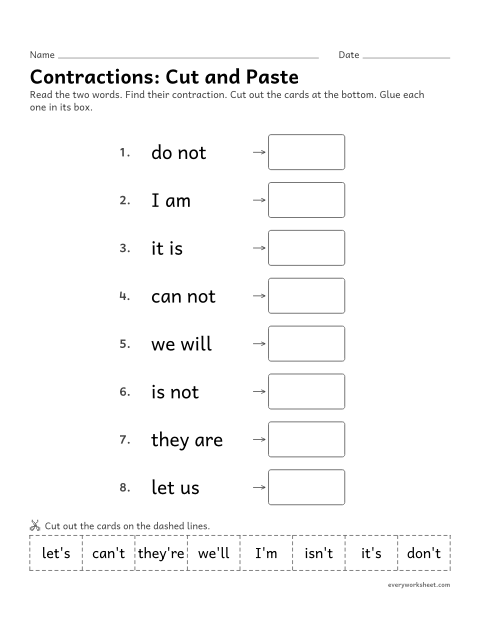
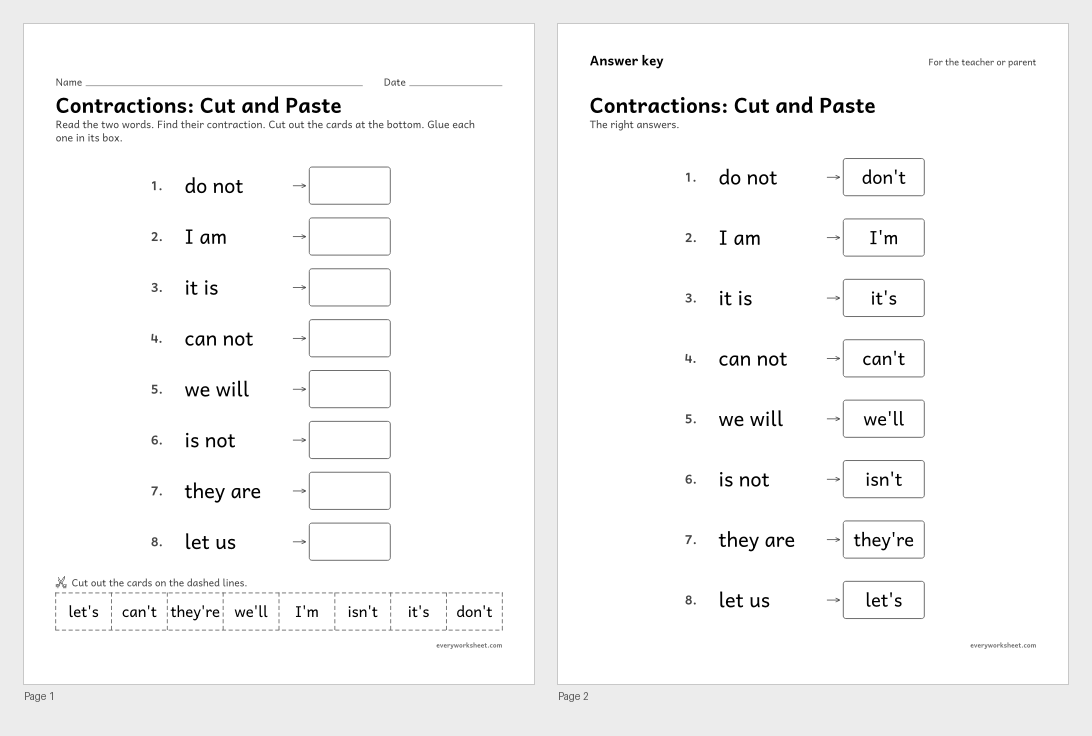
Contractions: cut and paste
Gluing each contraction next to its two words
Answer key on page 2
2 pages78 KB
 View all 2 pages
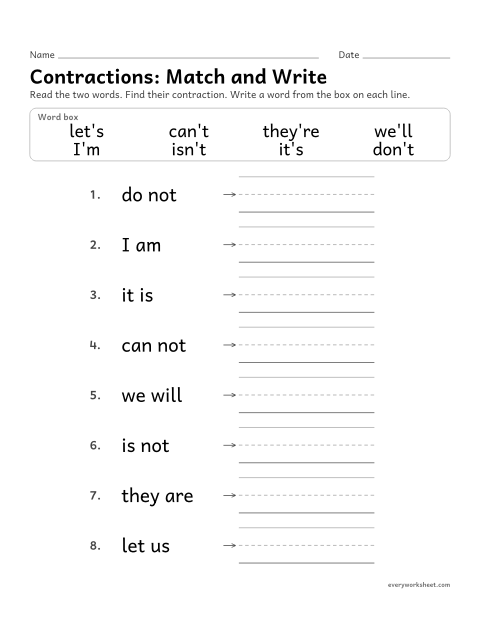
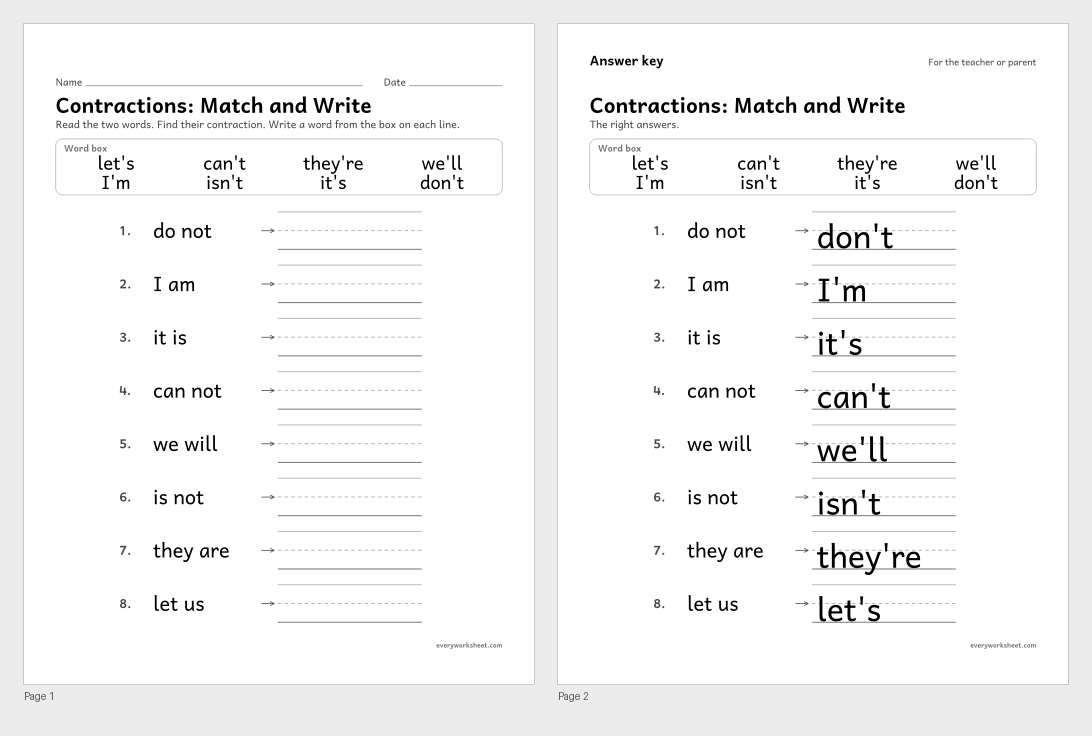
Contractions: match and write (No Cutting)
Writing each contraction next to its two words
Answer key on page 2
2 pages52 KB
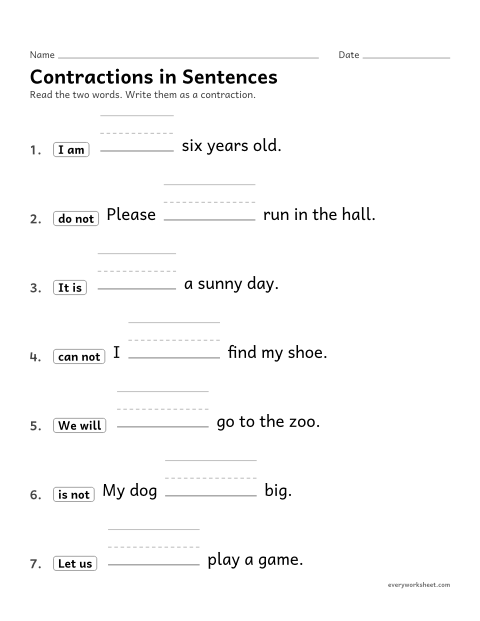
Contractions in sentences
 View all 2 pages
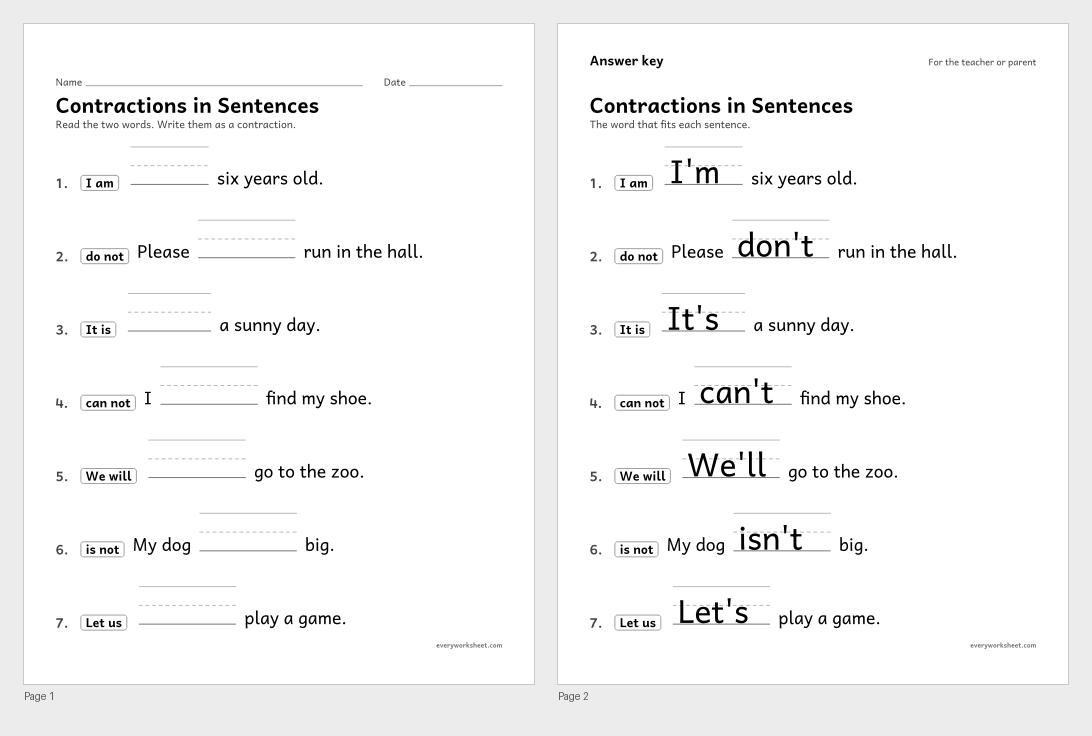
Contractions in sentences
Writing contractions in sentences
Answer key on page 2
2 pages38 KB
 View all 2 pages
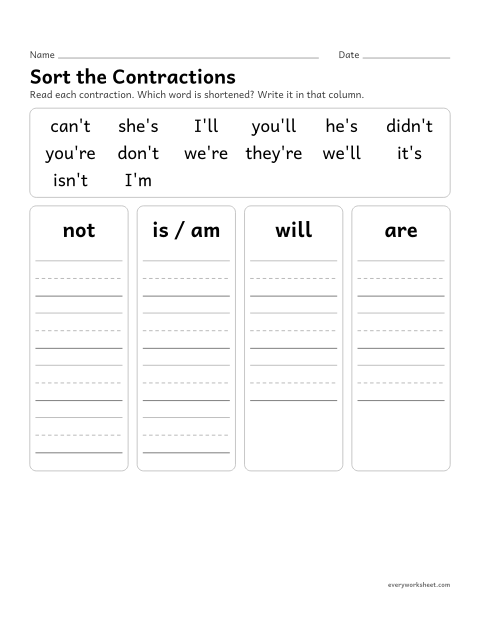
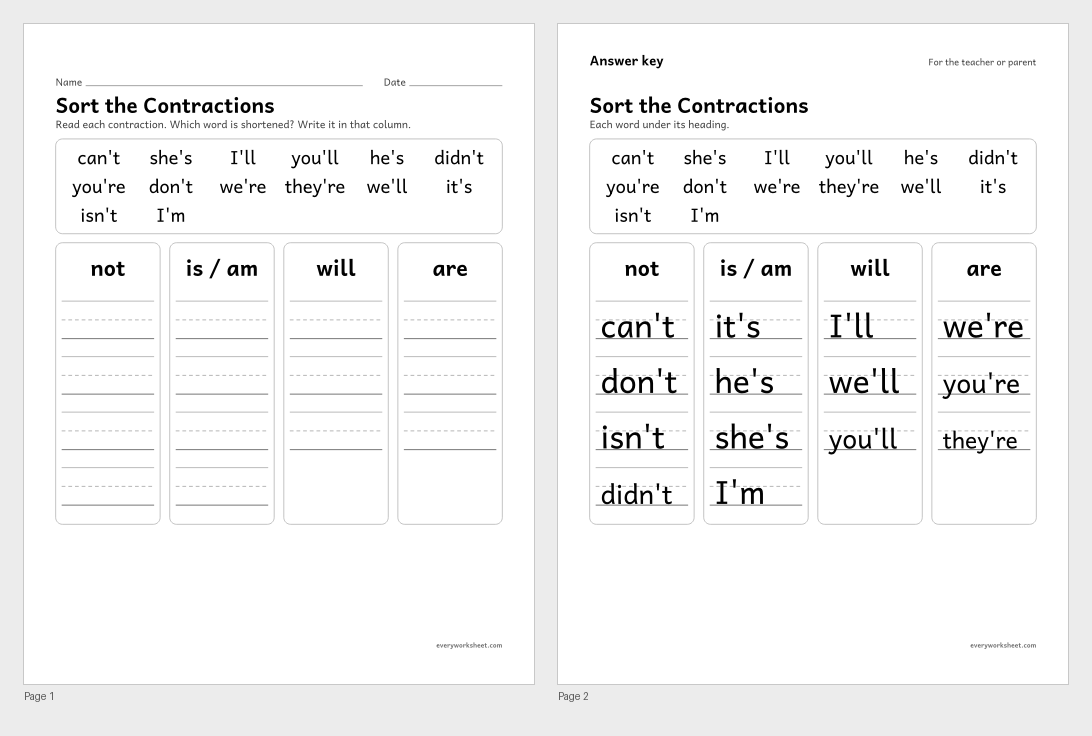
Sort the contractions
Sorting contractions by the word that is shortened
Answer key on page 2
2 pages36 KB
Print at 100% (actual size) for the cleanest tracing lines.
About these contractions worksheets
A contraction is two words pushed together into one shorter word, with an apostrophe where letters were left out: do not becomes don't, I am becomes I'm and we will becomes we'll. Contractions are everywhere in children's books, so 1st graders start reading them early, and they learn to write them in 1st and 2nd grade.
These contractions worksheets begin with a chart of 16 common contractions grouped by the word that gets shortened: not, is and am, will, and are. Children then match two words to their contraction, write the contraction, write the two words a contraction stands for, cut and paste contractions (or use the no-cut twin), write contractions in sentences and sort contractions by the word they shorten.
All pages print in black and white on US Letter or A4, and every page has an answer key on page 2.
Standards
CCSS.ELA-LITERACY.L.2.2.CUse an apostrophe to form contractions and frequently occurring possessives.CCSS.ELA-LITERACY.RF.1.3.GRecognize and read grade-appropriate irregularly spelled words.CCSS.ELA-LITERACY.RF.1.4Read with sufficient accuracy and fluency to support comprehension.CCSS.ELA-LITERACY.RF.1.4.CUse context to confirm or self-correct word recognition and understanding, rereading as necessary.
How to use them
- Start with the not group: can't, don't, isn't and didn't. Show that the apostrophe sits exactly where the o of not was.
- Add one group at a time: I'm and it's, then the will contractions, then the are contractions.
- Use matching and the cut and paste page to connect the two forms, then the write pages and sentences.
Teaching tips
- Write the two words, then cross out the missing letters and put the apostrophe in their place. Children see where it goes.
- it's means it is; its (no apostrophe) means belonging to it. Teach it's as a contraction first and leave its for later.
- can't comes from cannot, which is usually written as one word.
- won't (will not) changes its spelling. Teach it on its own, after the regular ones.
Questions teachers and parents ask
What is a contraction?
A contraction is a short way to write two words as one, with an apostrophe in place of the missing letters: do not is don't, I am is I'm, they are is they're.
Which contractions should 1st graders learn?
Start with the most common: can't, don't, isn't, didn't, I'm, it's, he's, she's, I'll, we'll, you'll, we're, you're, they're and let's. These are all on the chart.
What grade learns contractions?
Children read contractions in 1st grade and learn to write them in 1st and 2nd grade. Using an apostrophe to form contractions is a 2nd grade standard.
What does the apostrophe do?
The apostrophe shows where letters were taken out. In don't, it replaces the o in not.
Do these worksheets have answer keys?
Yes, every page has an answer key on page 2.