 View larger
Counting to 120 Worksheets
A printable 120 chart, blank and fill in the missing number charts, 120 chart puzzles, counting on and back, skip counting by 2s, 5s and 10s, and number lines.
Download the counting to 120 worksheets
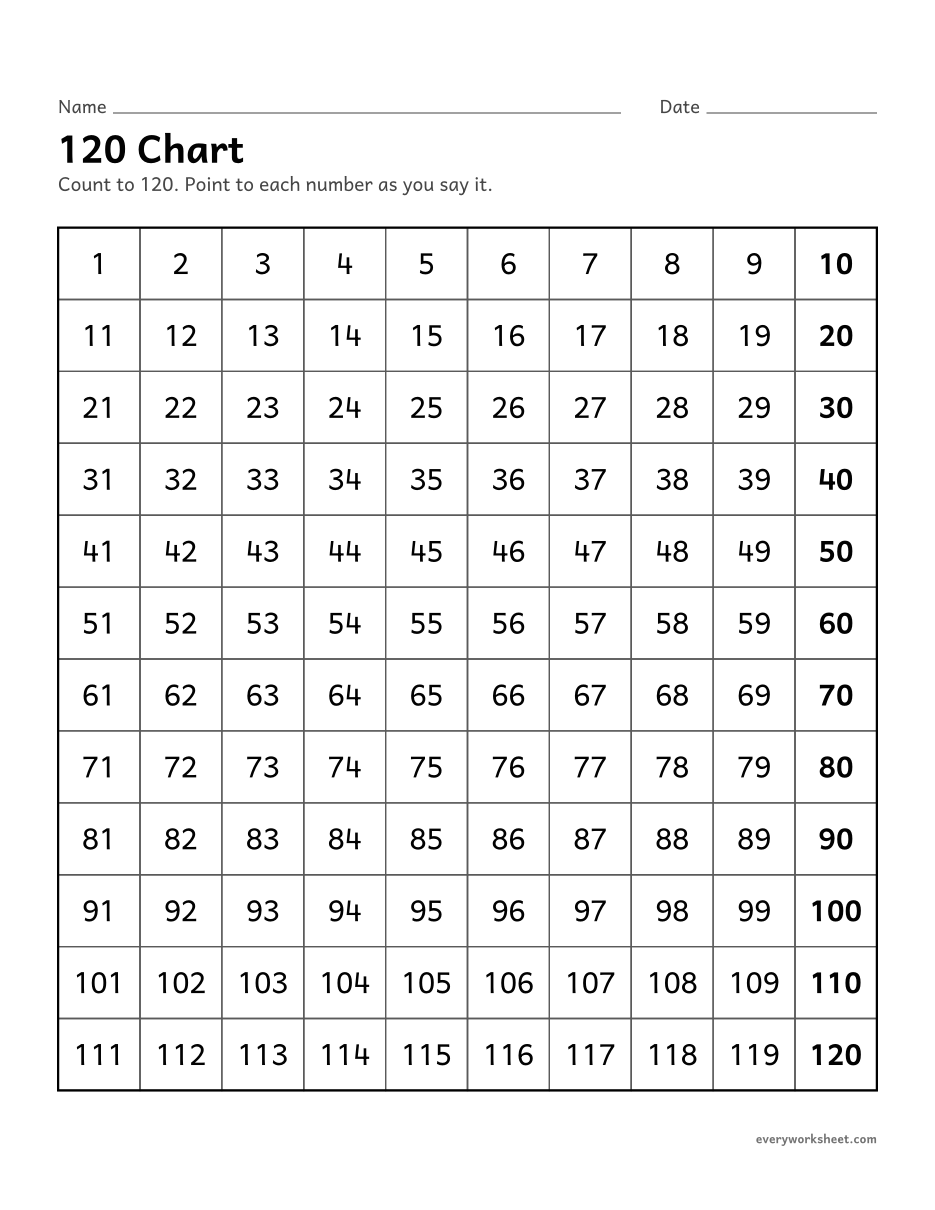
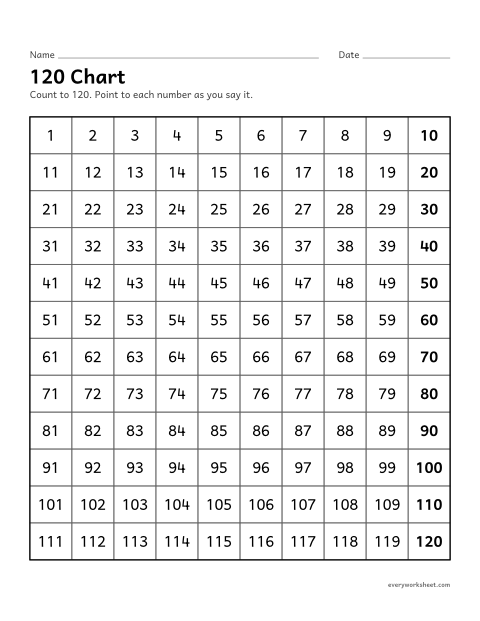
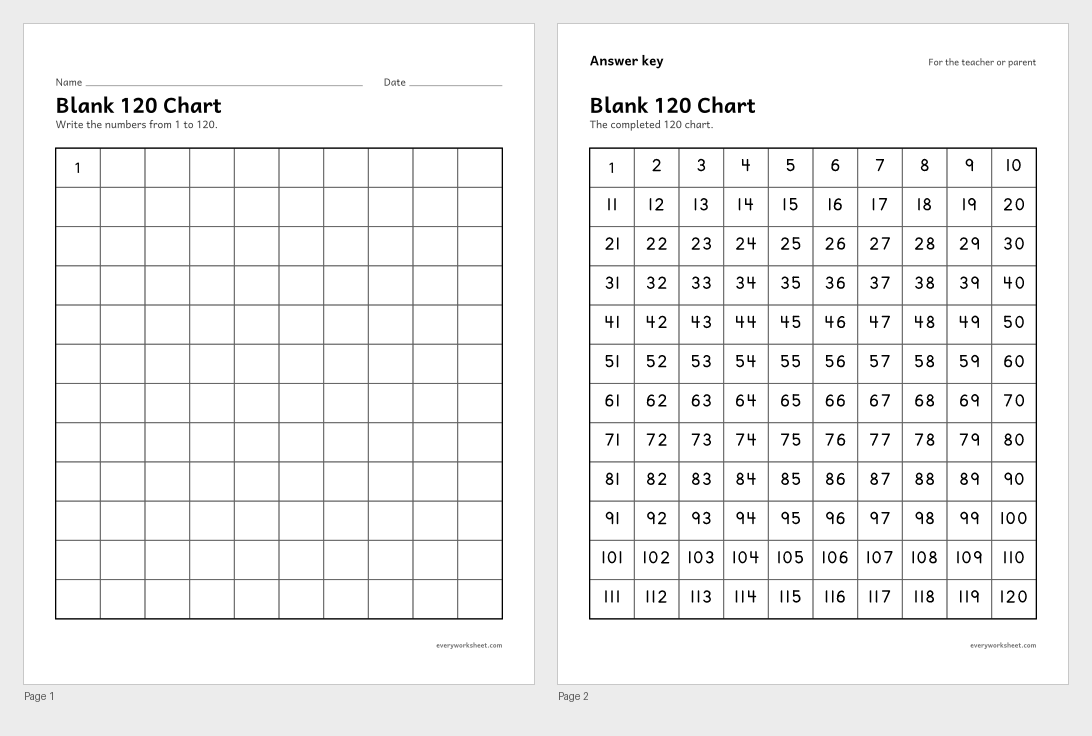
120 charts
 View larger
 View all 2 pages
 View all 2 pages
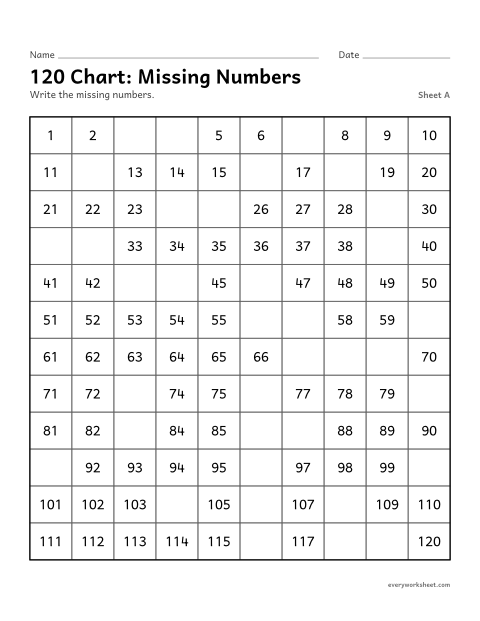
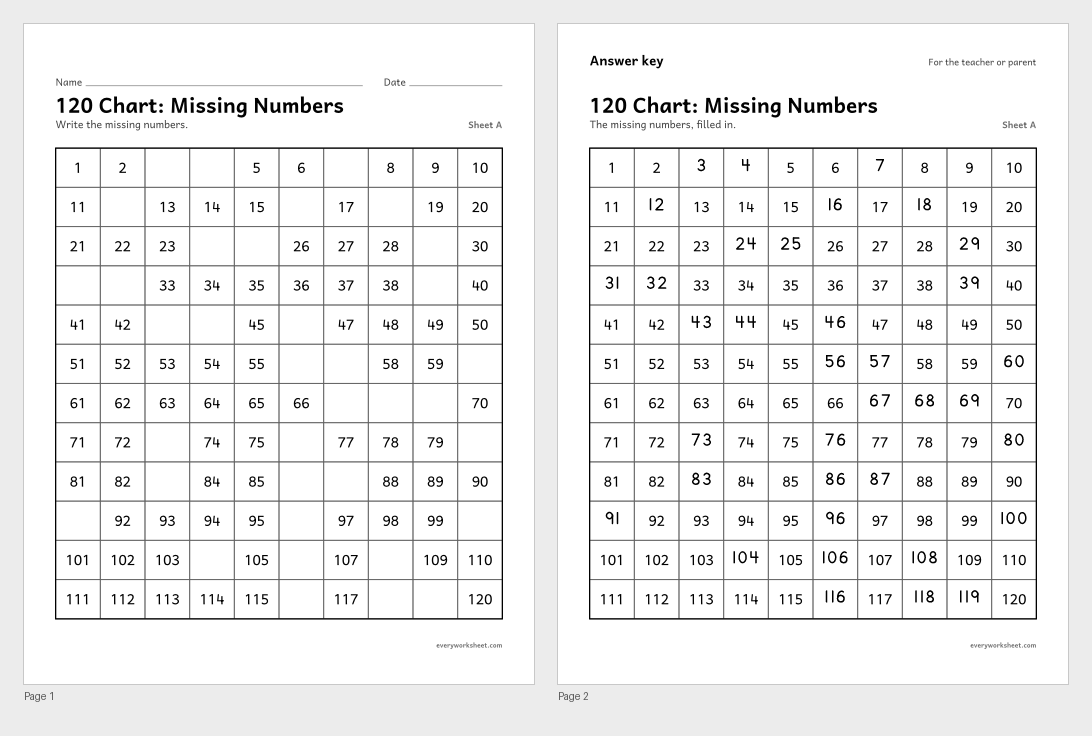
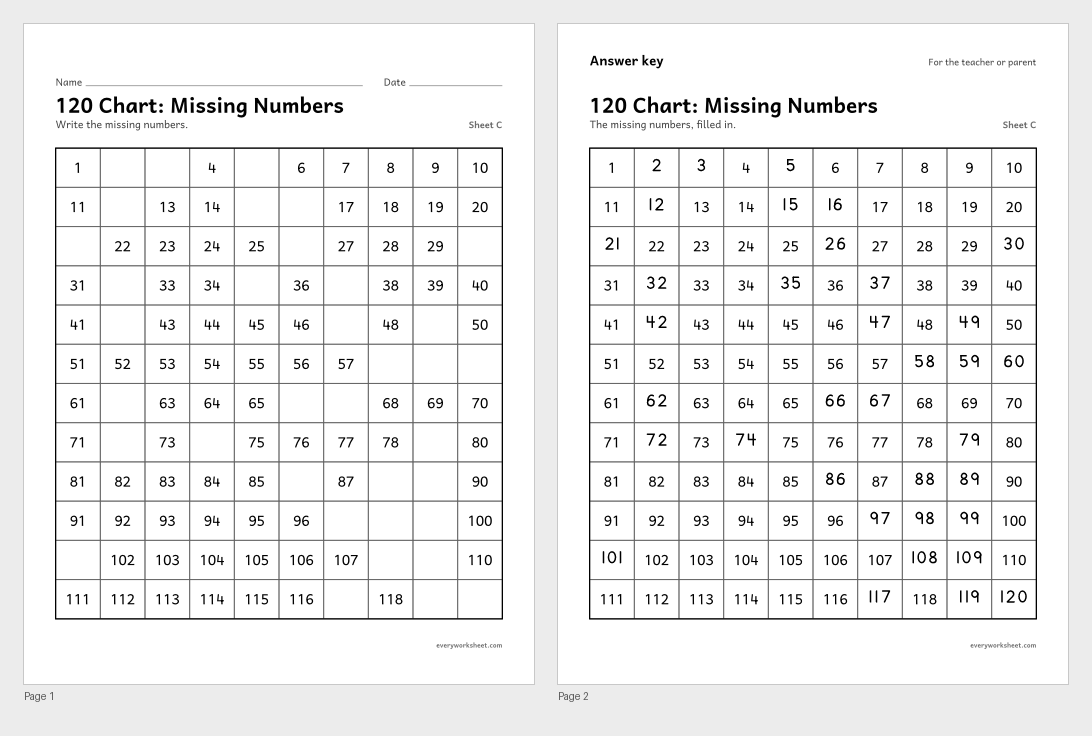
120 Chart: missing Numbers, sheet A
Writing missing numbers on a 120 chart
Answer key on page 2
2 pages35 KB
 View all 2 pages
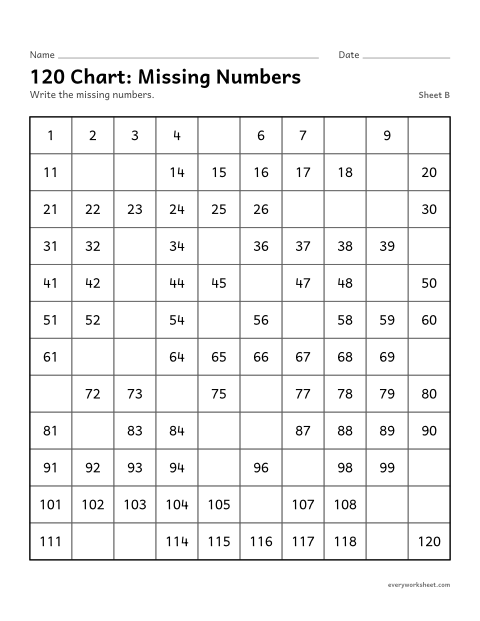
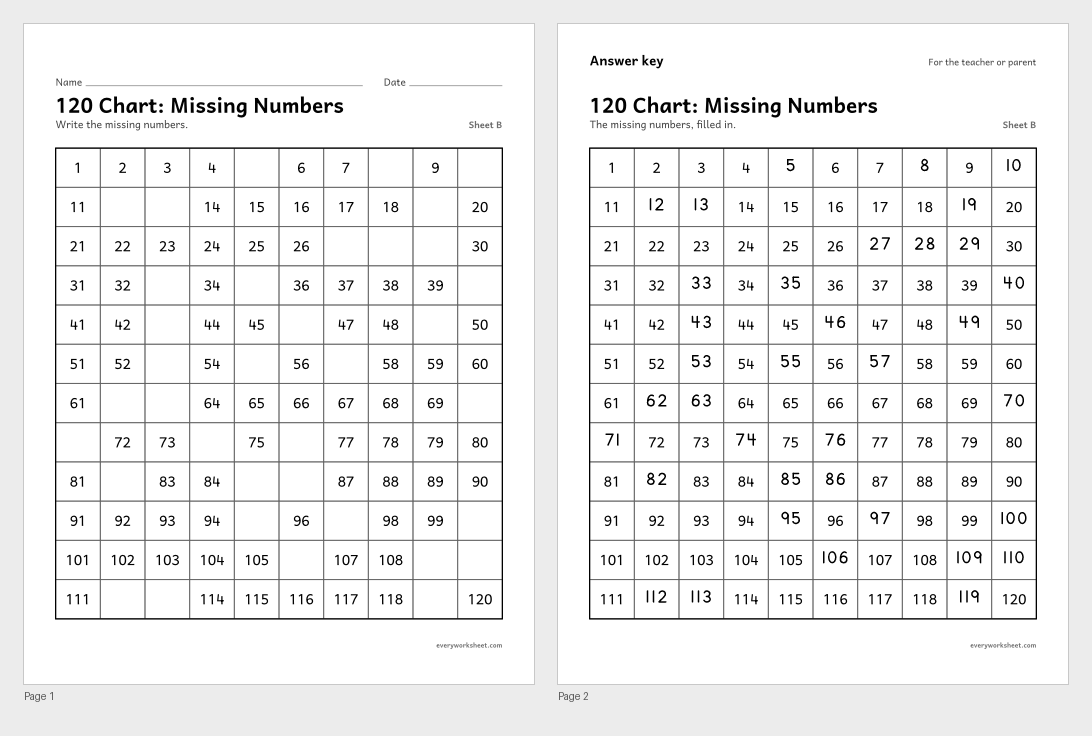
120 Chart: missing Numbers, sheet B
Writing missing numbers on a 120 chart
Answer key on page 2
2 pages35 KB
 View all 2 pages
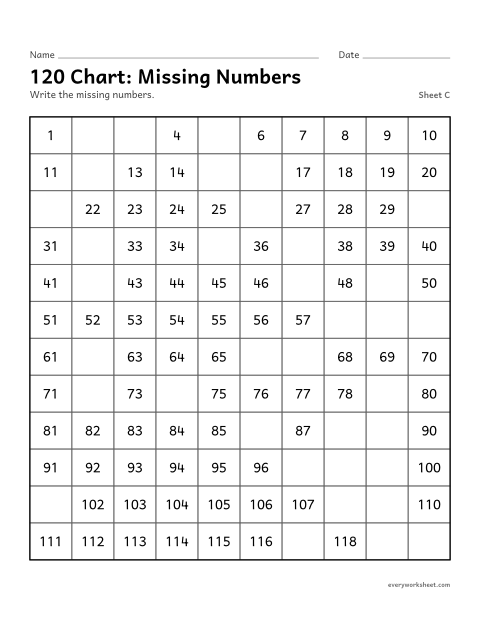
120 Chart: missing Numbers, sheet C
Writing missing numbers on a 120 chart
Answer key on page 2
2 pages35 KB
 View all 2 pages
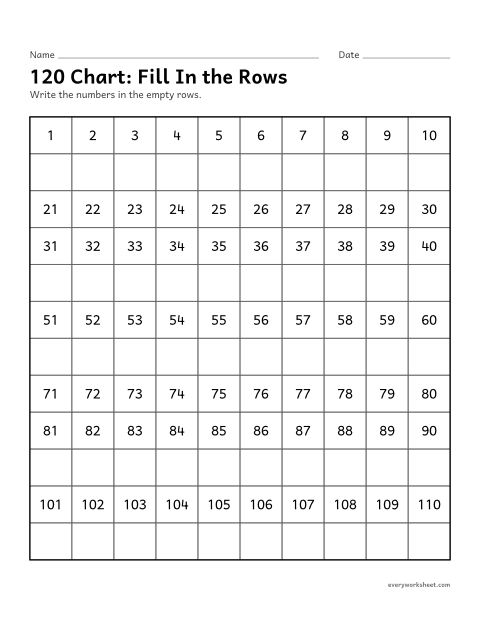
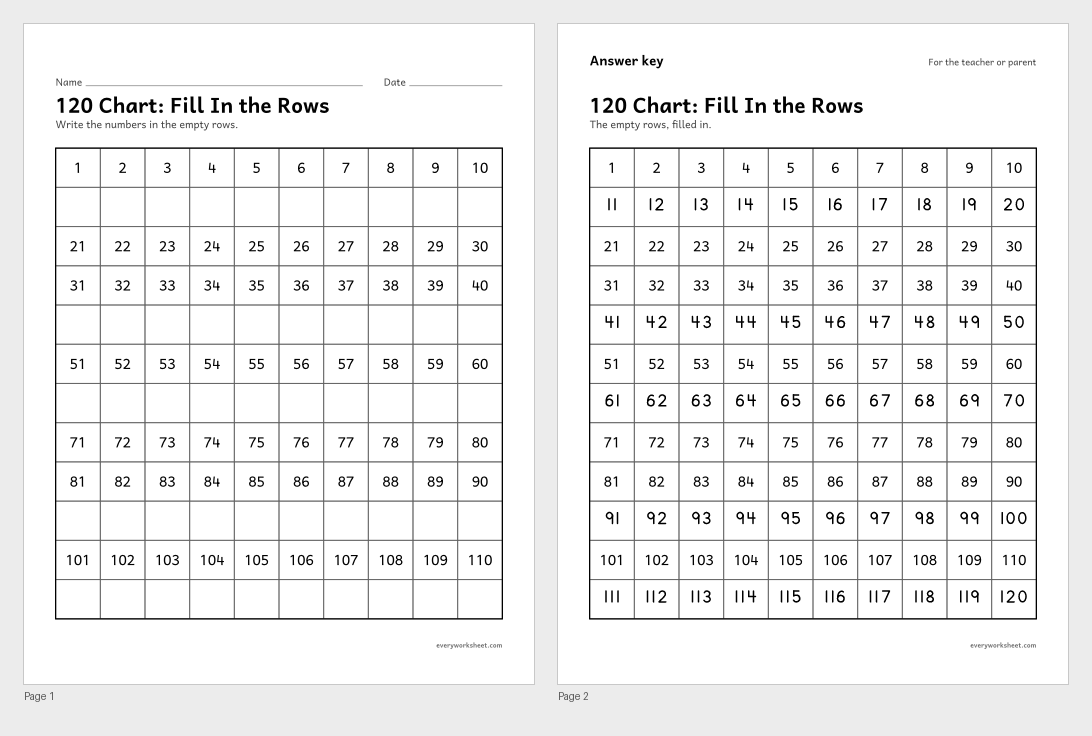
120 Chart: fill in the rows
Writing rows of numbers on a 120 chart
Answer key on page 2
2 pages34 KB
 View all 2 pages
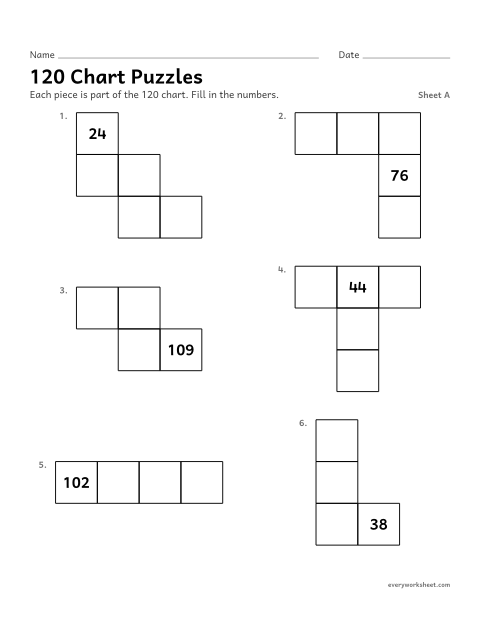
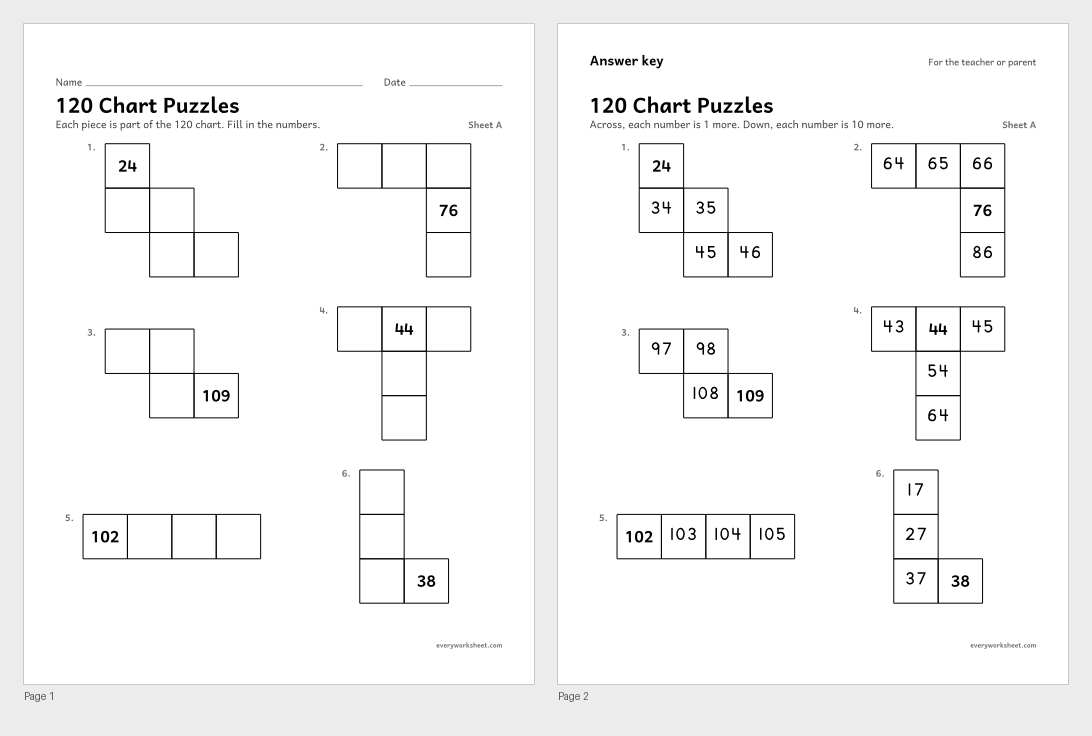
120 chart Puzzles, sheet A
Using the 1 more and 10 more patterns of the 120 chart
Answer key on page 2
2 pages37 KB
 View all 2 pages
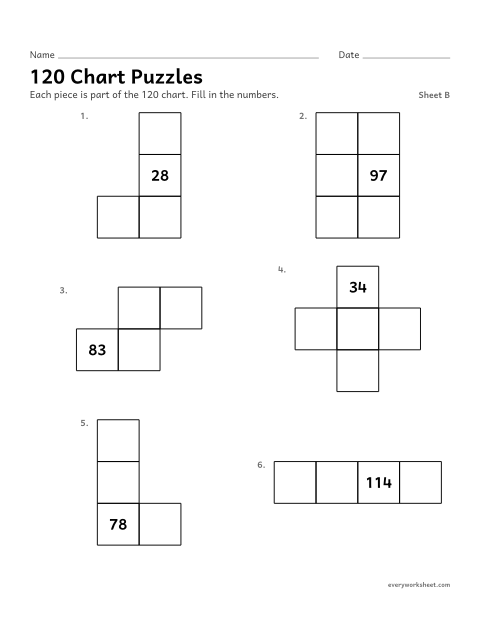
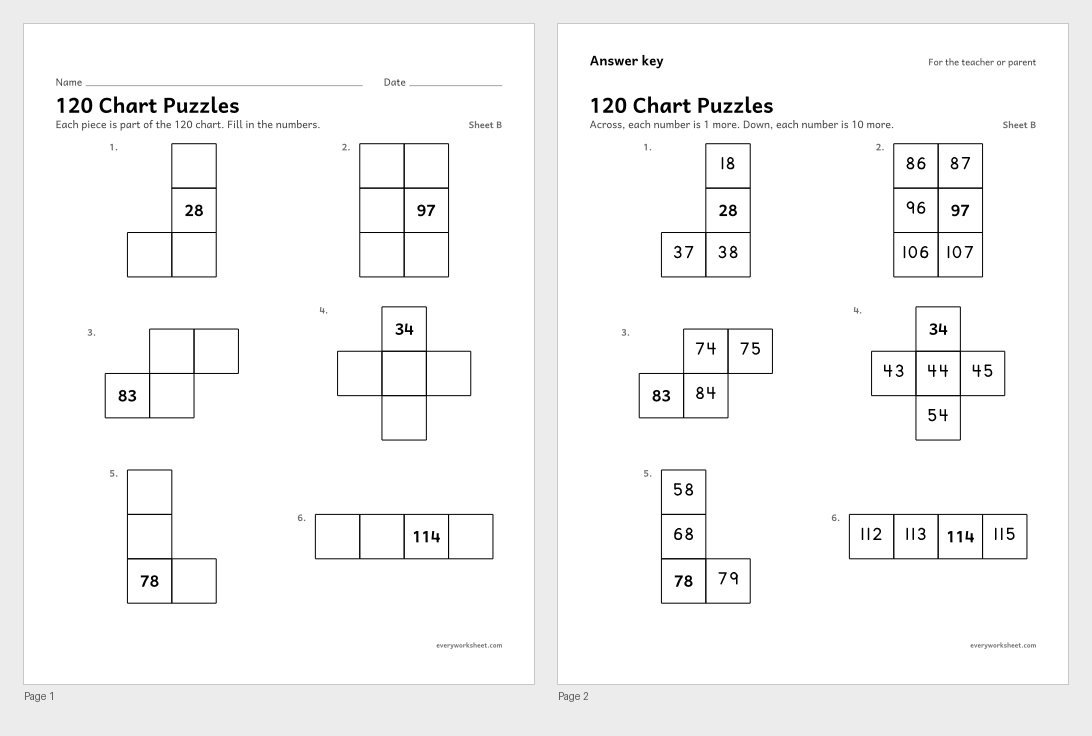
120 chart Puzzles, sheet B
Using the 1 more and 10 more patterns of the 120 chart
Answer key on page 2
2 pages37 KB
Skip counting
 View all 2 pages
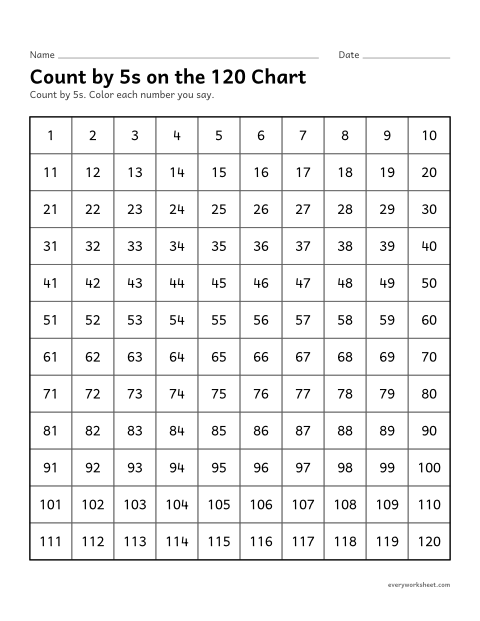
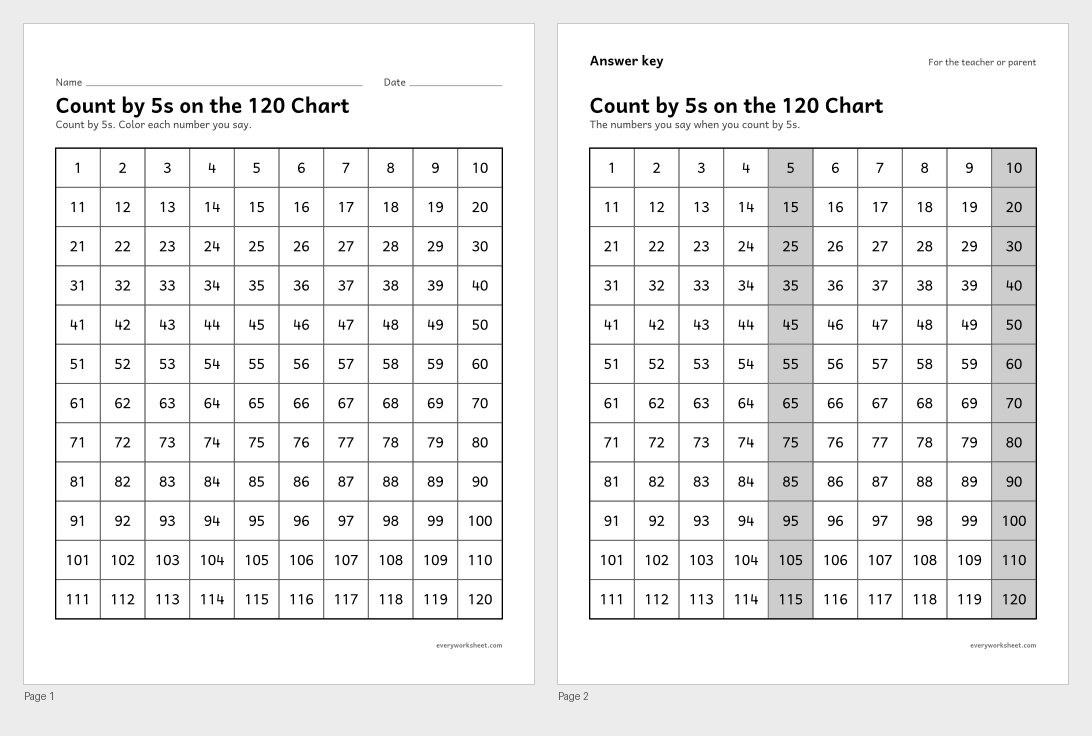
Count by 5s on the 120 chart
Skip counting by 5s to 120
Answer key on page 2
2 pages32 KB
 View all 2 pages
 View all 2 pages
 View all 2 pages
 View all 2 pages
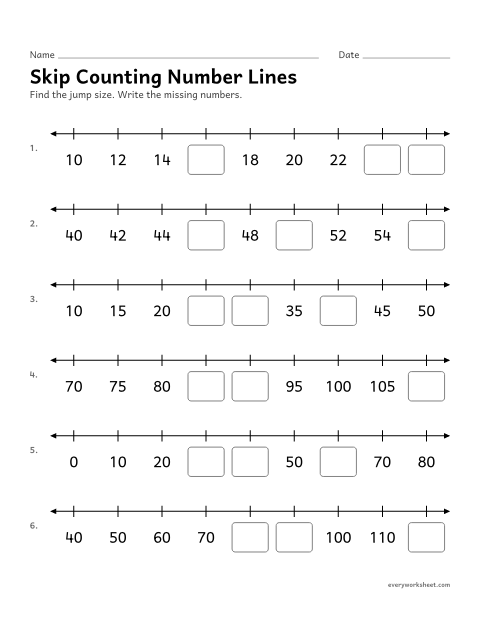
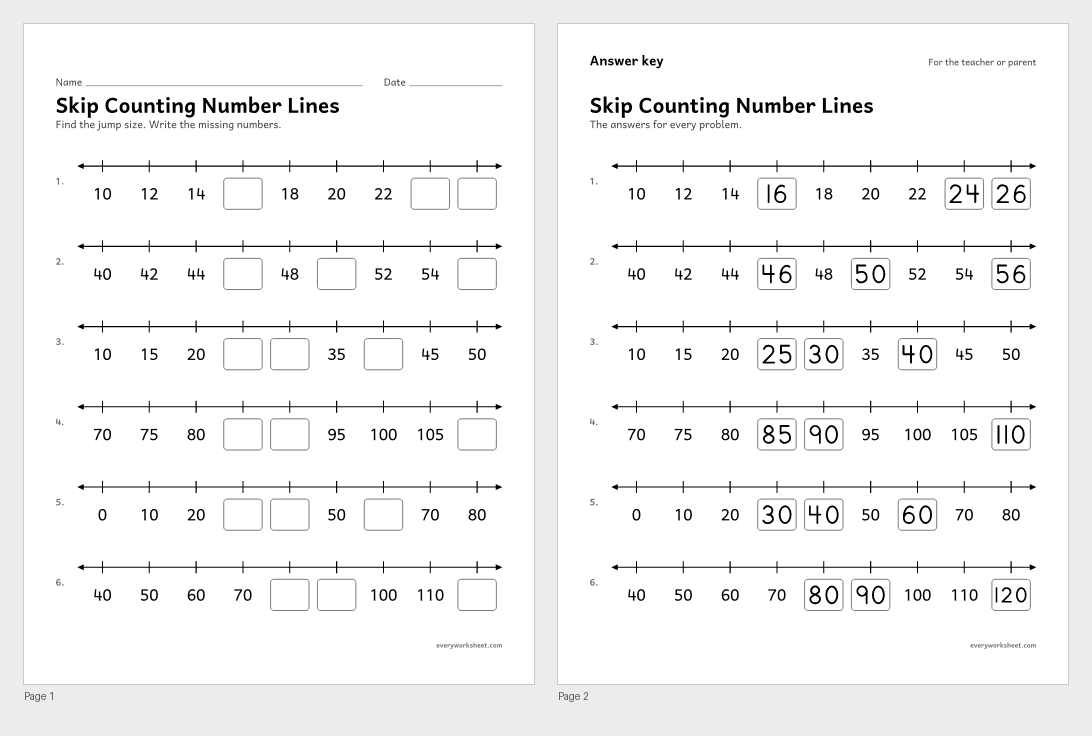
Skip counting number lines
Skip counting by 2s, 5s and 10s on a number line
Answer key on page 2
2 pages39 KB
Count on and count back
 View all 2 pages
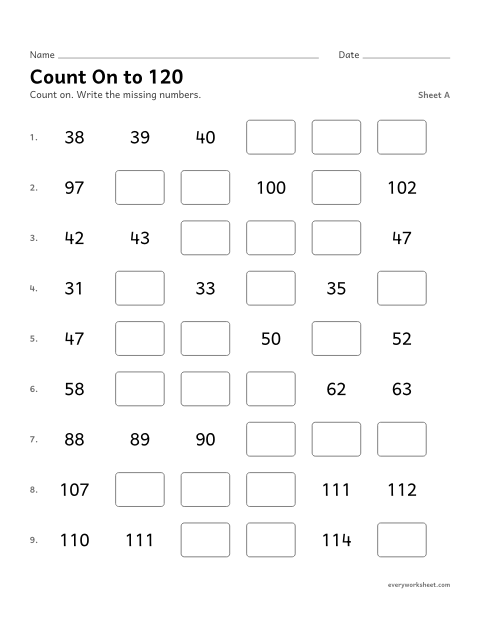
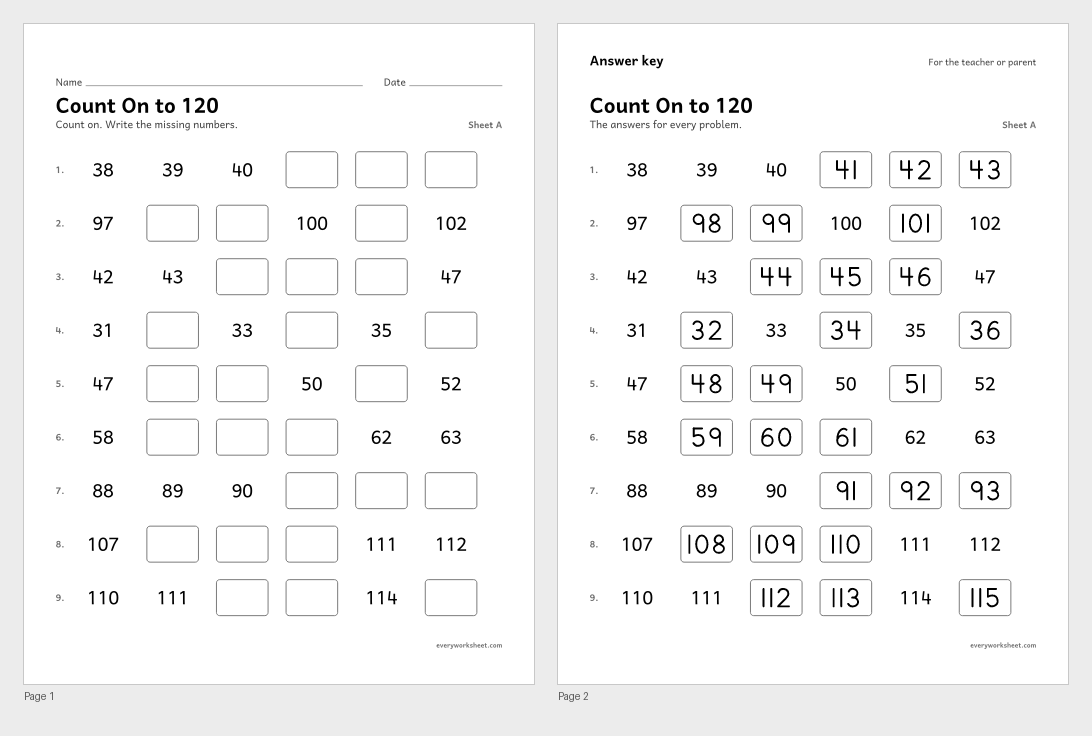
Count on to 120, sheet A
Counting on from any number to 120
Answer key on page 2
2 pages44 KB
 View all 2 pages
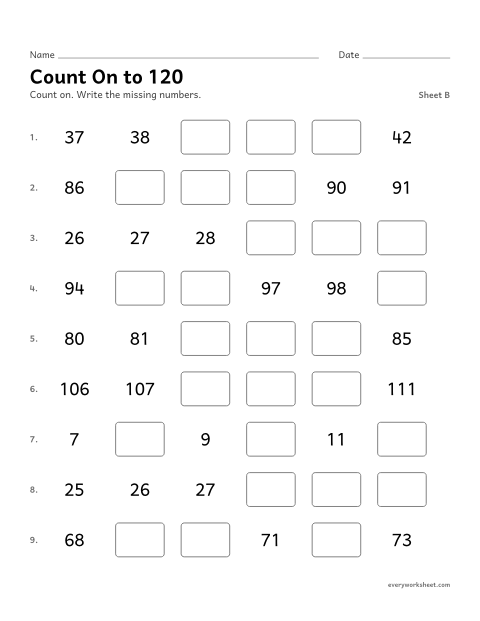
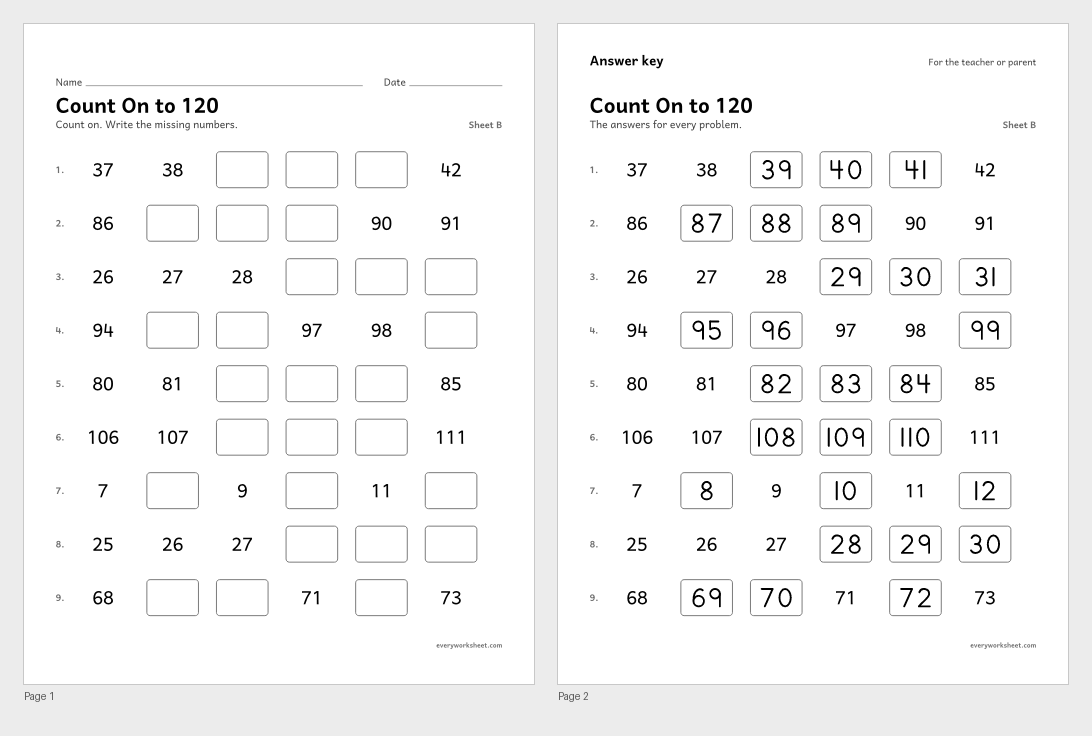
Count on to 120, sheet B
Counting on from any number to 120
Answer key on page 2
2 pages44 KB
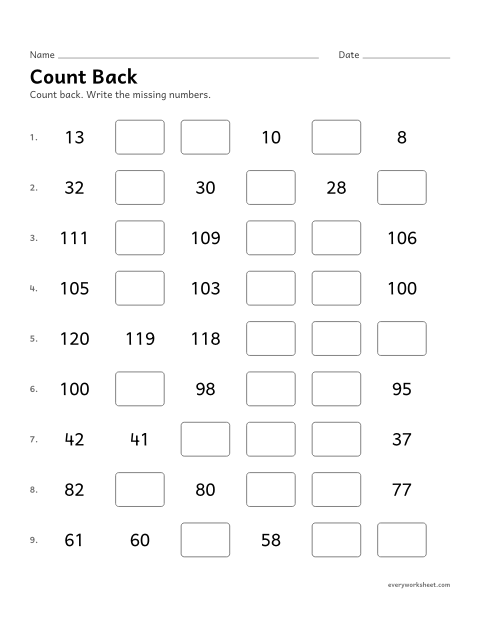 View all 2 pages
 View all 2 pages
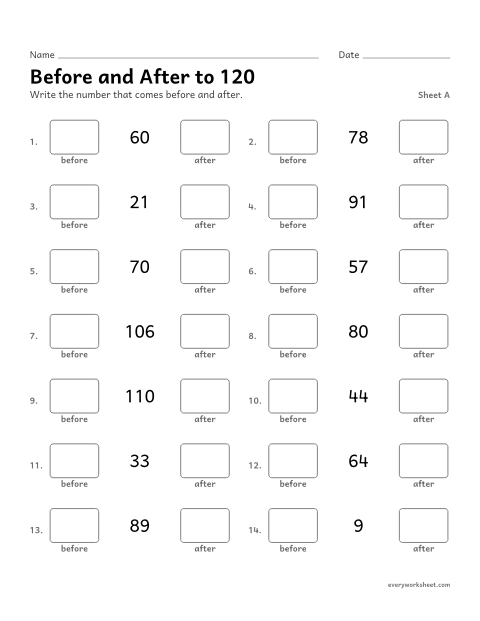
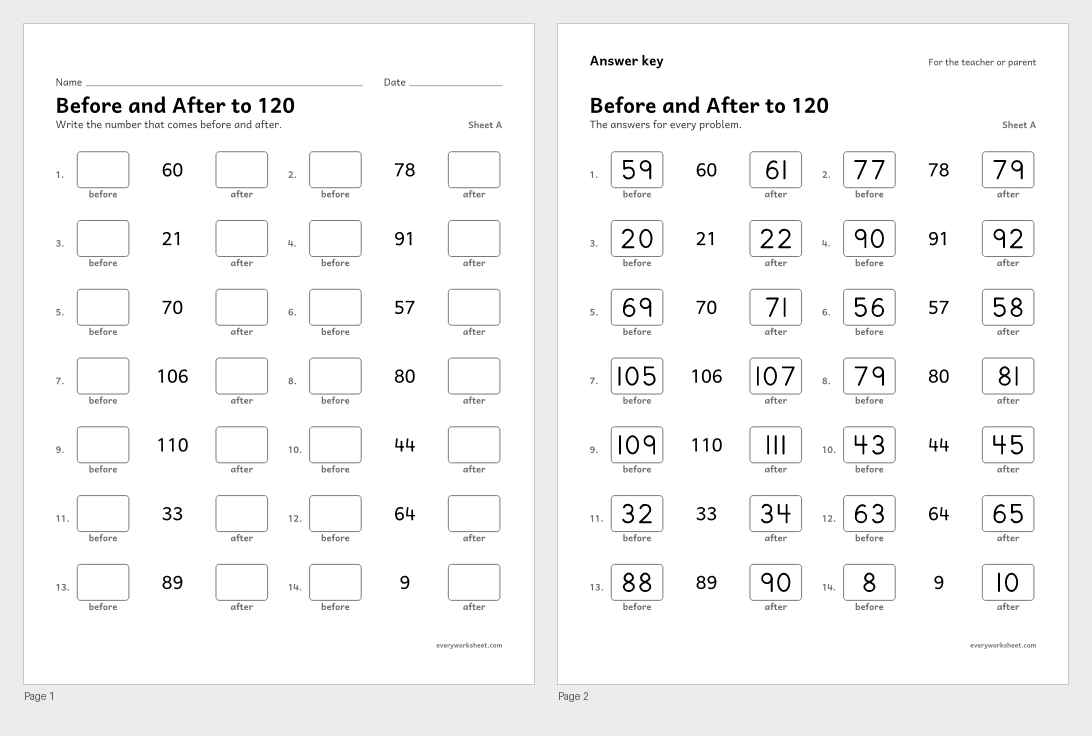
Before and after to 120, sheet A
Naming the numbers just before and after a number to 120
Answer key on page 2
2 pages51 KB
 View all 2 pages
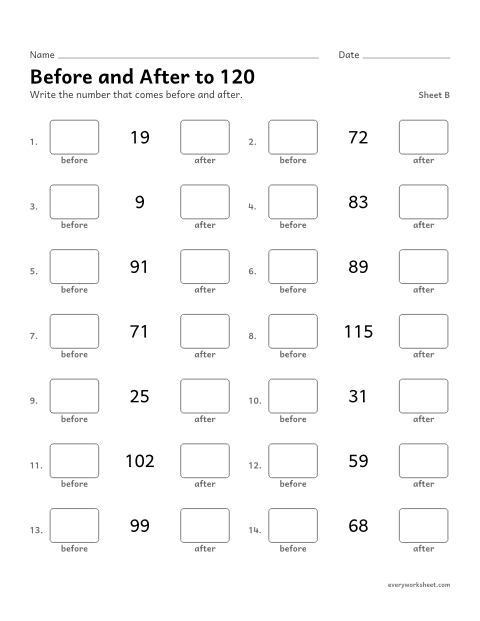
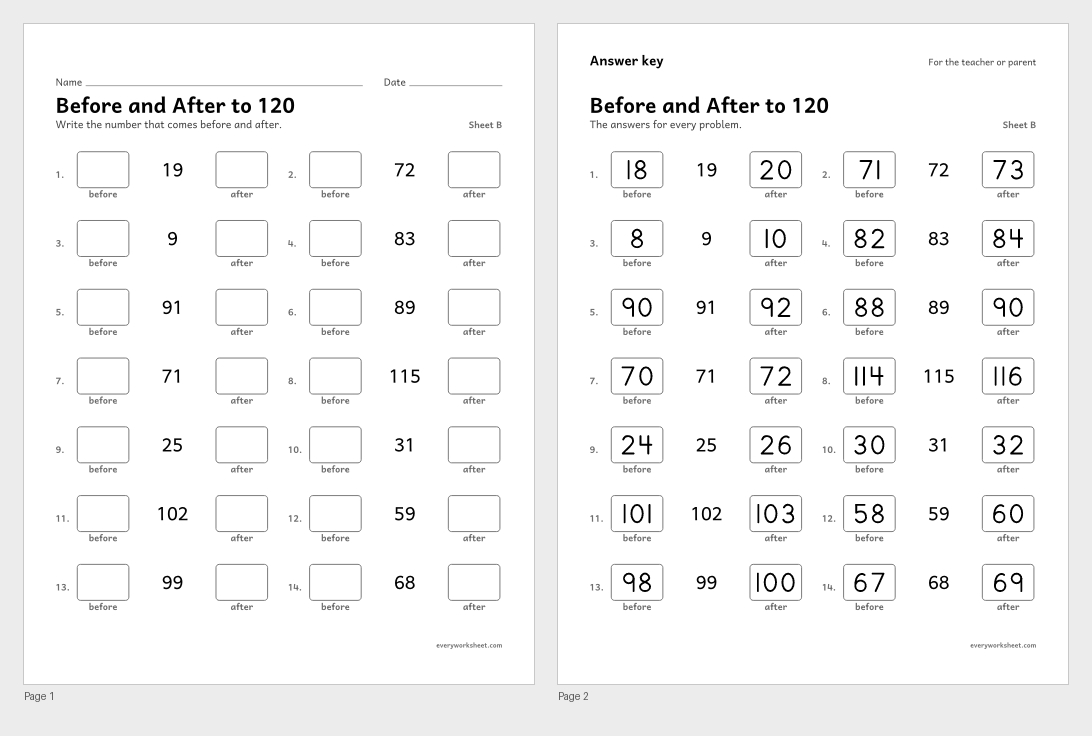
Before and after to 120, sheet B
Naming the numbers just before and after a number to 120
Answer key on page 2
2 pages51 KB
 View all 2 pages
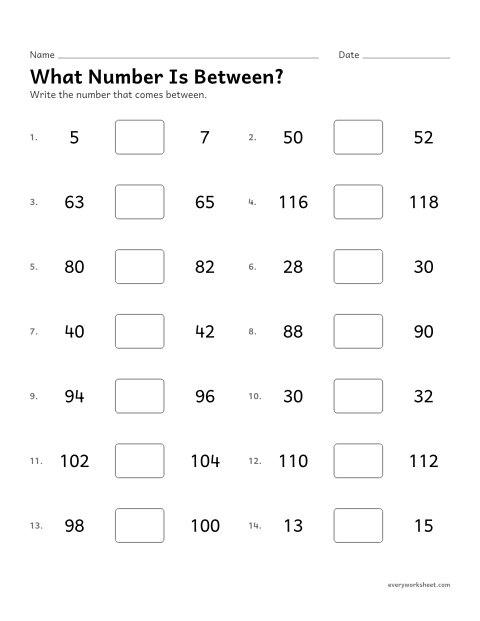
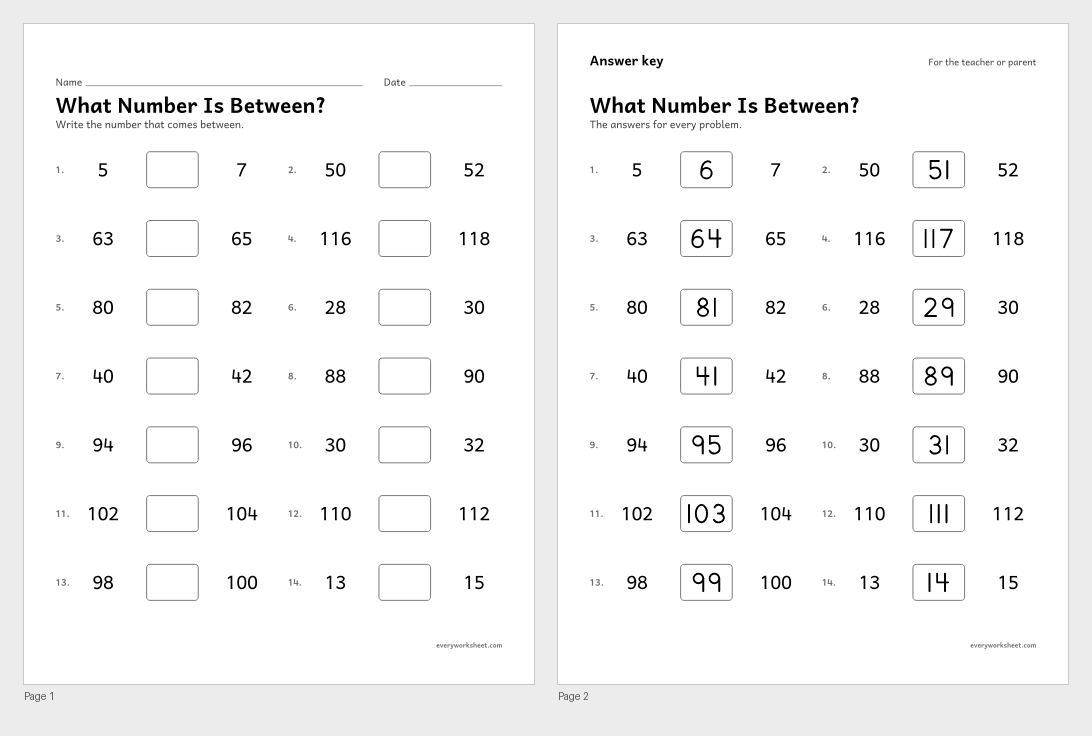
What number is Between?
Naming the number between two numbers to 120
Answer key on page 2
2 pages49 KB
 View all 2 pages
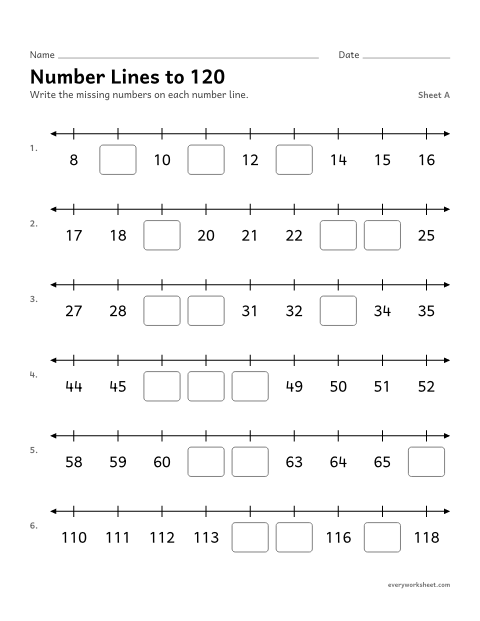
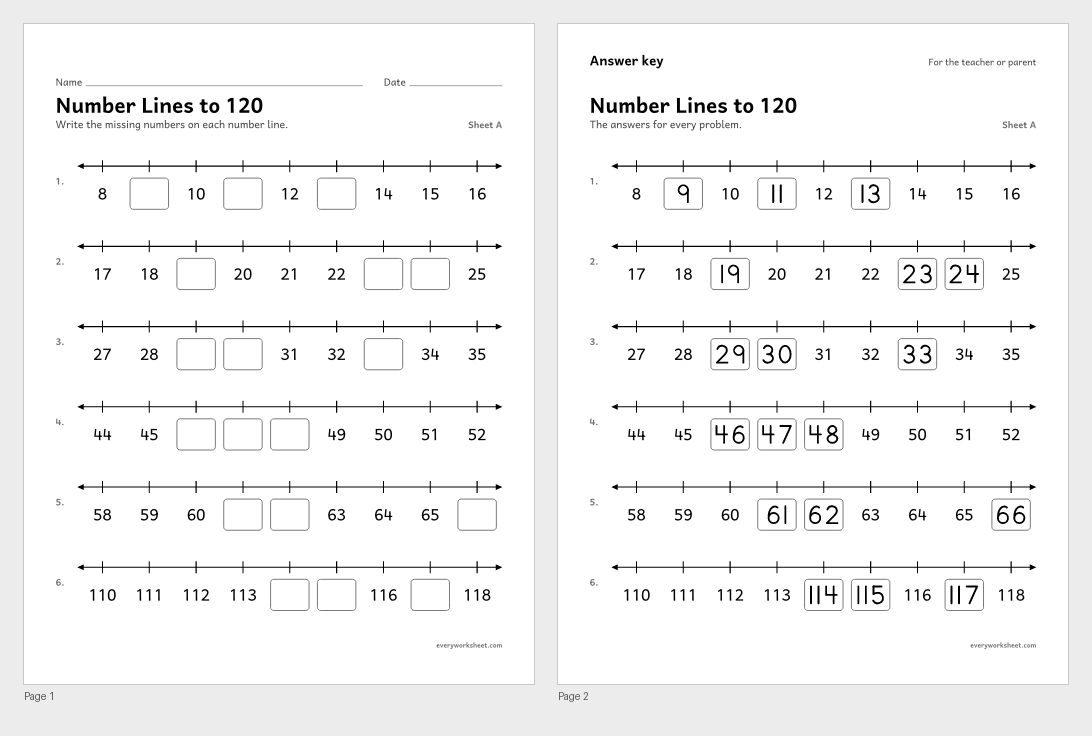
Number lines to 120, sheet A
Writing missing numbers on number lines to 120
Answer key on page 2
2 pages39 KB
 View all 2 pages
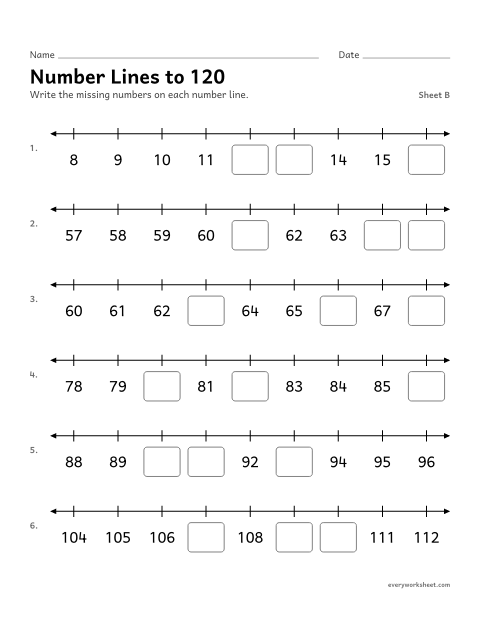
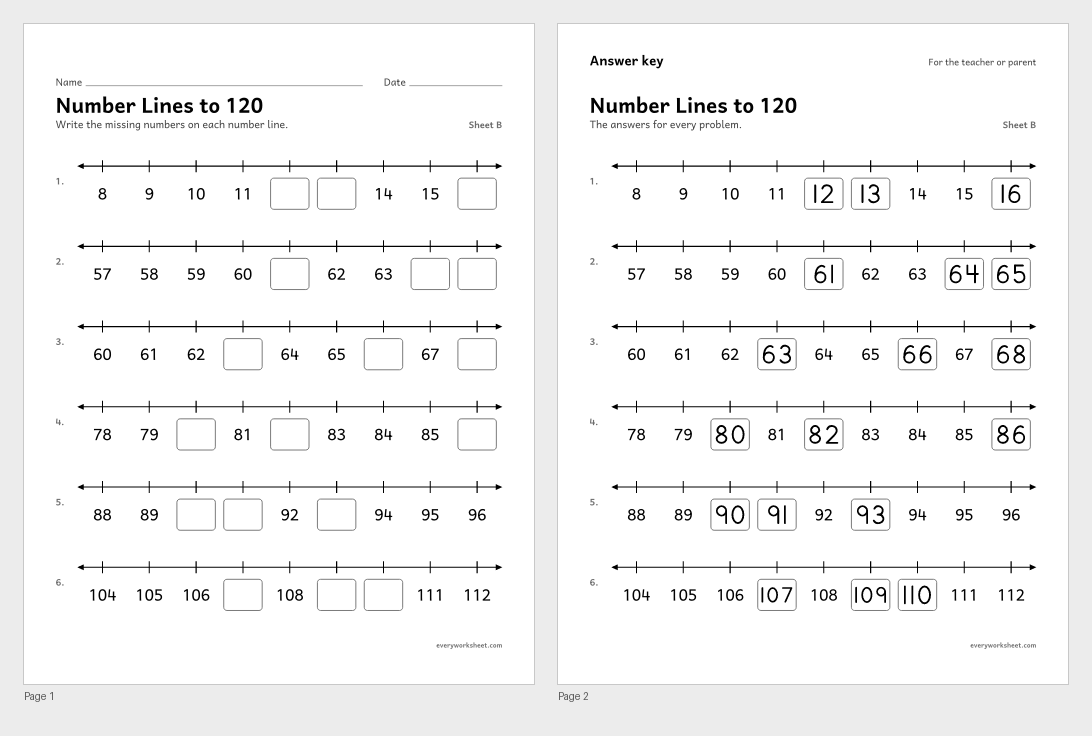
Number lines to 120, sheet B
Writing missing numbers on number lines to 120
Answer key on page 2
2 pages39 KB
Print at 100% (actual size) for the cleanest tracing lines.
About these counting to 120 worksheets
First graders learn to count to 120, starting from any number, and to read and write the numbers along the way. These counting to 120 worksheets start with the 120 chart, the most useful tool for seeing how numbers grow, then practice counting on and back without it.
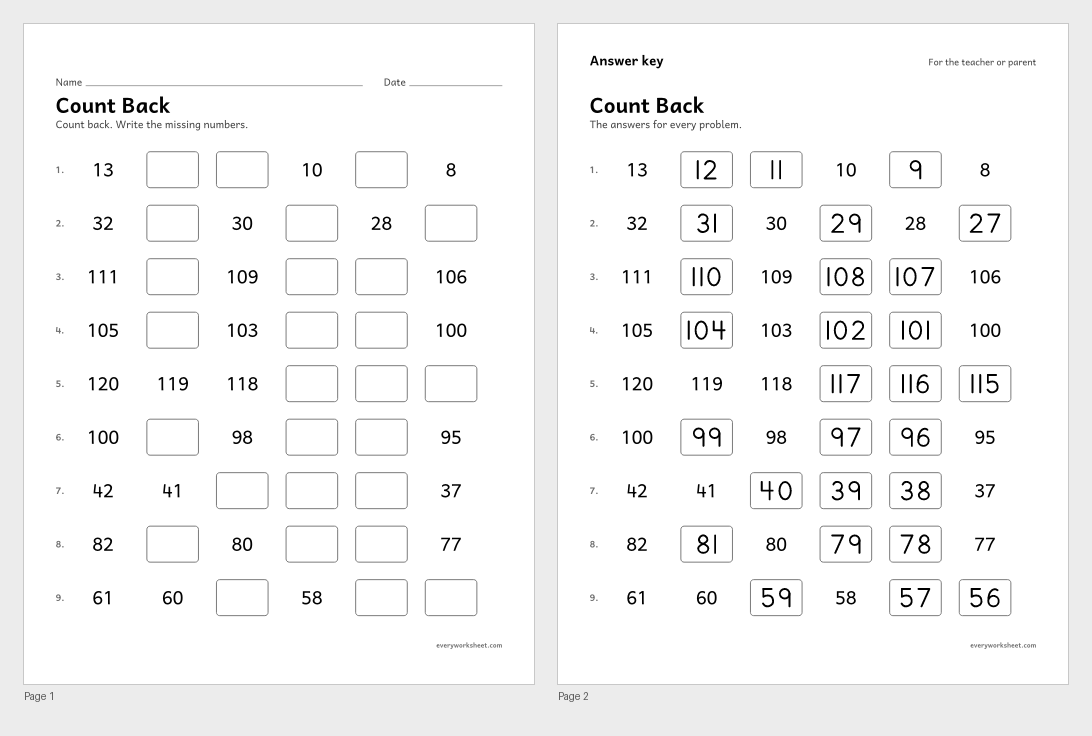
There is a printable 120 chart, a blank chart to fill in, missing number charts in three versions, and 120 chart puzzles: small pieces cut from the chart where children use the patterns (1 more across, 10 more down) to fill in the numbers. Counting pages ask for the next numbers, the numbers before and after, and the number between, with extra practice at the tricky spots like 39, 40 and 99, 100, 101.
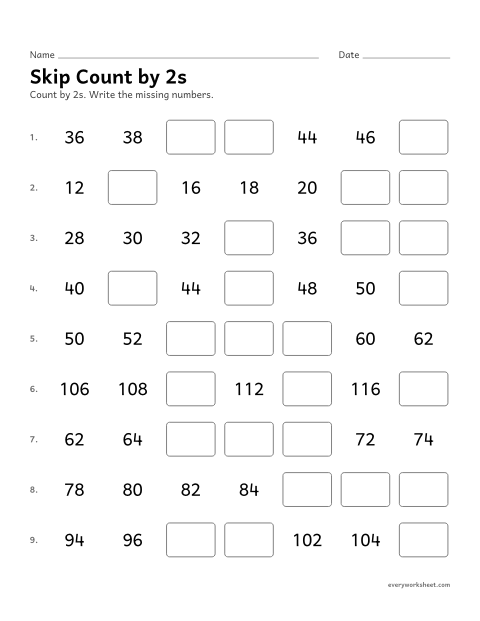
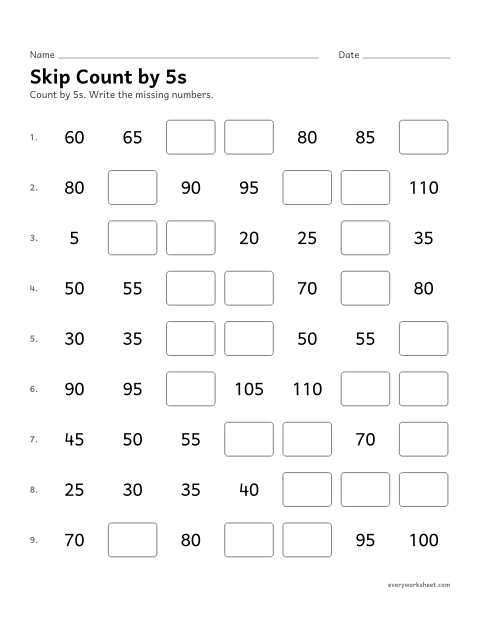
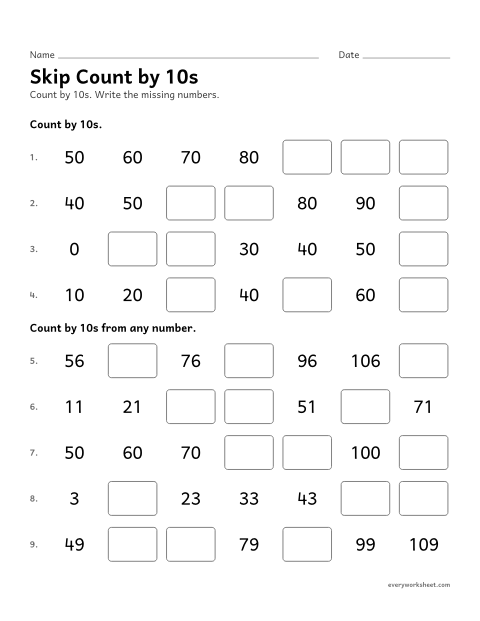
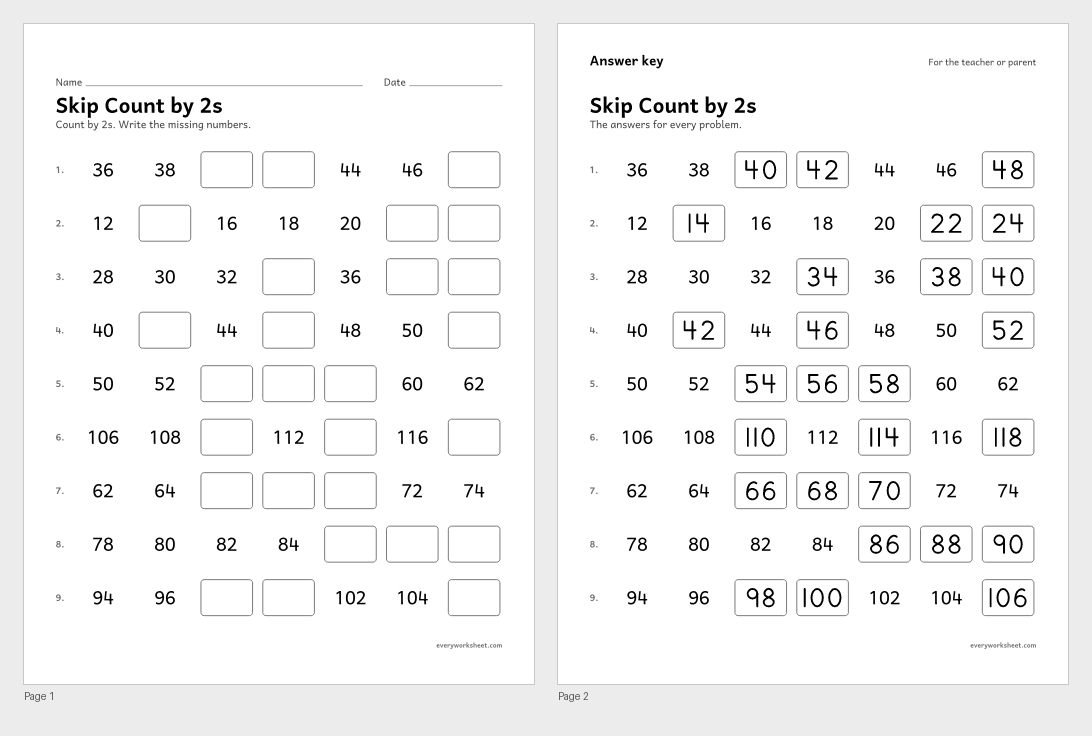
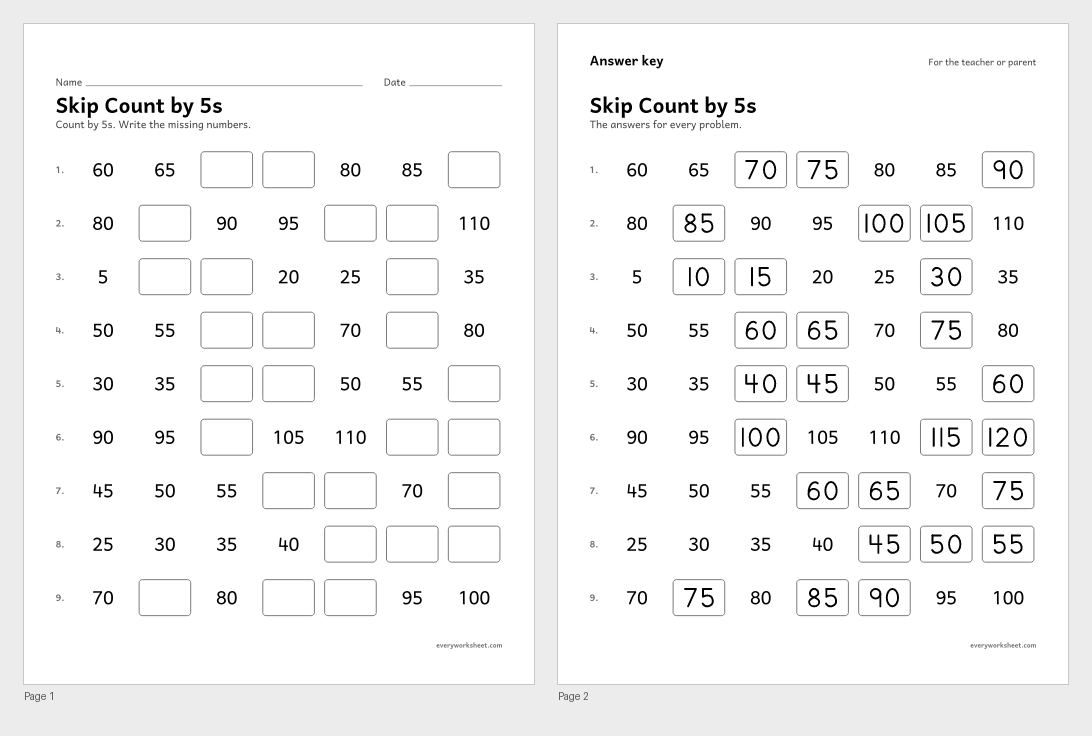
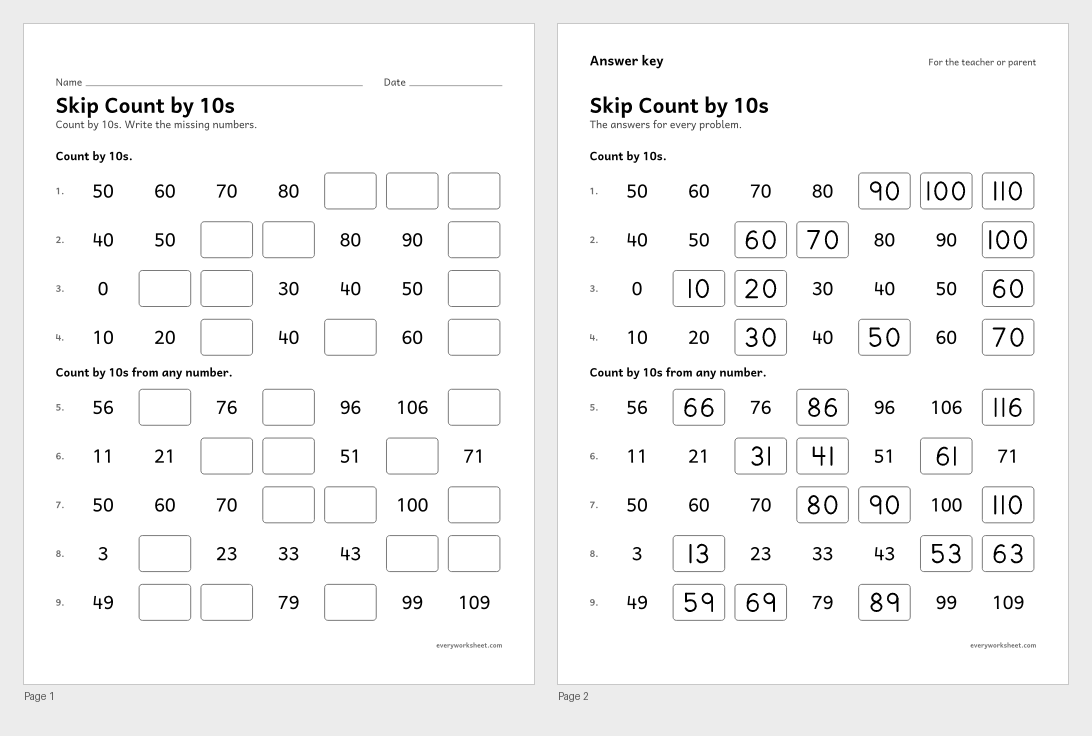
Skip counting pages count by 2s, 5s and 10s, including by 10s from any number (7, 17, 27). Every page with answers has a key on page 2, and everything prints in black and white on US Letter or A4.
Standards
CCSS.MATH.CONTENT.1.NBT.A.1Count to 120, starting at any number less than 120. In this range, read and write numerals and represent a number of objects with a written numeral.CCSS.MATH.CONTENT.1.NBT.B.2.CThe numbers 10, 20, 30, 40, 50, 60, 70, 80, 90 refer to one, two, three, four, five, six, seven, eight, or nine tens (and 0 ones).CCSS.MATH.CONTENT.1.NBT.C.5Given a two-digit number, mentally find 10 more or 10 less than the number, without having to count; explain the reasoning used.
How to use them
- Put the 120 chart where your child can see it every day. Count from different starting numbers, not always from 1.
- Use the missing number charts and the blank chart once your child can count to 120 aloud.
- Give the 120 chart puzzles after talking about the patterns: across the chart each number is 1 more, and down a column each number is 10 more.
- Practice counting back as well as on. It prepares children for subtraction.
- Use the skip counting pages with the chart: color the 5s, then say them aloud.
Teaching tips
- The hardest spots are where a new ten starts (29, 30) and after 100. Children often say 'one hundred ten' for 101 or write 1001. Show that 101 is 100 and 1 more.
- When children write numbers past 100, check they write 105, not 1005.
- On the chart, the last column is the tens: 10, 20, 30. Counting by 10s is just reading down that column.
- Counting by 10s from any number keeps the ones the same: 4, 14, 24, 34.
Questions teachers and parents ask
Why do 1st graders count to 120 and not 100?
Counting past 100 shows that the pattern keeps going: 101, 102 … 110, 111 work the same way as 1, 2 … 10, 11. It helps children understand place value instead of memorizing a list.
What is a 120 chart?
A grid of the numbers 1 to 120 in rows of 10. Across a row, each number is 1 more; down a column, each number is 10 more. It is a great tool for counting, skip counting and adding tens.
When should my child learn skip counting?
Counting by 10s comes first, then 5s and 2s. Most 1st graders can count by 10s to 120 and by 5s and 2s with a chart by the end of the year.
Are there answer keys?
Yes. Every page with answers has a key on page 2 of the PDF. The plain 120 chart is a one-page reference.