 View larger
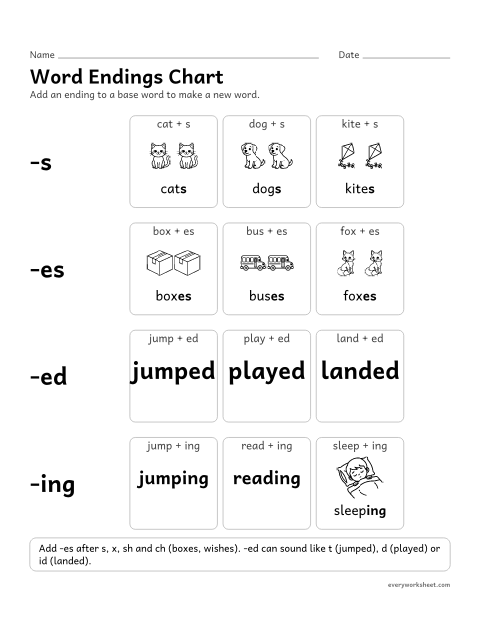
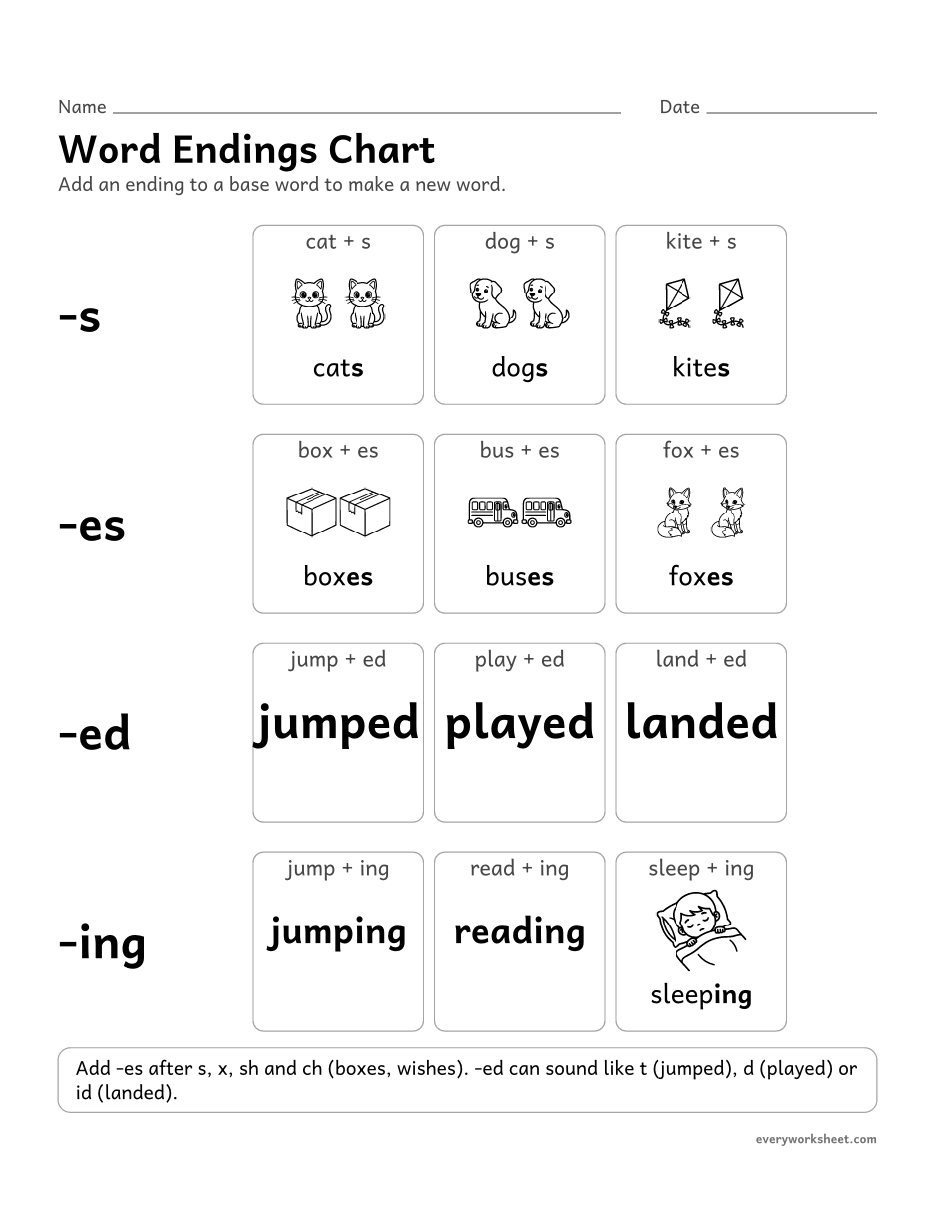
Word endings Chart: -s, -es, -ed, -ing
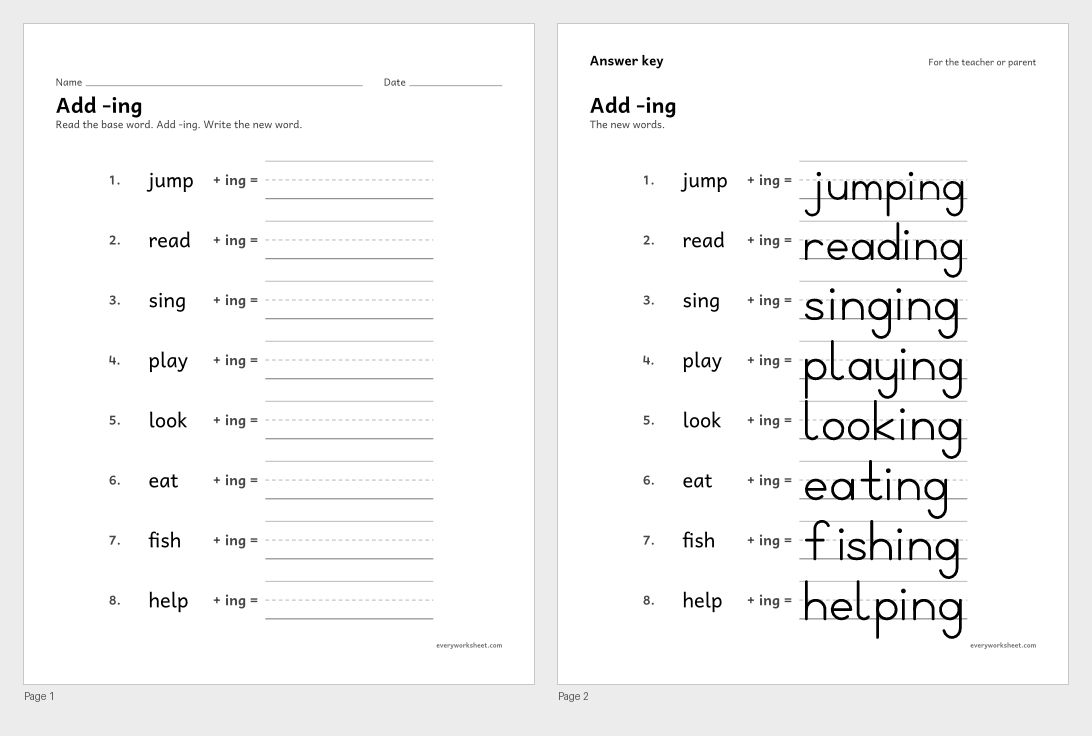
Adding -s, -es, -ed and -ing to base words
1 page238 KB
Pages for -s, -es, -ed and -ing: an endings chart, add the ending, sorts, the three sounds of -ed, find the base word, sentences and a story.
View largerAdding -s, -es, -ed and -ing to base words
1 page238 KB
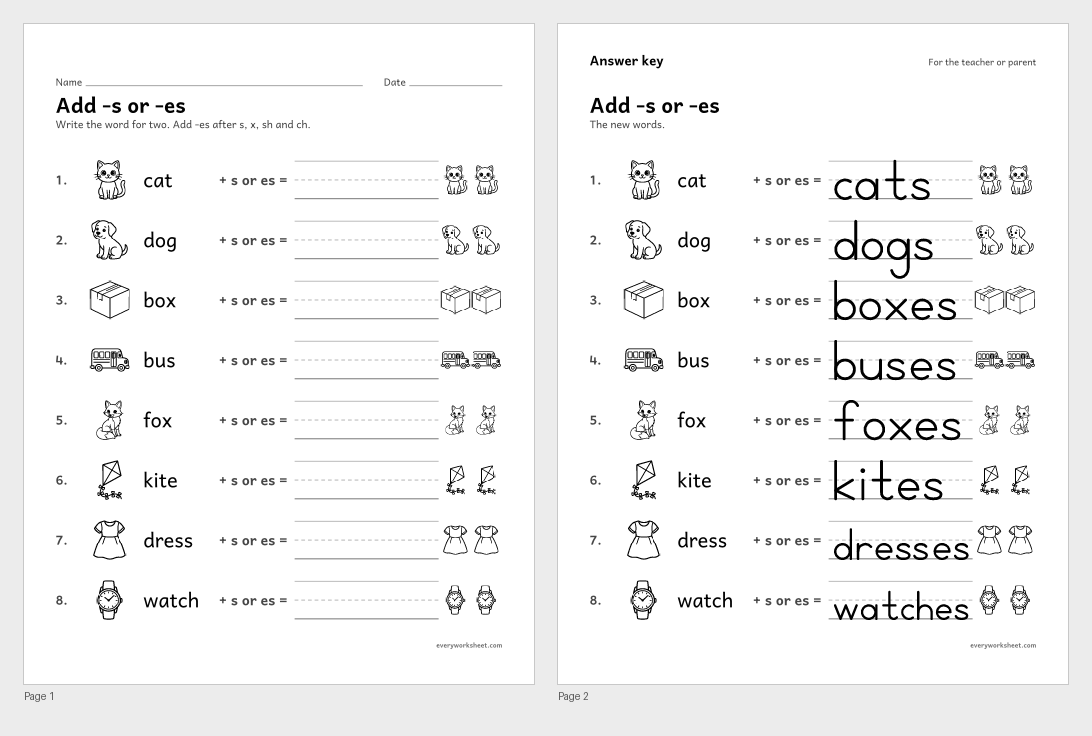 View all 2 pages
 View all 2 pages
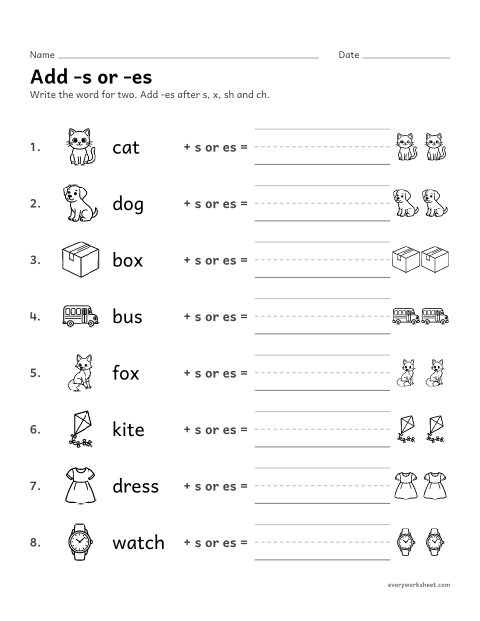
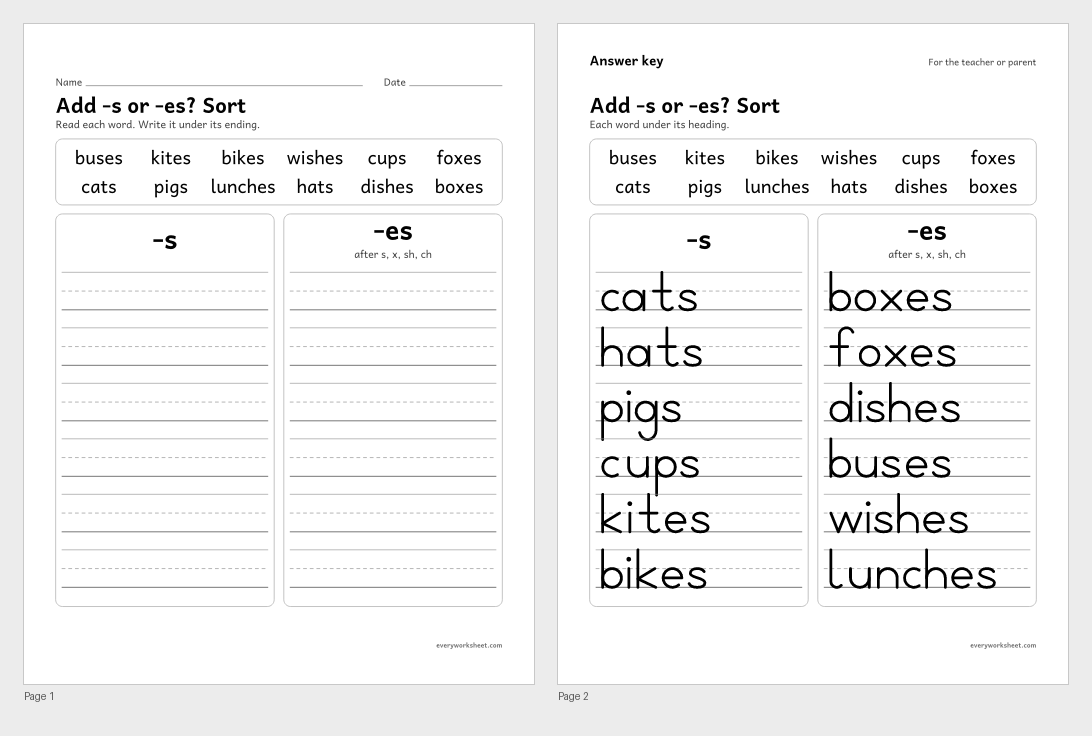
Sorting plural words by -s or -es
Answer key on page 2
2 pages35 KB
 View all 2 pages
 View all 2 pages
 View all 2 pages
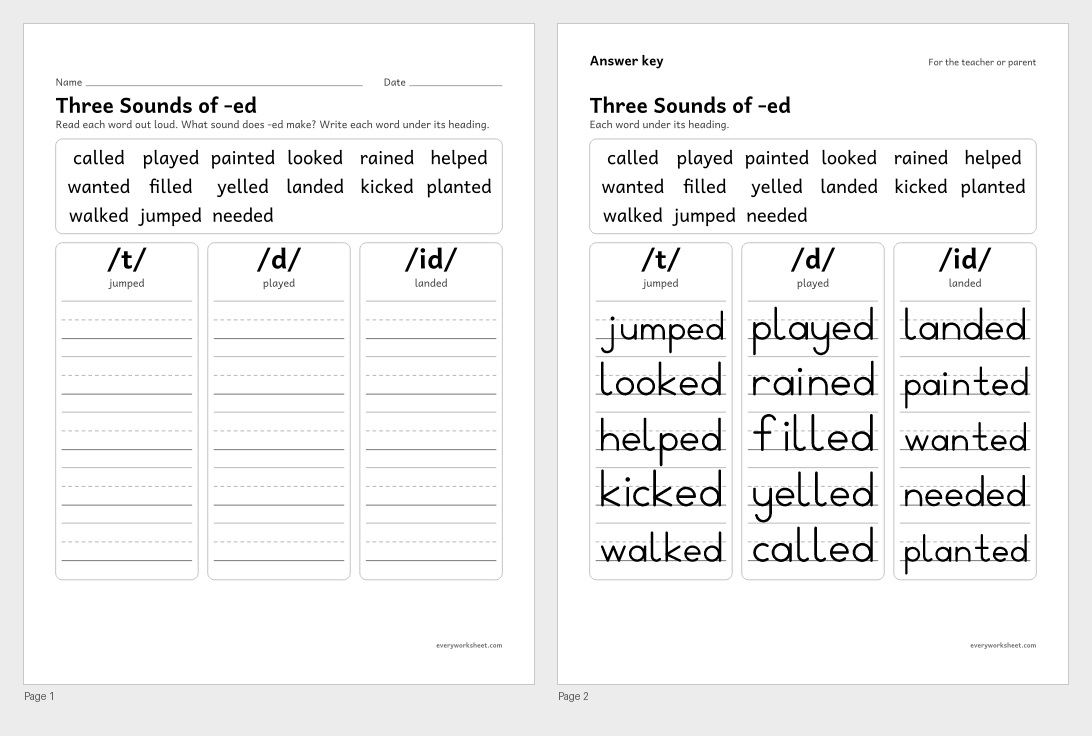
Hearing the three sounds of -ed: t, d and id
Answer key on page 2
2 pages45 KB
 View all 2 pages
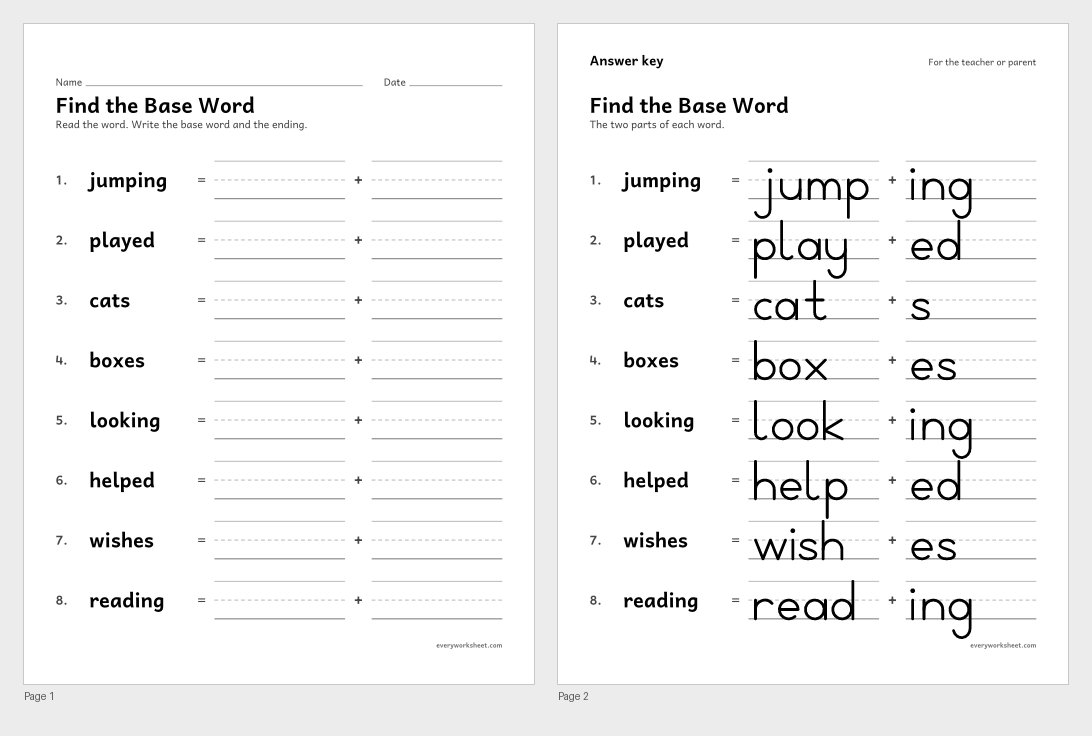
Splitting a word into its base word and ending
Answer key on page 2
2 pages51 KB
 View all 2 pages
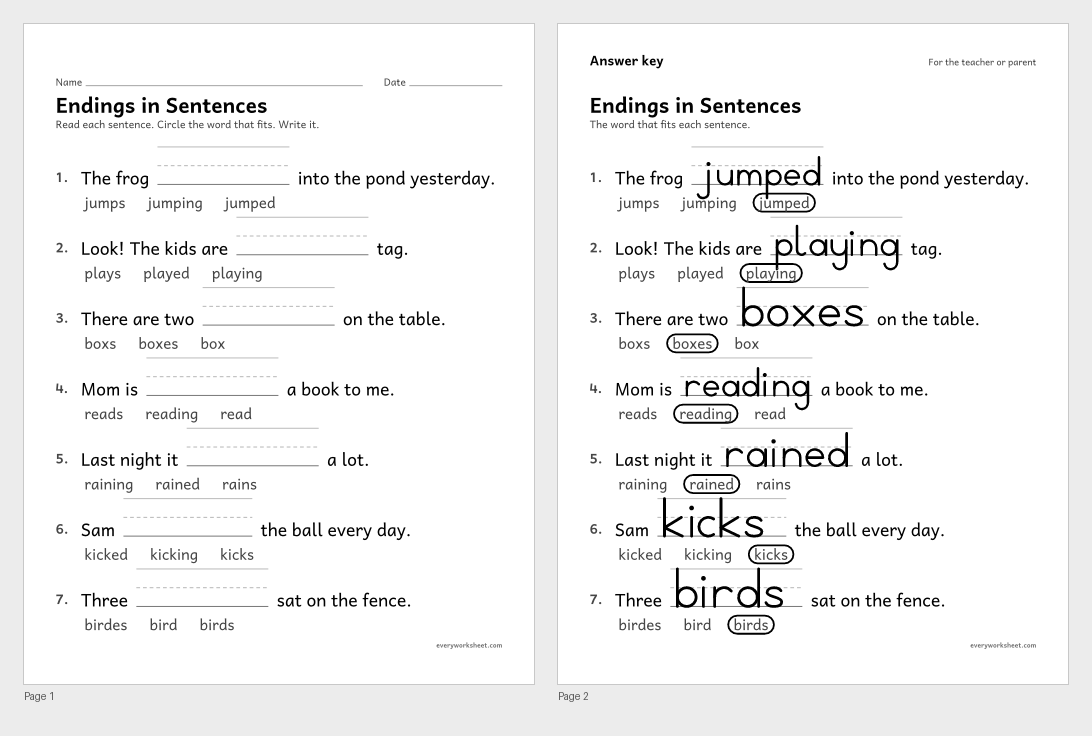
Choosing the word with the right ending for a sentence
Answer key on page 2
2 pages44 KB
 View all 2 pages
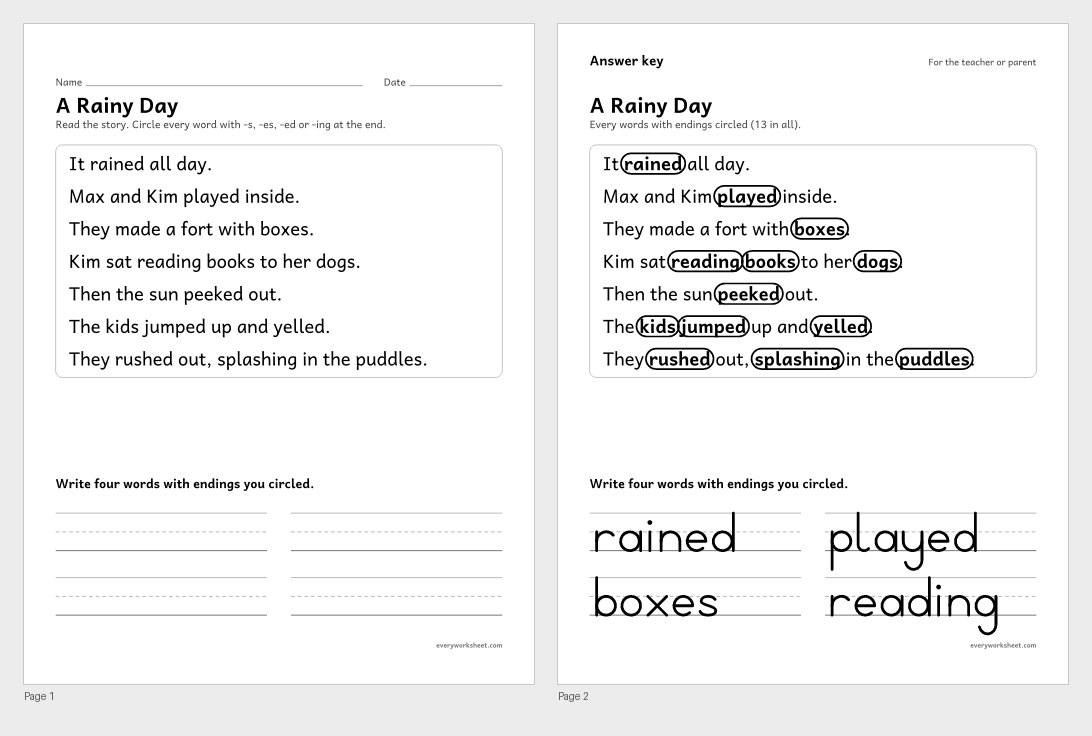
Finding words with -s, -es, -ed and -ing in a short story
Answer key on page 2
2 pages34 KB
Print at 100% (actual size) for the cleanest tracing lines.
Inflectional endings are the small endings we add to a base word to change its meaning a little: -s and -es for more than one (cats, boxes), and -s, -ed and -ing for verbs (jumps, jumped, jumping). Spotting the base word inside a longer word is one of the first steps from reading short words to reading longer ones.
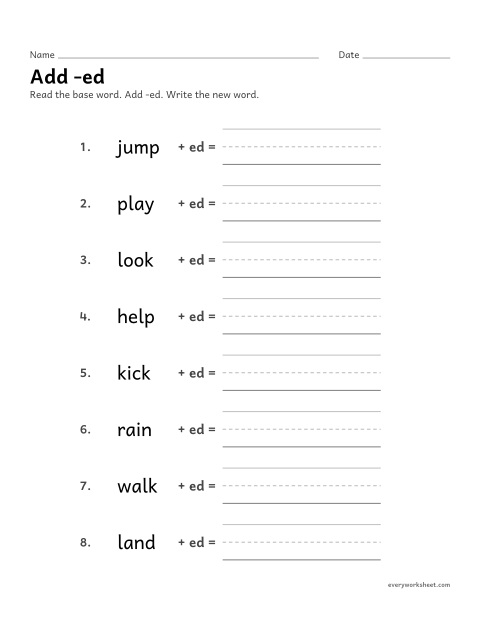
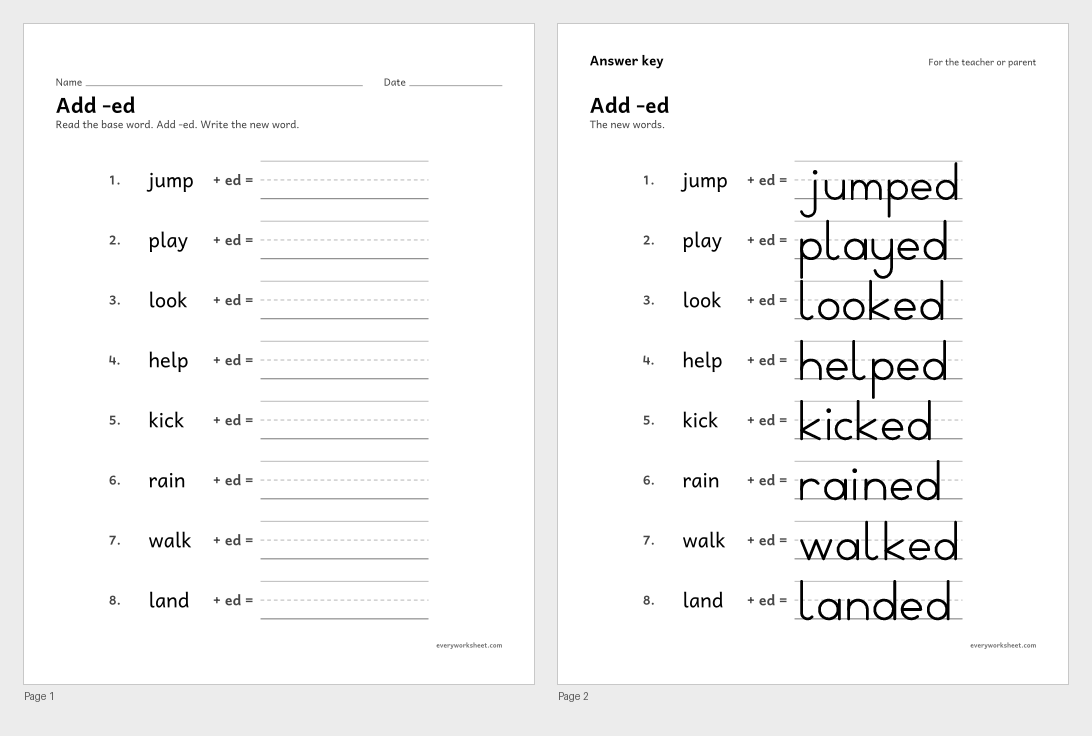
These worksheets start with an endings chart. Children then add -s or -es to make plurals, sort -s and -es words, add -ing and -ed to base words, sort -ed words by their three sounds (jumped, played, landed), find the base word and ending, choose the right form of a word in sentences and find words with endings in a short story.
The pages use base words that don't change when an ending is added, the 1st grade step. Doubling (running) and dropping e (making) come in 2nd grade. All pages print in black and white on US Letter or A4 with answer keys on page 2.
CCSS.ELA-LITERACY.RF.1.3.FRead words with inflectional endings.CCSS.ELA-LITERACY.L.1.4.CIdentify frequently occurring root words (e.g., look) and their inflectional forms (e.g., looks, looked, looking).CCSS.ELA-LITERACY.L.1.1.CUse singular and plural nouns with matching verbs in basic sentences (e.g., He hops; We hop).CCSS.ELA-LITERACY.L.1.1.EUse verbs to convey a sense of past, present, and future (e.g., Yesterday I walked home; Today I walk home; Tomorrow I will walk home).CCSS.ELA-LITERACY.L.1.2.DUse conventional spelling for words with common spelling patterns and for frequently occurring irregular words.CCSS.ELA-LITERACY.RF.1.4.CUse context to confirm or self-correct word recognition and understanding, rereading as necessary.Inflectional endings are endings added to a base word that change its number or tense without making a new kind of word: -s and -es (cats, boxes), -ed (jumped) and -ing (jumping).
Add -es after s, x, sh and ch (buses, boxes, wishes, lunches), because you can hear an extra beat. Add -s to most other words (cats, kites).
-ed says t after sounds like p, k, sh and ch (jumped, looked), d after most other sounds (played, rained) and id after t and d (landed, painted). It is always spelled -ed.
Not usually. In 1st grade children add endings to base words that don't change. Doubling (run, running) and dropping e (make, making) are 2nd grade skills.
Yes, on page 2 of every page with right answers.