 View larger
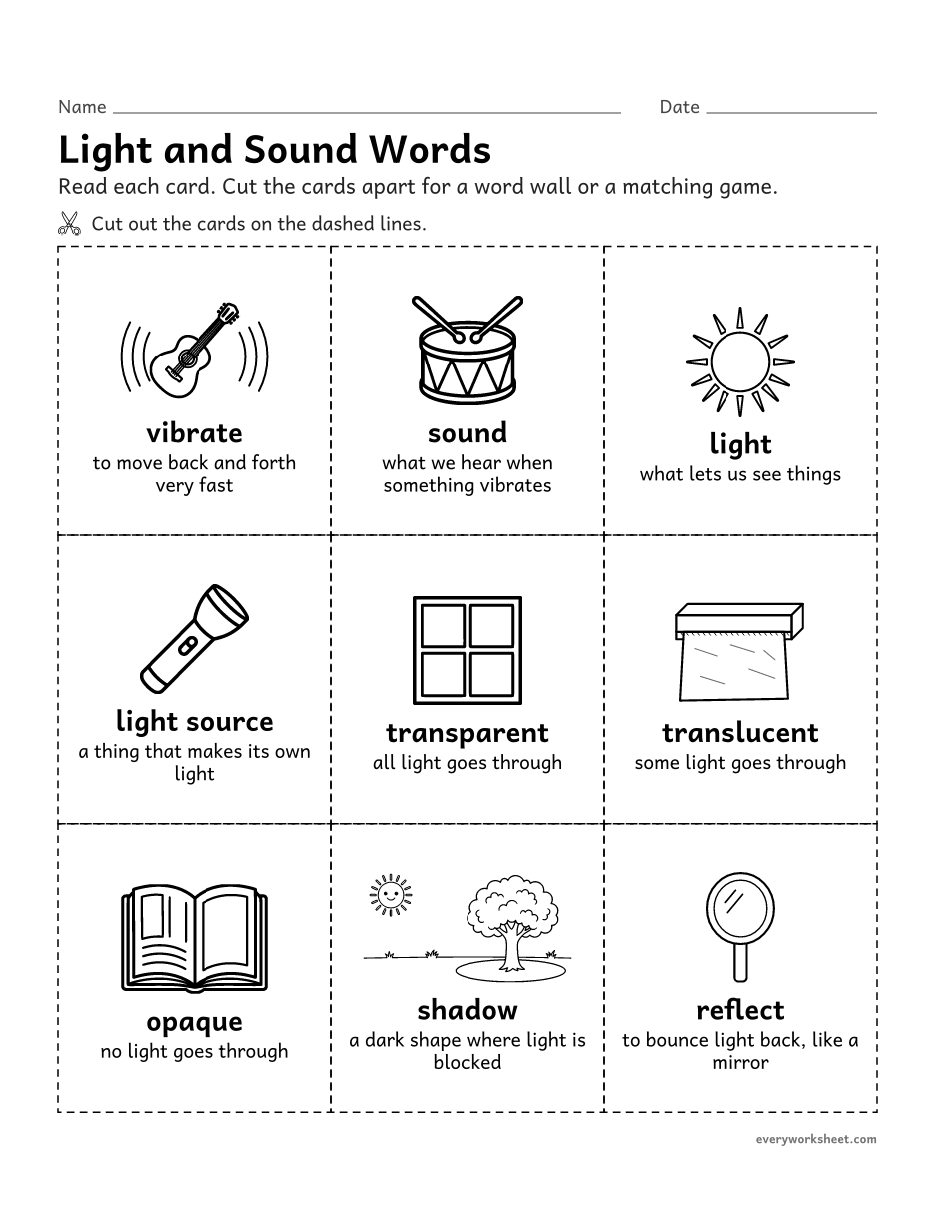
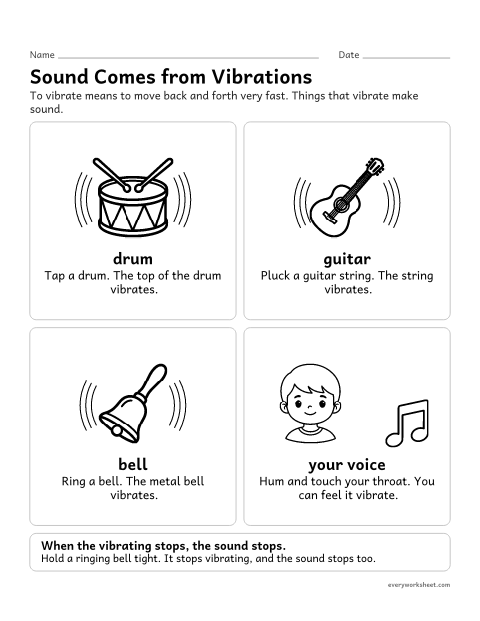
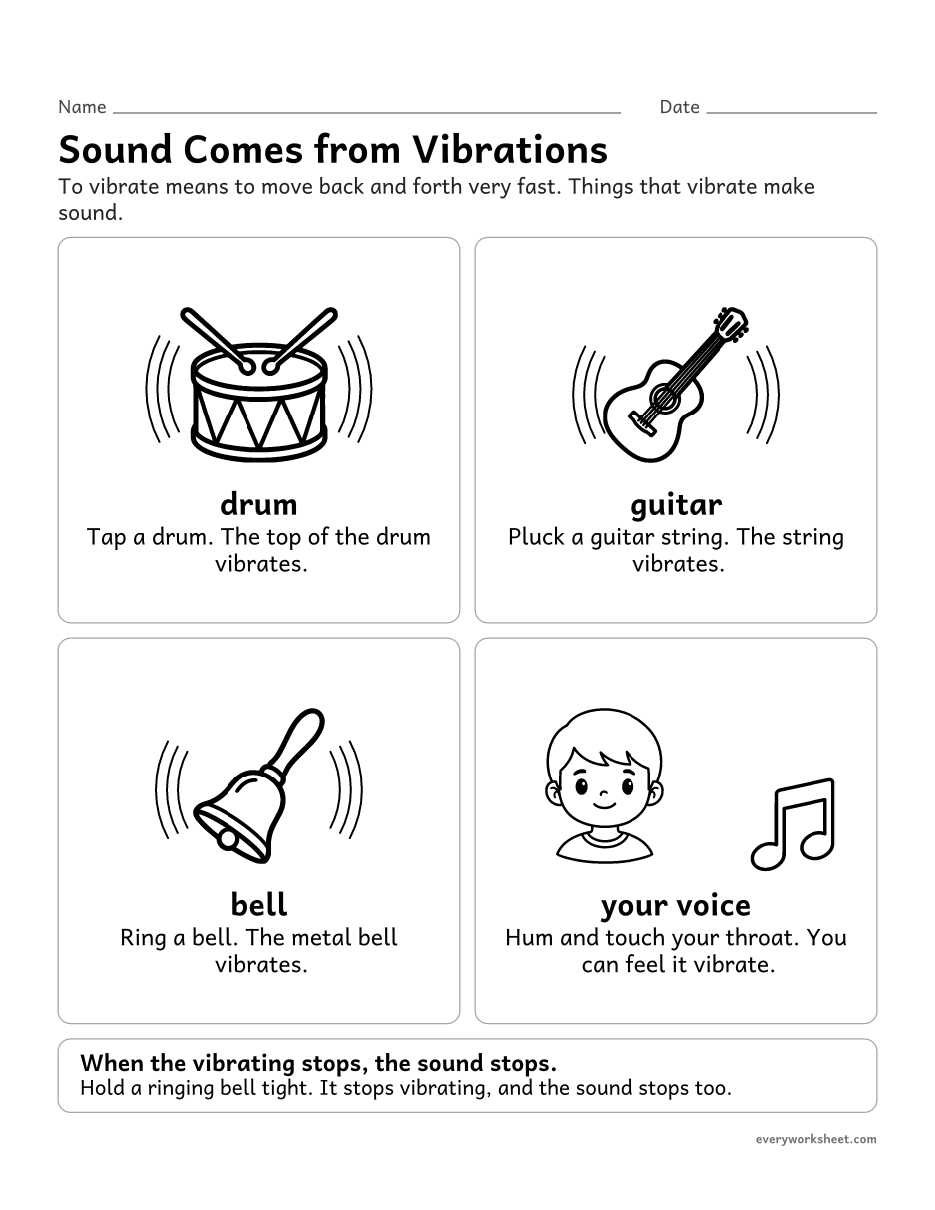
Sound and vibrations poster
Explaining that vibrating materials make sound
1 page107 KB
Sound and vibration, seeing in the dark, transparent, translucent and opaque, shadows and mirrors, and designing a signal, with answer keys.
View largerExplaining that vibrating materials make sound
1 page107 KB
 View all 2 pages
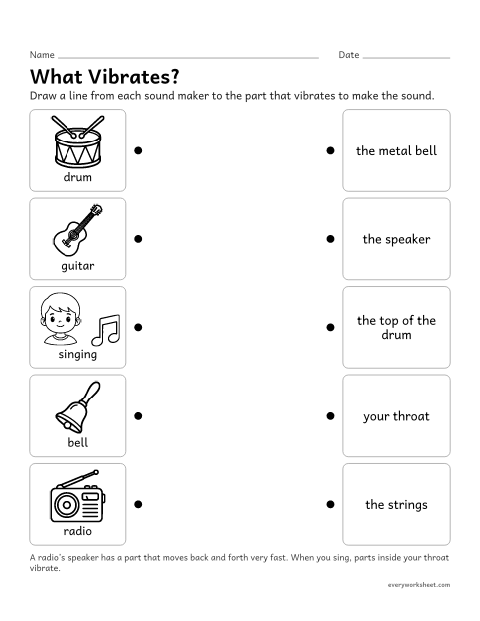
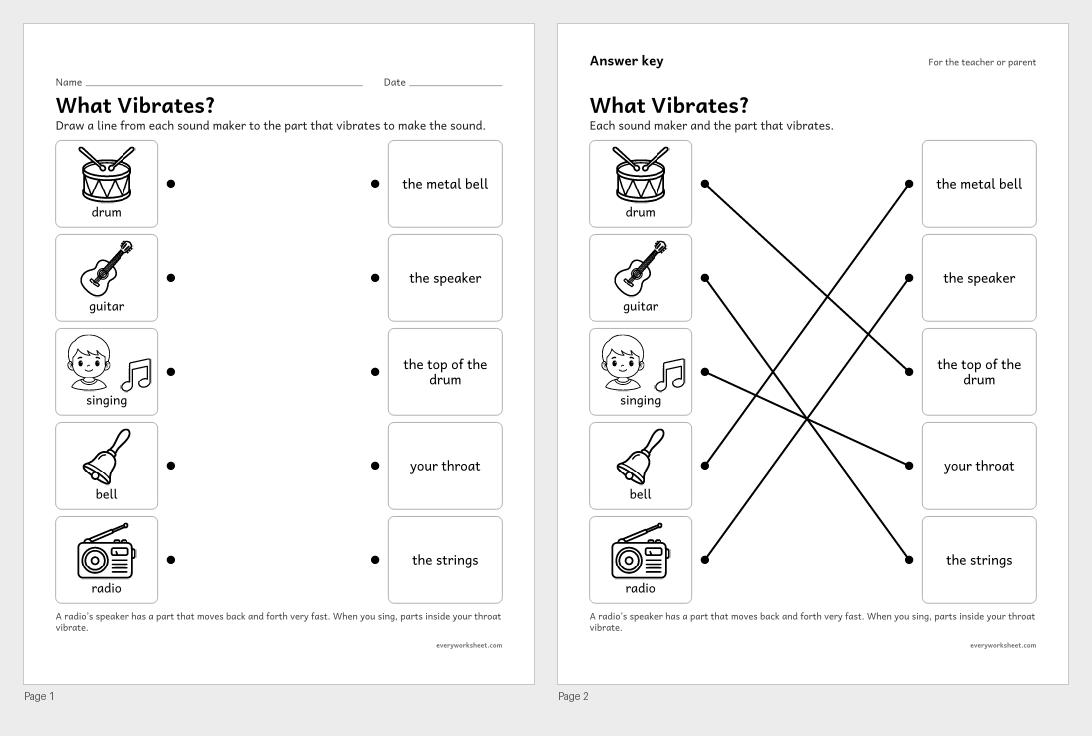
Naming the part that vibrates to make a sound
Answer key on page 2
2 pages228 KB
 View all 2 pages
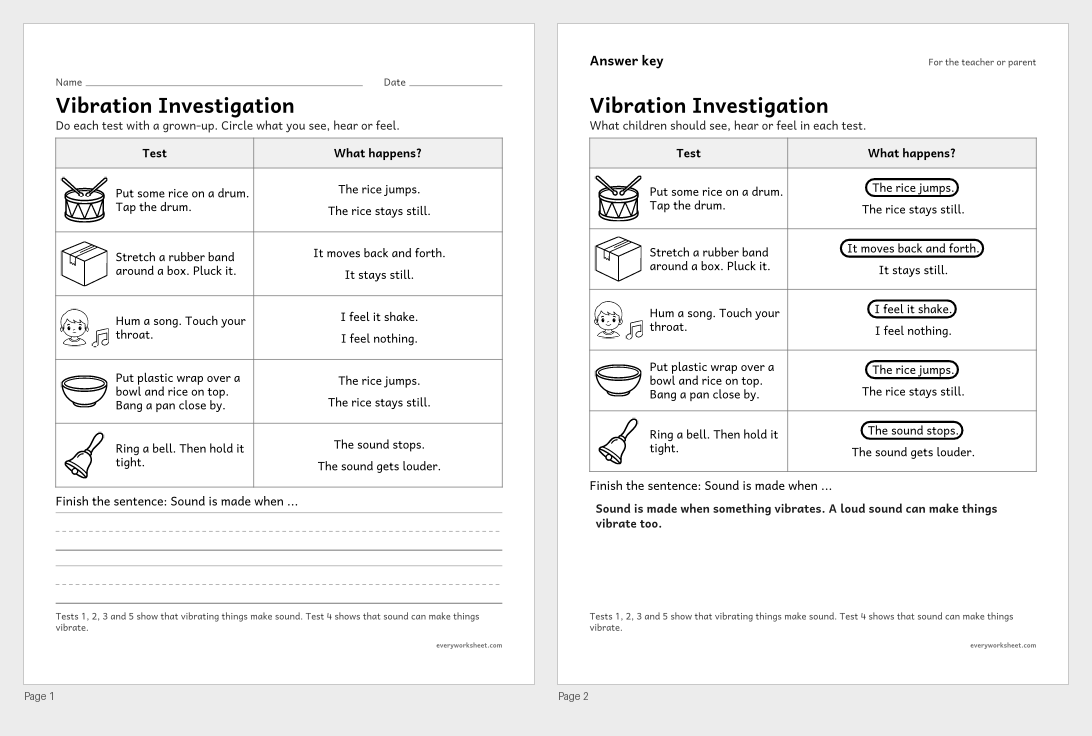
Investigating that vibrating materials make sound and that sound can make materials vibrate
Answer key on page 2
2 pages246 KB
 View all 2 pages
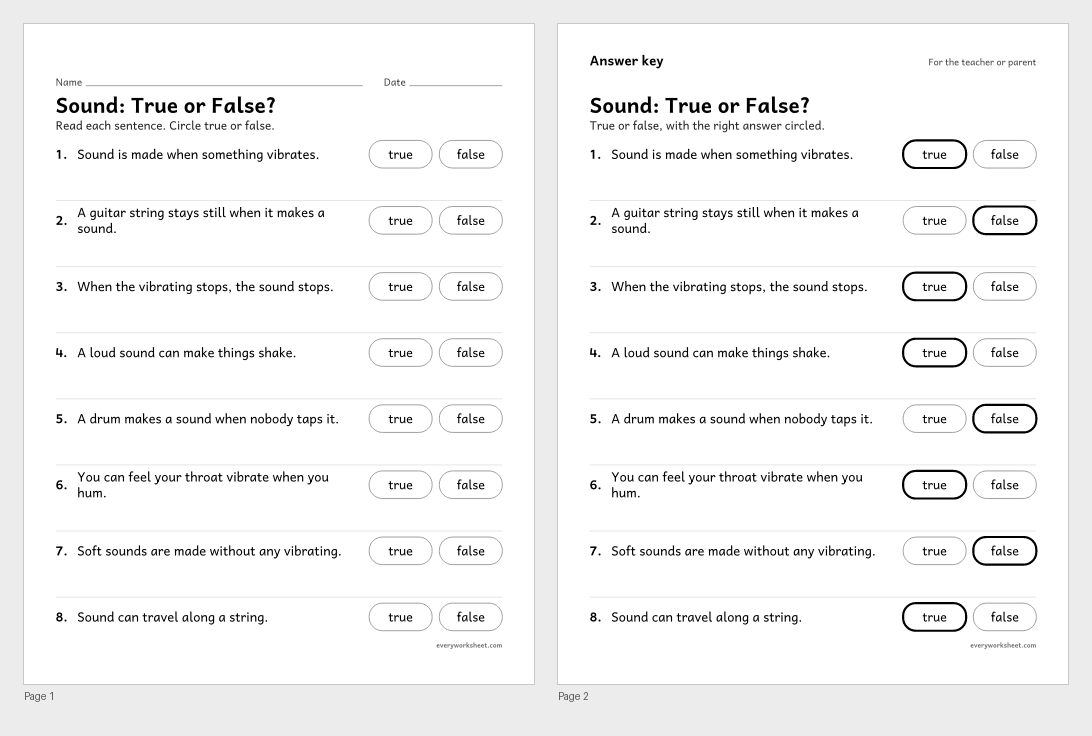
Checking facts about sound and vibration
Answer key on page 2
2 pages44 KB
 View all 2 pages
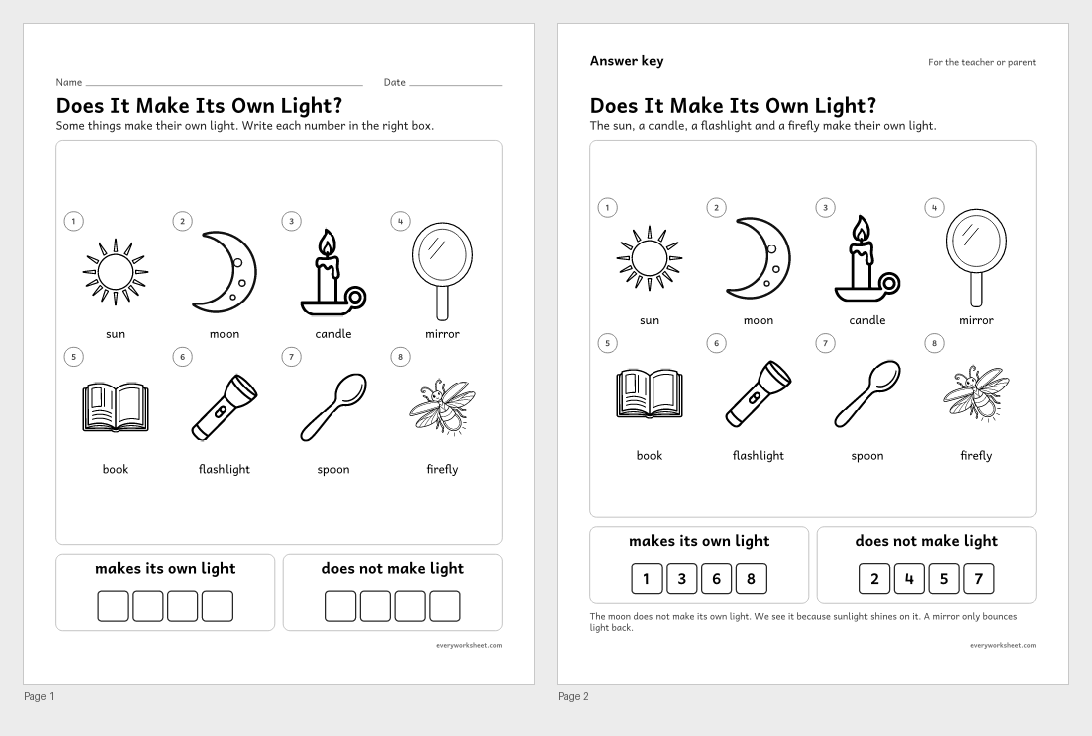
Sorting things that make their own light from things that do not
Answer key on page 2
2 pages162 KB
 View all 2 pages
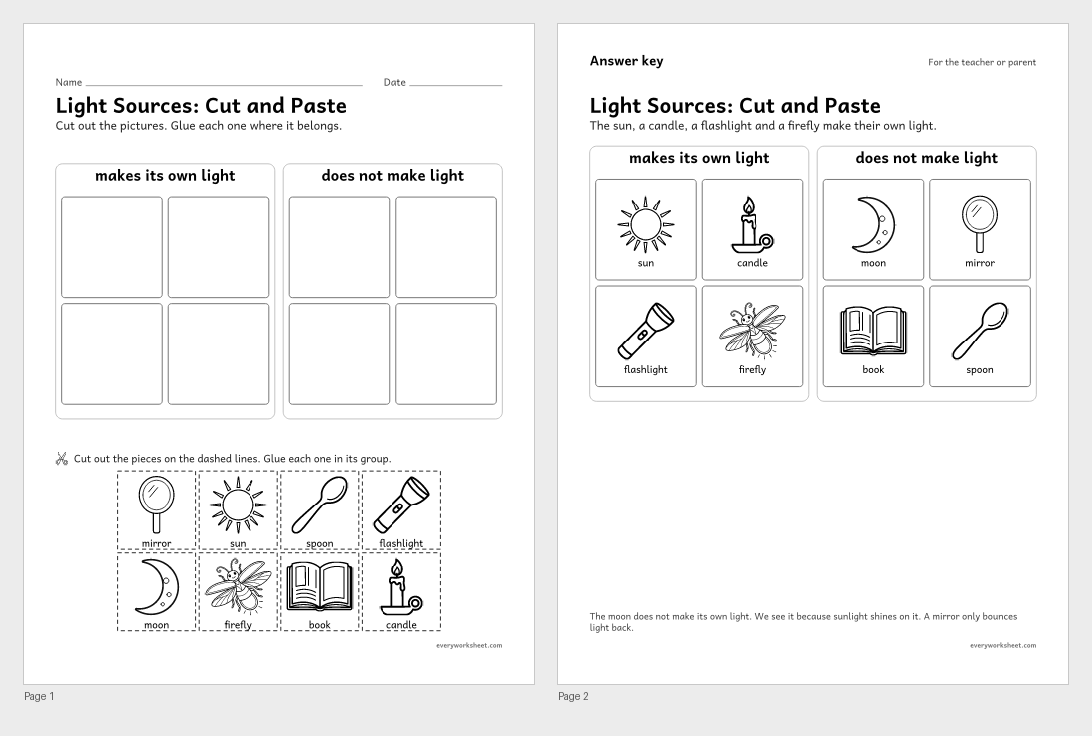
Sorting things that make their own light from things that do not
Answer key on page 2
2 pages186 KB
 View all 2 pages
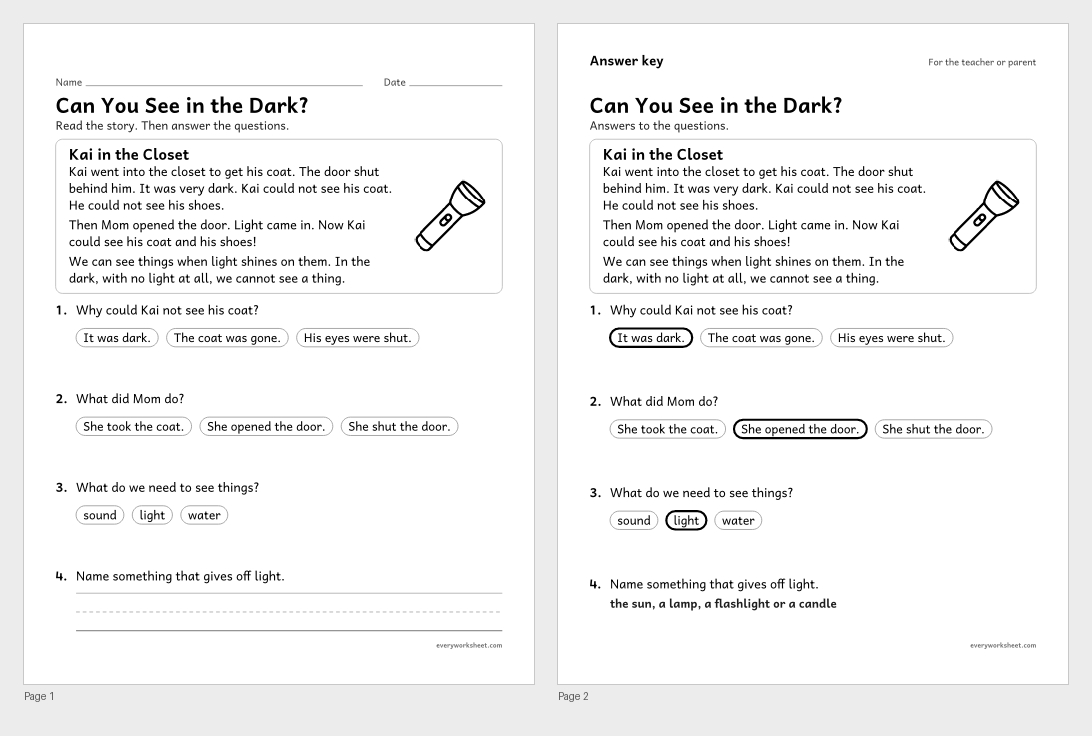
Reading that we see objects only when light shines on them
Answer key on page 2
2 pages61 KB
 View all 2 pages
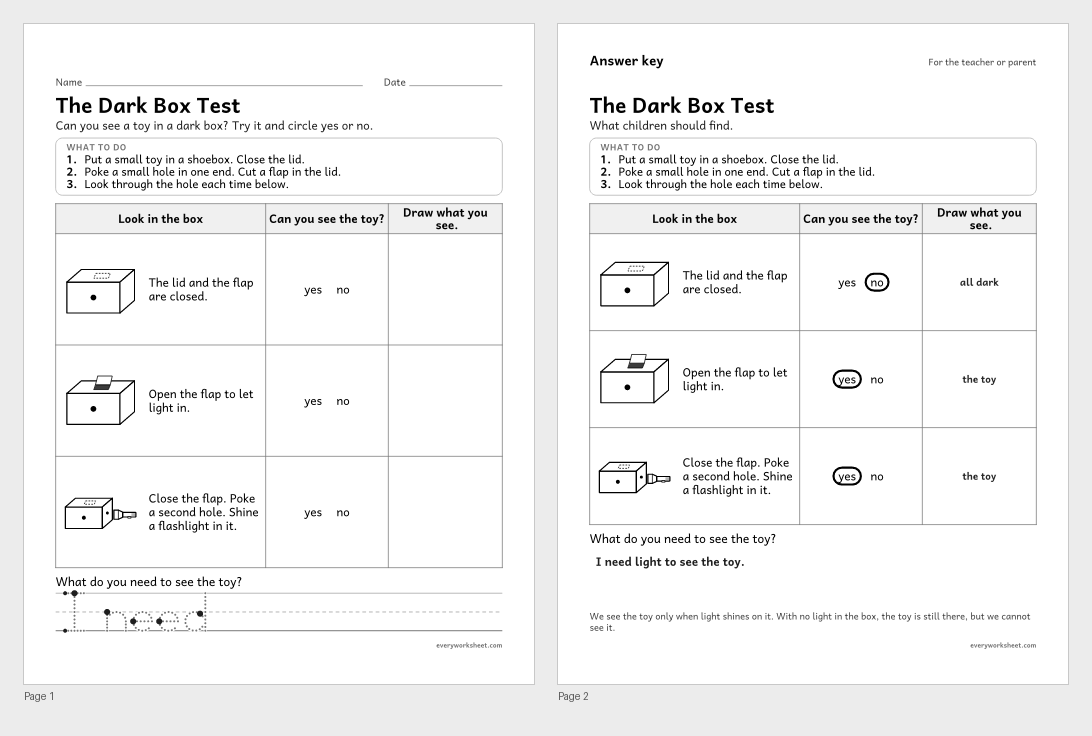
Investigating that objects can be seen only when light shines on them
Answer key on page 2
2 pages45 KB
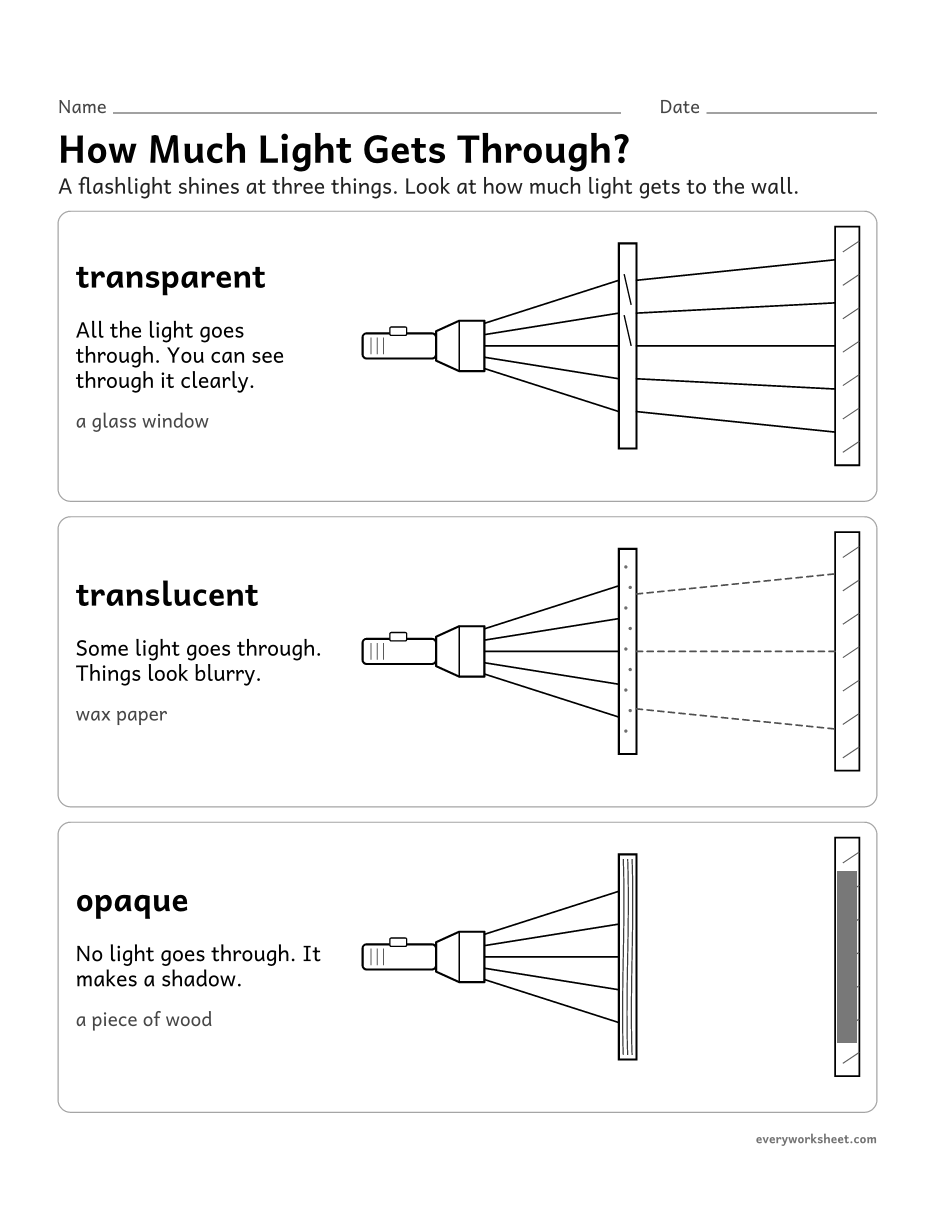 View larger
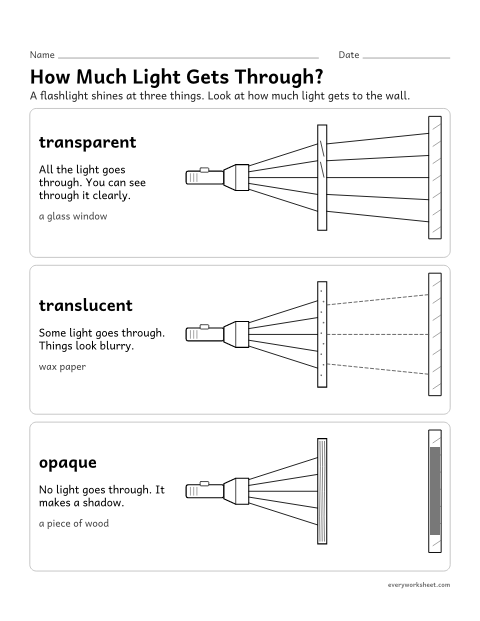
Comparing materials that let all, some or no light through
1 page29 KB
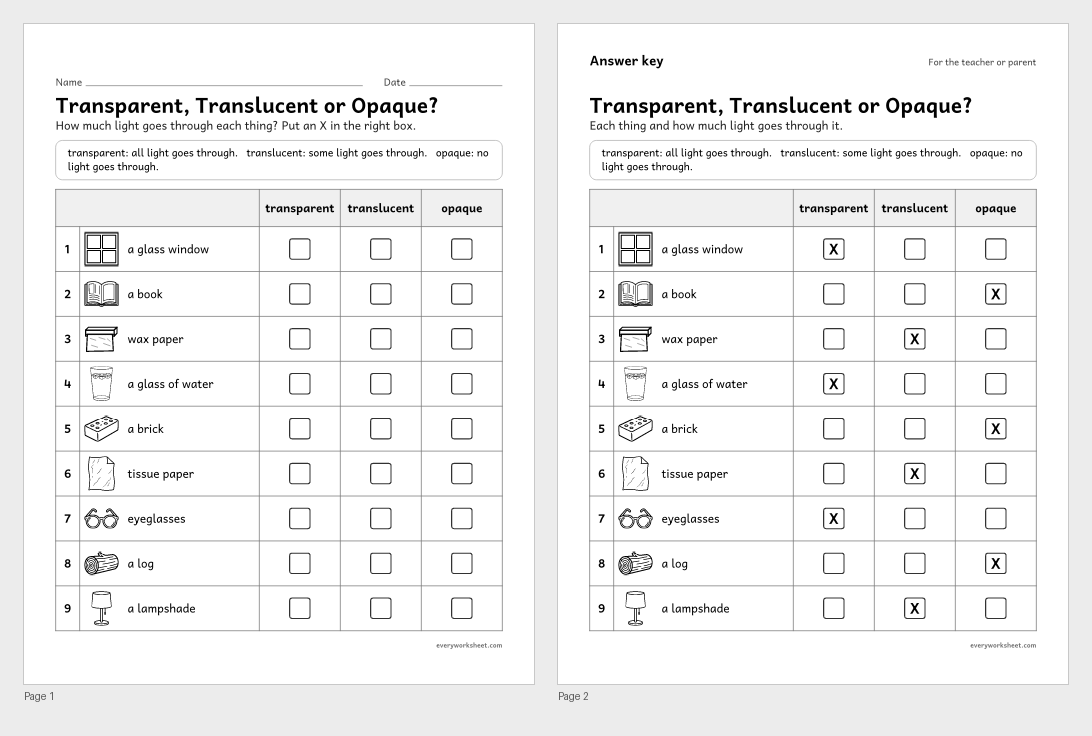 View all 2 pages
Sorting materials by how much light passes through them
Answer key on page 2
2 pages260 KB
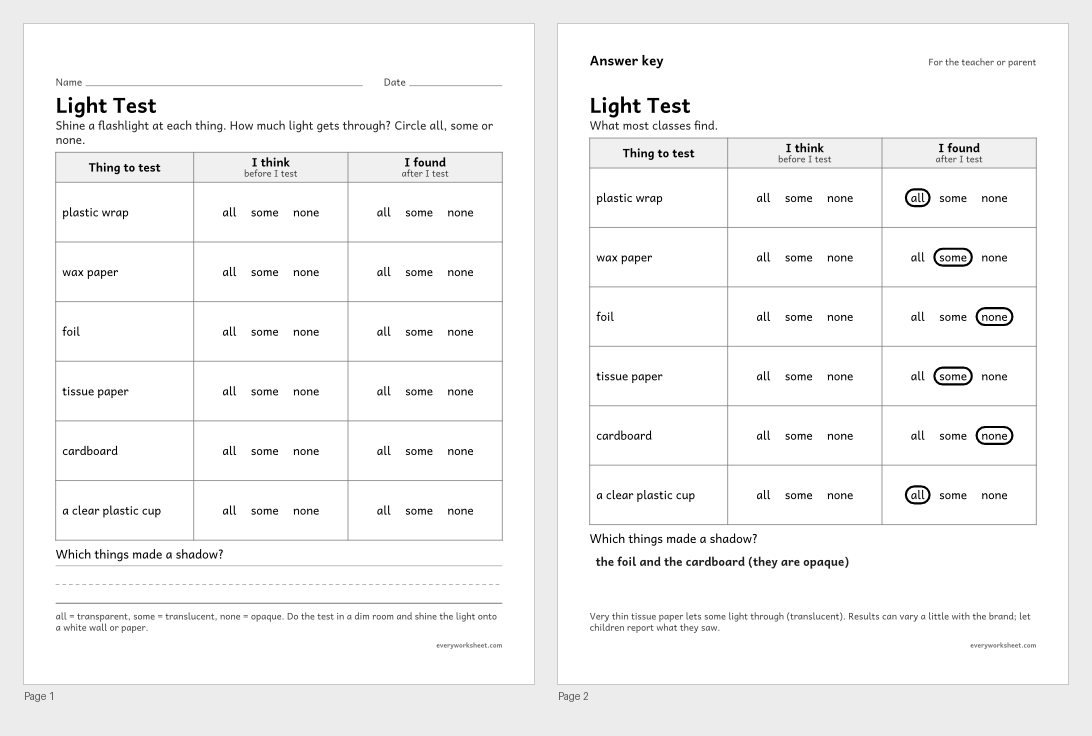 View all 2 pages
Testing materials to see how much light passes through
Answer key on page 2
2 pages40 KB
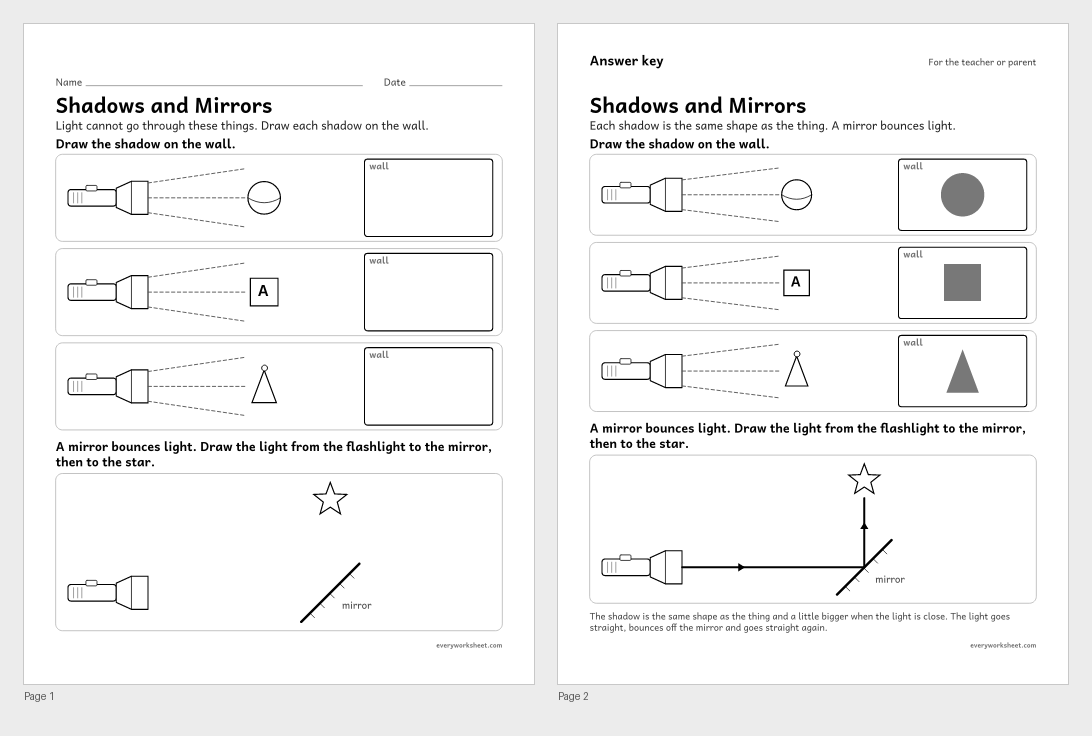 View all 2 pages
Drawing shadows made by opaque objects and the path of light off a mirror
Answer key on page 2
2 pages31 KB
 View all 2 pages
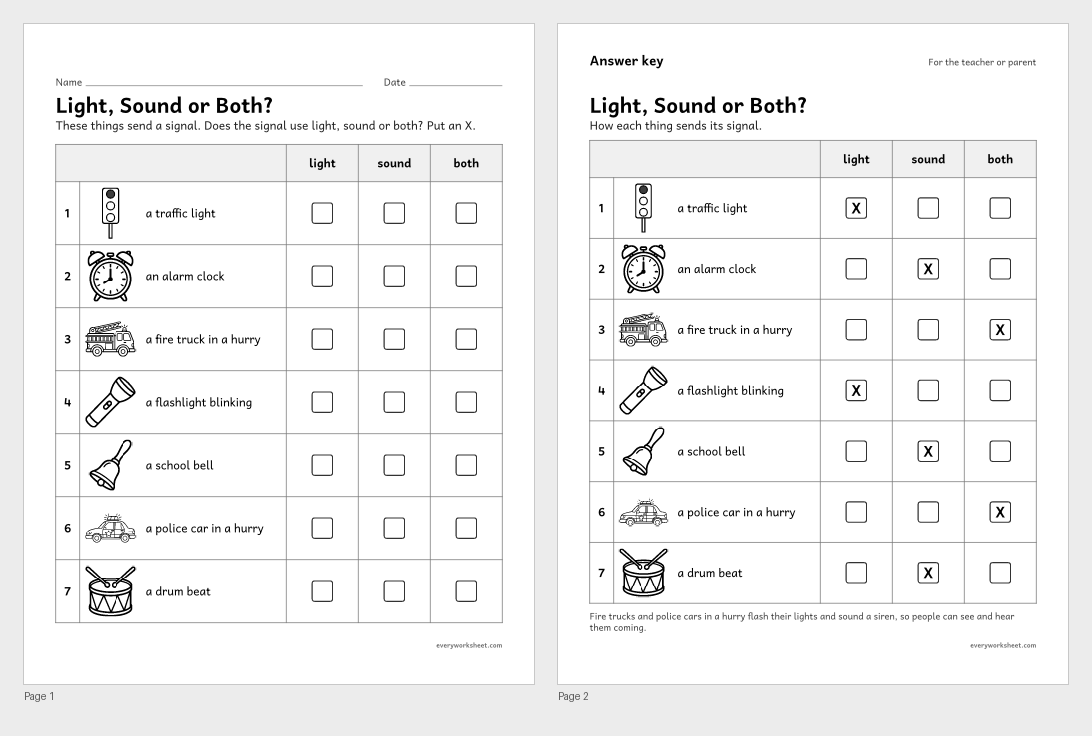
Sorting devices that send signals with light, sound or both
Answer key on page 2
2 pages293 KB
 View all 2 pages
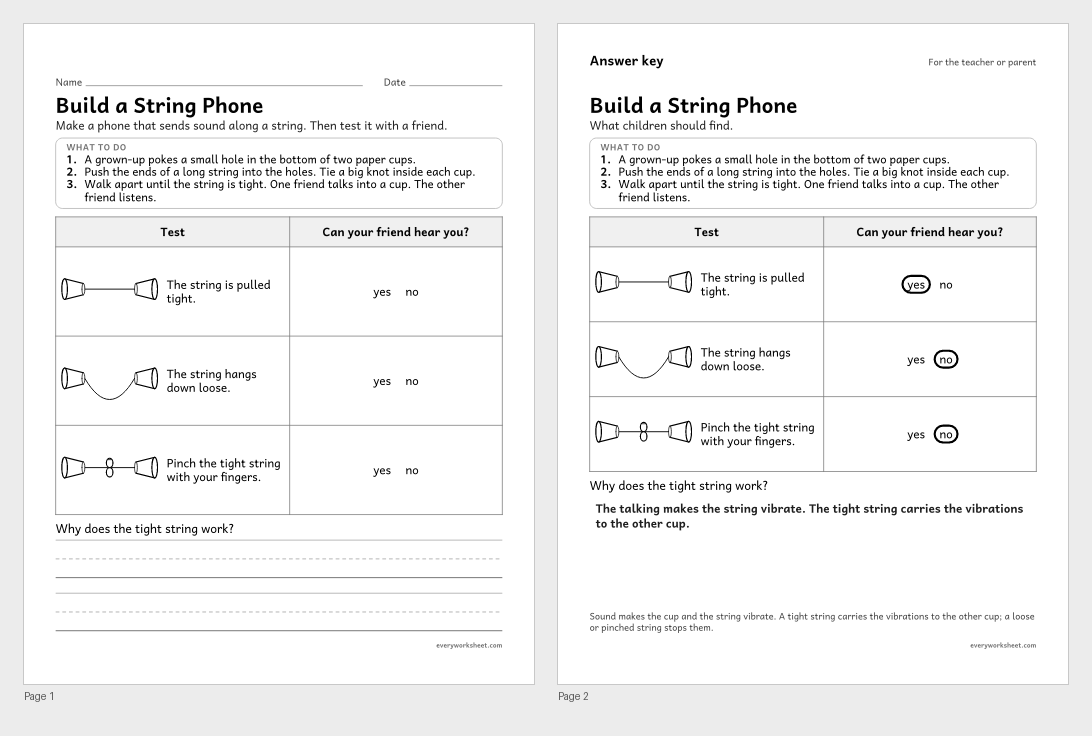
Building and testing a device that uses sound to talk over a distance
Answer key on page 2
2 pages42 KB
 View larger
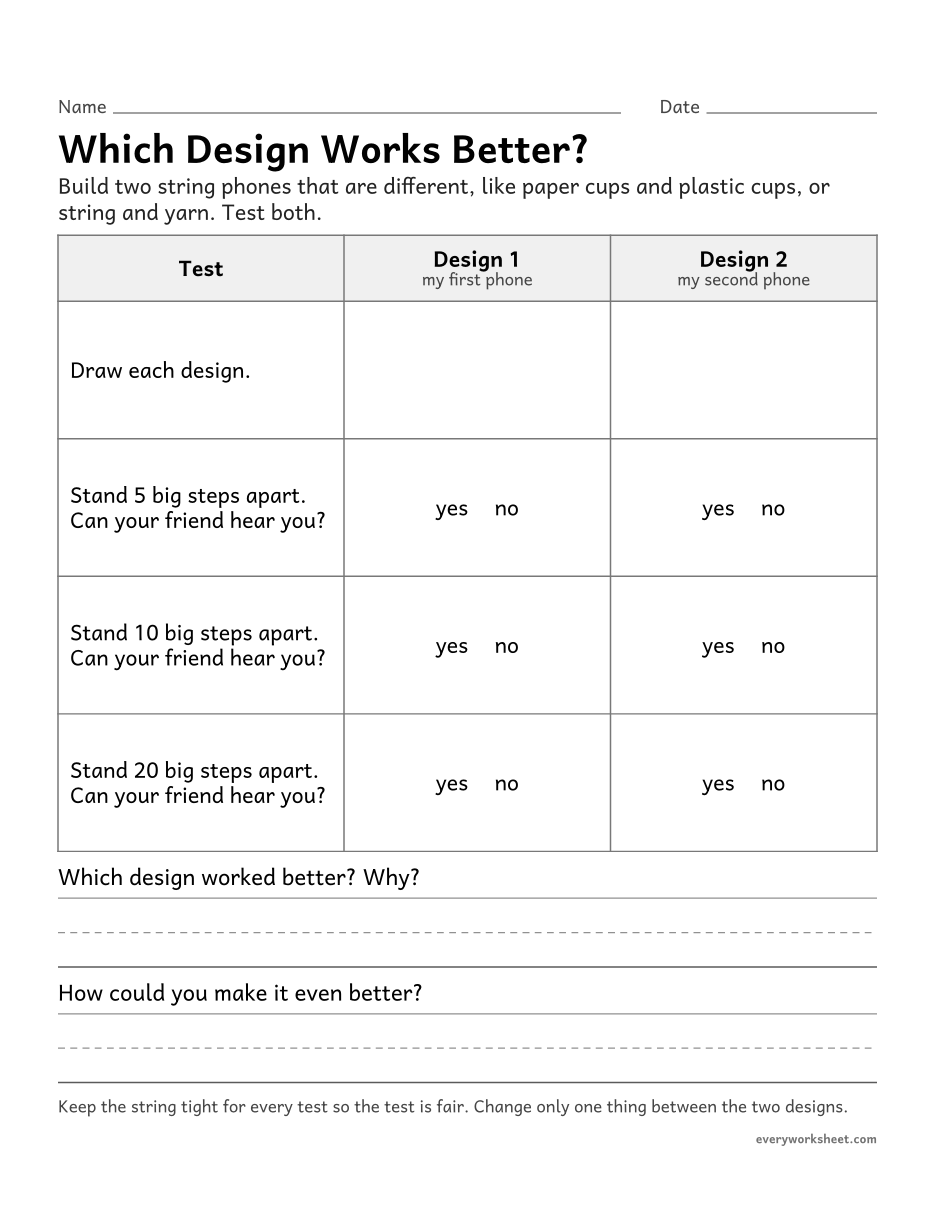
Testing two designs that solve the same problem and comparing how well each works
1 page30 KB
 View larger
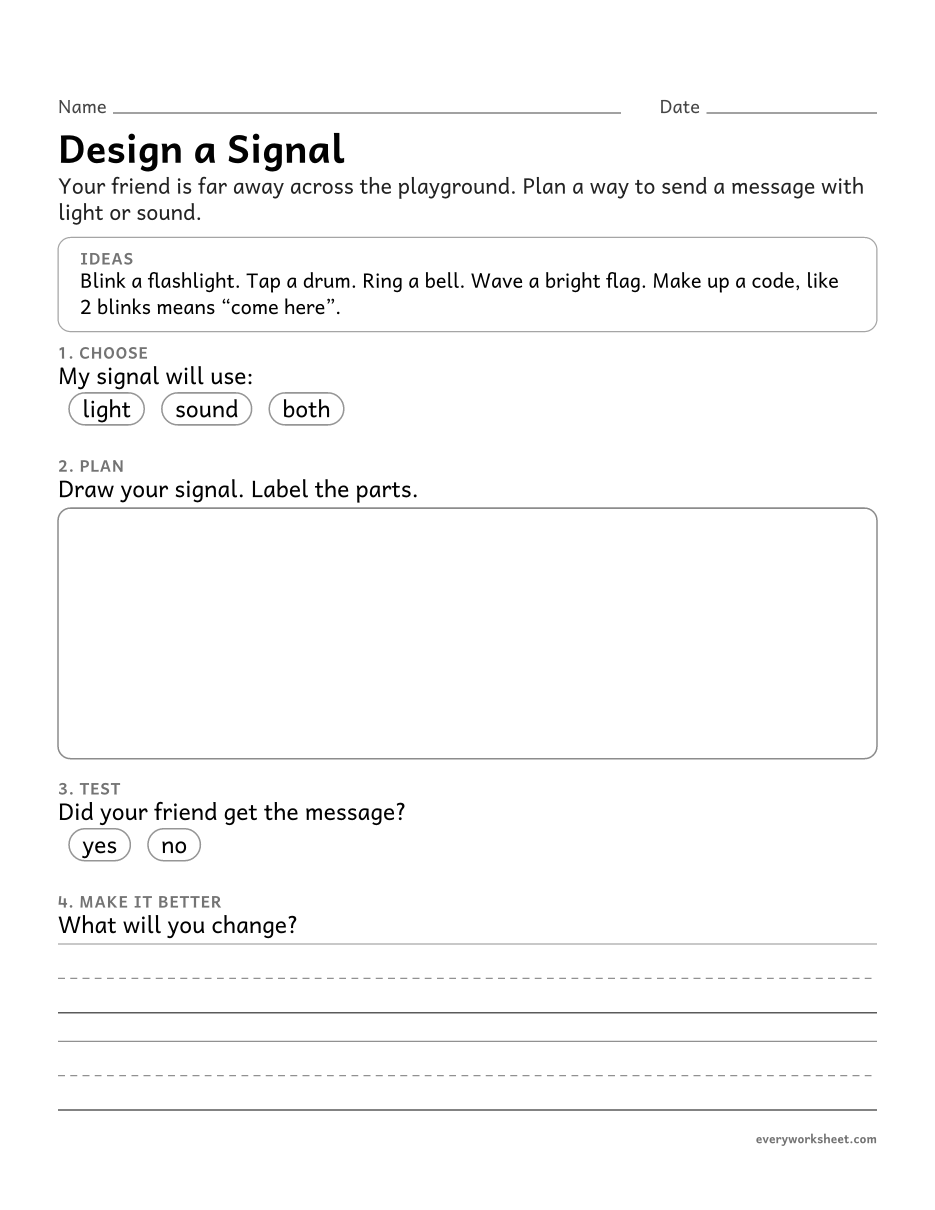
Designing and testing a device that uses light or sound to send a message
1 page29 KB
Print at 100% (actual size) for the cleanest tracing lines.
First graders learn two big ideas about waves: things that vibrate make sound, and we can only see things when light shines on them. They feel a drum shake, watch rice jump on a pan, sit in a dark closet and notice they cannot see their coat until someone opens the door.
These light and sound worksheets follow those ideas with hands-on tests and simple record sheets. Children sort light sources, test which materials let all, some or no light through, draw shadows and the path of light off a mirror, and use what they learn to design a signal that can send a message across the playground.
Each page has short directions a 1st grader can read, plus black and white pictures that copy well. Pages print on US Letter or A4, and every page with right answers has an answer key on page 2.
NGSS 1-PS4-1Plan and conduct investigations to provide evidence that vibrating materials can make sound and that sound can make materials vibrate.NGSS 1-PS4-2Make observations to construct an evidence-based account that objects in darkness can be seen only when illuminated.NGSS 1-PS4-3Plan and conduct investigations to determine the effect of placing objects made with different materials in the path of a beam of light.NGSS 1-PS4-4Use tools and materials to design and build a device that uses light or sound to solve the problem of communicating over a distance.NGSS K-2-ETS1-1Ask questions, make observations, and gather information about a situation people want to change to define a simple problem that can be solved through the development of a new or improved object or tool.NGSS K-2-ETS1-2Develop a simple sketch, drawing, or physical model to illustrate how the shape of an object helps it function as needed to solve a given problem.NGSS K-2-ETS1-3Analyze data from tests of two objects designed to solve the same problem to compare the strengths and weaknesses of how each performs.CCSS.ELA-LITERACY.RL.1.1Ask and answer questions about key details in a text.CCSS.ELA-LITERACY.W.1.8With guidance and support from adults, recall information from experiences or gather information from provided sources to answer a question.Transparent things, like a glass window, let all the light through, so you can see through them clearly. Translucent things, like wax paper, let some light through, so things look blurry. Opaque things, like wood or a book, let no light through and make a shadow.
No. We see an object when light shines on it and bounces to our eyes. In a closet or box with no light at all, the object is still there, but we cannot see it. The dark box test lets children find this out themselves.
A drum or a pan, rice, a rubber band and a box, a bell, a flashlight, a shoebox, plastic wrap, wax paper, foil, tissue paper, cardboard, paper cups and string. Most classrooms and kitchens already have them.
Yes. Every page with right answers has an answer key on page 2. Design and drawing pages have no single right answer, so they have no key.