 View larger
Long Vowel Worksheets
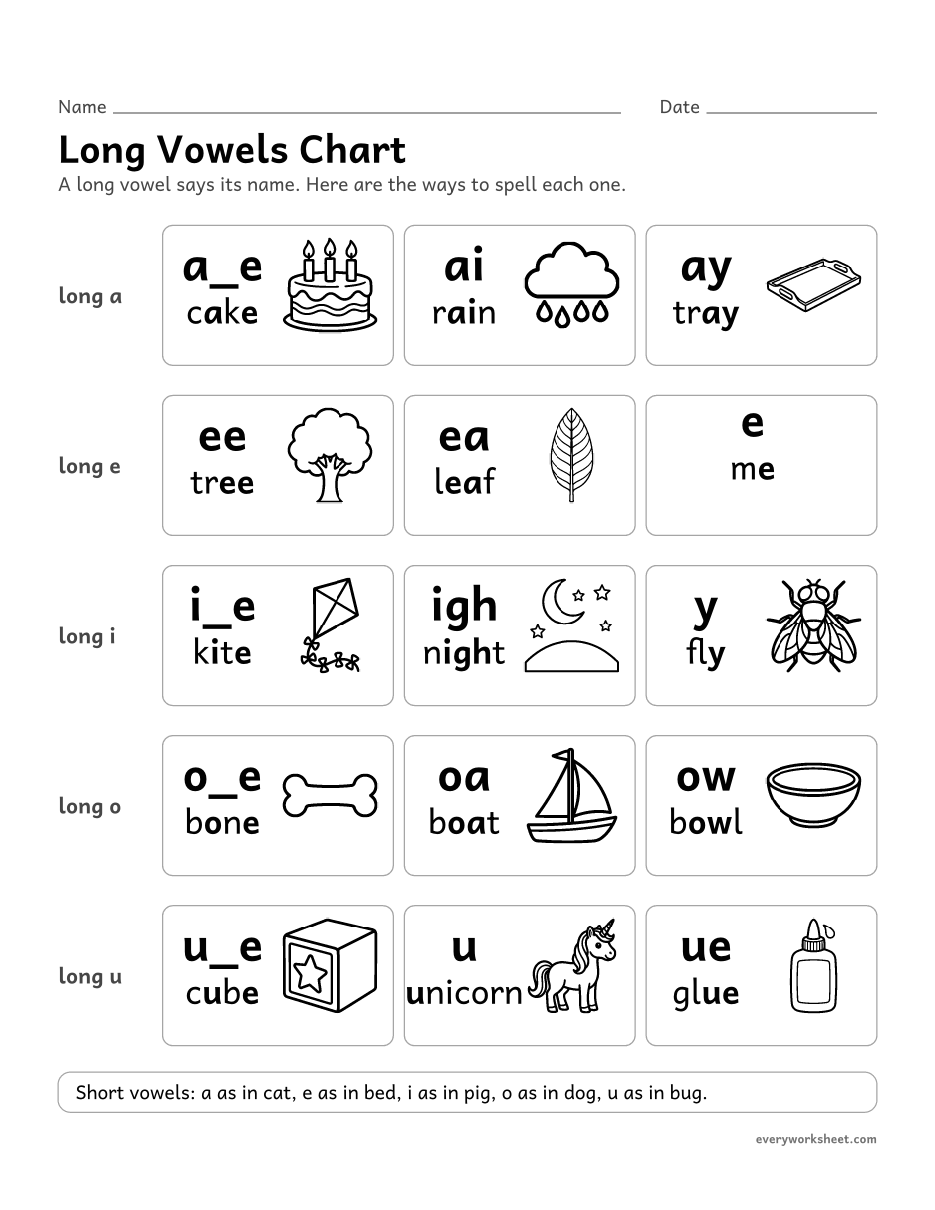
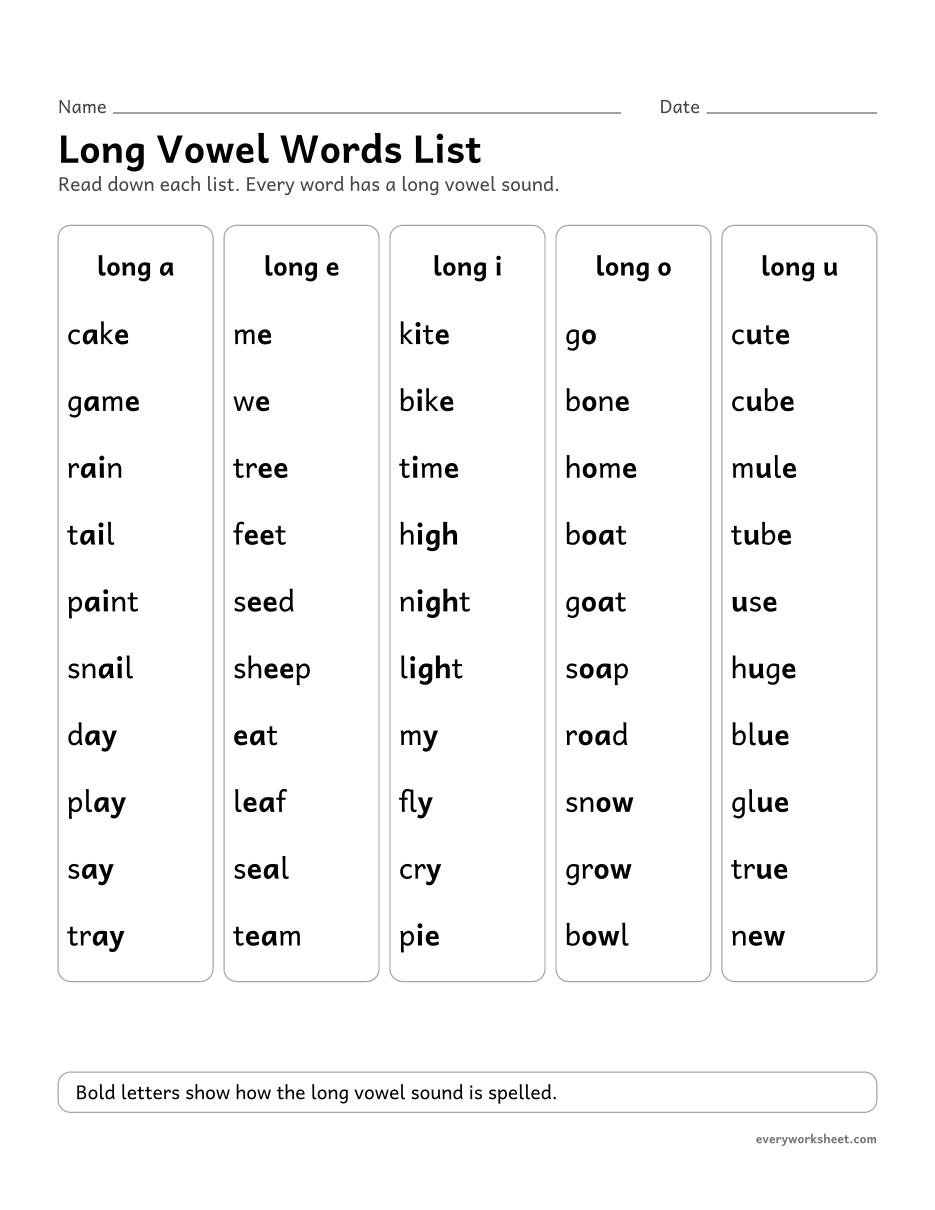
A long vowels chart and word list, long or short sorts, picture hunts for long a, e, i and o, a which-spelling page, matching and sentences.
Download the long vowels worksheets
Long vowels chart and word list
 View larger
 View larger
Hear long and short vowels
 View all 2 pages
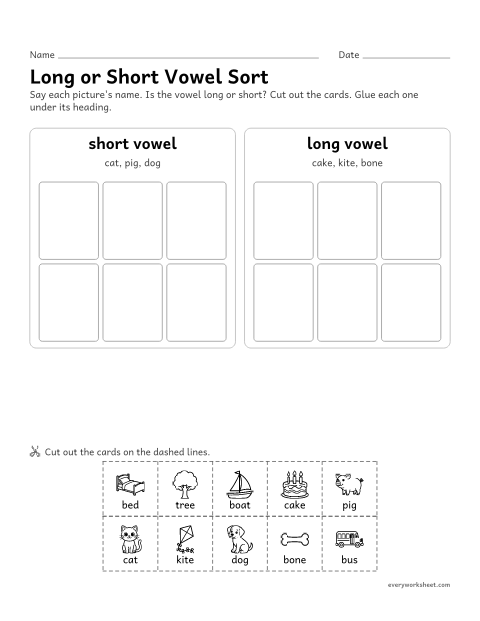
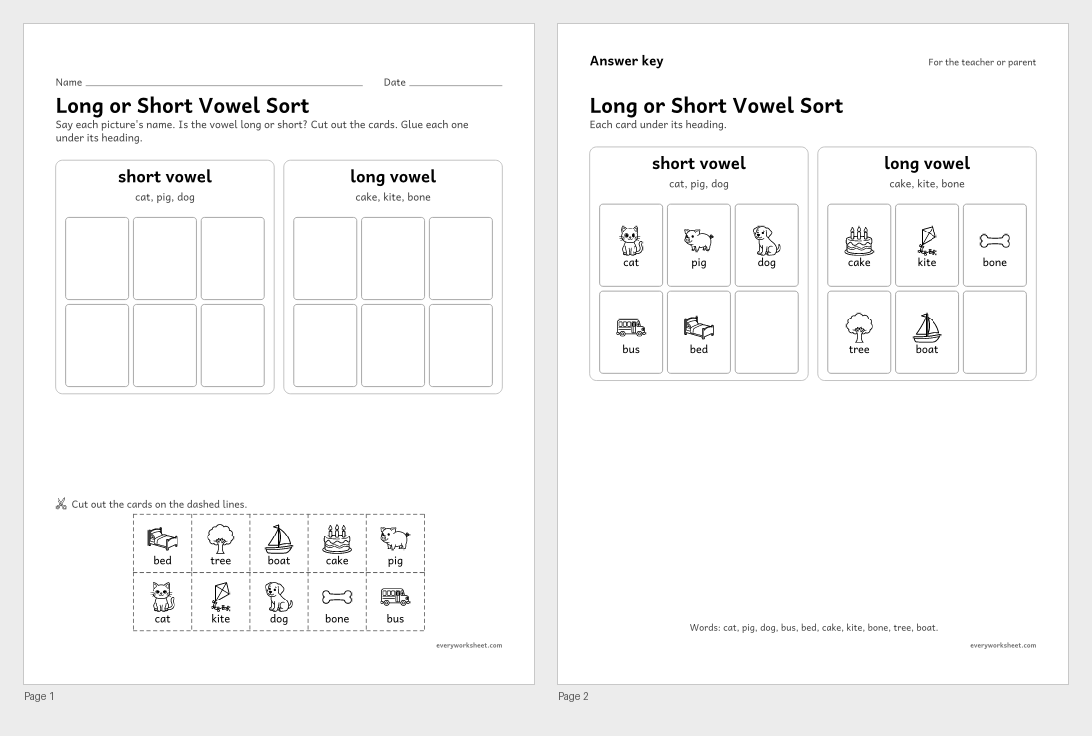
Long or short vowel Sort: cut and paste
Sorting pictures by long or short vowel sound
Answer key on page 2
2 pages394 KB
 View all 2 pages
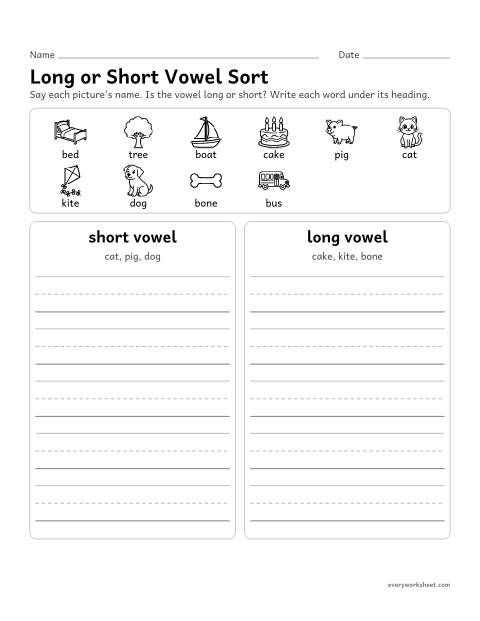
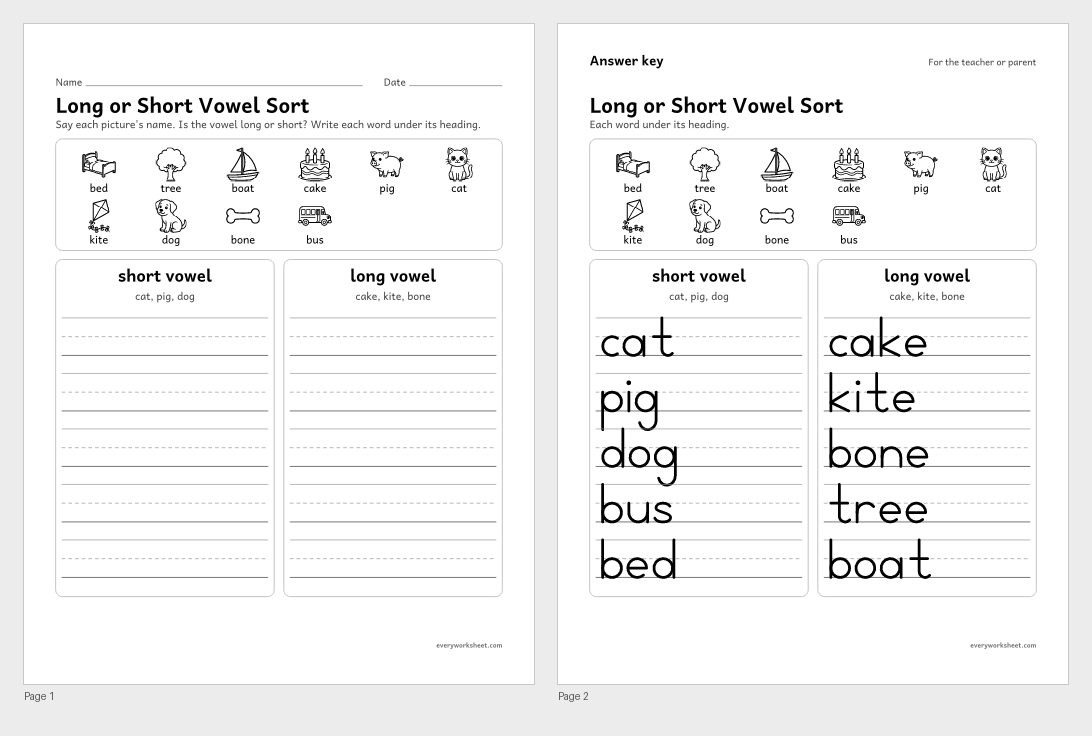
Long or short vowel sort (No Cutting)
Sorting words by long or short vowel sound
Answer key on page 2
2 pages365 KB
 View all 2 pages
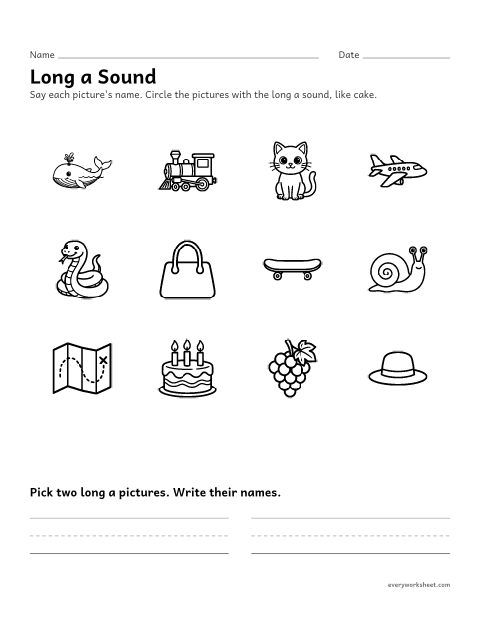
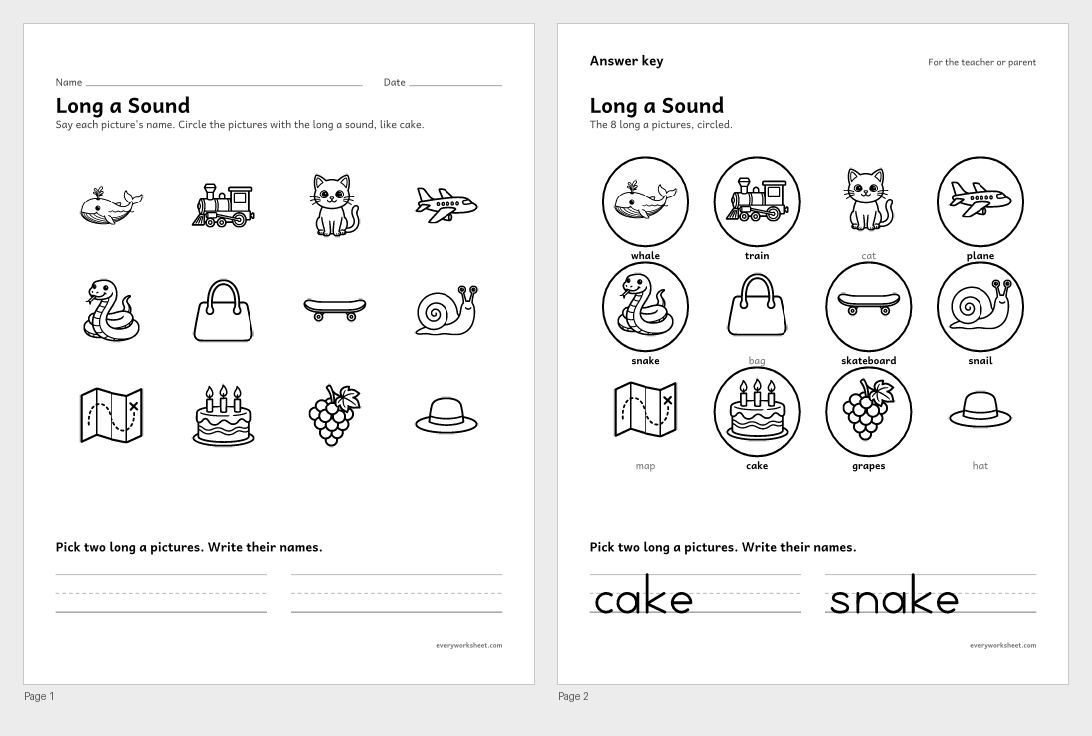
Long a Sound: circle the pictures
Hearing the long a sound in picture names
Answer key on page 2
2 pages430 KB
 View all 2 pages
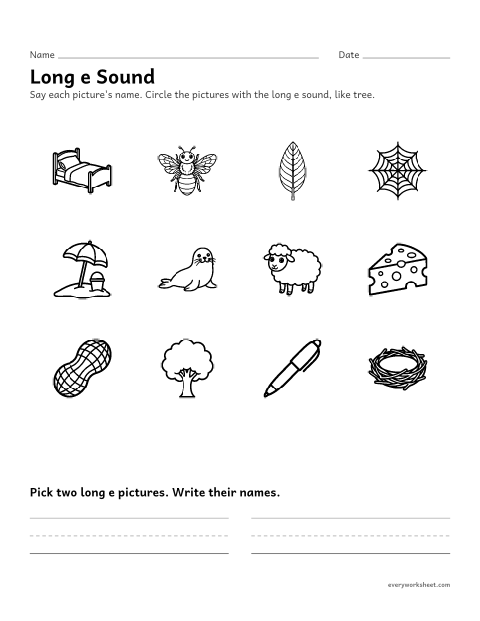
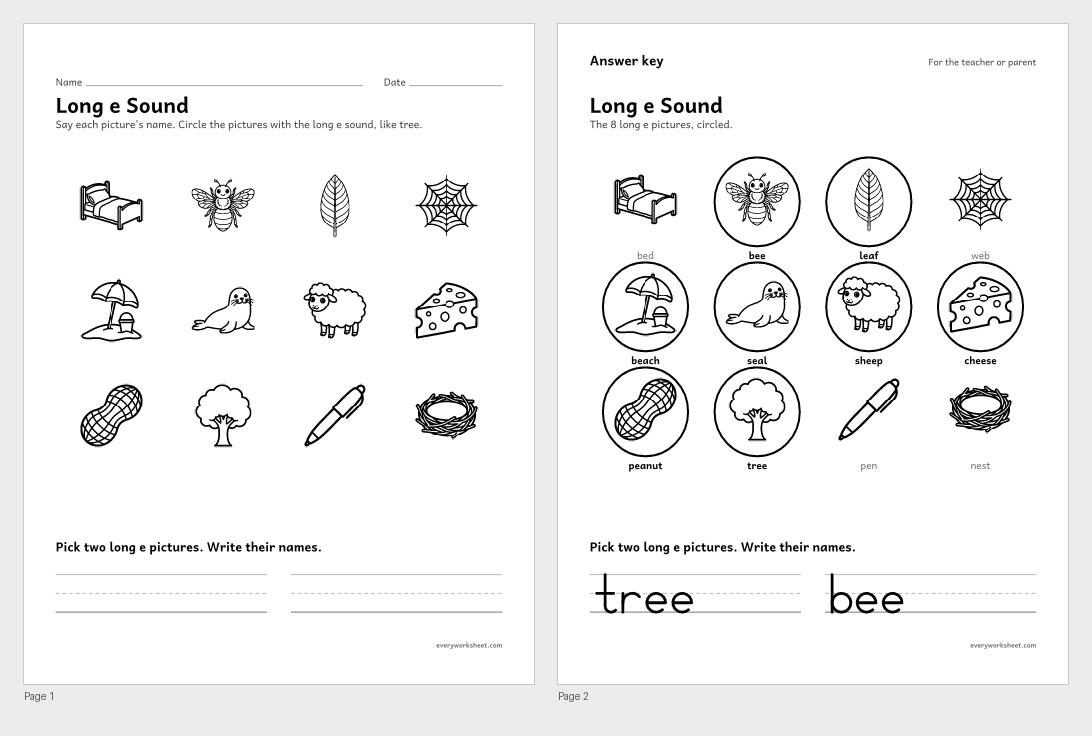
Long e Sound: circle the pictures
Hearing the long e sound in picture names
Answer key on page 2
2 pages447 KB
 View all 2 pages
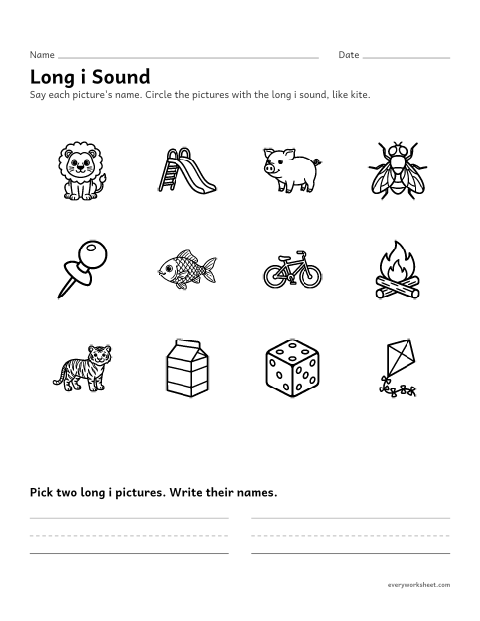
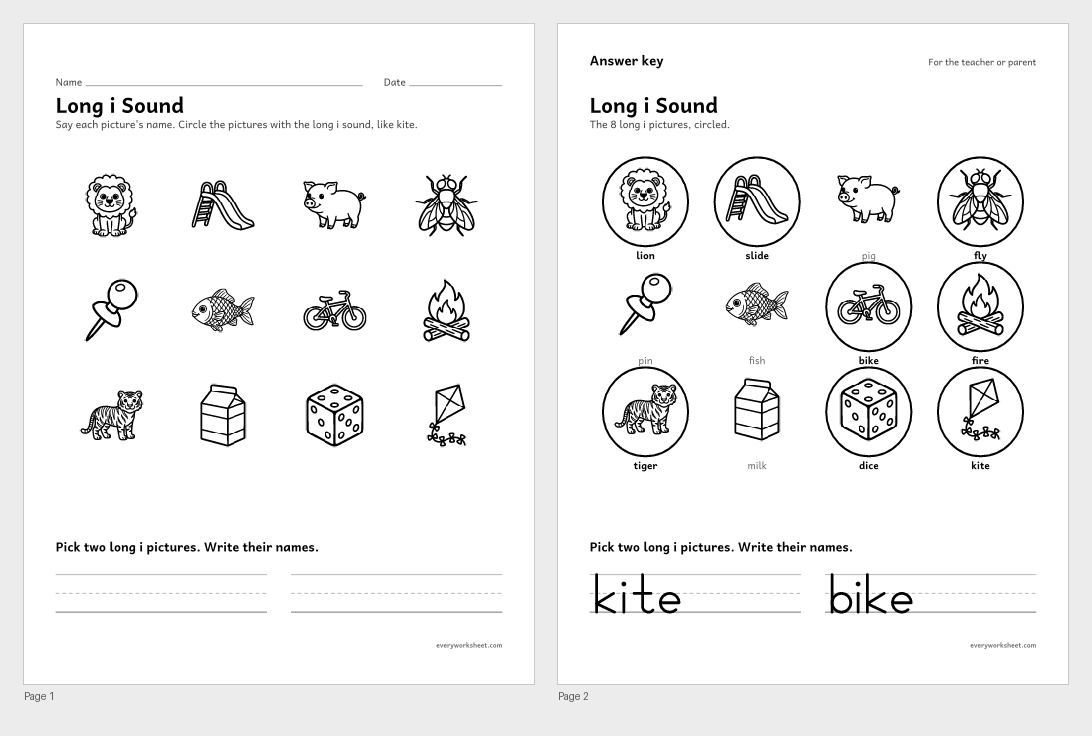
Long i Sound: circle the pictures
Hearing the long i sound in picture names
Answer key on page 2
2 pages603 KB
 View all 2 pages
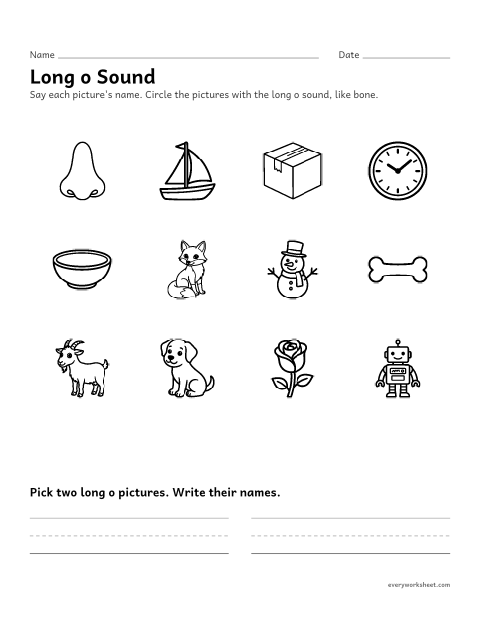
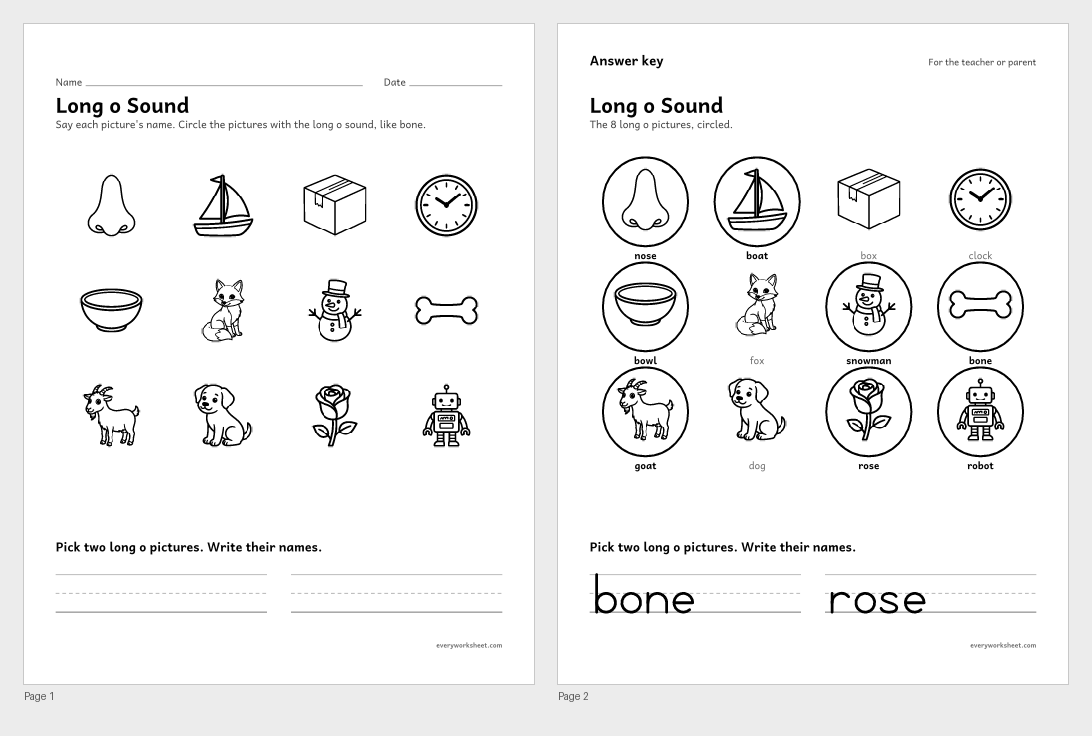
Long o Sound: circle the pictures
Hearing the long o sound in picture names
Answer key on page 2
2 pages413 KB
Read and spell long vowel words
 View all 2 pages
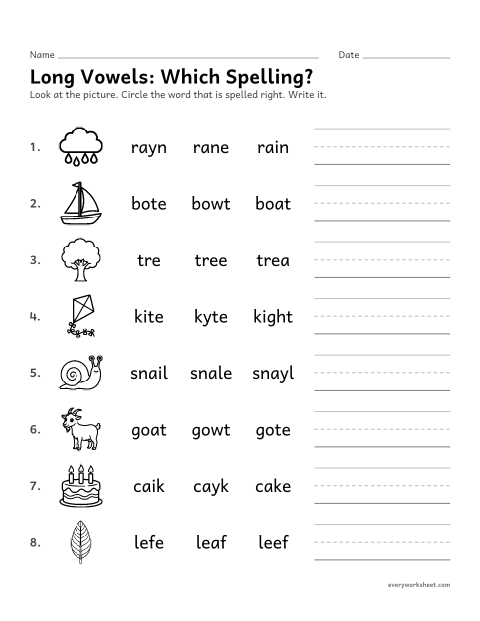
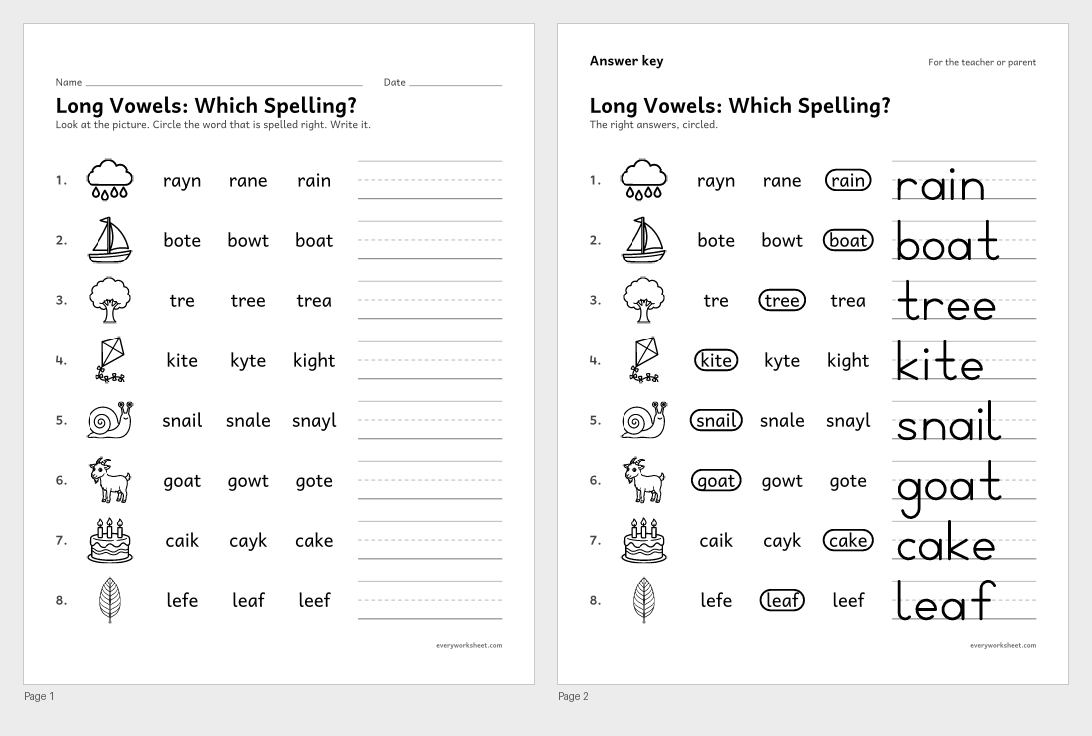
Long Vowels: which Spelling?
Choosing the right spelling of a long vowel word
Answer key on page 2
2 pages270 KB
 View all 2 pages
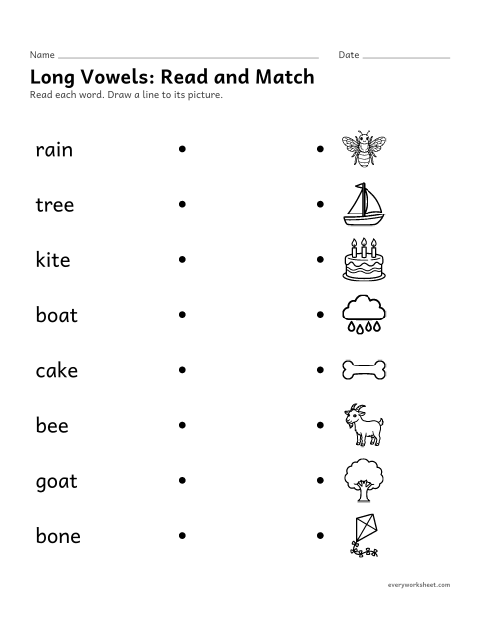
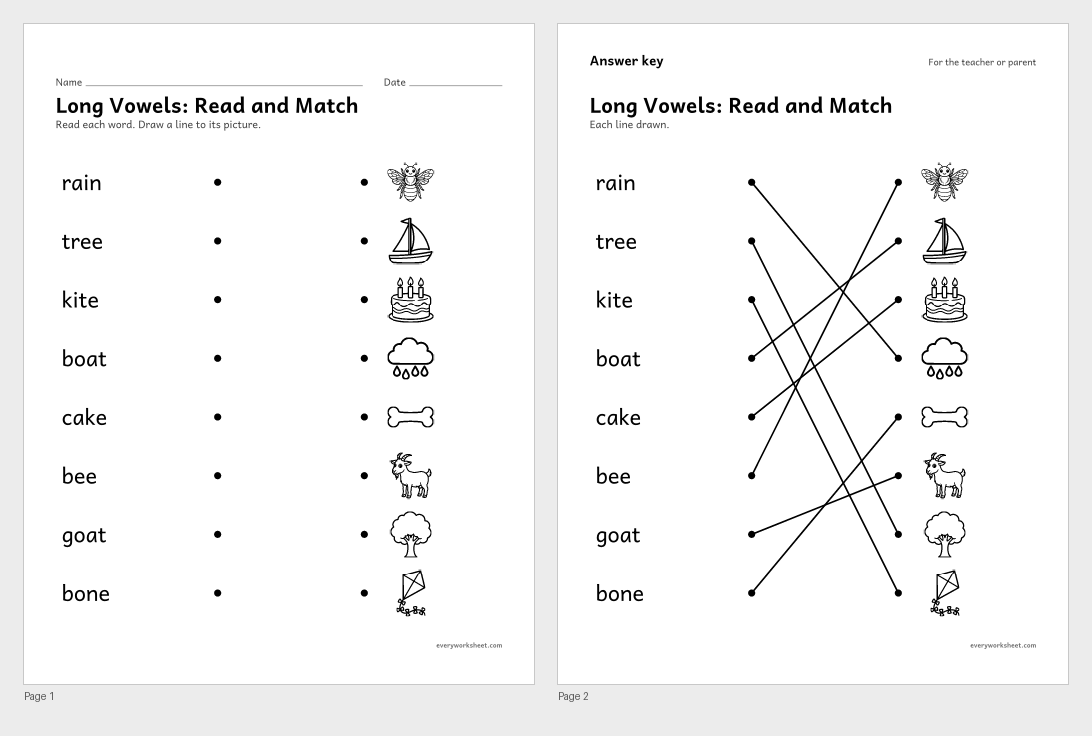
Long Vowels: read and match
Reading long vowel words and matching them to pictures
Answer key on page 2
2 pages259 KB
 View all 2 pages
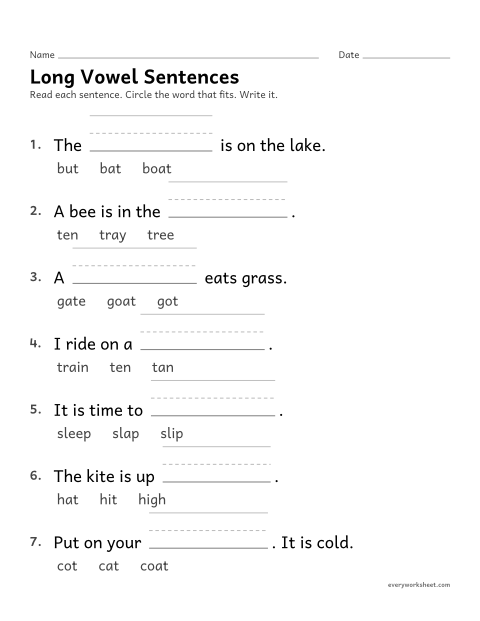
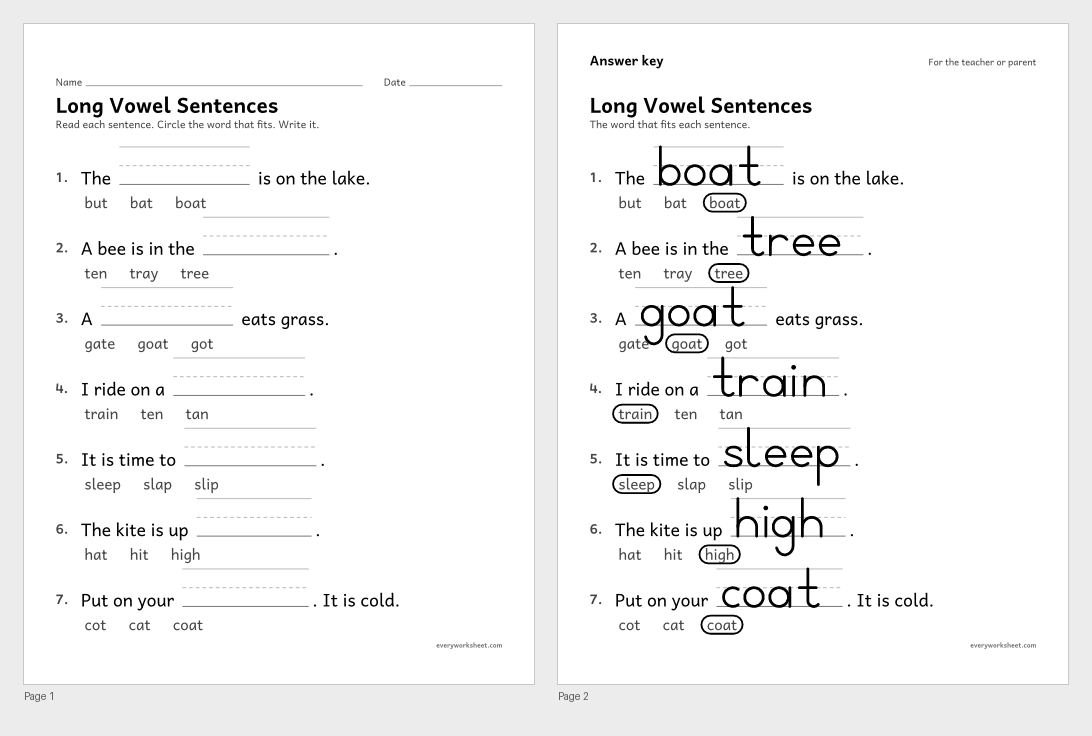
Long vowel sentences
Choosing the long vowel word that fits a sentence
Answer key on page 2
2 pages40 KB
Print at 100% (actual size) for the cleanest tracing lines.
About these long vowels worksheets
A long vowel says its own name: the a in cake, the e in tree, the i in kite, the o in boat and the u in cube. Short vowels sound different: cat, bed, pig, dog, bug. Hearing the difference comes first, and then children learn the different ways each long vowel is spelled, such as a_e, ai and ay for long a.
These long vowel worksheets start with a chart that shows the common spellings for every long vowel, and a word list for reading practice. Children then sort pictures by long or short vowel (cut and paste or no-cut), hunt for the long a, long e, long i and long o pictures, choose the right spelling of a long vowel word, match words to pictures and read long vowel words in sentences.
For more practice with one spelling at a time, see the silent e worksheets and the vowel teams worksheets. All pages print in black and white on US Letter or A4, with answer keys on page 2.
Standards
CCSS.ELA-LITERACY.RF.1.2.ADistinguish long from short vowel sounds in spoken single-syllable words.CCSS.ELA-LITERACY.RF.1.3.CKnow final -e and common vowel team conventions for representing long vowel sounds.CCSS.ELA-LITERACY.RF.1.3.BDecode regularly spelled one-syllable words.CCSS.ELA-LITERACY.L.1.2.DUse conventional spelling for words with common spelling patterns and for frequently occurring irregular words.CCSS.ELA-LITERACY.RF.1.4.CUse context to confirm or self-correct word recognition and understanding, rereading as necessary.
How to use them
- Start with listening. Say pairs like cap and cape, or pin and pine, and have your child tell you which has the long vowel.
- Use the long or short sort and the picture hunts. These are about the sound, so say every picture's name together first.
- Show the chart and point out that one sound can have several spellings. Then use the which-spelling page and the sentences.
Teaching tips
- Teach children to listen for the letter name: if the vowel says its name, it is long.
- Mark long vowels with a straight line (a macron) and short vowels with a little smile (a breve) when you write words on the board. It helps children see the difference.
- When a child picks the wrong spelling, like rane for rain, praise the long a they heard, then show the spelling the word uses. Both spellings are logical; only one is right for that word.
- A y at the end of a short word can say long i (my, fly). An e at the end of a short word can say long e (me, we, he).
Questions teachers and parents ask
What is a long vowel?
A long vowel is a vowel that says its own name: a as in cake, e as in tree, i as in kite, o as in boat and u as in cube.
How are long vowels spelled?
The most common spellings are silent e (cake, kite, bone, cube), vowel teams (rain, day, tree, leaf, boat, snow, night), and a vowel at the end of a short word (me, go, hi).
What is the difference between long and short vowels?
Short vowels are the sounds in cat, bed, pig, dog and bug. Long vowels say the letter's name. The same letter can make both: hop has a short o and hope has a long o.
When do children learn long vowels?
Children learn to hear long and short vowels in kindergarten and learn to read and spell the common long vowel patterns in 1st grade.
Are there answer keys?
Yes. Every page with right answers has an answer key on page 2.