 View larger
Main idea and details
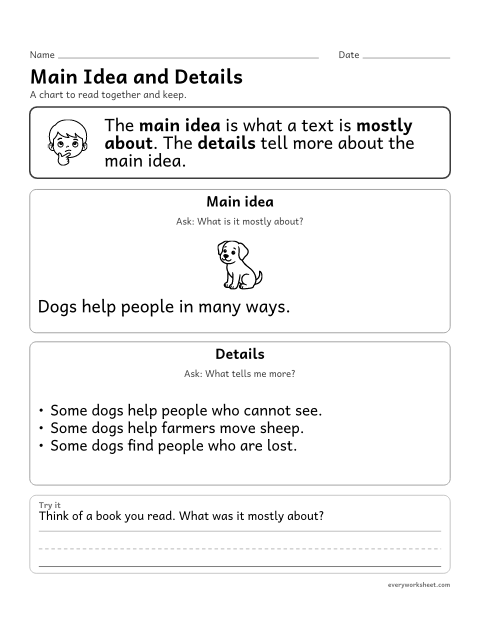
Knowing what the main idea and details of a text are
1 page65 KB
Find the main idea of pictures and paragraphs, sort details, write titles and fill in main idea and details organizers, with answer keys.
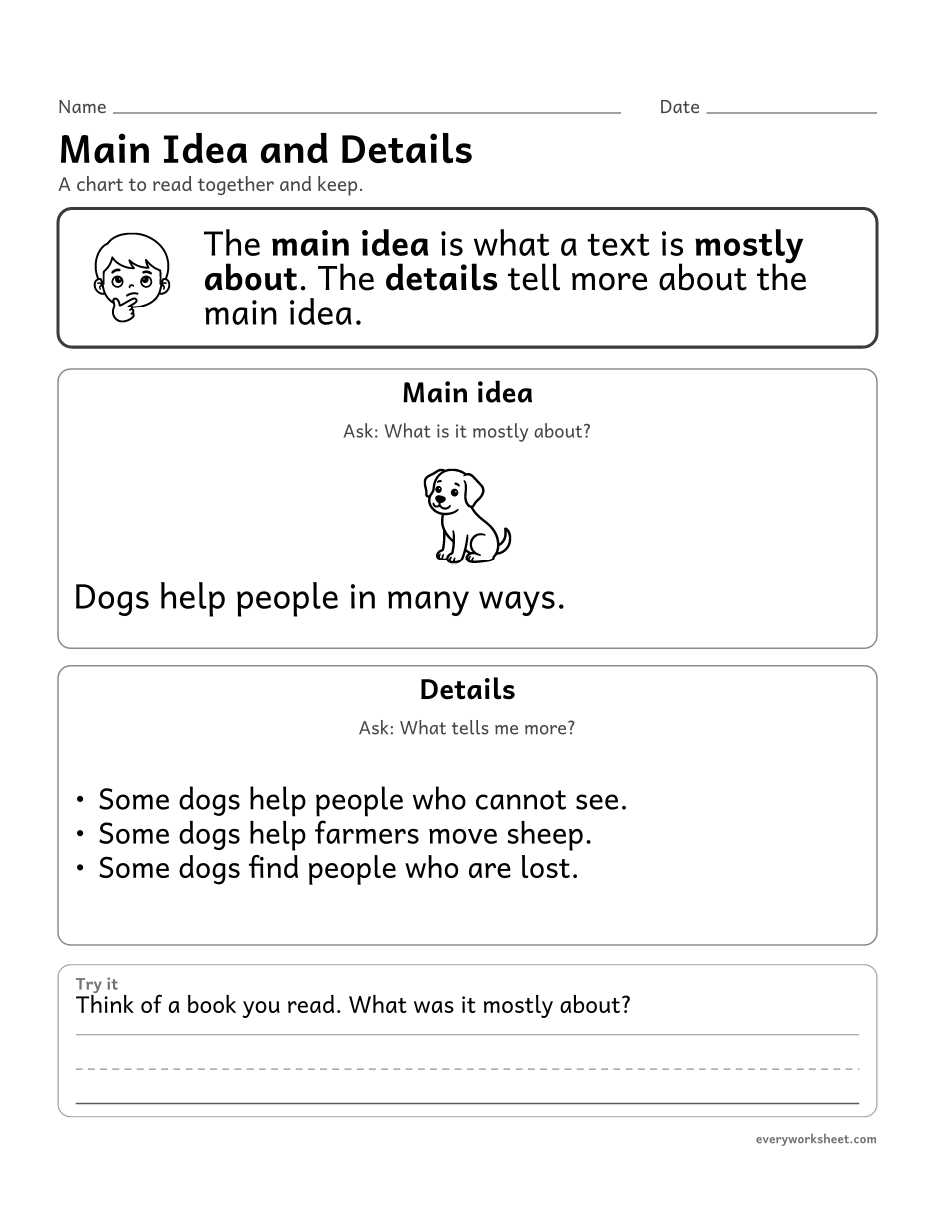
View largerKnowing what the main idea and details of a text are
1 page65 KB
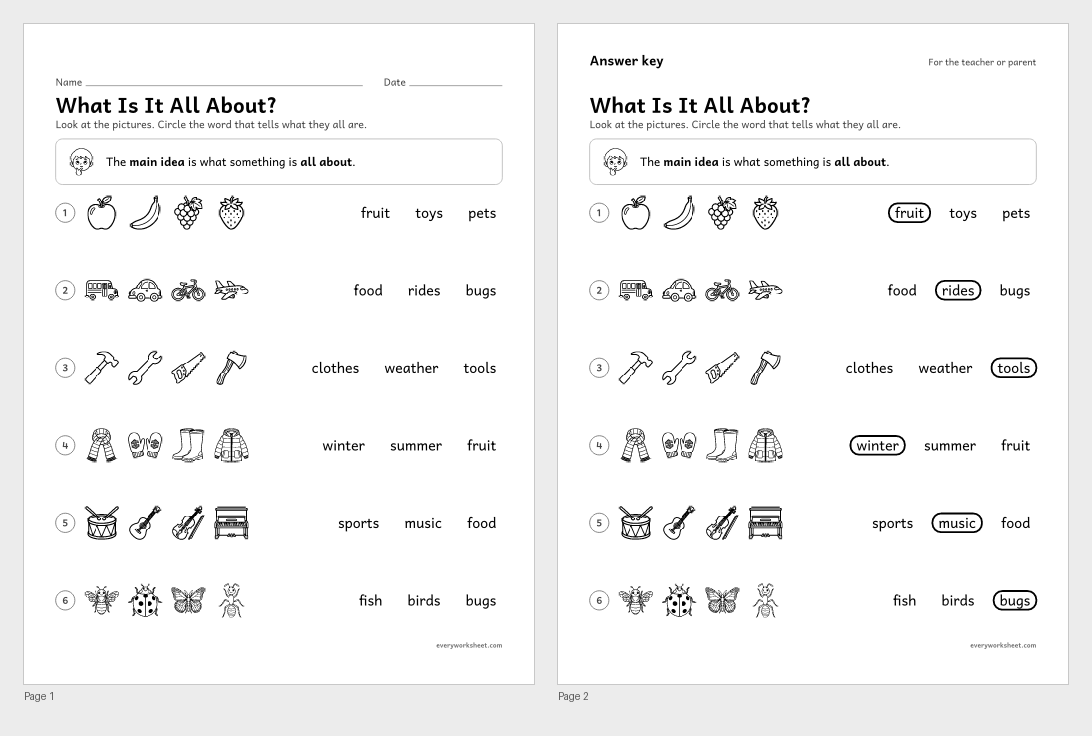 View all 2 pages
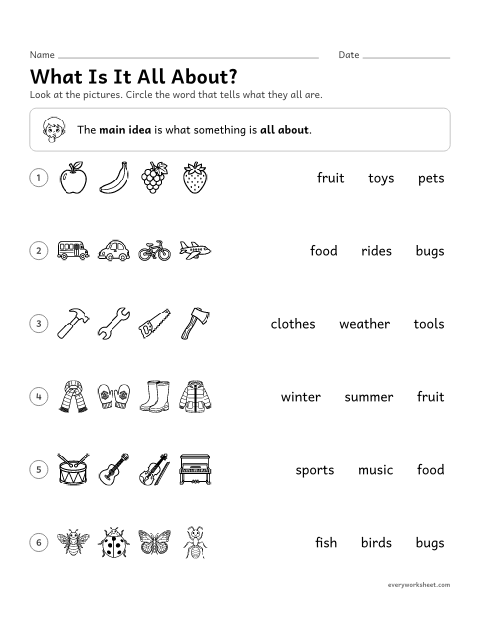
Naming the one topic a group of pictures shares
Answer key on page 2
2 pages863 KB
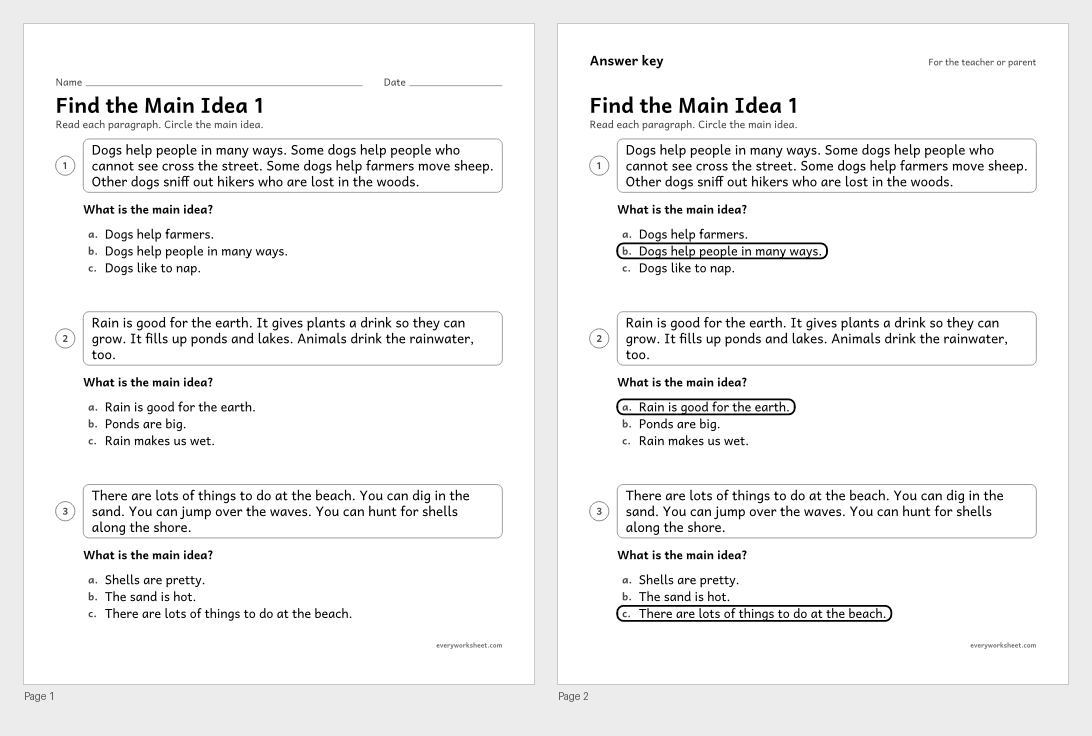 View all 2 pages
Choosing the main idea of a short paragraph
Answer key on page 2
2 pages44 KB
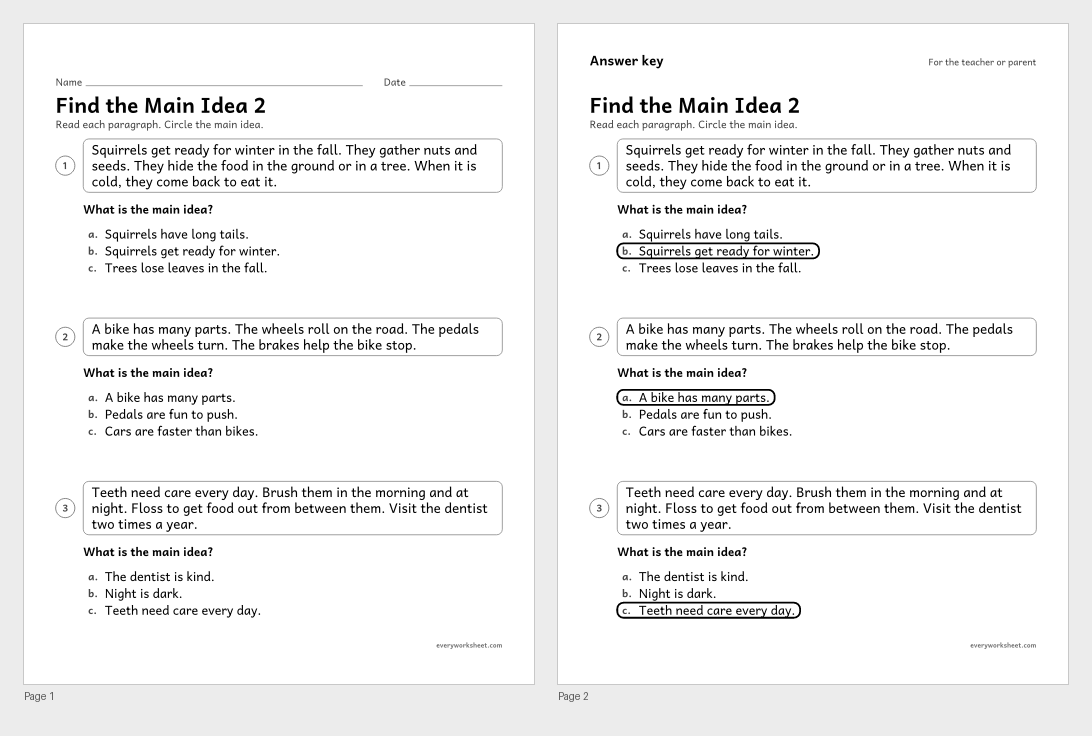 View all 2 pages
Choosing the main idea of a short paragraph
Answer key on page 2
2 pages44 KB
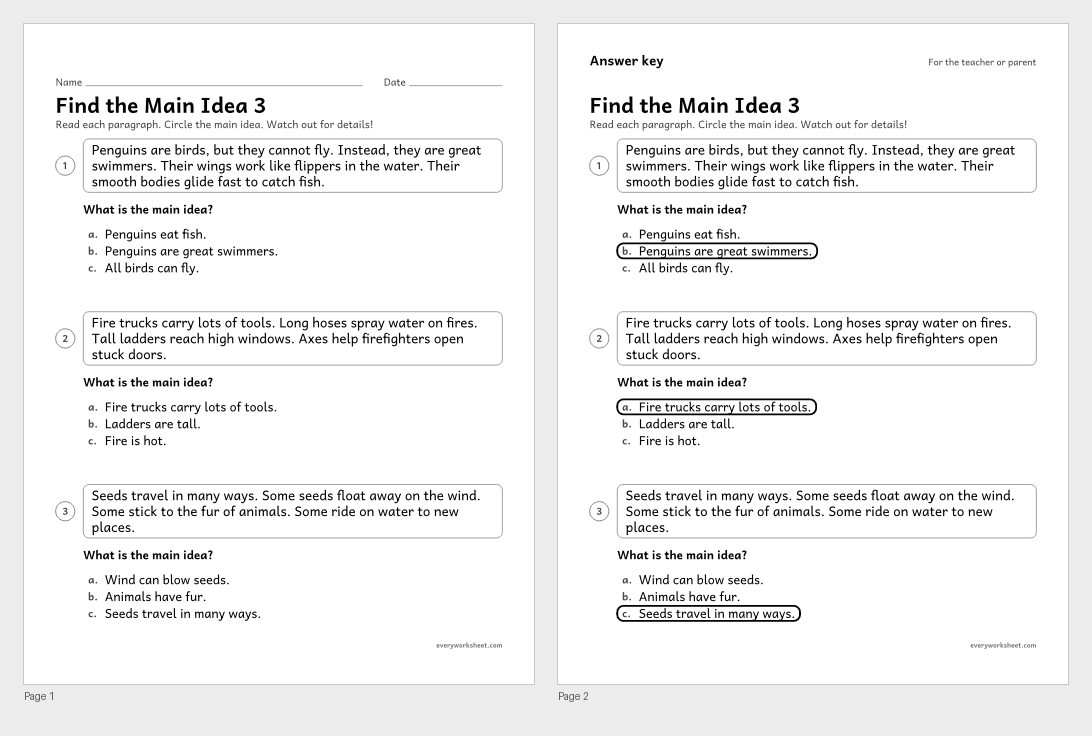 View all 2 pages
Telling the main idea from a detail
Answer key on page 2
2 pages44 KB
 View all 2 pages
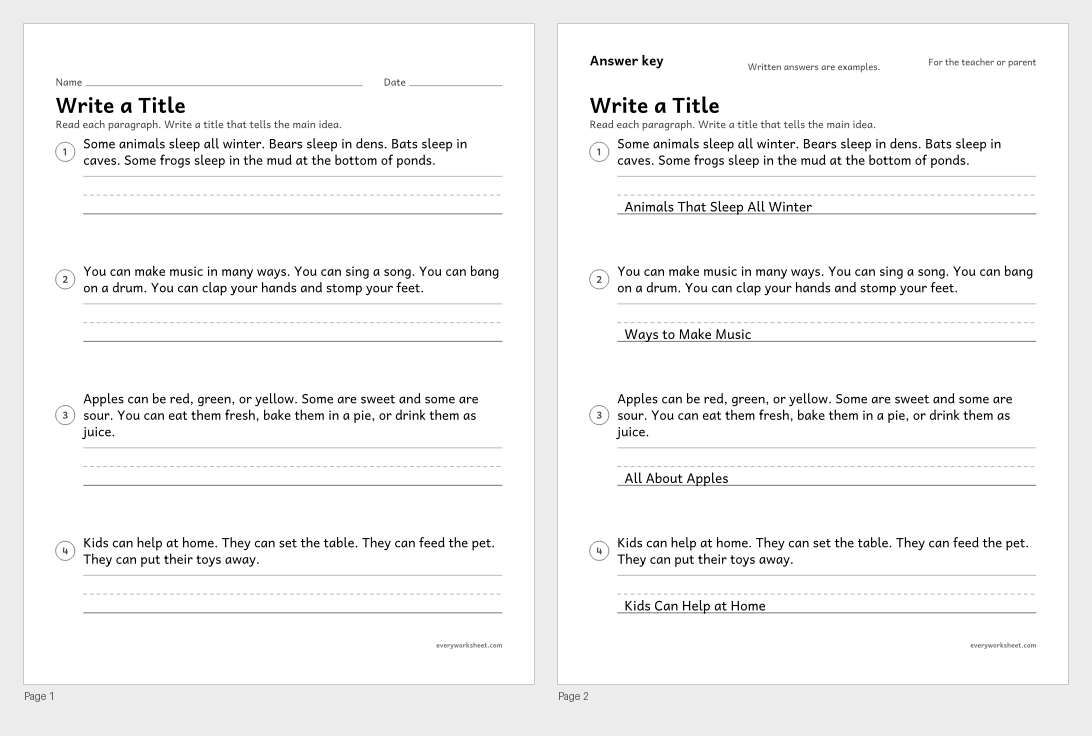
Writing a title that tells the main idea of a paragraph
Answer key on page 2
2 pages34 KB
 View all 2 pages
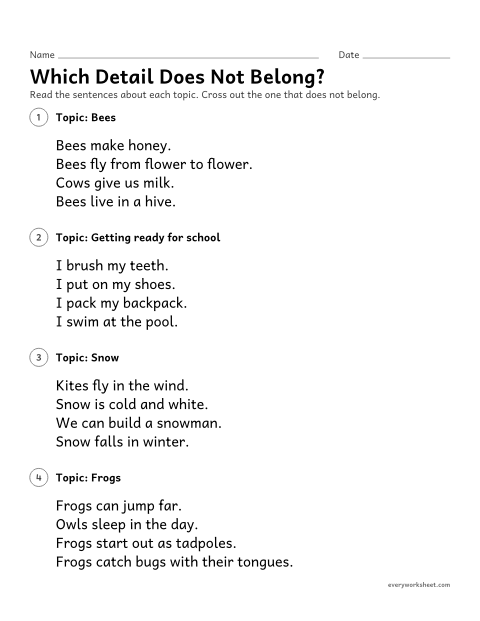
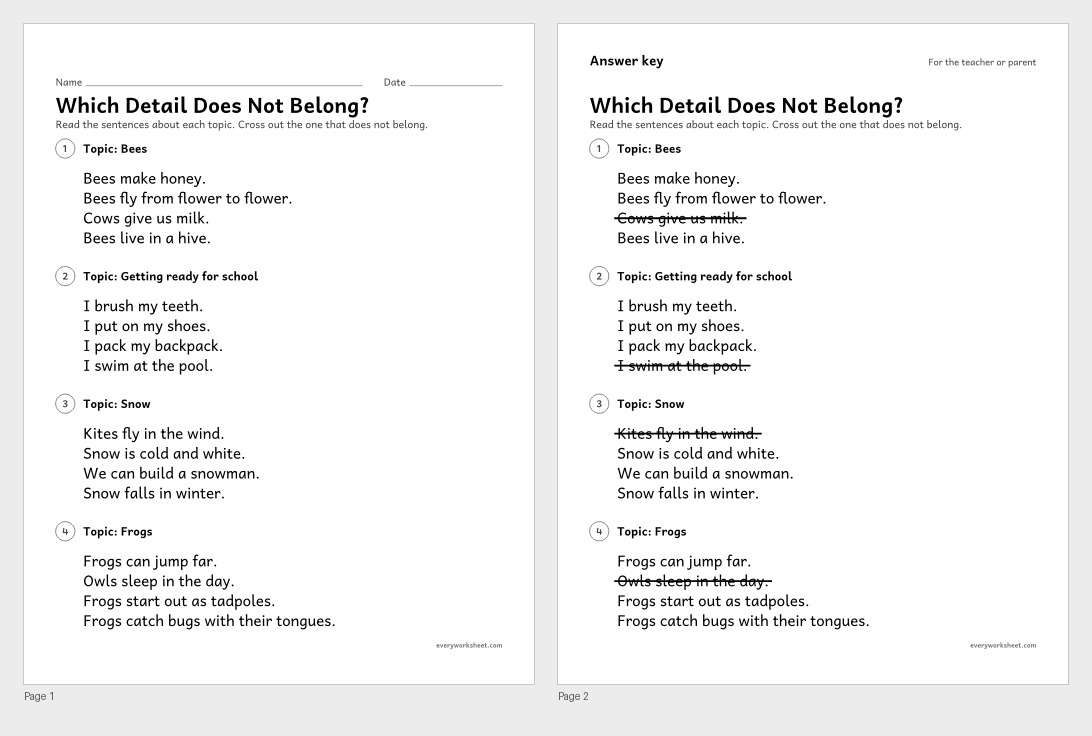
Finding the detail that does not fit the main topic
Answer key on page 2
2 pages37 KB
 View all 2 pages
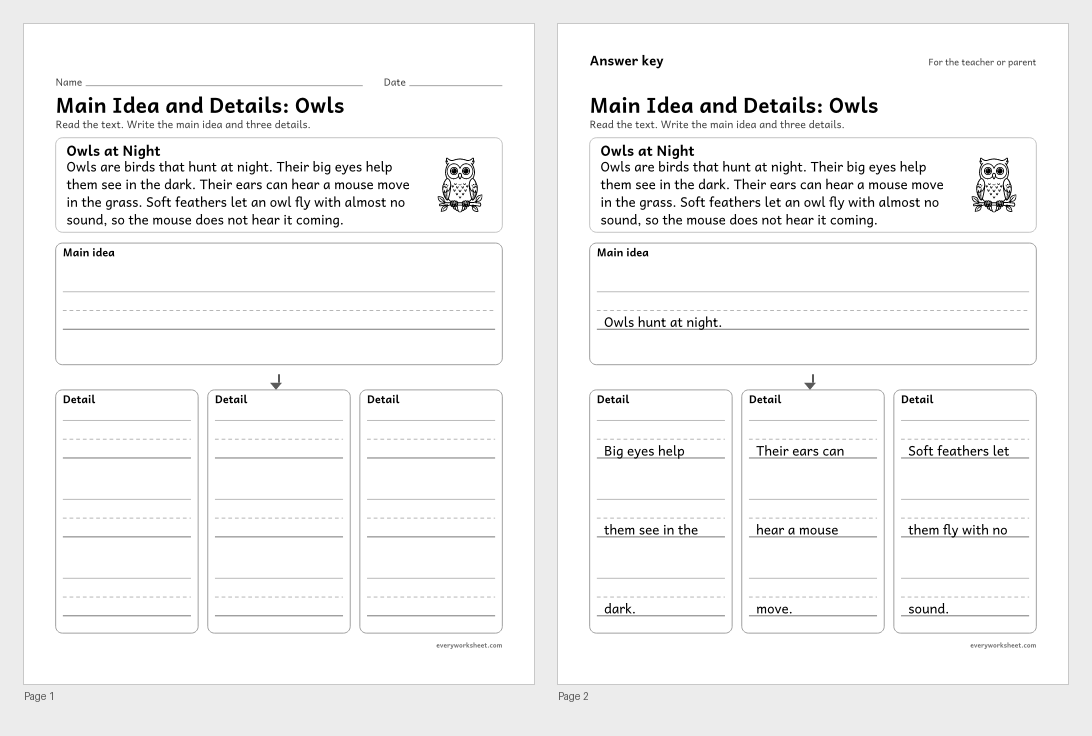
Finding the main idea and three key details in a short text
Answer key on page 2
2 pages64 KB
 View all 2 pages
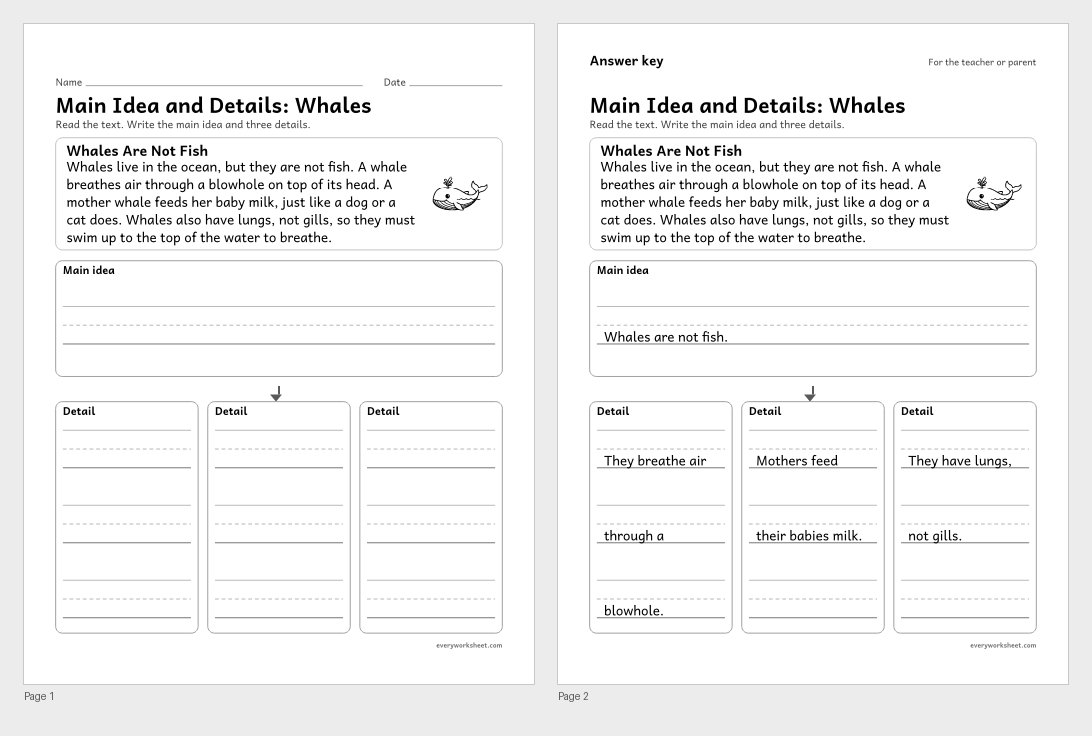
Finding the main idea and three key details in a short text
Answer key on page 2
2 pages46 KB
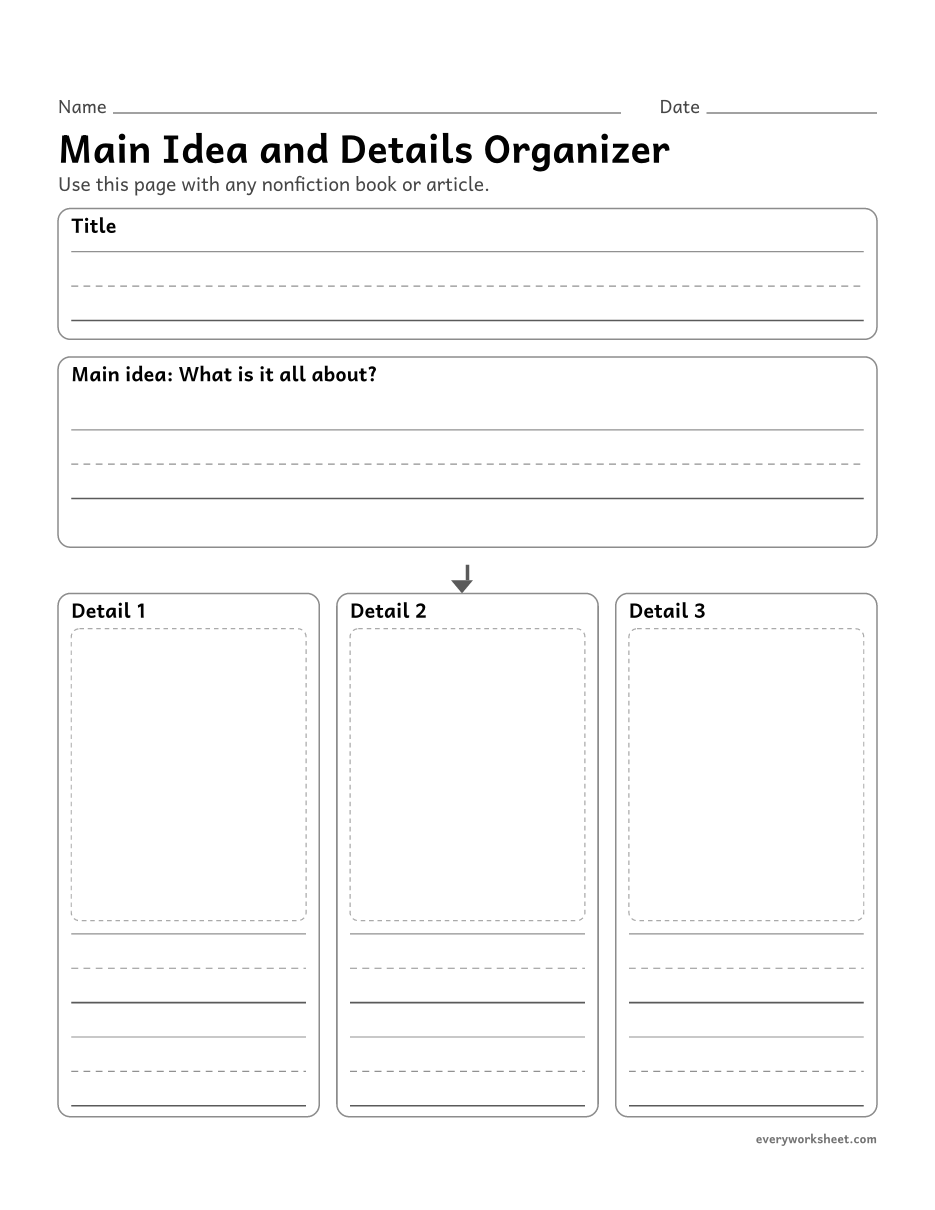 View larger
Planning the main idea and details of any nonfiction text
1 page27 KB
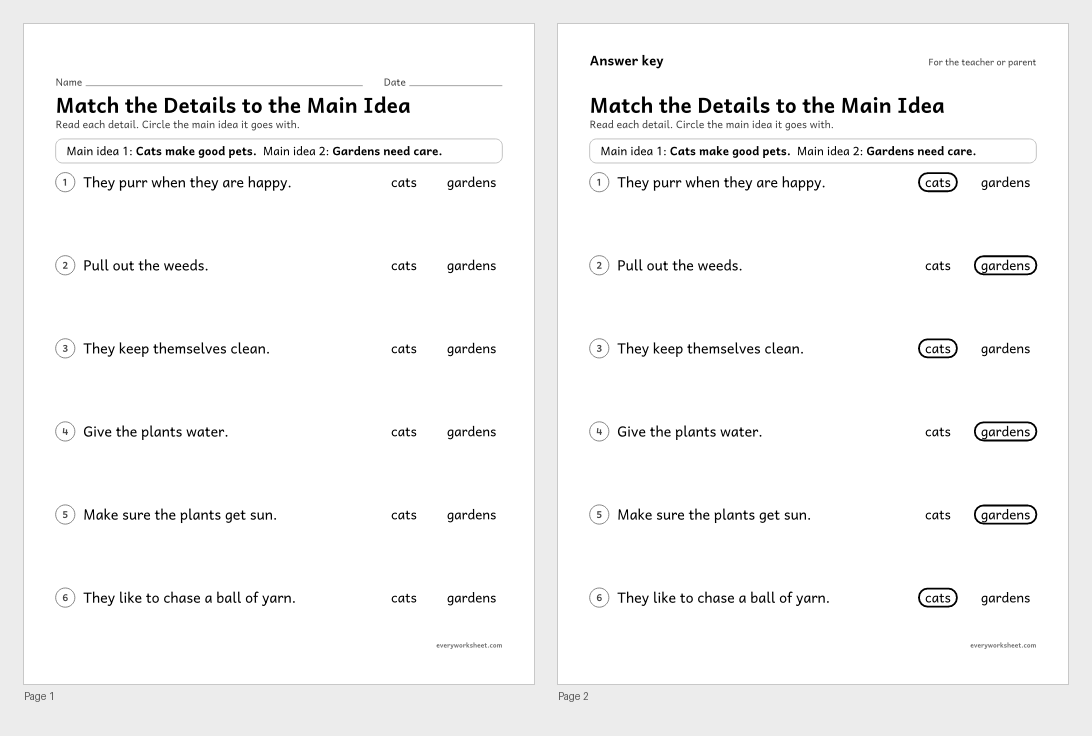 View all 2 pages
Matching details to the main idea they support
Answer key on page 2
2 pages42 KB
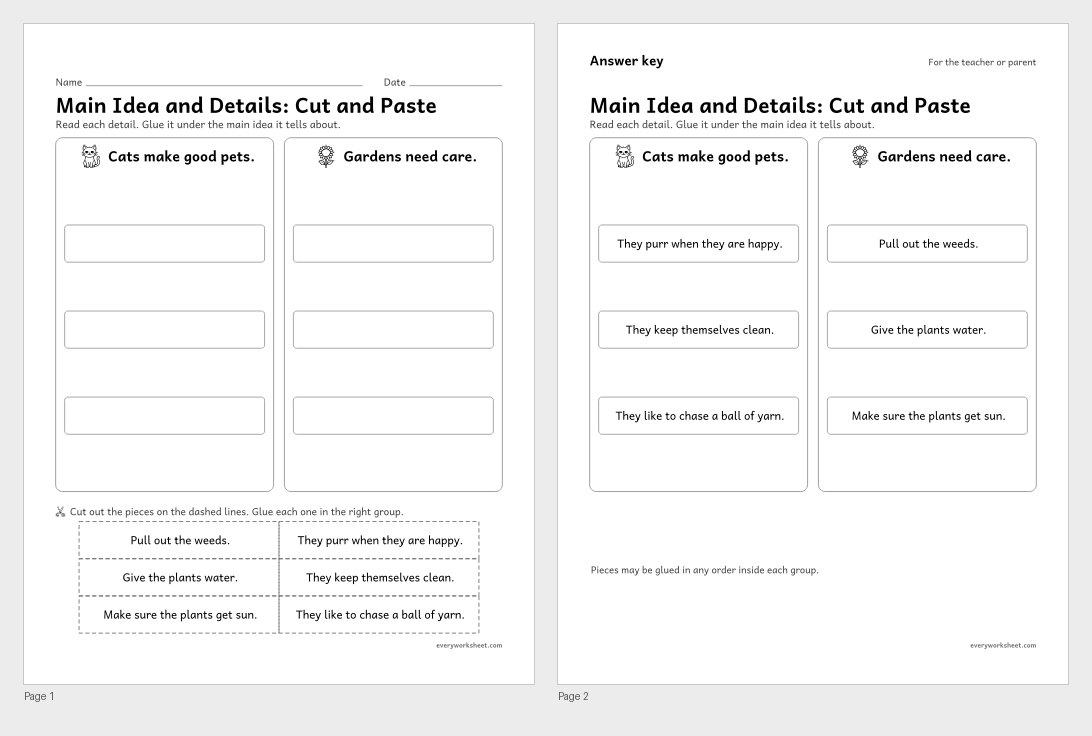 View all 2 pages
Sorting details under the main idea they support (cut and paste)
Answer key on page 2
2 pages136 KB
Print at 100% (actual size) for the cleanest tracing lines.
The main idea is what a text is mostly about. Details tell more about it. In first grade, children learn to name the main topic of a nonfiction text and retell its key details, which is the first step toward summarizing.
These main idea worksheets start with pictures: four pictures that all belong together, and one word that names them. Then children read short paragraphs and choose the main idea, cross out a detail that does not belong, and write a title that tells the main idea. Two organizers pair a short nonfiction text about owls or whales with a main idea and details chart.
A cut and paste sort and its no-cut twin have children match details to the main idea they support. A chart to keep and a blank organizer work with any nonfiction book. Pages with right answers have an answer key.
CCSS.ELA-LITERACY.RI.1.2Identify the main topic and retell key details of a text.CCSS.ELA-LITERACY.RI.1.1Ask and answer questions about key details in a text.CCSS.ELA-LITERACY.RI.1.10With prompting and support, read informational texts appropriately complex for grade 1.CCSS.ELA-LITERACY.SL.1.2Ask and answer questions about key details in a text read aloud or information presented orally or through other media.The main idea is what a text is mostly about. The details are the facts or examples that tell more about it.
Start with pictures that share one topic, then short paragraphs. Ask what the whole thing is about, and check that every sentence fits the answer.
A detail tells about one part. The main idea covers all of the details together.
Yes, every page with one right answer has an answer key on page 2. Organizers show example answers.