 View all 2 pages
Order by length
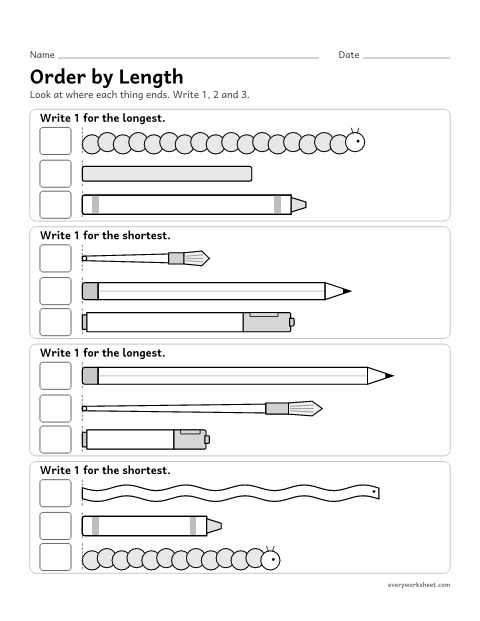
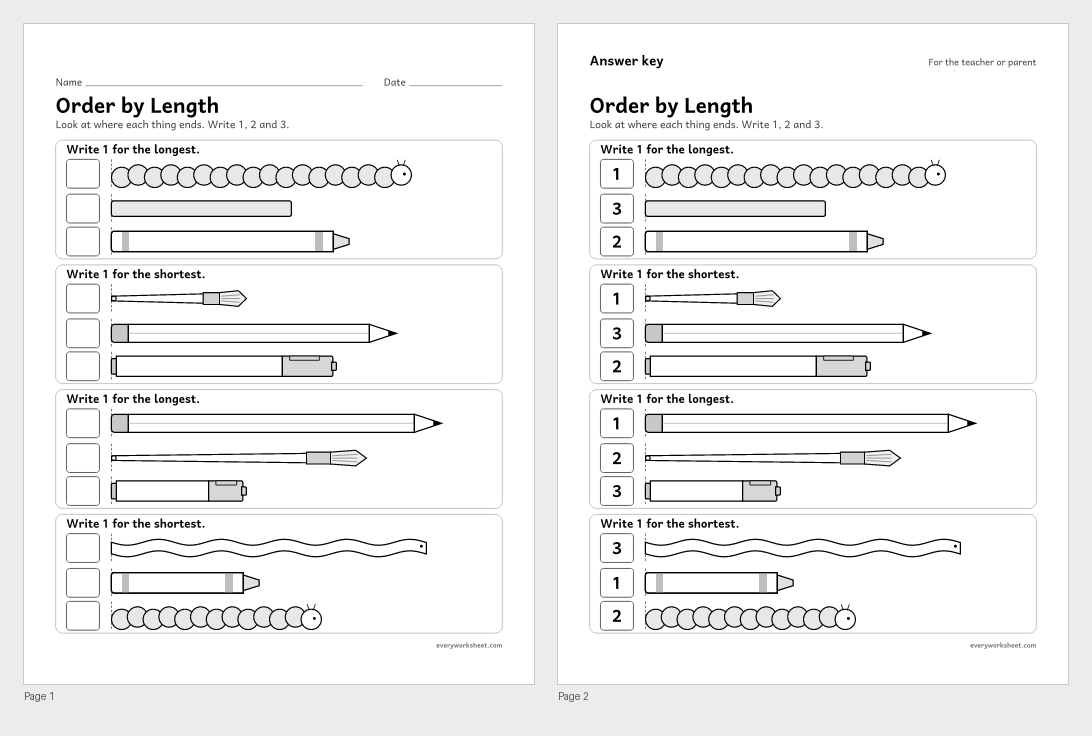
Ordering three objects from longest to shortest and shortest to longest
Answer key on page 2
2 pages43 KB
Length pages for 1st grade: order three things by length or height, compare with clues, measure with cubes and paper clips, and spot gaps and overlaps.
View all 2 pagesOrdering three objects from longest to shortest and shortest to longest
Answer key on page 2
2 pages43 KB
 View all 2 pages
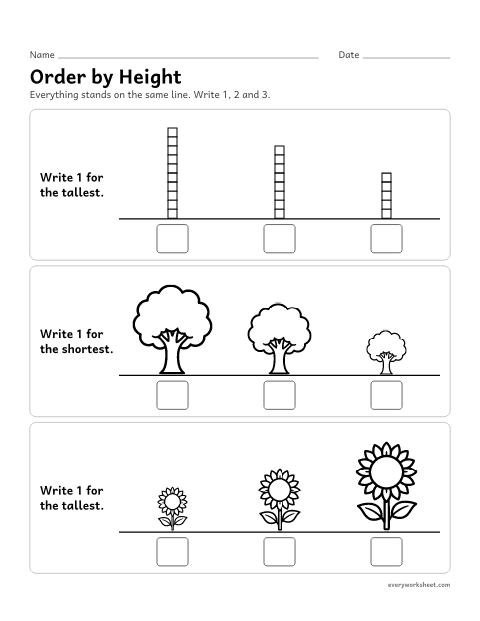
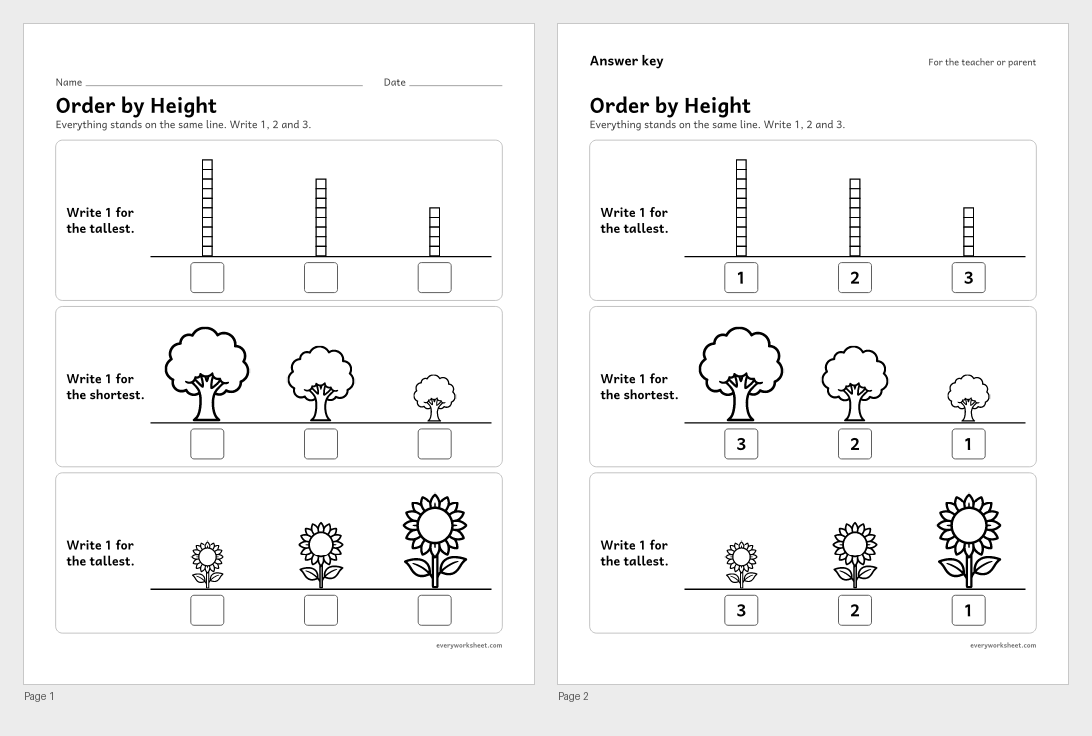
Ordering three objects from tallest to shortest and shortest to tallest
Answer key on page 2
2 pages76 KB
 View all 2 pages
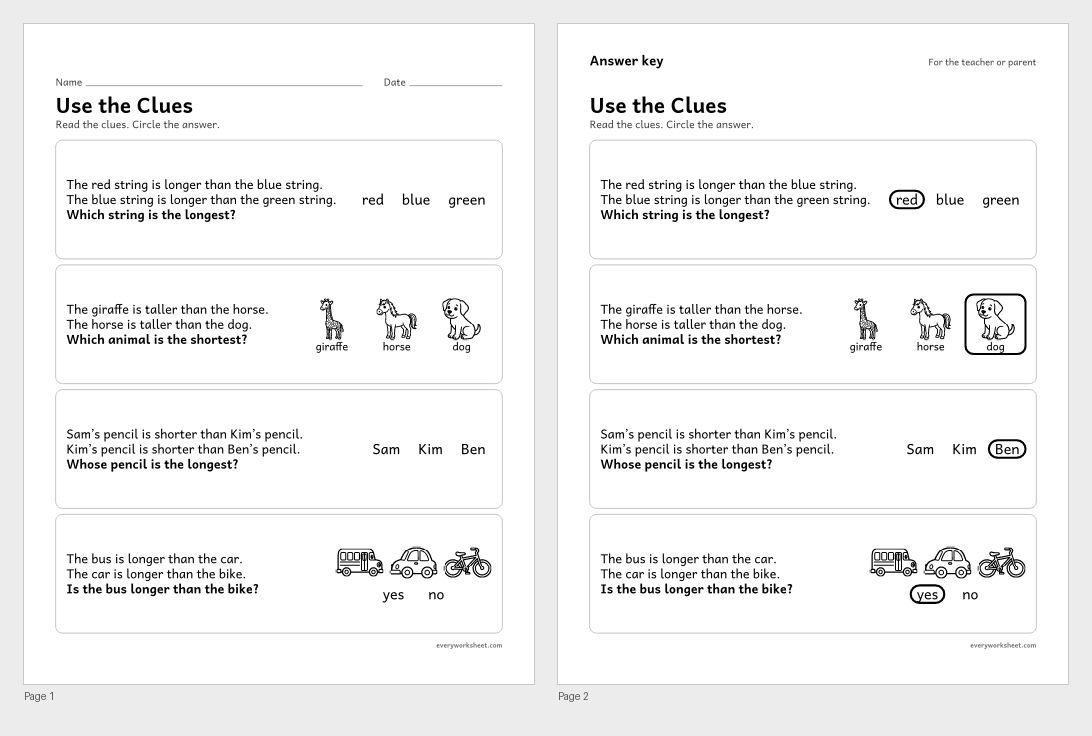
Comparing two lengths by using a third (if A is longer than B and B is longer than C, A is longer than C)
Answer key on page 2
2 pages250 KB
 View all 2 pages
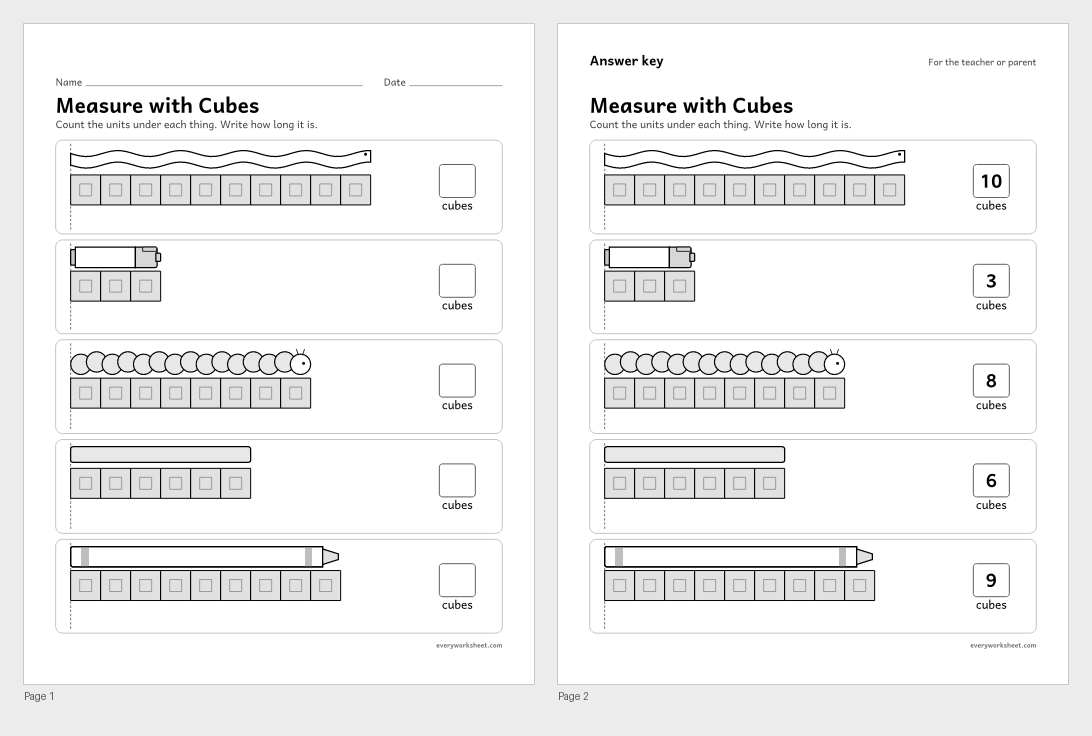
Measuring length with cubes laid end to end and writing the number of cubes
Answer key on page 2
2 pages36 KB
 View all 2 pages
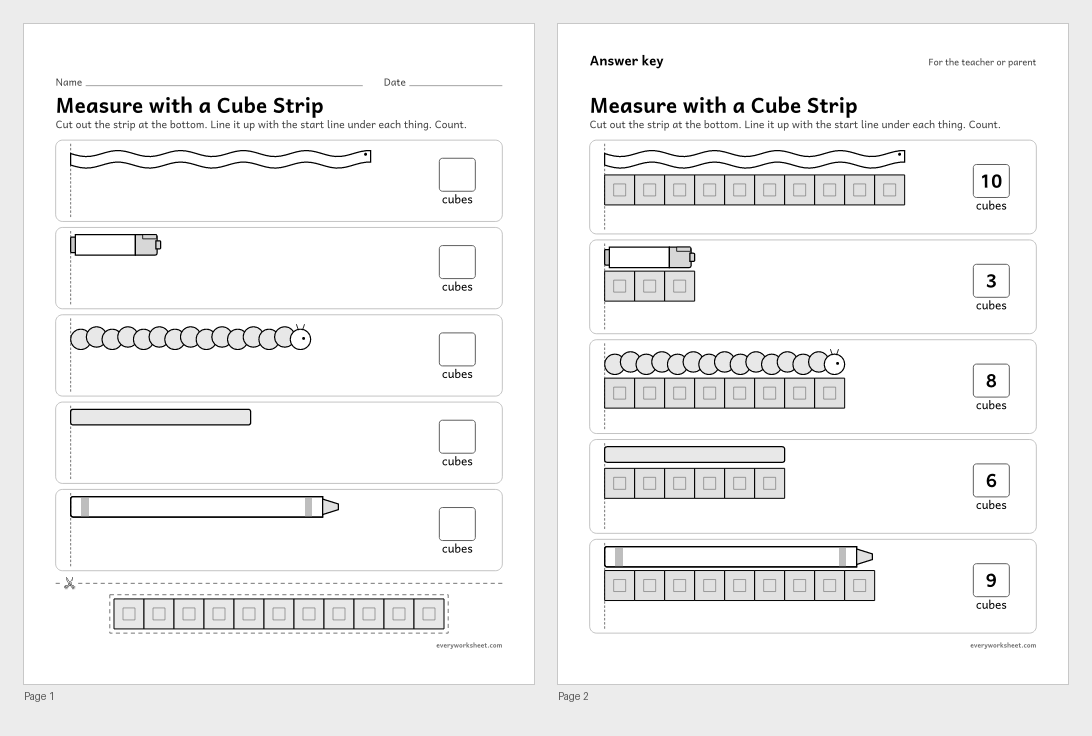
Measuring length with a cut-out strip of cubes
Answer key on page 2
2 pages64 KB
 View all 2 pages
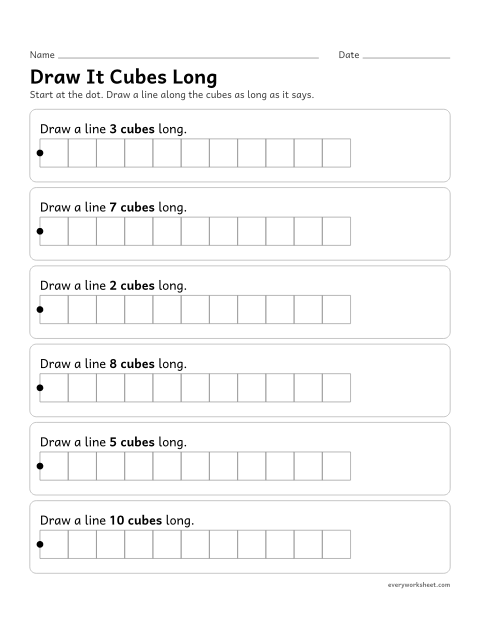
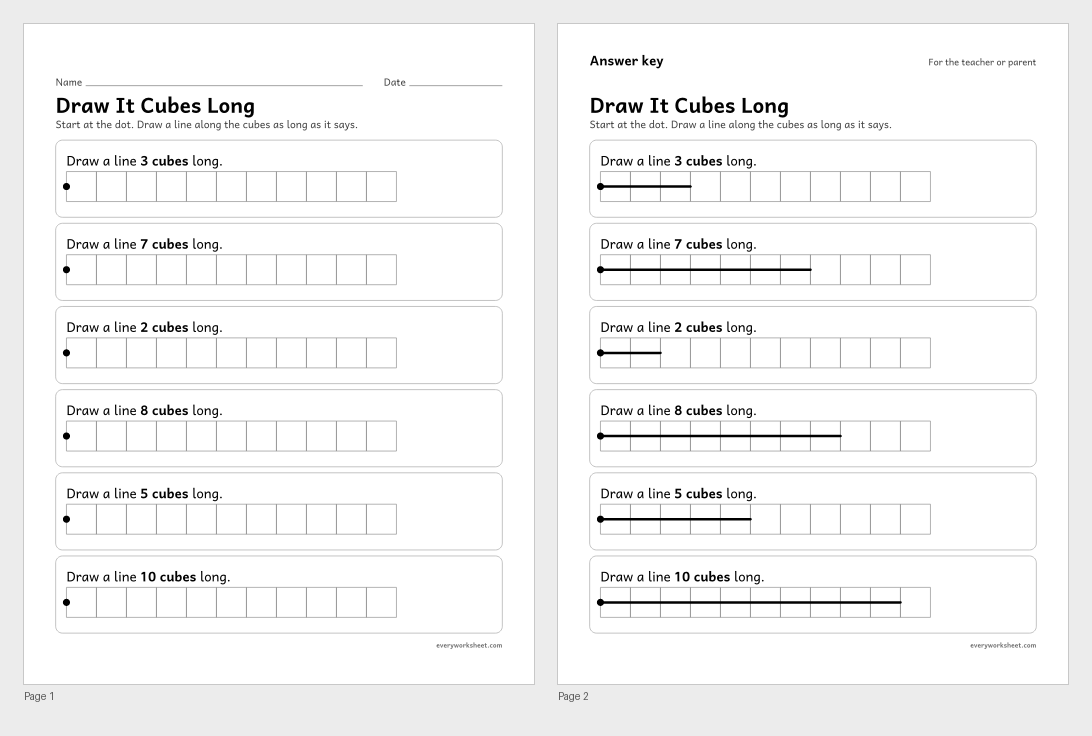
Drawing a line a given number of cubes long
Answer key on page 2
2 pages32 KB
 View all 2 pages
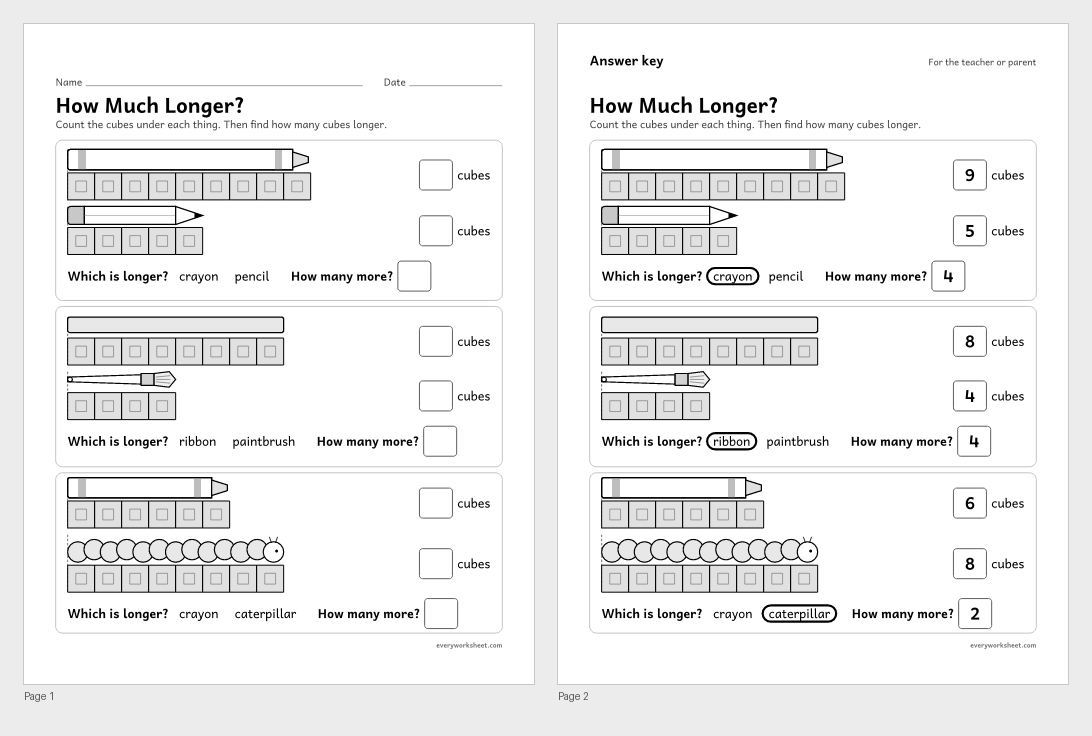
Measuring two objects in cubes and finding how many cubes longer one is
Answer key on page 2
2 pages38 KB
 View all 2 pages
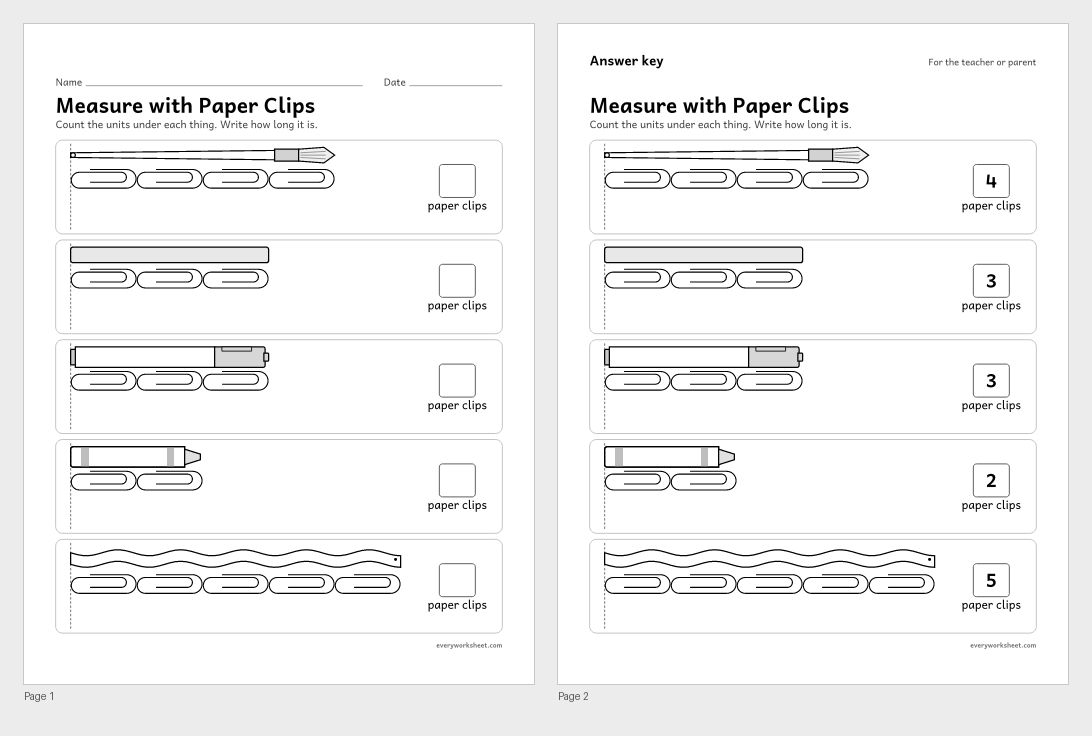
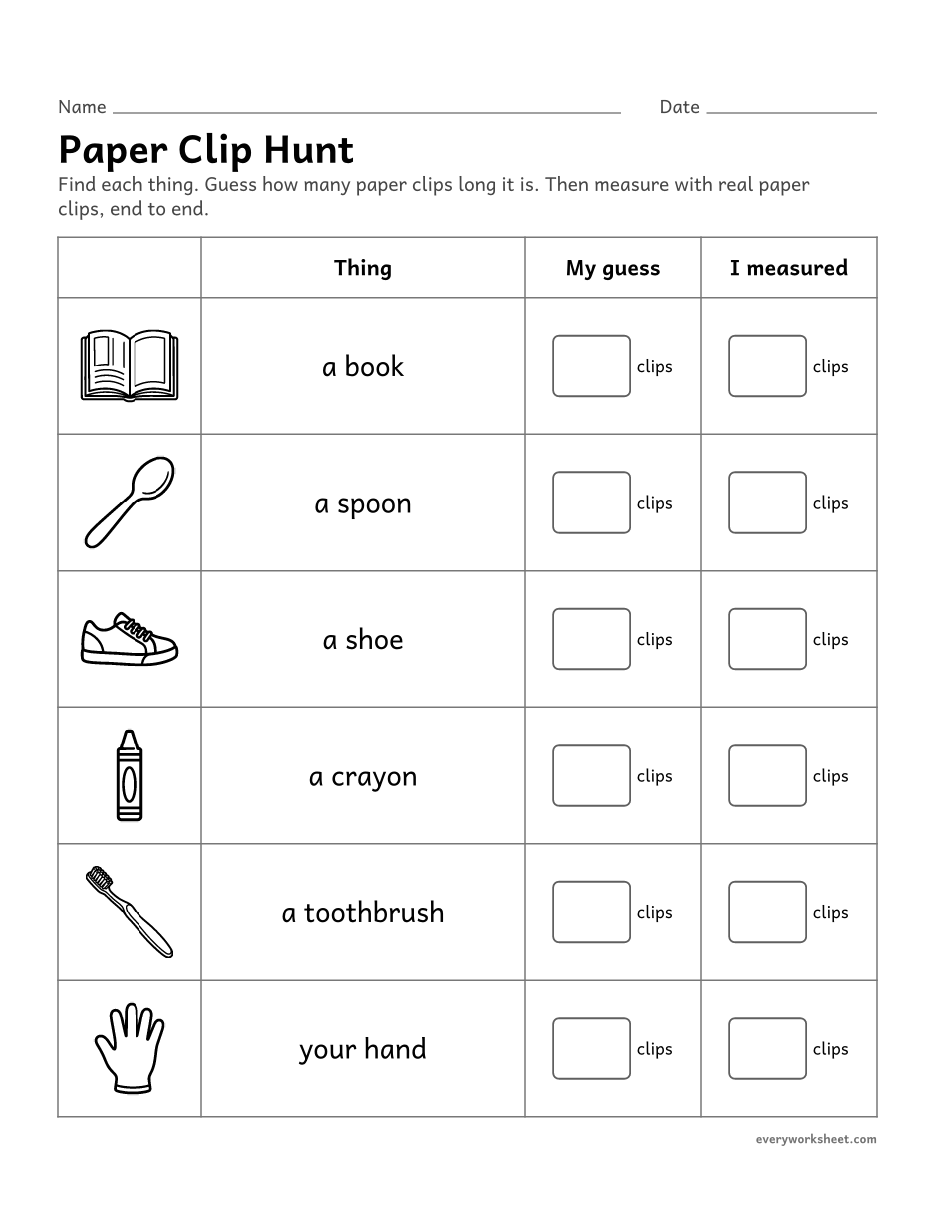
Measuring length in paper clips laid end to end
Answer key on page 2
2 pages36 KB
 View all 2 pages
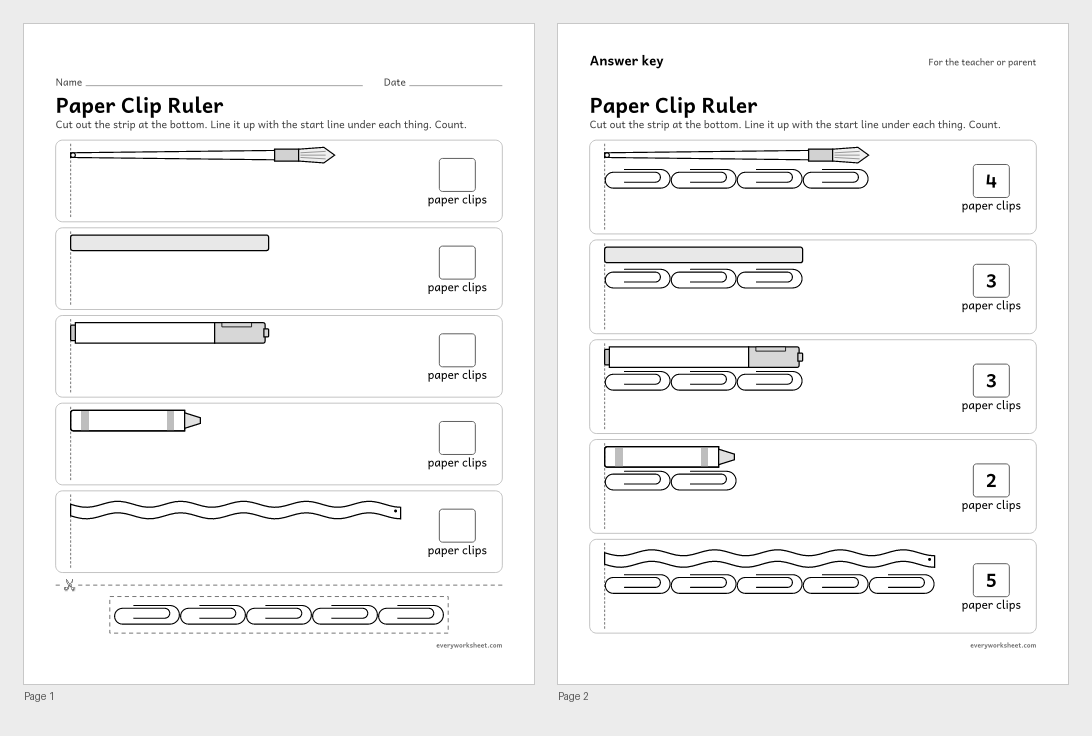
Measuring length with a cut-out paper clip strip
Answer key on page 2
2 pages64 KB
 View larger
 View all 2 pages
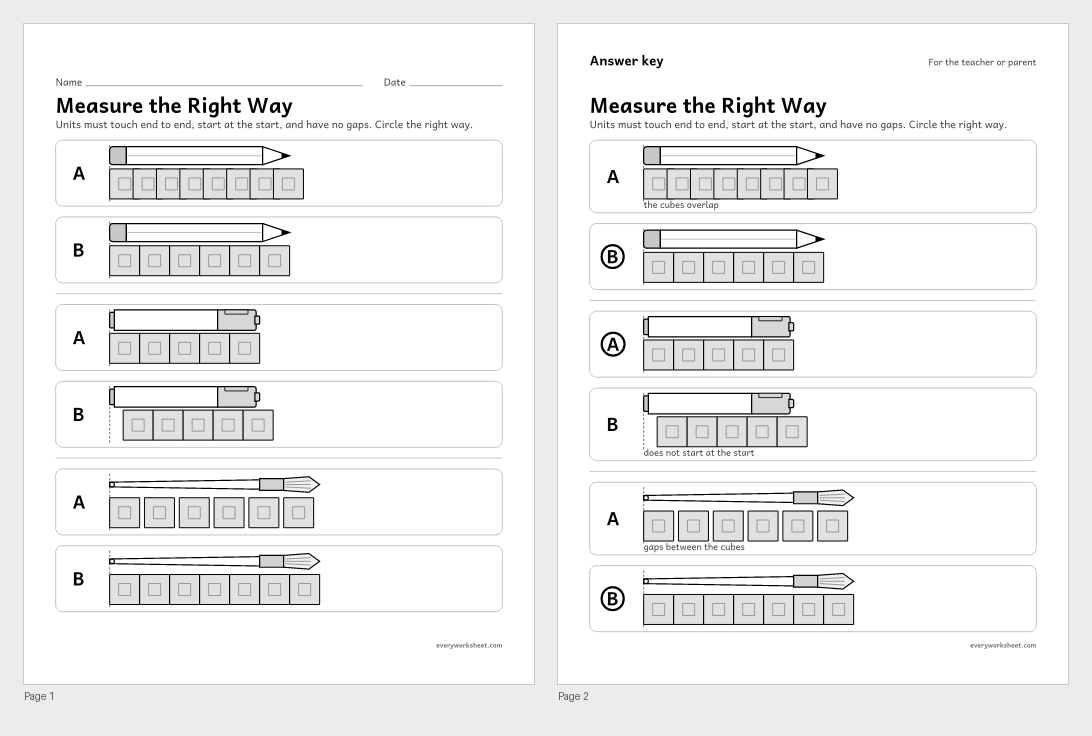
Spotting gaps and overlaps: units must touch end to end from the start
Answer key on page 2
2 pages35 KB
Print at 100% (actual size) for the cleanest tracing lines.
First graders measure length by laying copies of a small unit, like cubes or paper clips, end to end. They also order three things by length and learn to compare two things by using a third.
These pages start with comparing: order by length and order by height, with everything lined up at the same start line, and clue puzzles that use one thing to compare two others. Then children measure with cubes and paper clips, check whether units are laid the right way, draw lines a given number of cubes long, and find how many cubes longer one thing is than another.
Every object is drawn exactly a whole number of units long, so the cut-out cube strip and paper clip ruler measure the pictures exactly at 100% print size. Each cut-out page has a no-cut twin with the units drawn in. A Paper Clip Hunt sends children off to measure real things at home or in class.
CCSS.MATH.CONTENT.1.MD.A.1Order three objects by length; compare the lengths of two objects indirectly by using a third object.CCSS.MATH.CONTENT.1.MD.A.2Express the length of an object as a whole number of length units, by laying multiple copies of a shorter object (the length unit) end to end; understand that the length measurement of an object is the number of same-size length units that span it with no gaps or overlaps. Limit to contexts where the object being measured is spanned by a whole number of length units with no gaps or overlaps.First graders order three objects by length, compare two lengths by using a third object, and measure length with small units like cubes or paper clips laid end to end with no gaps or overlaps. Rulers with inches come in 2nd grade.
Laying units end to end shows what length really is: how many same-size units fit along a thing. That understanding makes rulers make sense later.
Yes, when you print at actual size (100%). Each object is drawn an exact number of cubes or paper clips long, on both US Letter and A4.
Only on the cut-out pages, and each has a twin with the cubes or paper clips already drawn under each object, so children who can't cut can do the same work.
Yes. Every page with right answers has an answer key on page 2. The Paper Clip Hunt measures real things, so it has no key.