 View larger
What is a Noun?
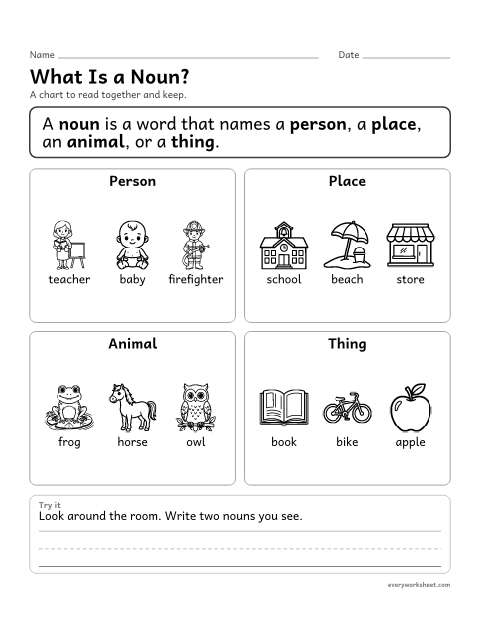
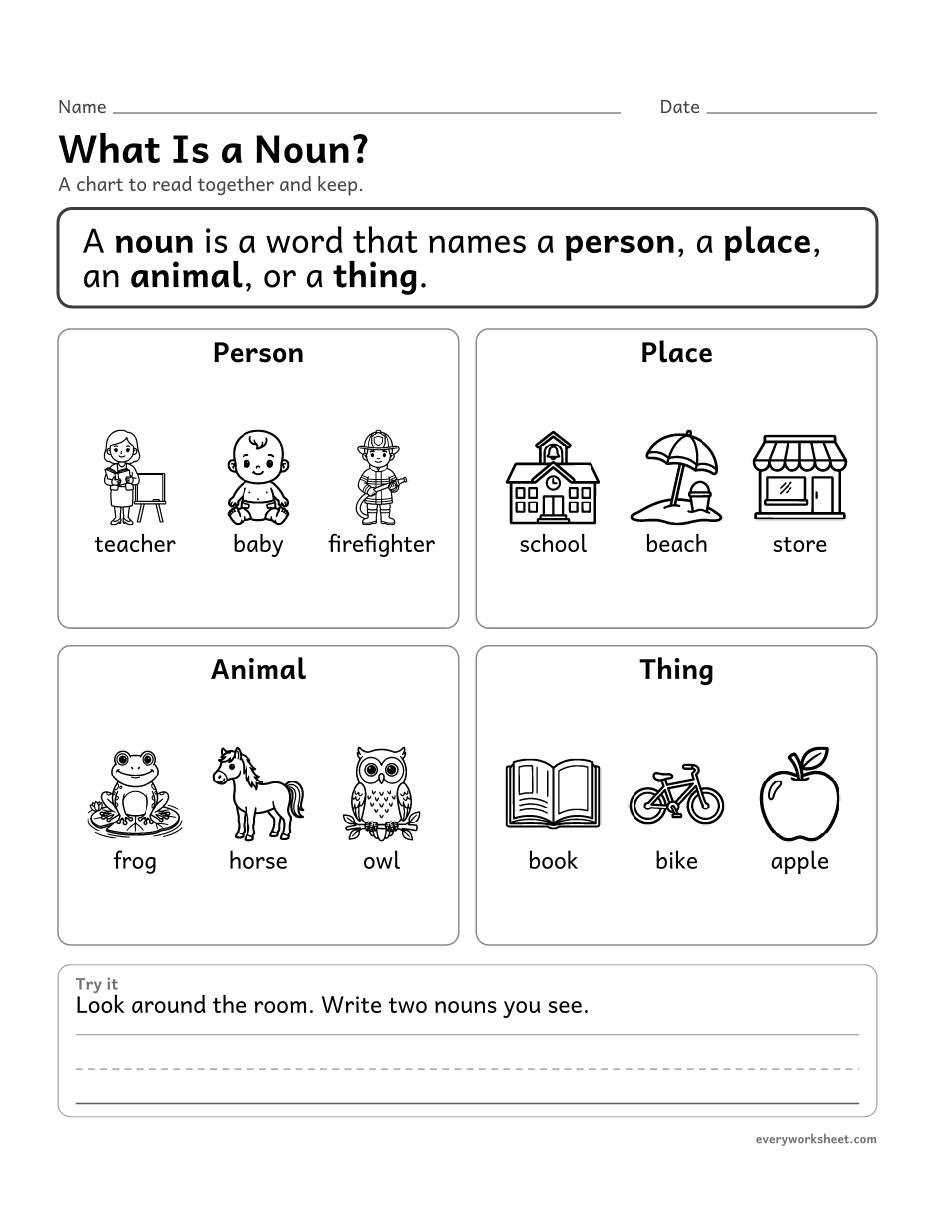
Knowing that a noun names a person, place, animal or thing
1 page244 KB
Find nouns, sort them, tell common from proper, make plurals and possessives, and use pronouns, with answer keys.
View largerKnowing that a noun names a person, place, animal or thing
1 page244 KB
 View all 2 pages
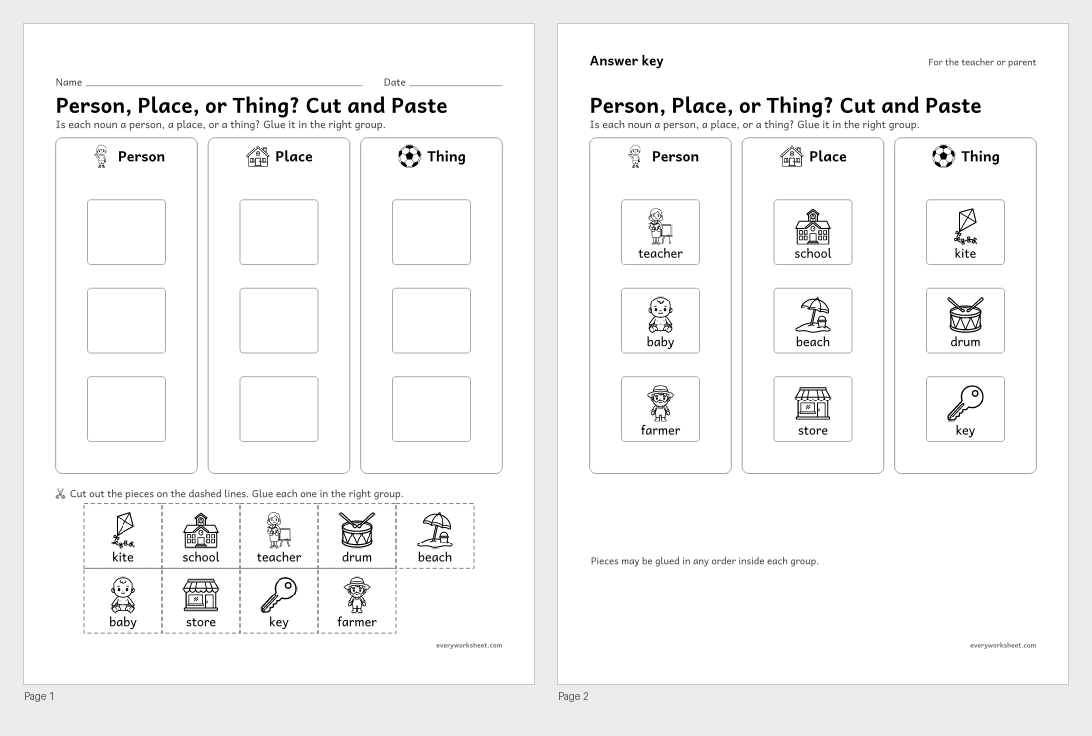
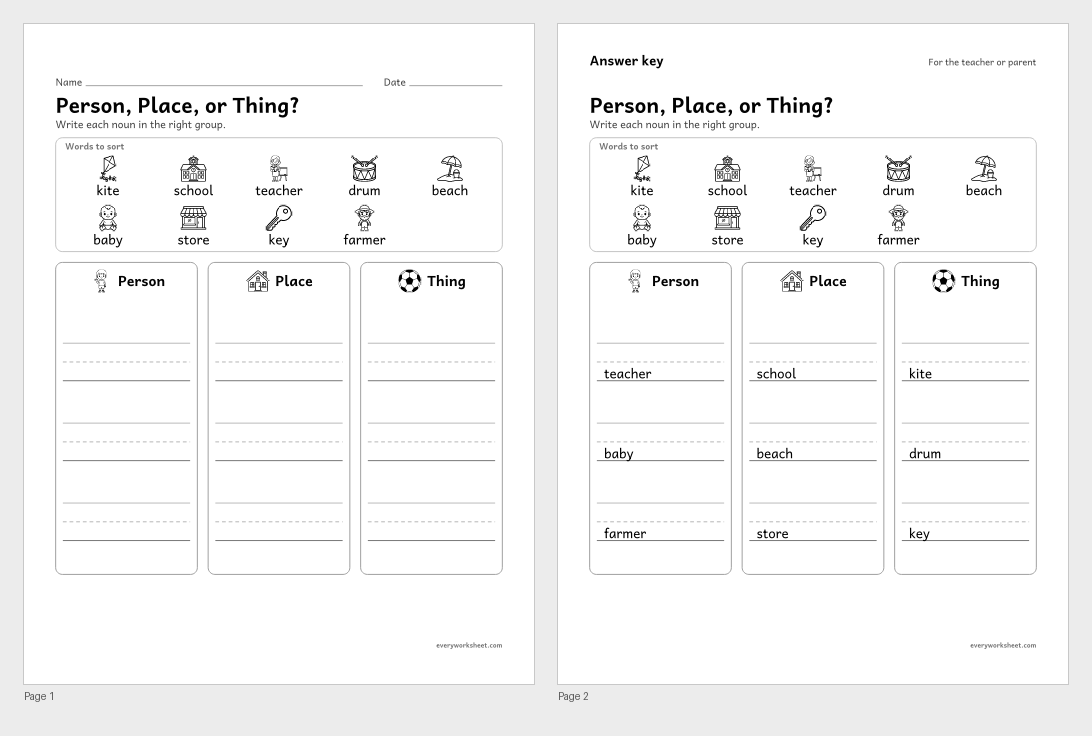
Sorting nouns into people, places and things
Answer key on page 2
2 pages455 KB
 View all 2 pages
Sorting nouns into people, places and things
Answer key on page 2
2 pages423 KB
 View all 2 pages
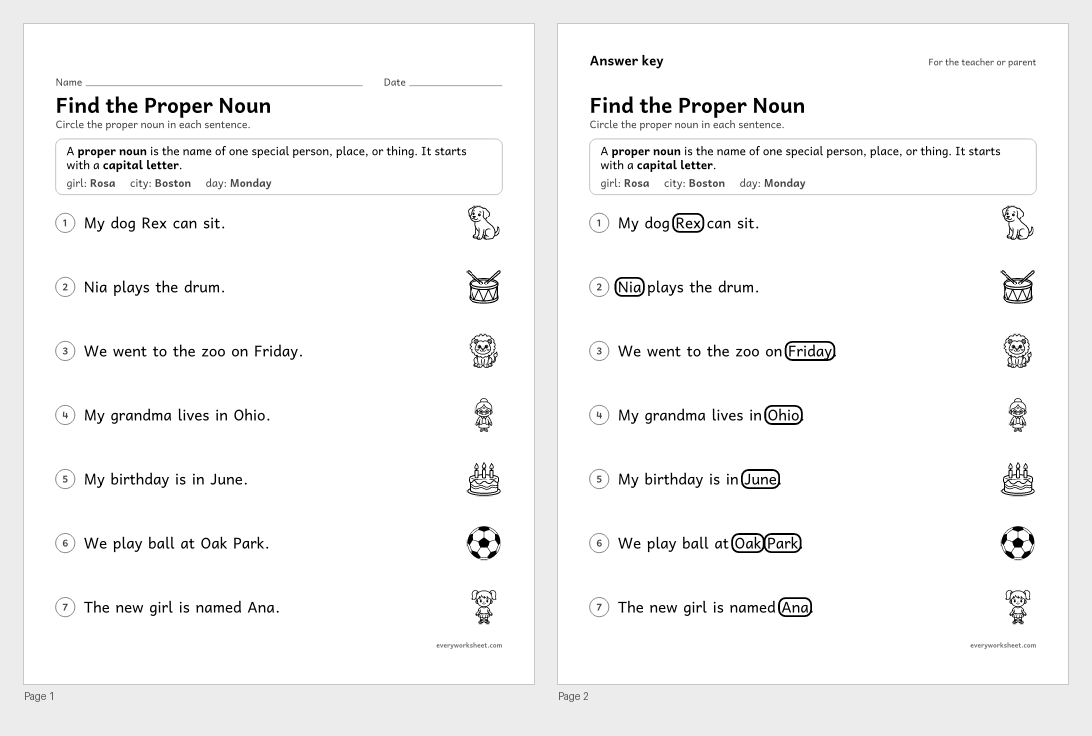
Finding the proper noun (a special name) in a sentence
Answer key on page 2
2 pages347 KB
 View all 2 pages
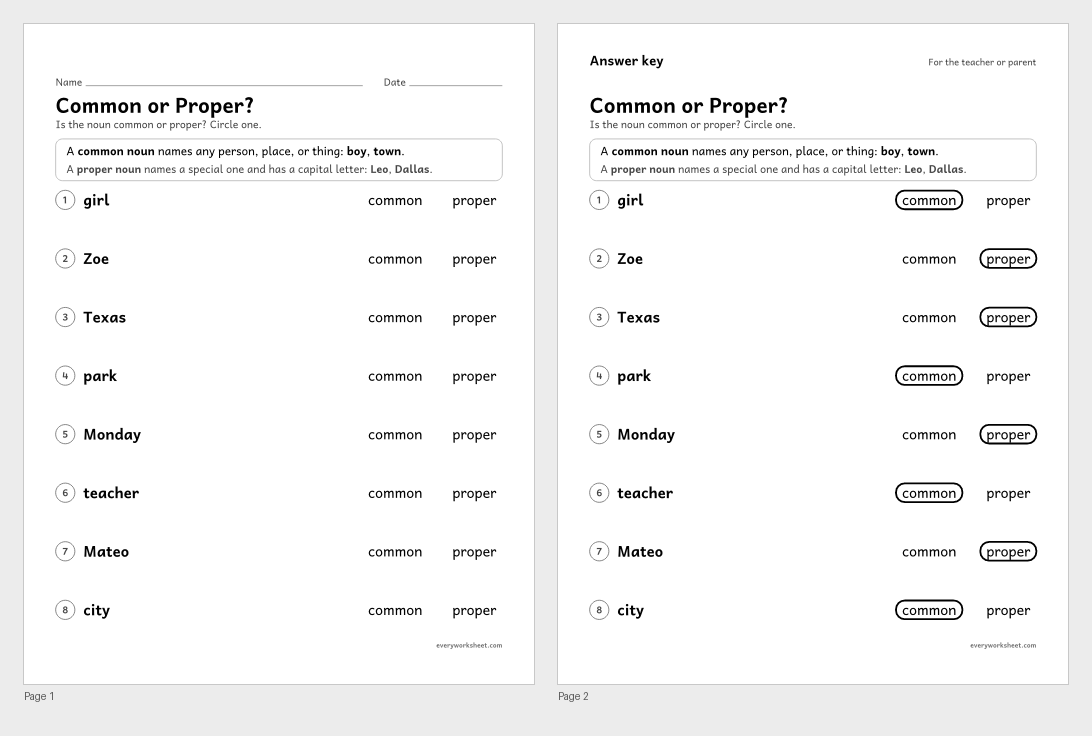
Telling common nouns from proper nouns
Answer key on page 2
2 pages48 KB
 View all 2 pages
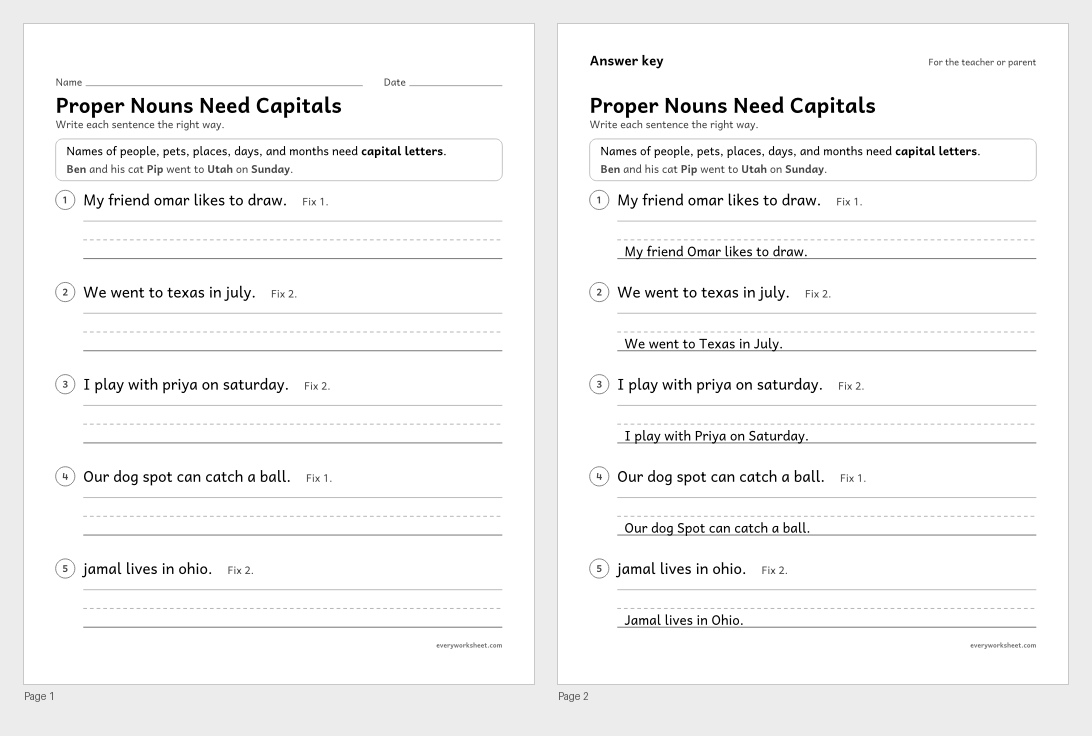
Capitalizing names of people, places, days and months
Answer key on page 2
2 pages39 KB
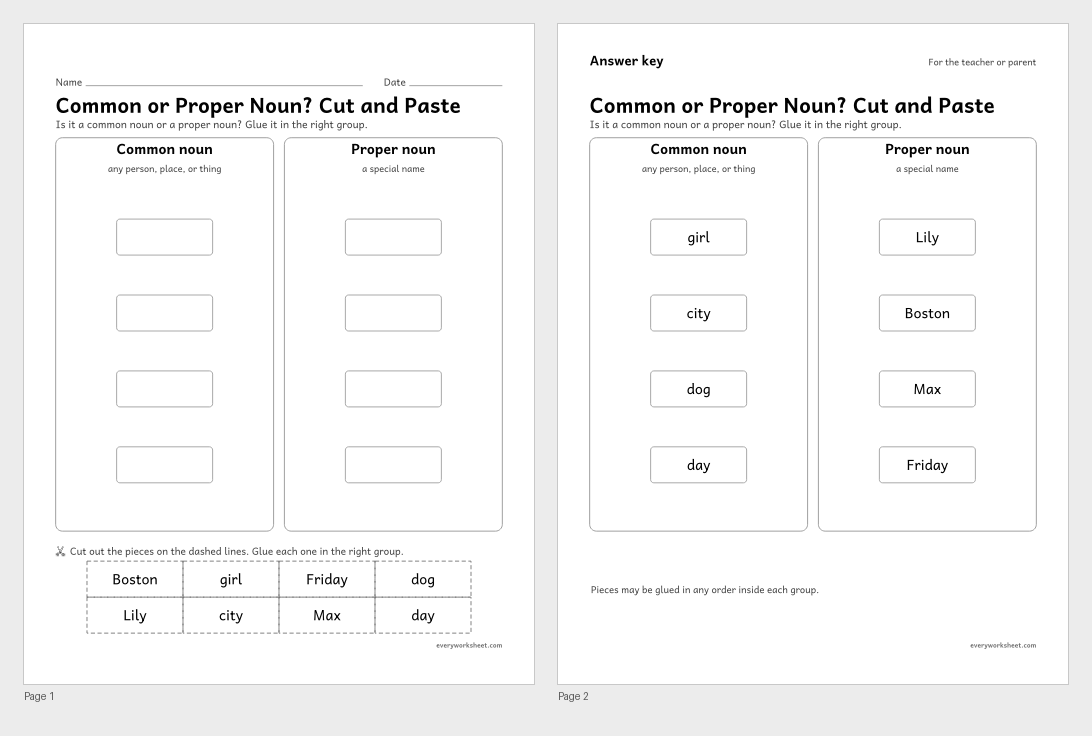 View all 2 pages
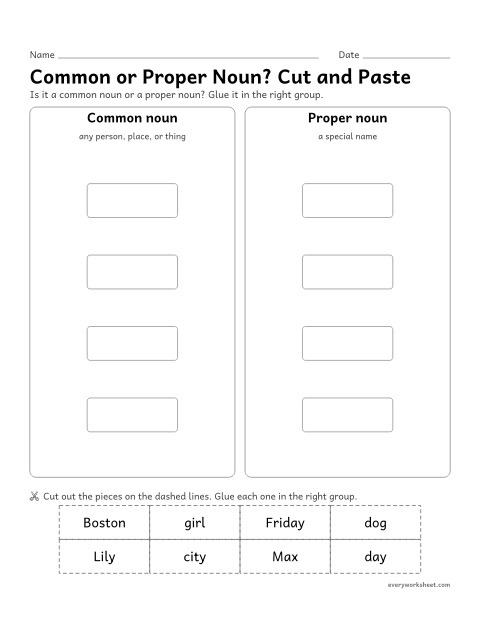
Sorting common nouns and proper nouns
Answer key on page 2
2 pages63 KB
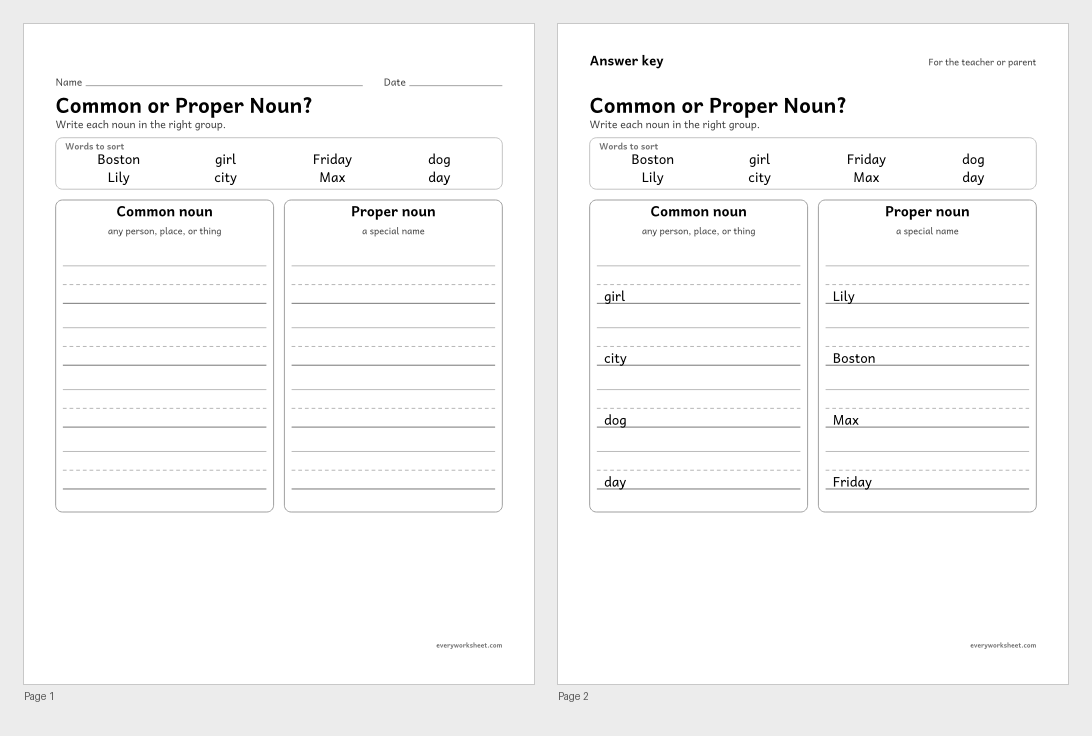 View all 2 pages
Sorting common nouns and proper nouns
Answer key on page 2
2 pages33 KB
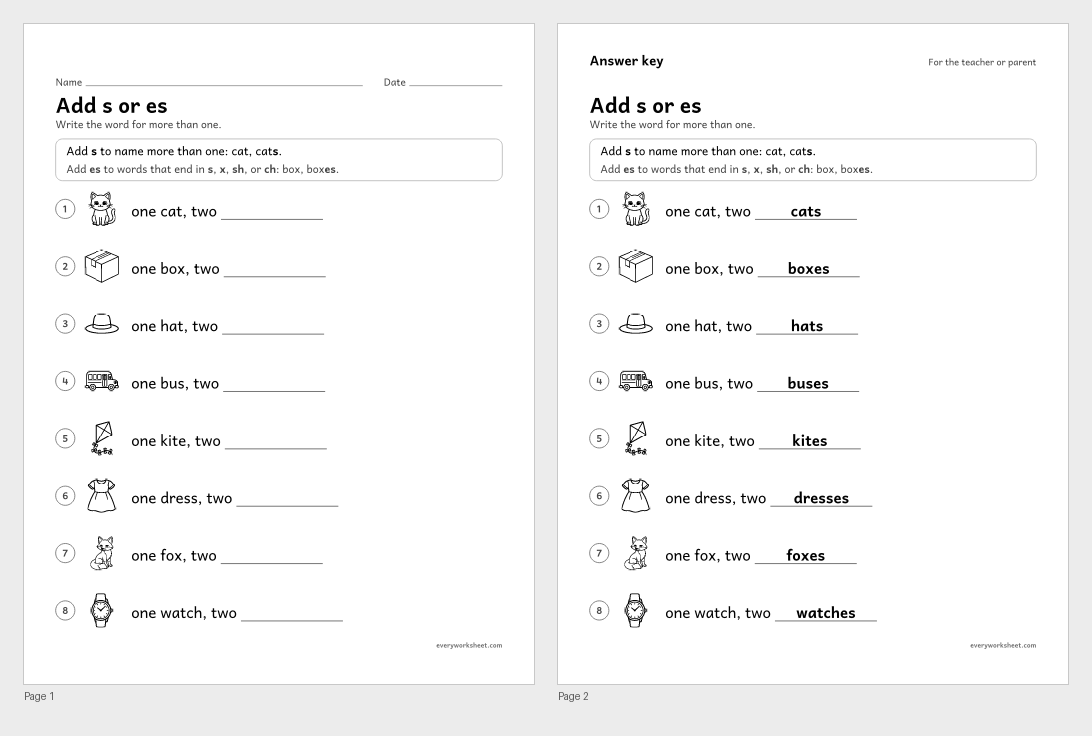 View all 2 pages
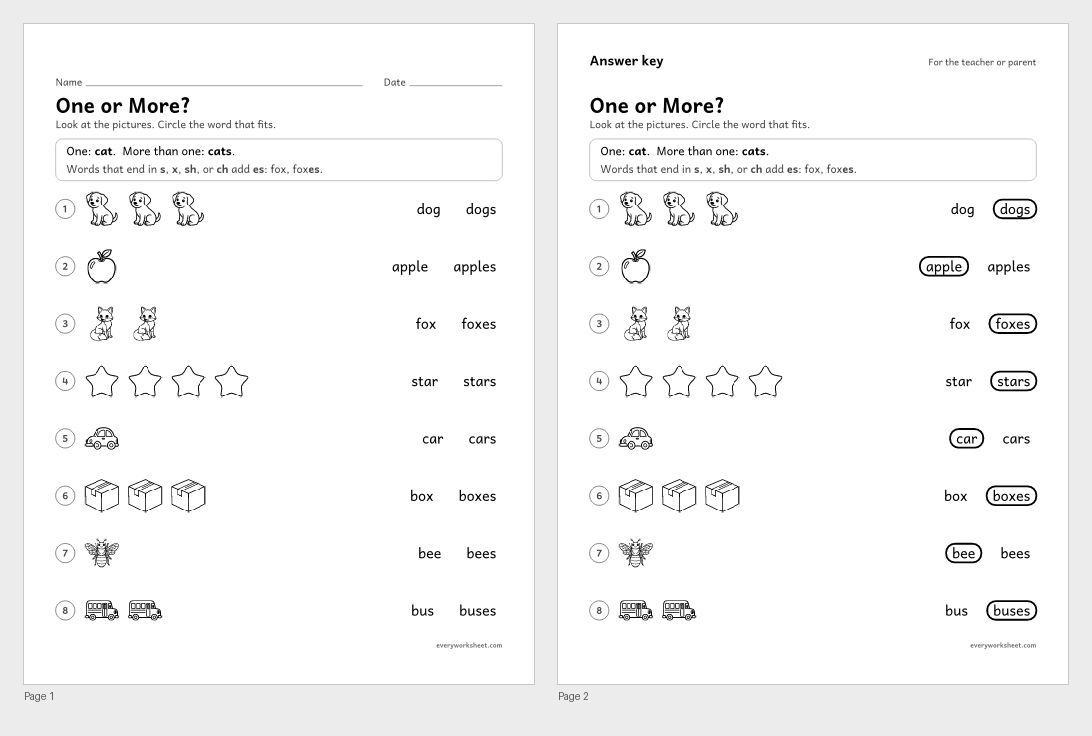 View all 2 pages
Telling singular and plural nouns apart
Answer key on page 2
2 pages355 KB
 View all 2 pages
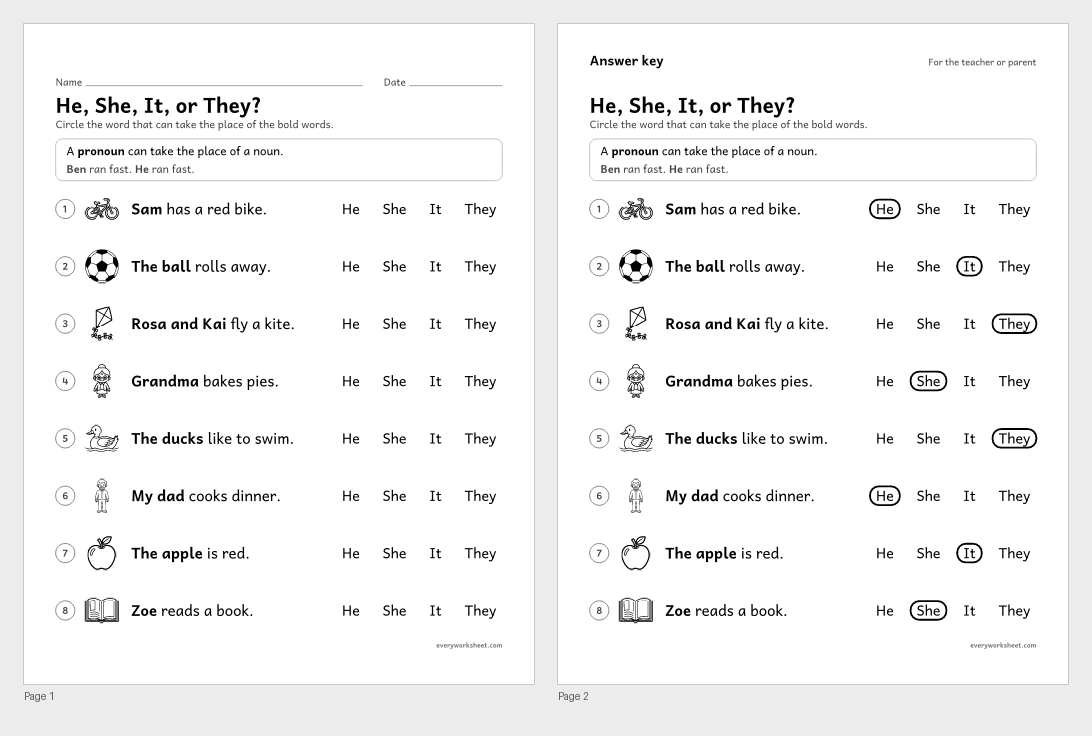
Using he, she, it and they in place of nouns
Answer key on page 2
2 pages287 KB
 View all 2 pages
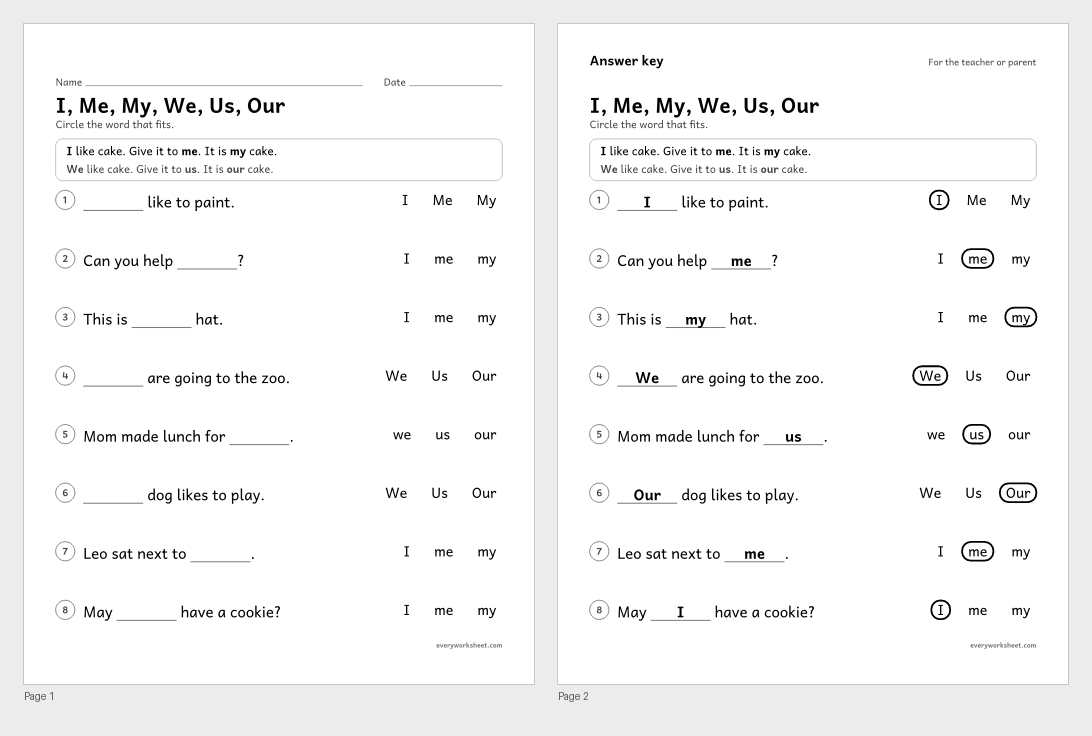
Using I, me, my, we, us and our
Answer key on page 2
2 pages48 KB
 View all 2 pages
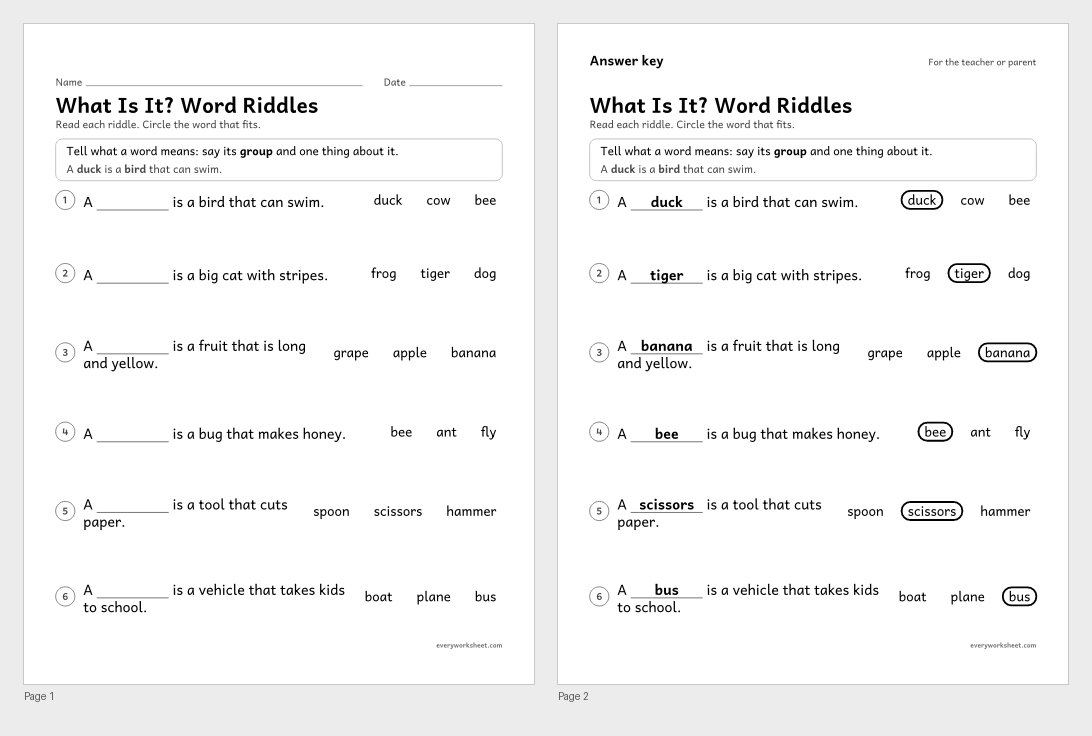
Telling what a word means by its group and a key detail
Answer key on page 2
2 pages44 KB
Print at 100% (actual size) for the cleanest tracing lines.
A noun is a word that names a person, a place, an animal or a thing. In first grade, children learn to find nouns in sentences, tell common nouns (girl, city) from proper nouns (Rosa, Boston), make nouns plural with s or es, show who owns something with an apostrophe and s, and use pronouns like he, she, it and they.
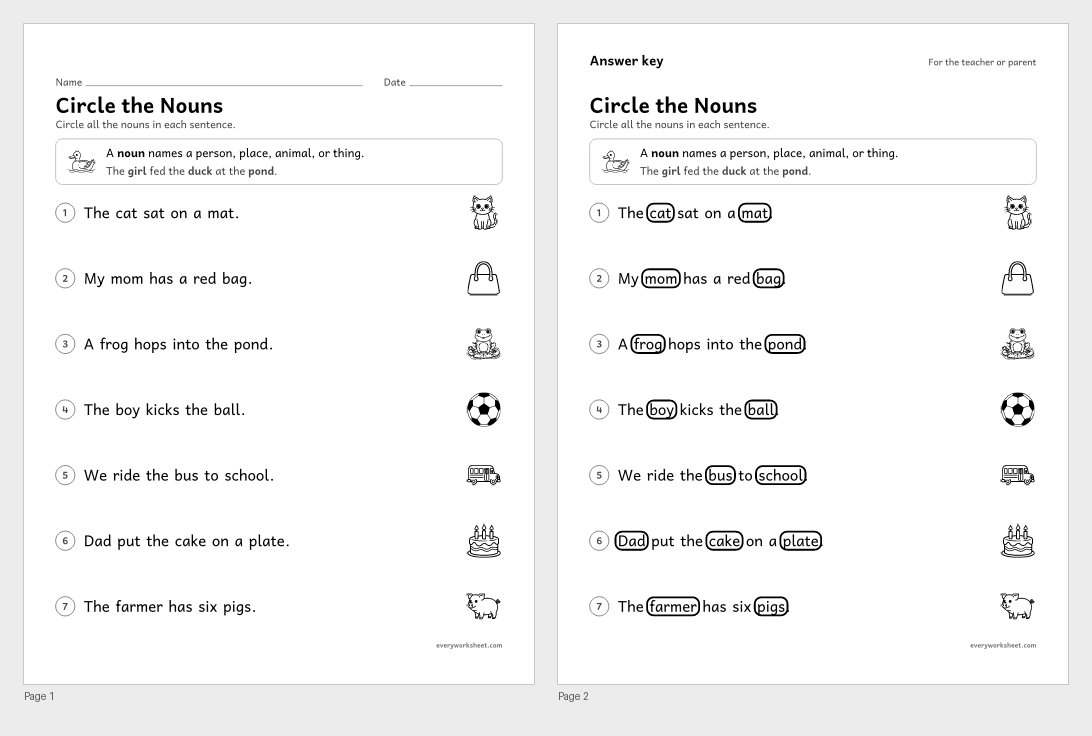
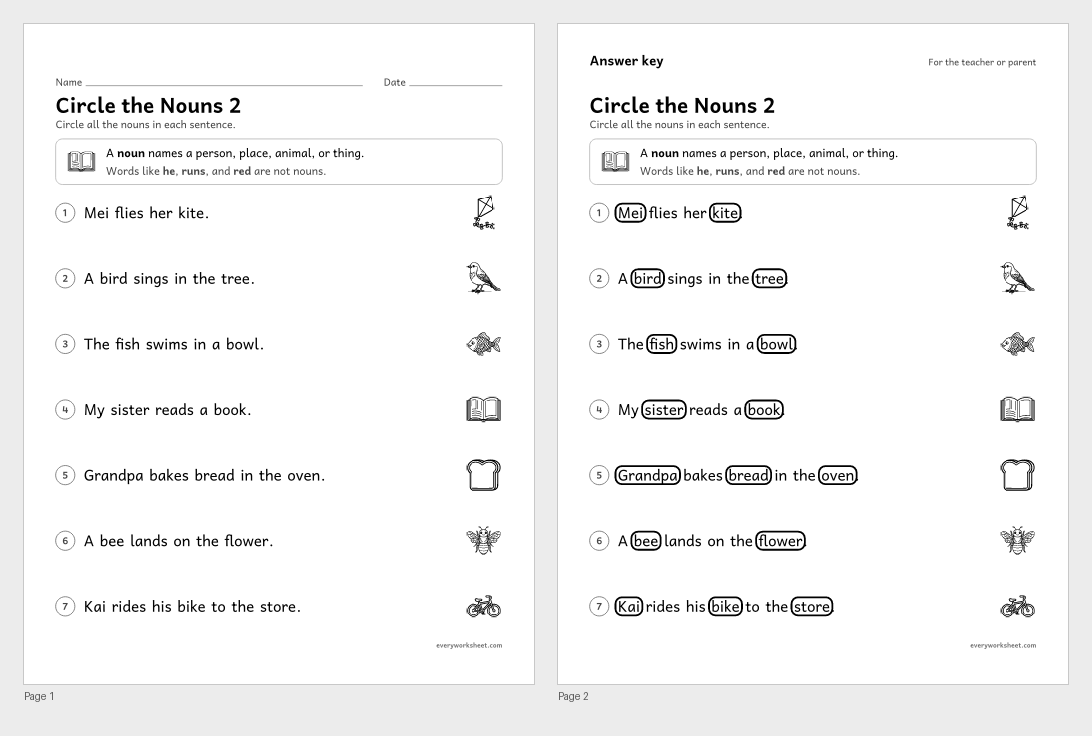
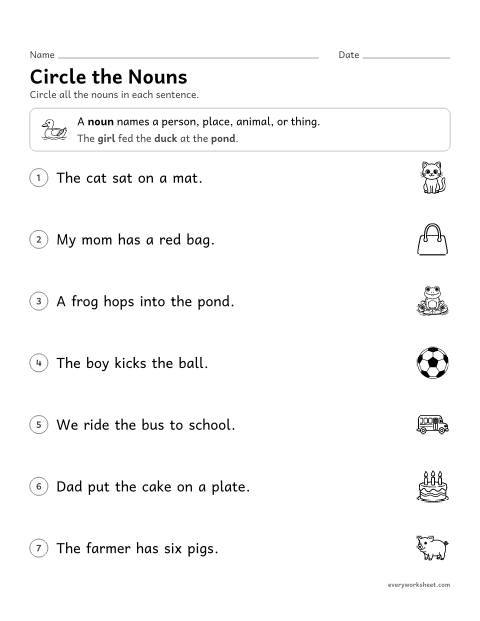
These nouns worksheets start with a chart to keep, then move through circling nouns in sentences, sorting nouns into person, place and thing, common and proper nouns, plurals, possessives and pronouns. Every page has a short rule box at the top, simple sentences a first grader can read, and pictures where they help.
Each cut and paste sort has a no-cut twin where children write the words instead. Every page with right answers has an answer key on page 2.
CCSS.ELA-LITERACY.L.1.1.BUse common, proper, and possessive nouns.CCSS.ELA-LITERACY.L.1.1.CUse singular and plural nouns with matching verbs in basic sentences (e.g., He hops; We hop).CCSS.ELA-LITERACY.L.1.1.DUse personal, possessive, and indefinite pronouns (e.g., I, me, my; they, them, their, anyone, everything).CCSS.ELA-LITERACY.L.1.2.ACapitalize dates and names of people.CCSS.ELA-LITERACY.L.1.5.ASort words into categories (e.g., colors, clothing) to gain a sense of the concepts the categories represent.CCSS.ELA-LITERACY.L.1.5.BDefine words by category and by one or more key attributes (e.g., a duck is a bird that swims; a tiger is a large cat with stripes).A noun is a naming word. It names a person (teacher), a place (park), an animal (dog) or a thing (ball).
A common noun names any person, place or thing (girl, city). A proper noun names a special one and starts with a capital letter (Rosa, Boston).
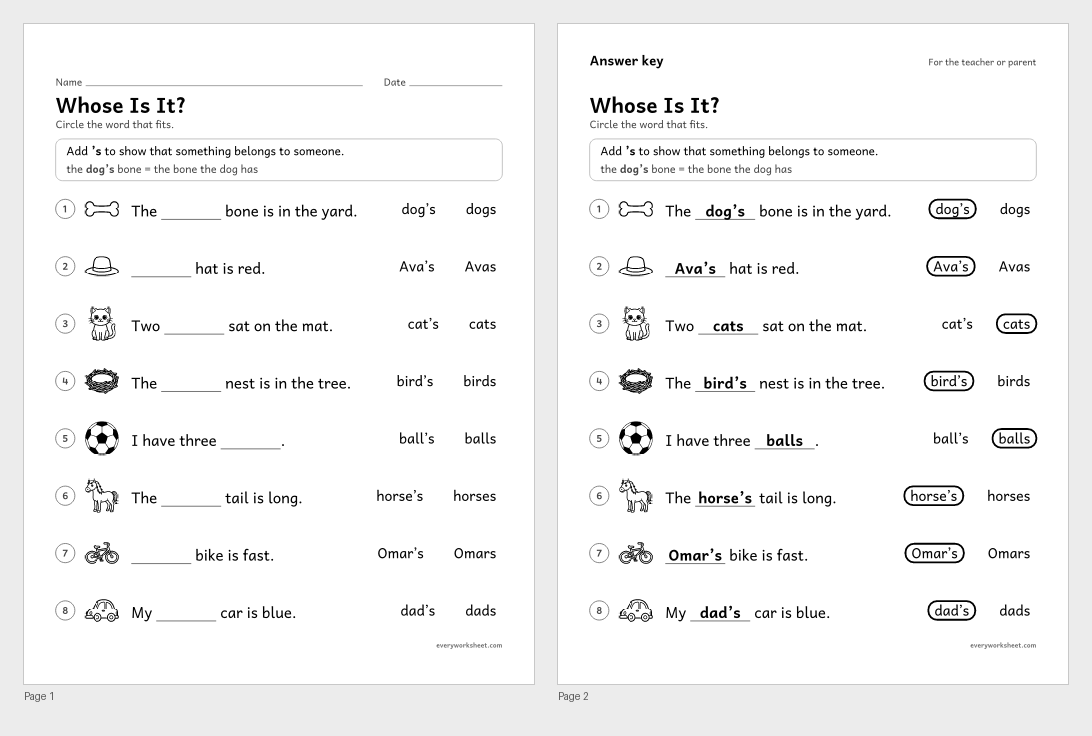
First graders begin using possessive nouns like the dog's bone. These pages introduce the apostrophe and s with simple examples.
Yes. Two pages practice he, she, it and they, and I, me, my, we, us and our.