 View larger
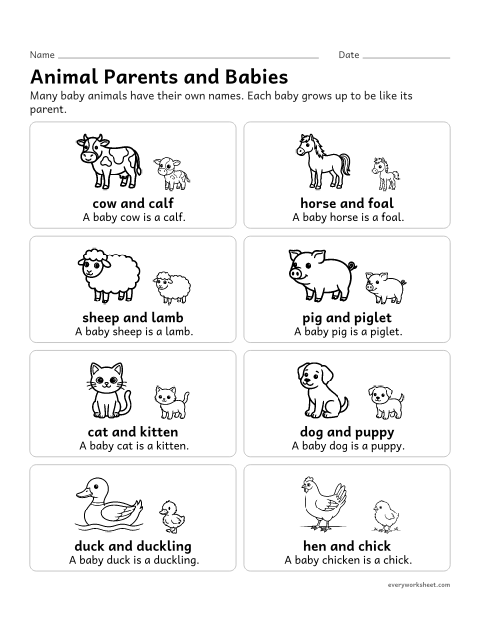
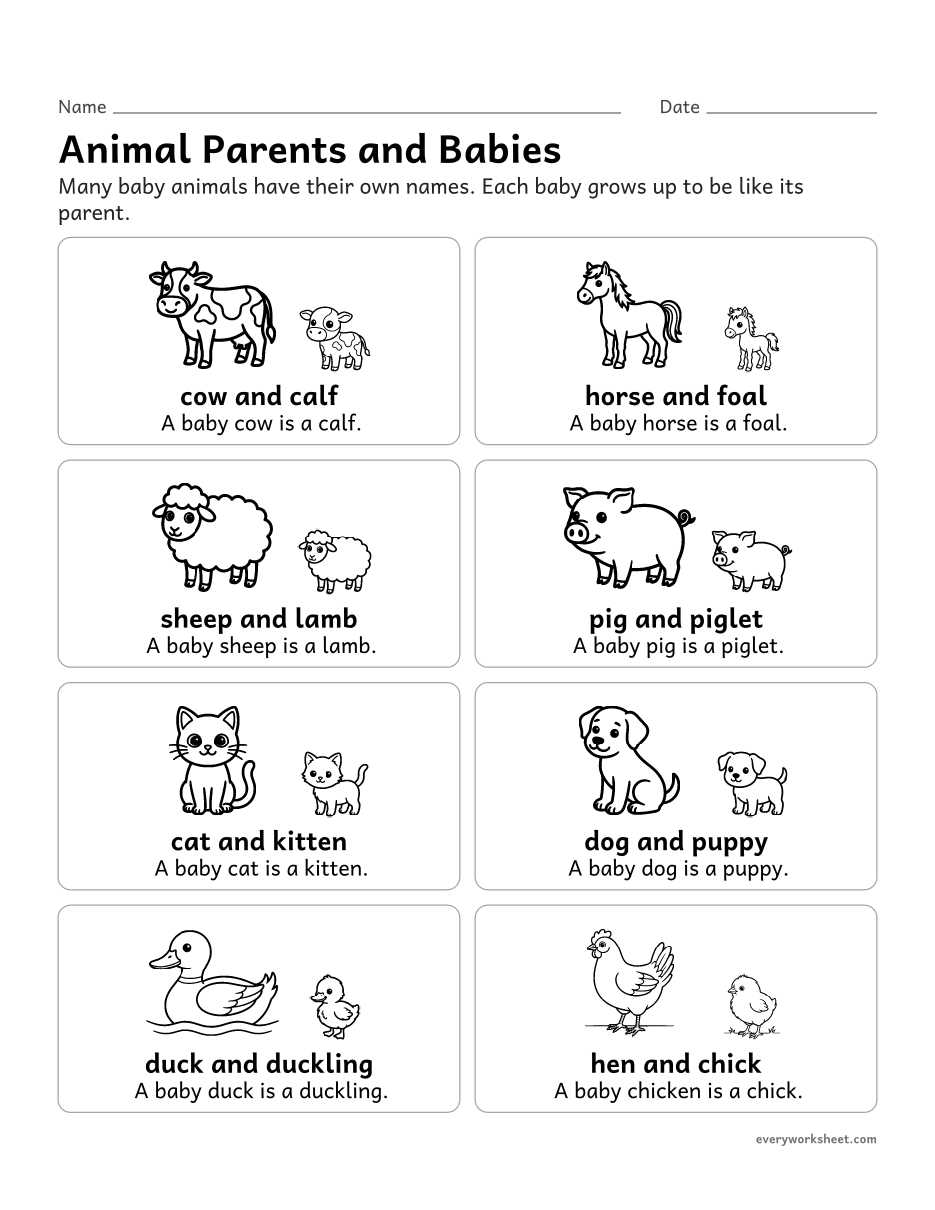
Baby animals and their parents poster
Naming baby animals and their parents
1 page303 KB
Baby animal names, matching babies and parents, alike and different, seeds that grow like their parents, and how animal parents help their young.
View largerNaming baby animals and their parents
1 page303 KB
 View all 2 pages
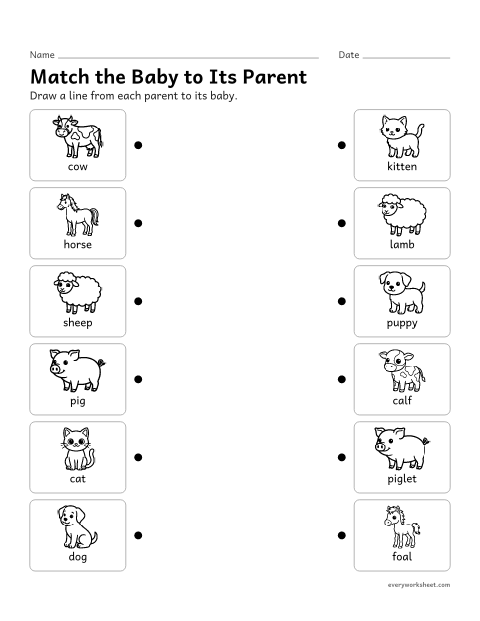
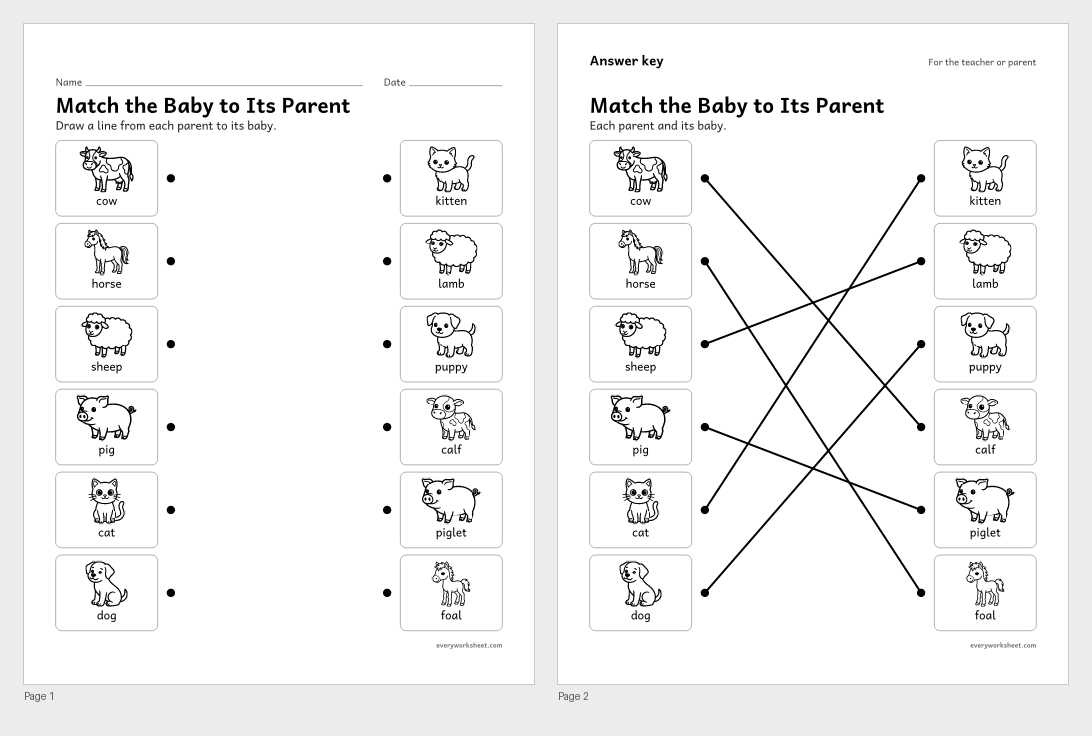
Matching baby animals to their parents
Answer key on page 2
2 pages495 KB
 View all 2 pages
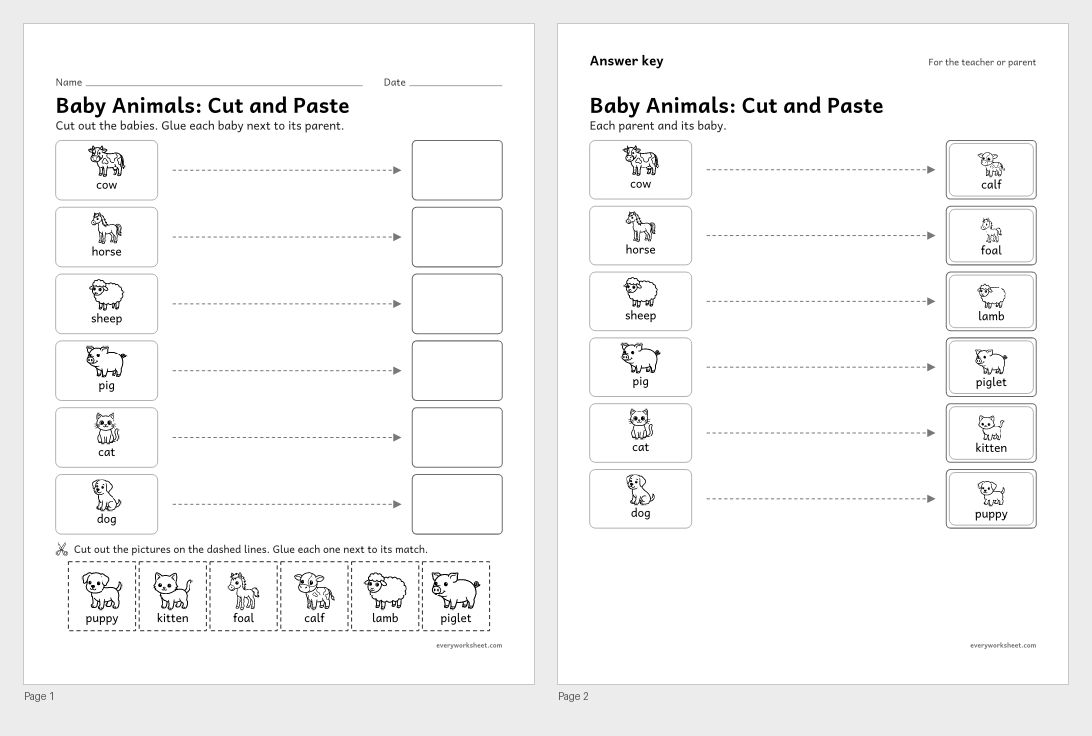
Matching baby animals to their parents
Answer key on page 2
2 pages524 KB
 View all 2 pages
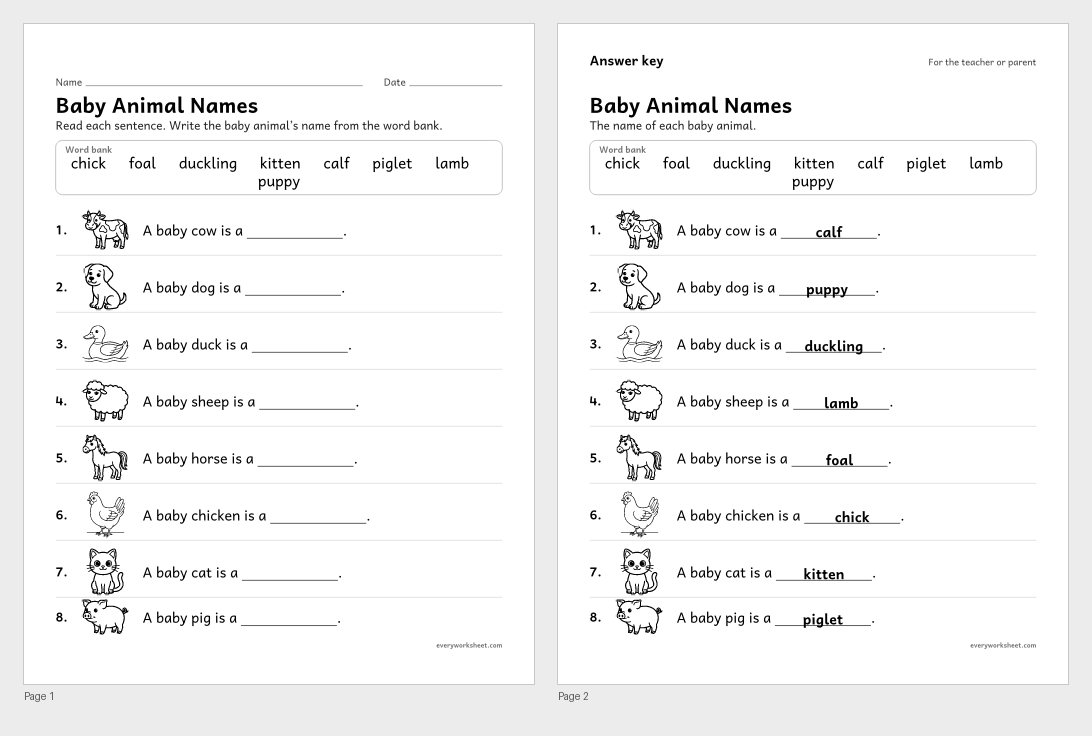
Writing the names of baby animals
Answer key on page 2
2 pages305 KB
 View all 2 pages
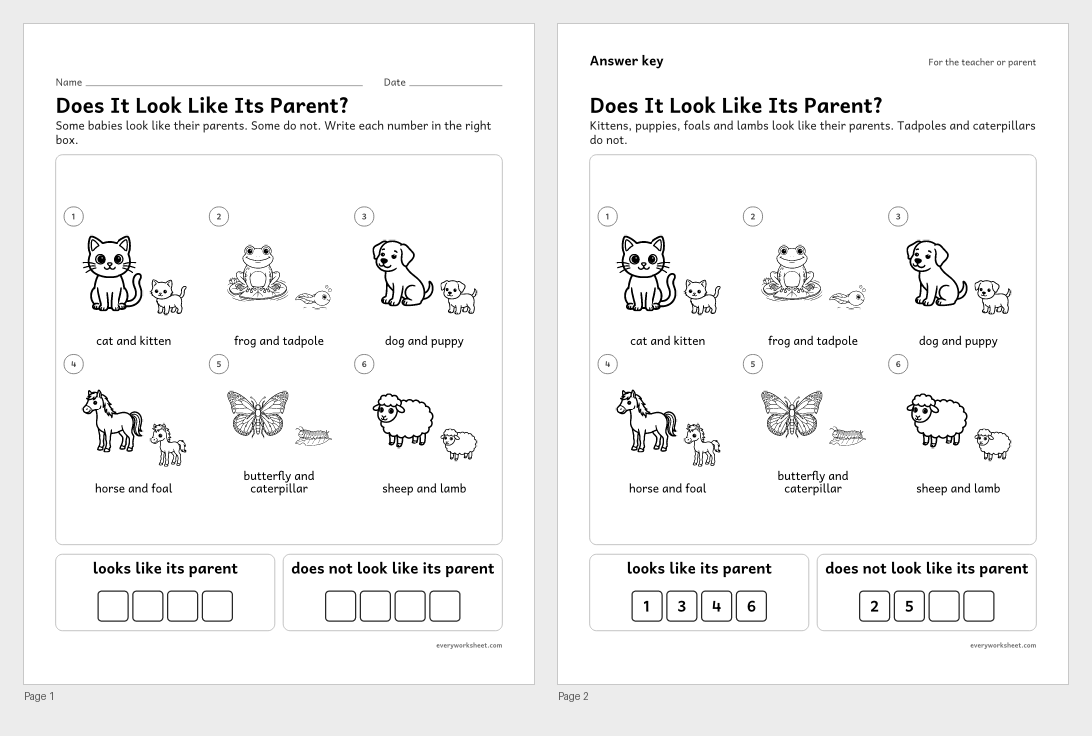
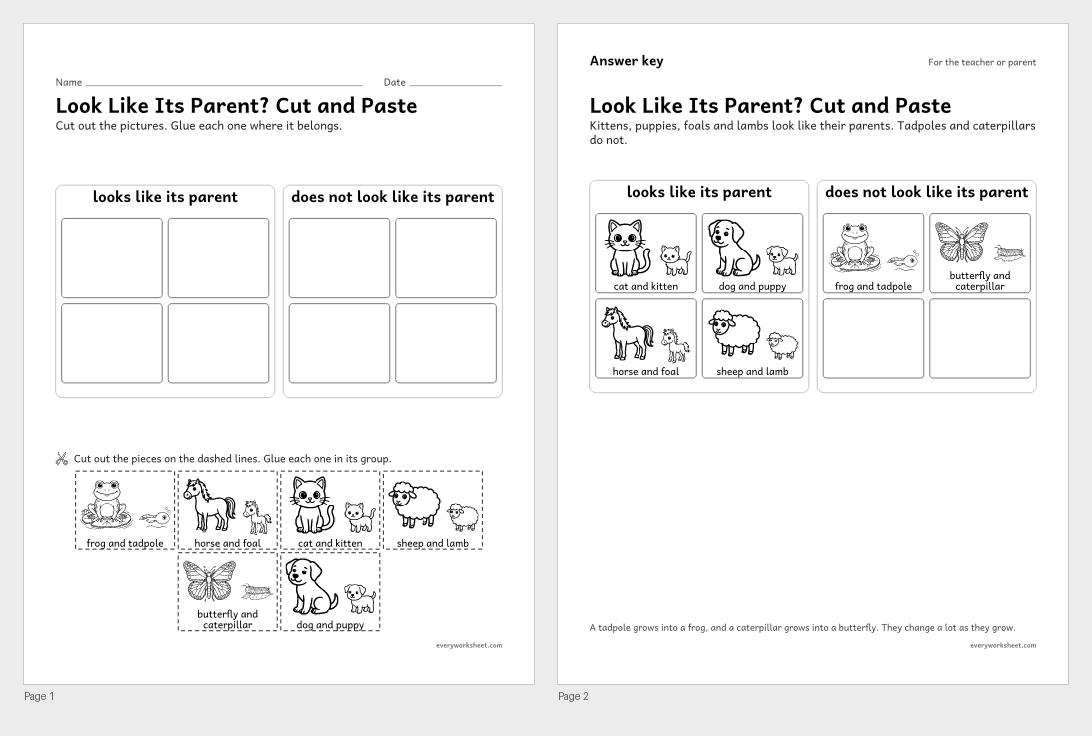
Sorting young animals that do and do not look like their parents
Answer key on page 2
2 pages501 KB
 View all 2 pages
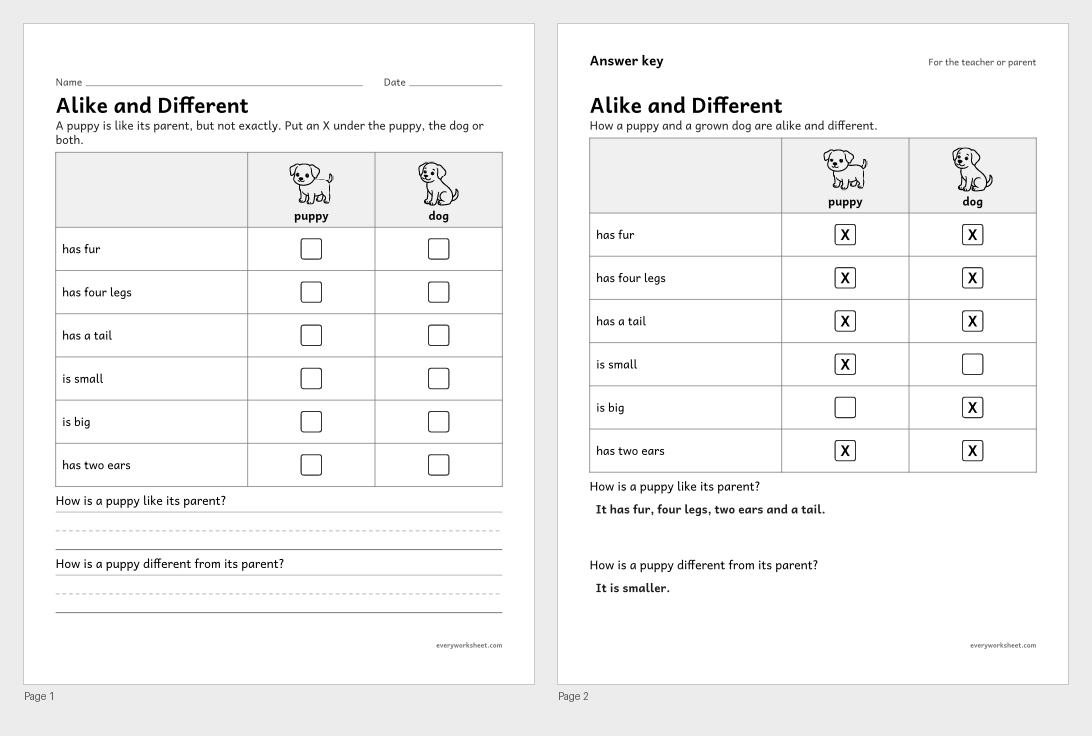
Sorting young animals that do and do not look like their parents
Answer key on page 2
2 pages526 KB
 View all 2 pages
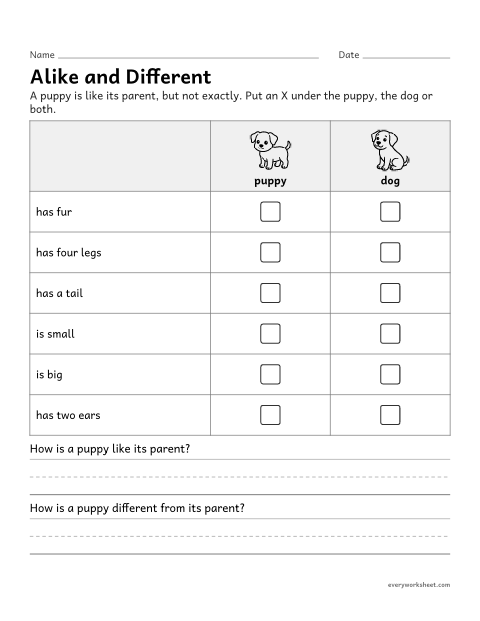
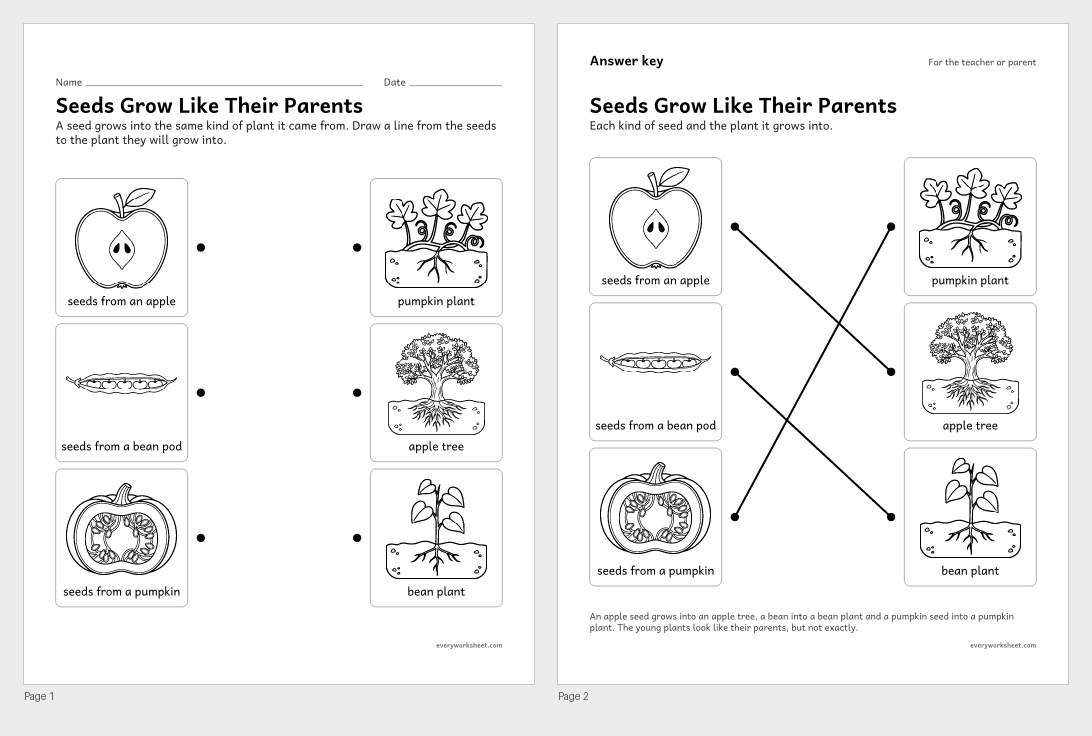
Comparing a young animal with its parent
Answer key on page 2
2 pages105 KB
 View all 2 pages
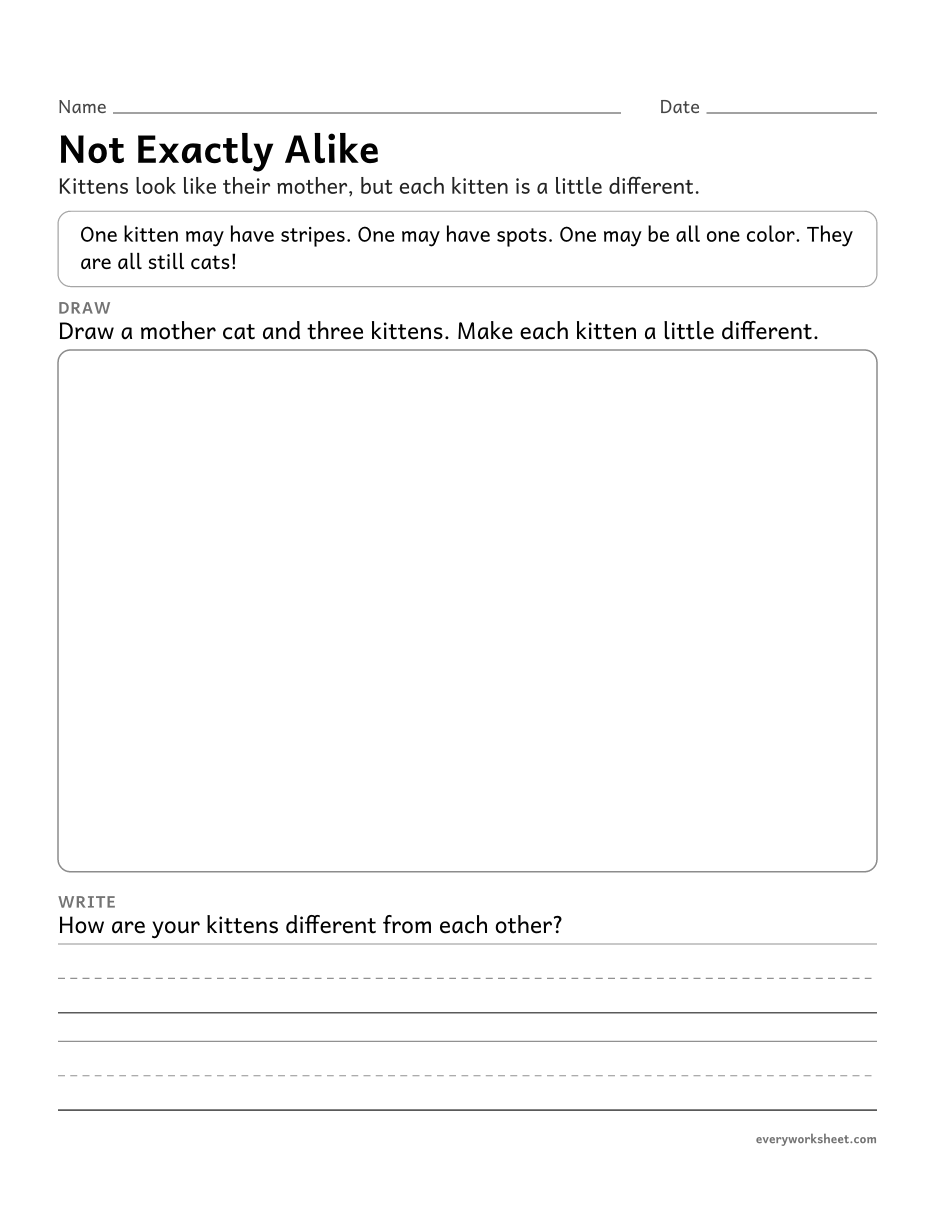
Matching seeds to the kind of parent plant they grow into
Answer key on page 2
2 pages232 KB
 View larger
Showing that young animals are like, but not exactly like, their parents
1 page26 KB
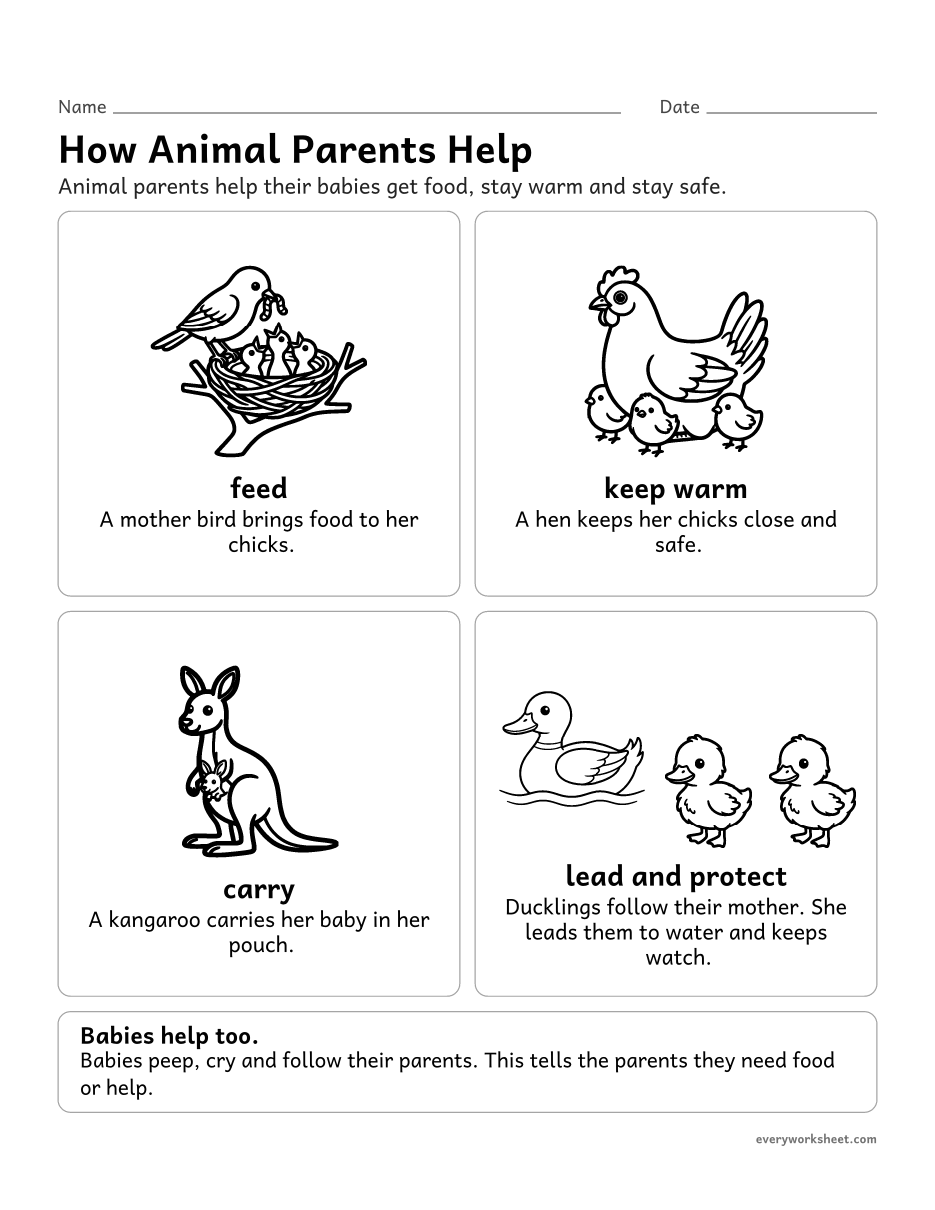 View larger
Describing how parents help their offspring survive
1 page142 KB
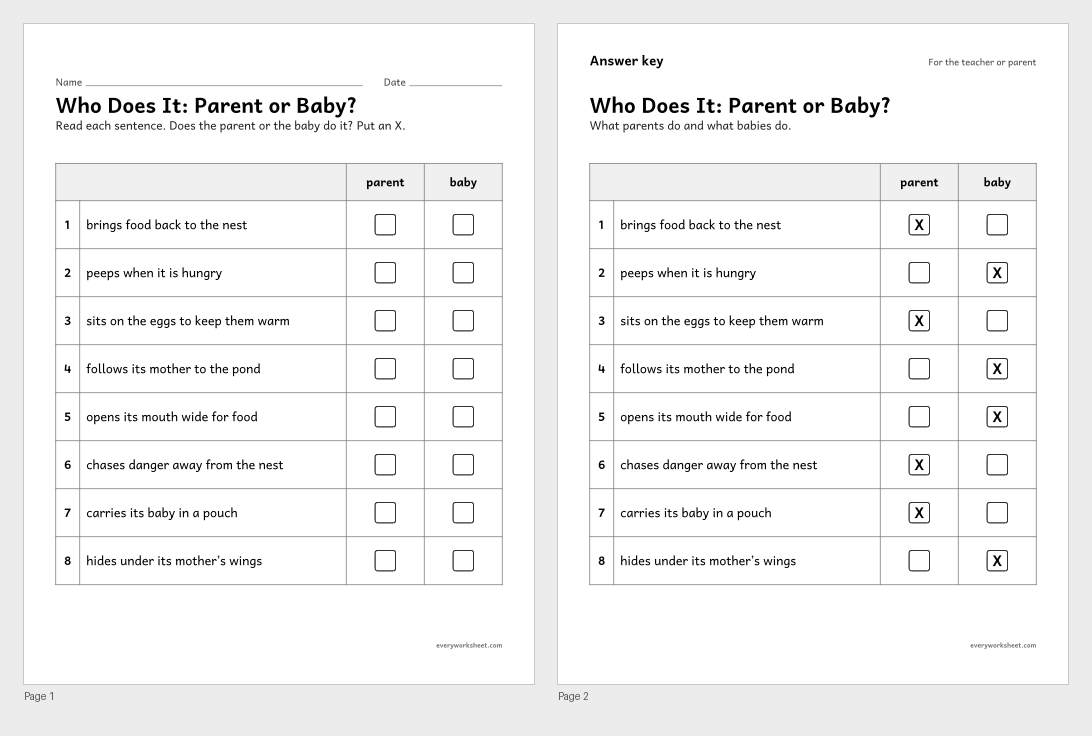 View all 2 pages
Sorting behaviors of parents and offspring that help the young survive
Answer key on page 2
2 pages42 KB
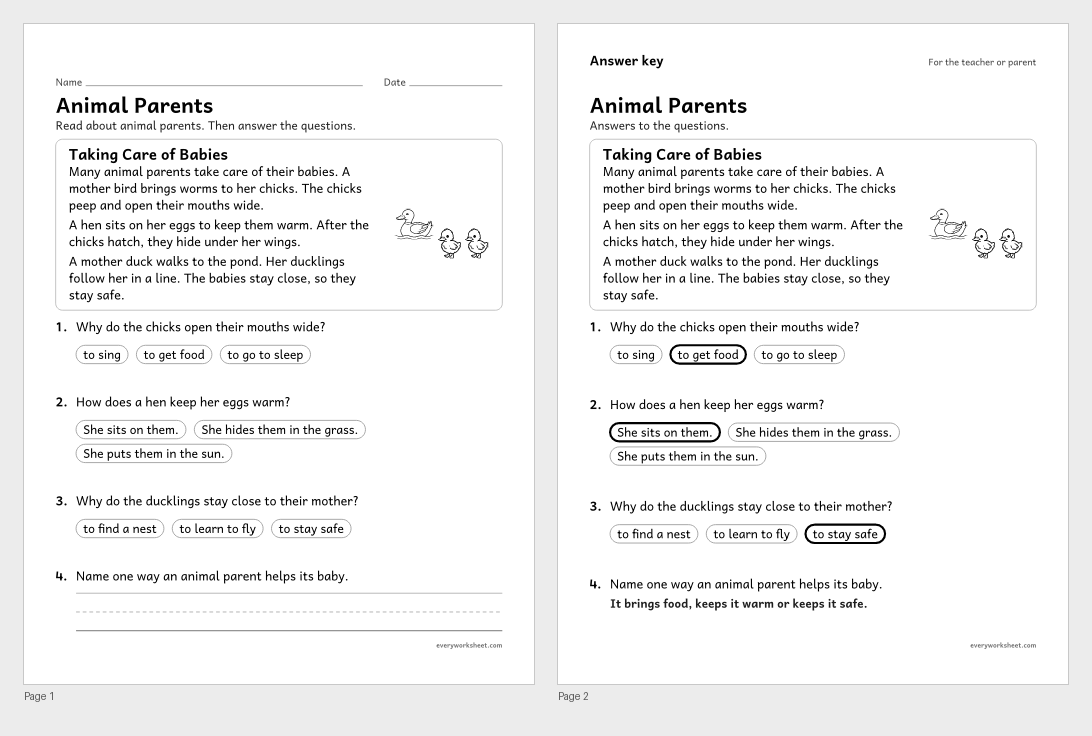 View all 2 pages
Reading how parents and babies act to help the babies survive
Answer key on page 2
2 pages125 KB
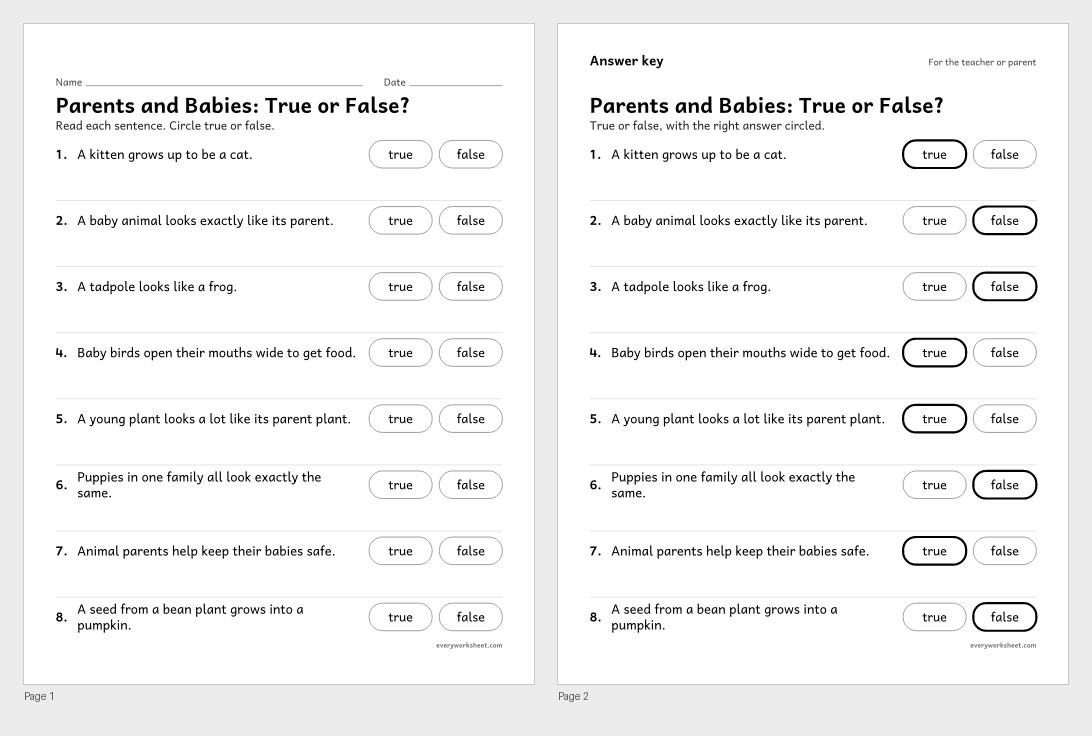 View all 2 pages
Checking facts about how young plants and animals are like their parents
Answer key on page 2
2 pages45 KB
Print at 100% (actual size) for the cleanest tracing lines.
Offspring is the science word for the young of a plant or animal. First graders learn two things about offspring. Young plants and animals are like their parents, but not exactly like them. And parents and babies act in ways that help the babies survive.
These parents and offspring worksheets start with baby animal names: a calf, a foal, a lamb, a piglet. Children match babies to parents, sort babies that look like their parents from ones that change a lot as they grow, and compare a puppy with a grown dog. A seed page shows that plants have offspring too.
The second half is about care. A poster, a sort and a short reading passage show parents feeding, warming, carrying and protecting their young, and babies peeping and following to get help. Pages print on US Letter or A4, with answer keys on page 2.
NGSS 1-LS3-1Make observations to construct an evidence-based account that young plants and animals are like, but not exactly like, their parents.NGSS 1-LS1-2Read texts and use media to determine patterns in behavior of parents and offspring that help offspring survive.CCSS.ELA-LITERACY.RI.1.1Ask and answer questions about key details in a text.CCSS.ELA-LITERACY.L.1.5.BDefine words by category and by one or more key attributes (e.g., a duck is a bird that swims; a tiger is a large cat with stripes).Offspring are the young of a plant or animal. A calf is the offspring of a cow, and a bean seedling is the offspring of a bean plant.
Many do, like kittens, puppies, foals and lambs. Some change a lot as they grow. A tadpole looks nothing like a frog, and a caterpillar looks nothing like a butterfly, but they grow up to look like their parents.
Yes. Every page with right answers has an answer key on page 2. The posters and the drawing page have no key.