 View larger
Tens and ones chart
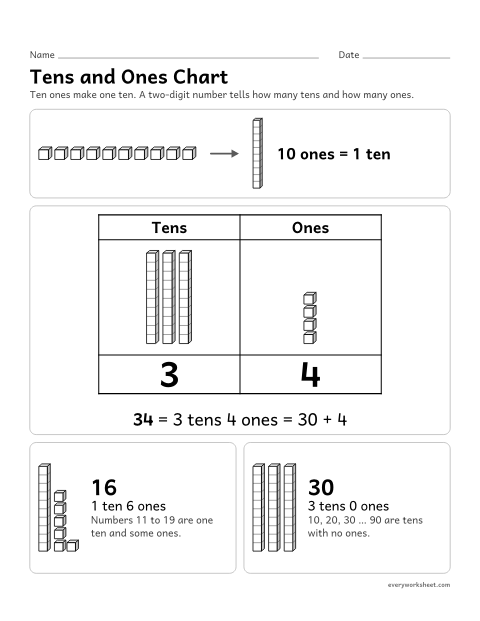
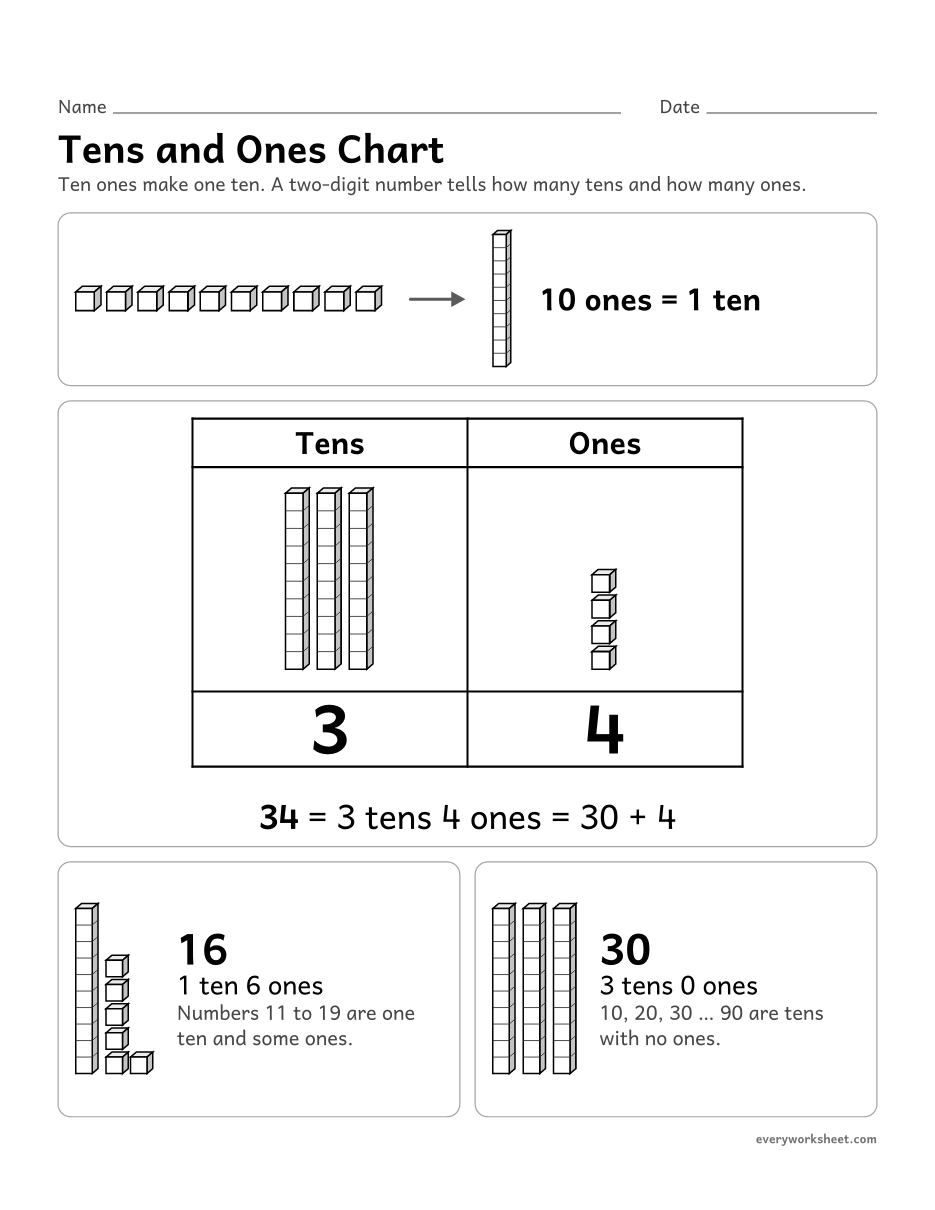
Seeing a ten as ten ones and a two-digit number as tens and ones
1 page31 KB
Tens and ones with clear base-ten blocks: make a ten, teen numbers, count the tens, read and draw two-digit numbers, and count blocks to 120.
View largerSeeing a ten as ten ones and a two-digit number as tens and ones
1 page31 KB
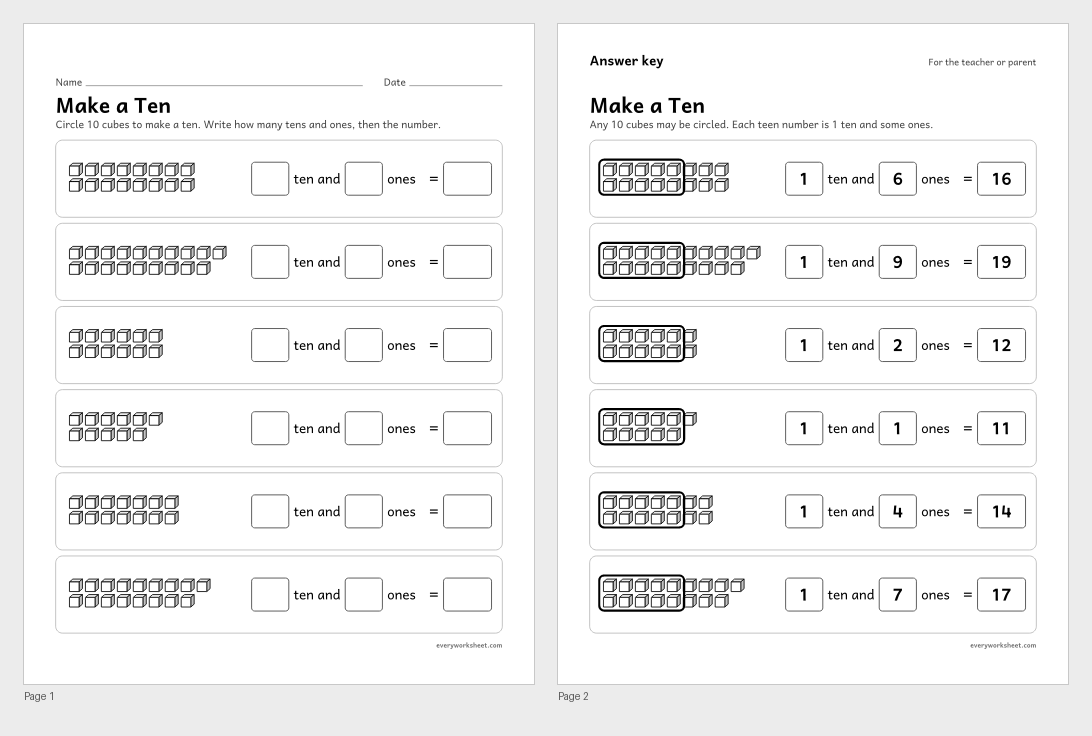 View all 2 pages
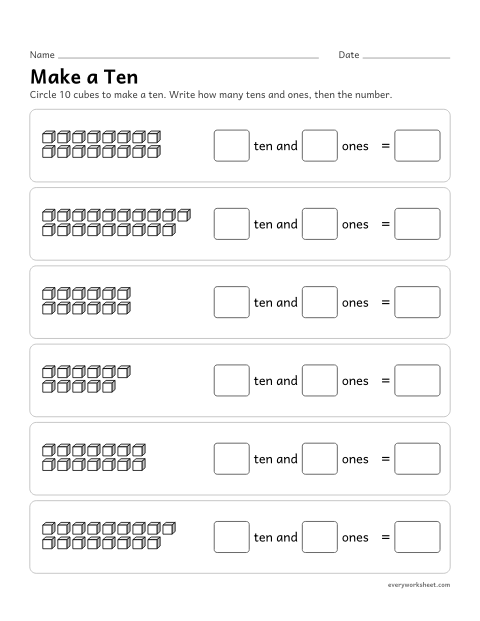
Circling ten ones to make a ten and writing teen numbers as a ten and ones
Answer key on page 2
2 pages36 KB
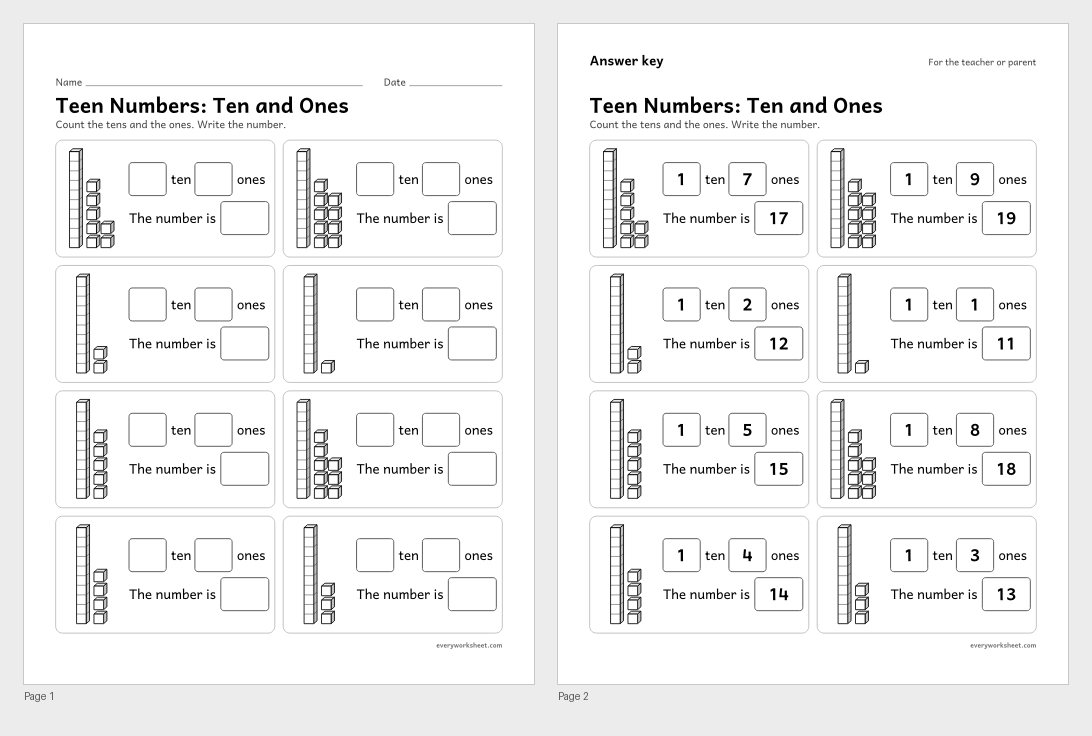 View all 2 pages
Writing 11 to 19 as one ten and some ones
Answer key on page 2
2 pages40 KB
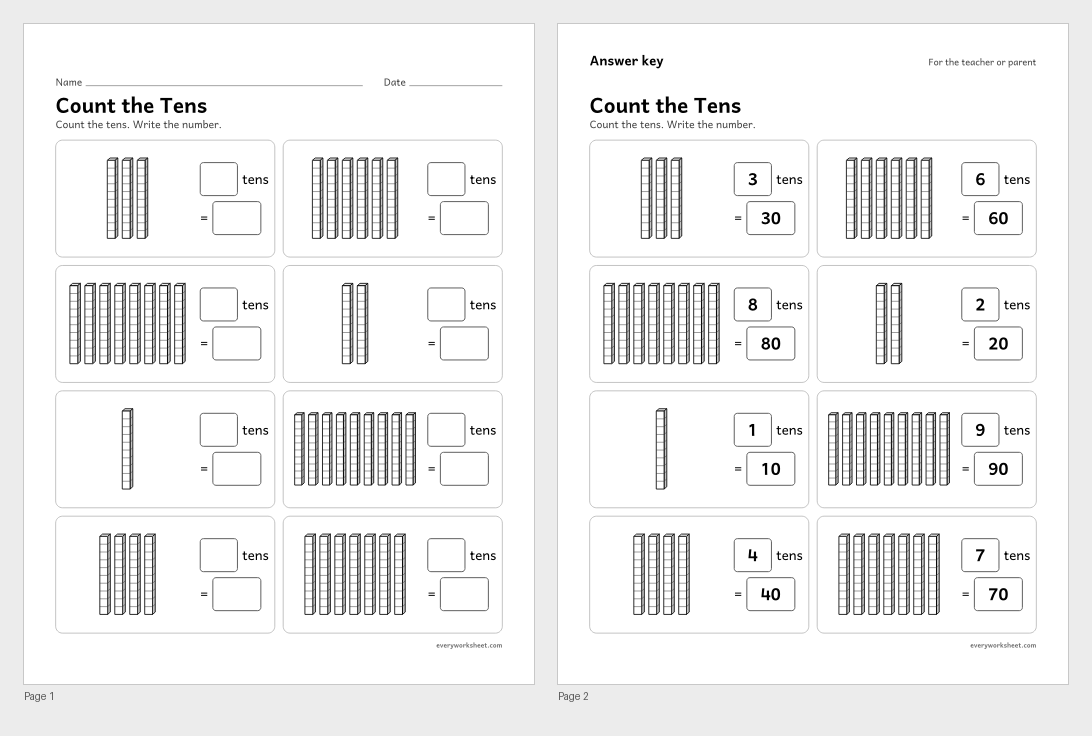 View all 2 pages
Naming 10, 20 ... 90 as tens and 0 ones
Answer key on page 2
2 pages44 KB
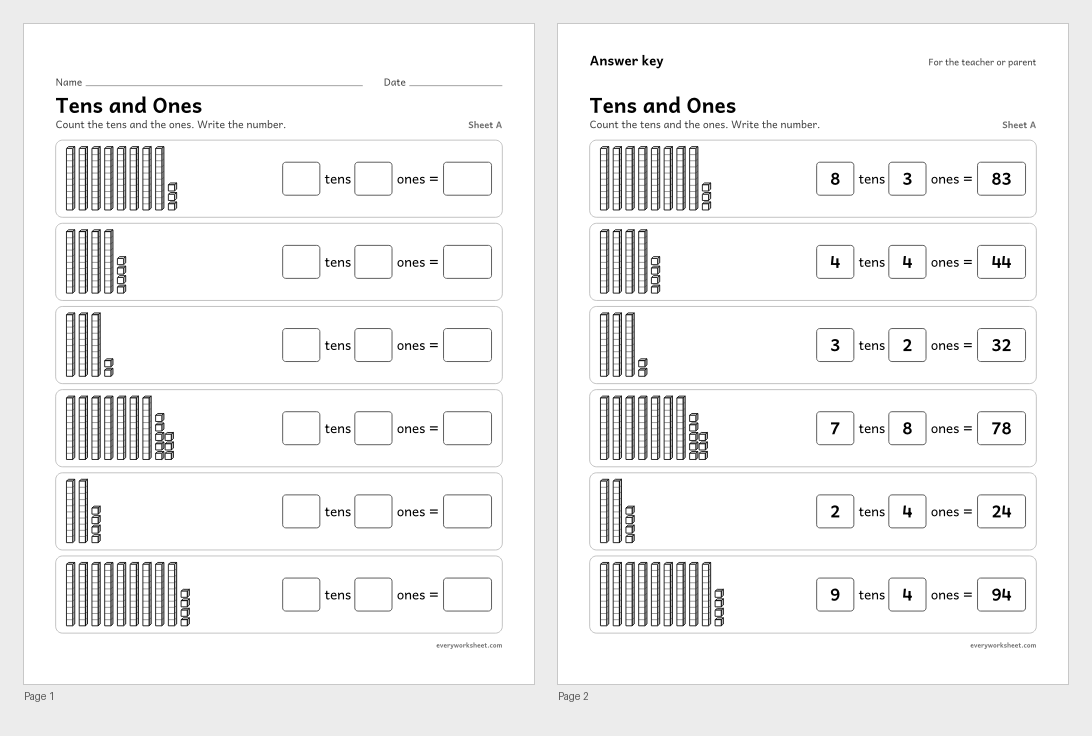 View all 2 pages
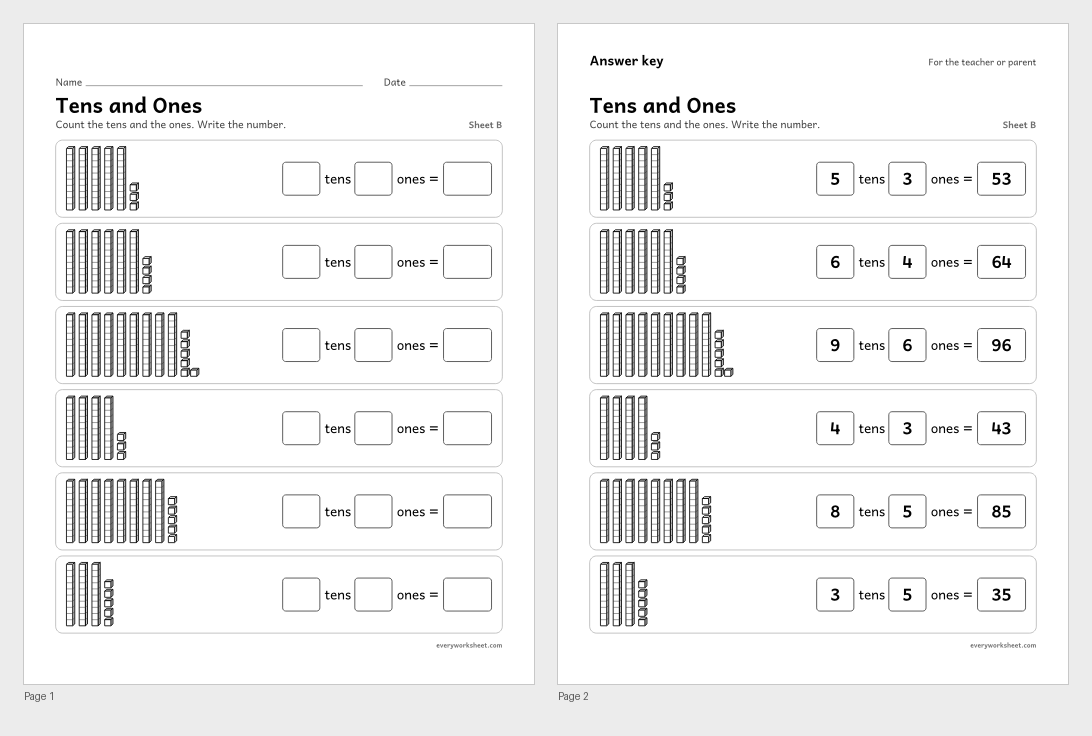
Counting tens and ones in base-ten blocks and writing the two-digit number
Answer key on page 2
2 pages41 KB
 View all 2 pages
Counting tens and ones in base-ten blocks and writing the two-digit number
Answer key on page 2
2 pages42 KB
 View all 2 pages
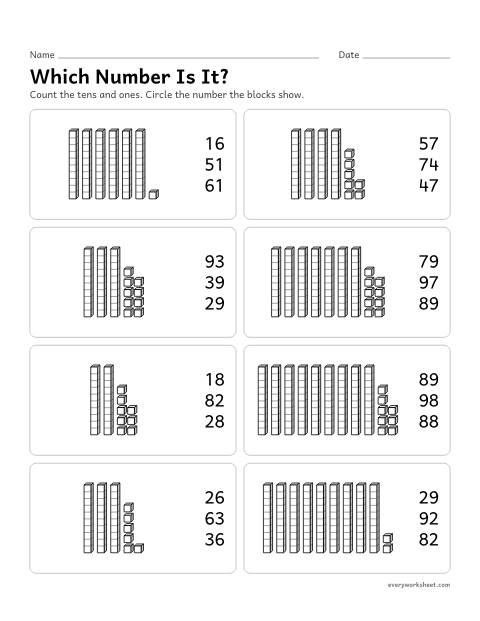
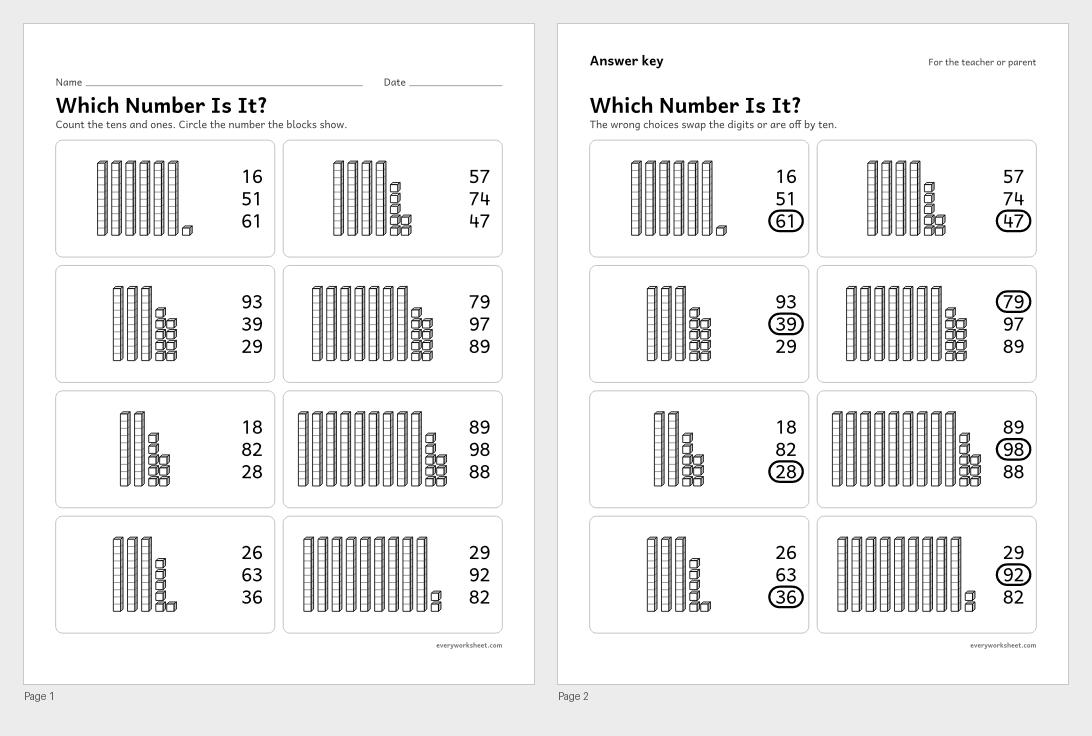
Telling 46 from 64: matching base-ten blocks to the right number
Answer key on page 2
2 pages47 KB
 View all 2 pages
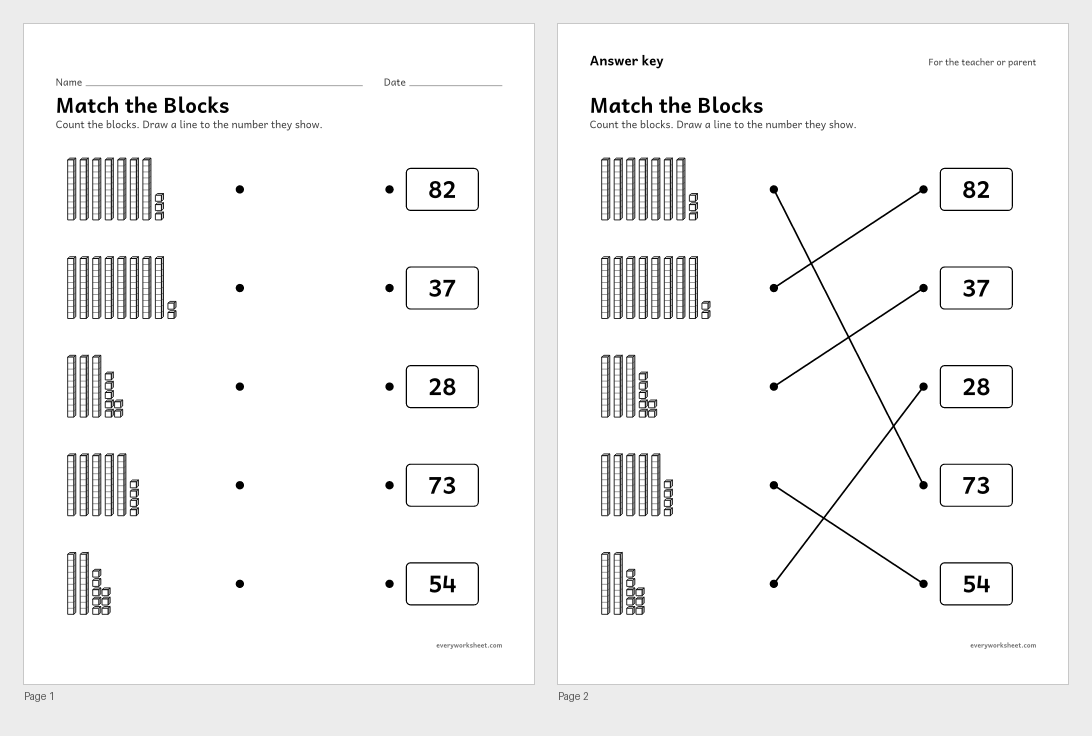
Matching base-ten pictures to two-digit numbers
Answer key on page 2
2 pages33 KB
 View all 2 pages
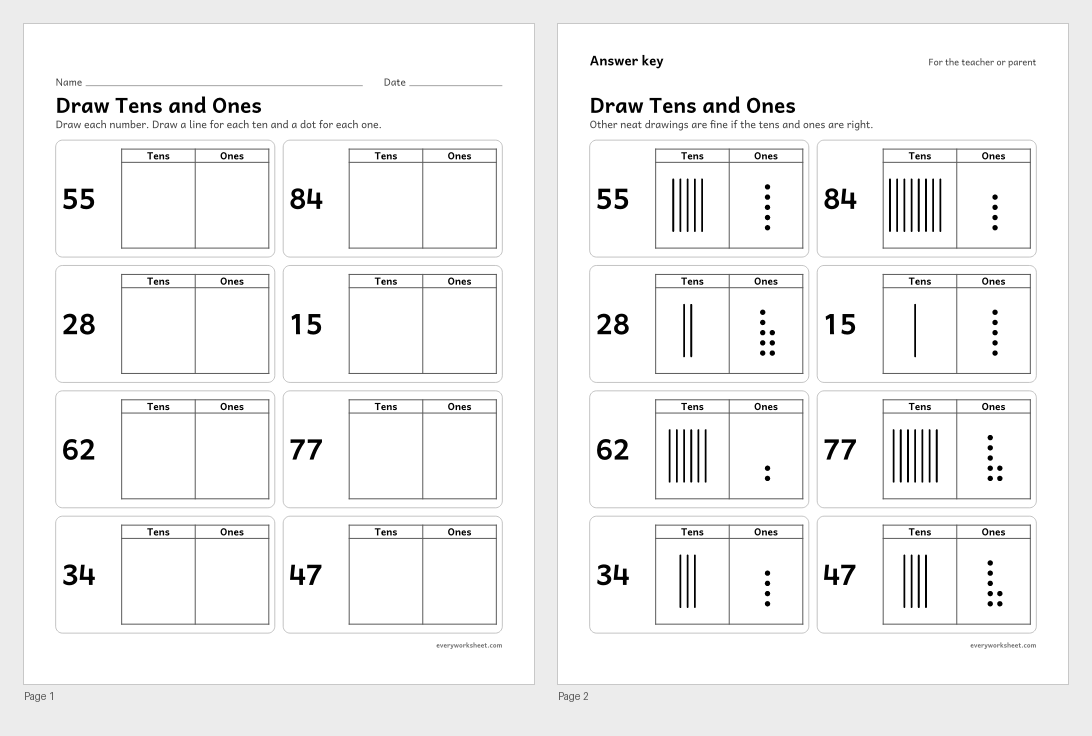
Drawing a two-digit number as tens (lines) and ones (dots)
Answer key on page 2
2 pages51 KB
 View all 2 pages
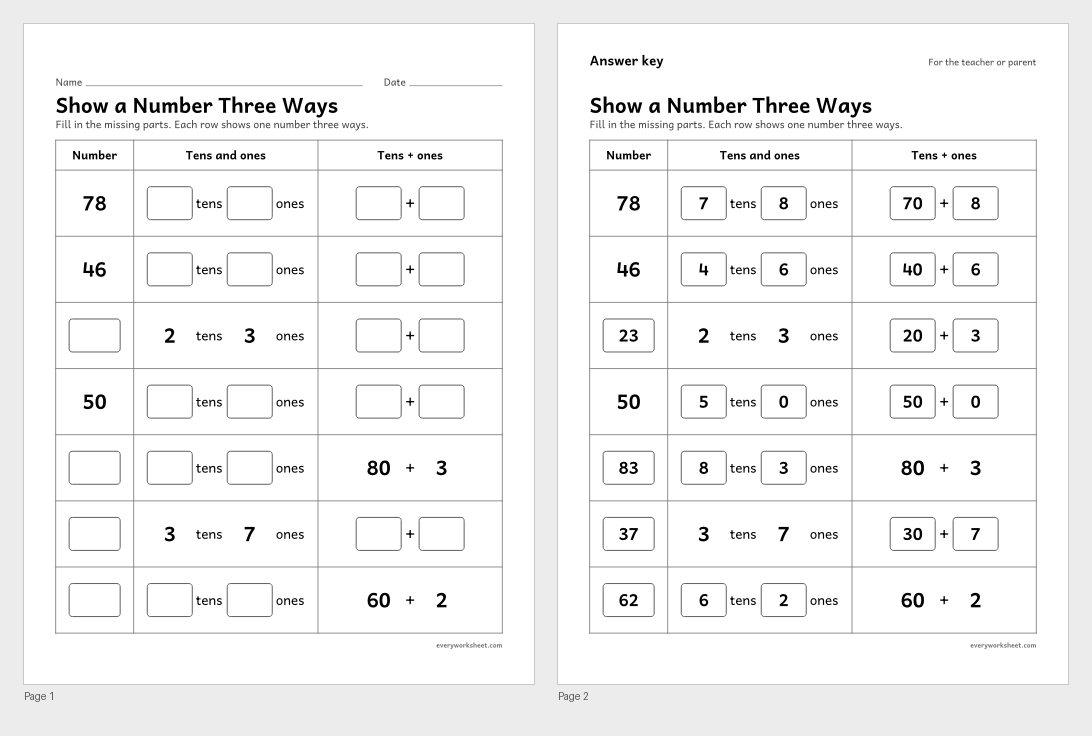
Writing a number as tens and ones and as tens plus ones (40 + 7)
Answer key on page 2
2 pages39 KB
 View all 2 pages
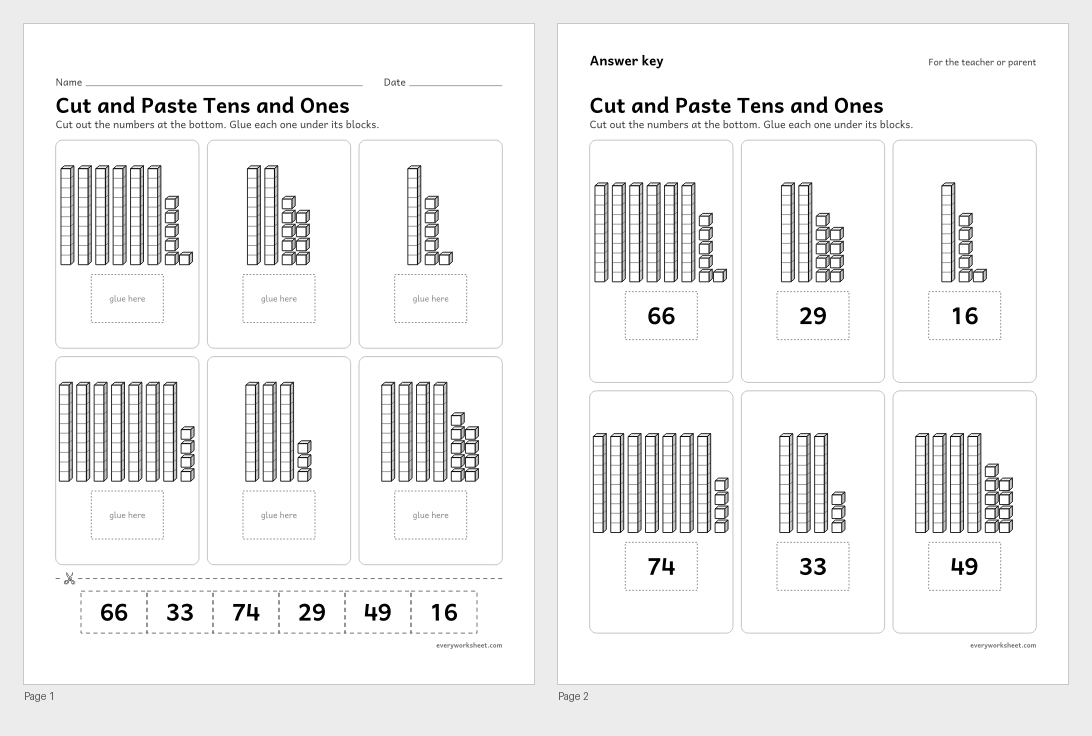
Matching number cards to base-ten pictures (cut and paste)
Answer key on page 2
2 pages65 KB
 View all 2 pages
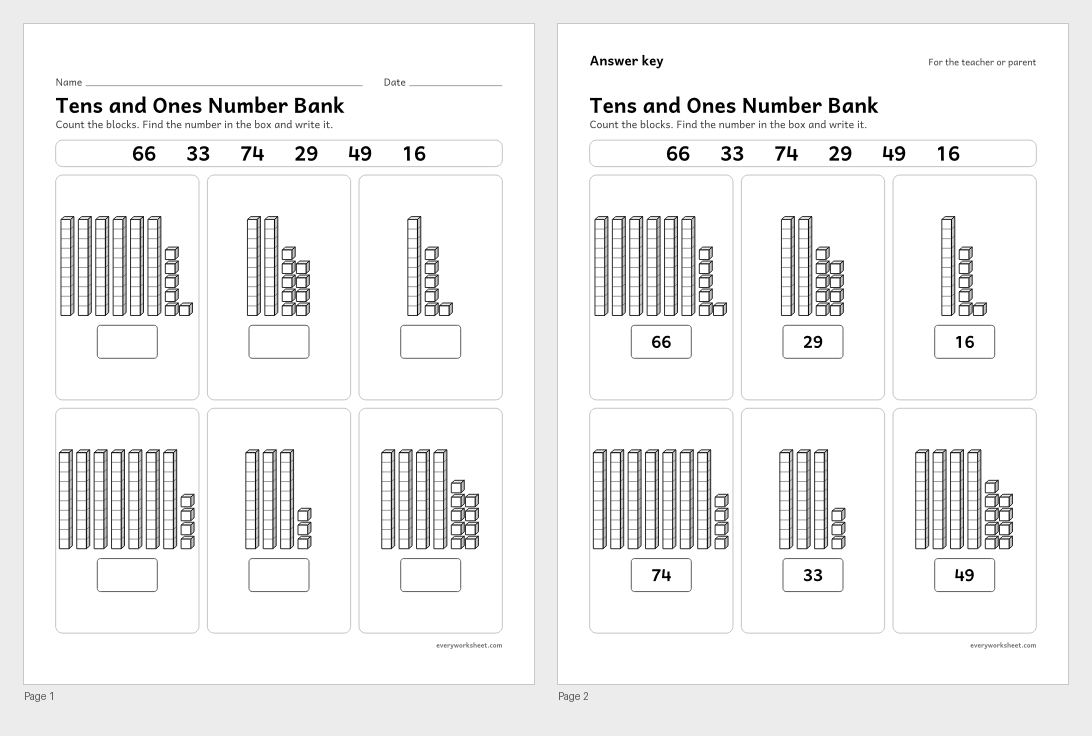
Matching numbers from a bank to base-ten pictures (no cutting)
Answer key on page 2
2 pages36 KB
 View all 2 pages
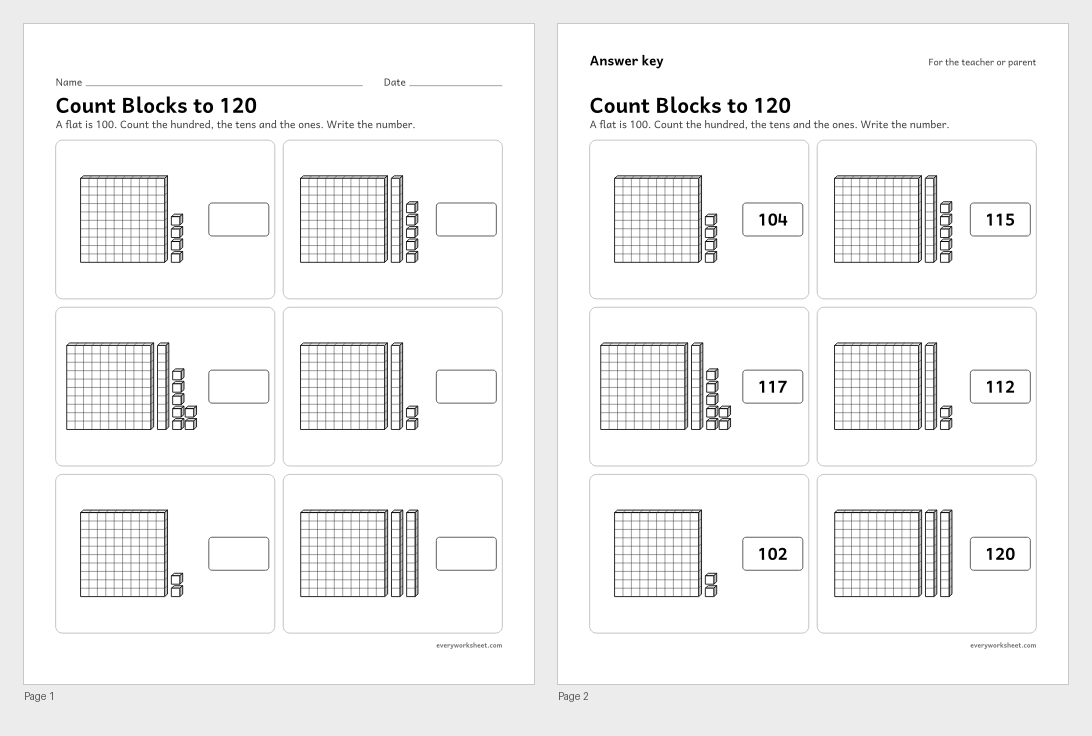
Counting hundreds, tens and ones blocks to 120 and writing the number
Answer key on page 2
2 pages37 KB
Print at 100% (actual size) for the cleanest tracing lines.
Place value is the big idea of 1st grade math: the 4 in 47 means 4 tens, and the 7 means 7 ones. Children who see that can count past 100, compare numbers, and add two-digit numbers without guessing.
These pages build the idea one step at a time. Children circle ten loose cubes to make a ten, write teen numbers as one ten and some ones, and count rods to see that 30 is 3 tens and 0 ones. Then they count tens and ones in pictures of base-ten blocks, draw numbers with quick lines and dots, and write each number three ways: 47, 4 tens 7 ones, and 40 + 7.
Every block picture is drawn to scale, with each ten rod marked into ten cubes so children can check by counting. "Which Number Is It?" puts the classic mix-up in front of them (46 or 64?), and a cut-and-paste page has a no-cut twin with a number bank. Every page with right answers has an answer key on page 2.
CCSS.MATH.CONTENT.1.NBT.B.2Understand that the two digits of a two-digit number represent amounts of tens and ones. Understand the following as special cases:CCSS.MATH.CONTENT.1.NBT.B.2.A10 can be thought of as a bundle of ten ones — called a "ten."CCSS.MATH.CONTENT.1.NBT.B.2.BThe numbers from 11 to 19 are composed of a ten and one, two, three, four, five, six, seven, eight, or nine ones.CCSS.MATH.CONTENT.1.NBT.B.2.CThe numbers 10, 20, 30, 40, 50, 60, 70, 80, 90 refer to one, two, three, four, five, six, seven, eight, or nine tens (and 0 ones).CCSS.MATH.CONTENT.1.NBT.A.1Count to 120, starting at any number less than 120. In this range, read and write numerals and represent a number of objects with a written numeral.It is knowing that the digits of a two-digit number stand for tens and ones. In 52, the 5 means 5 tens (50) and the 2 means 2 ones. First graders also learn that 10 is a bundle of ten ones and that teen numbers are one ten and some ones.
They are counting blocks: a small cube is one, a rod of ten cubes is a ten, and a flat of ten rods is a hundred. Our pages draw them clearly, with every rod marked into ten cubes so children can count to check.
Teen number names say the ones first (four-teen), so children often write them backward. Showing 14 as one ten rod and four cubes, then writing the tens digit first, fixes it for most children.
Yes. Every page with right answers has an answer key on page 2 of the same PDF. The chart is a reference page and has no key.
Yes. "Cut and Paste Tens and Ones" has number cards to cut and glue under block pictures. Its twin, "Tens and Ones Number Bank," uses the same pictures with a number bank, so children who can't cut can do the same work.