 View larger
End marks
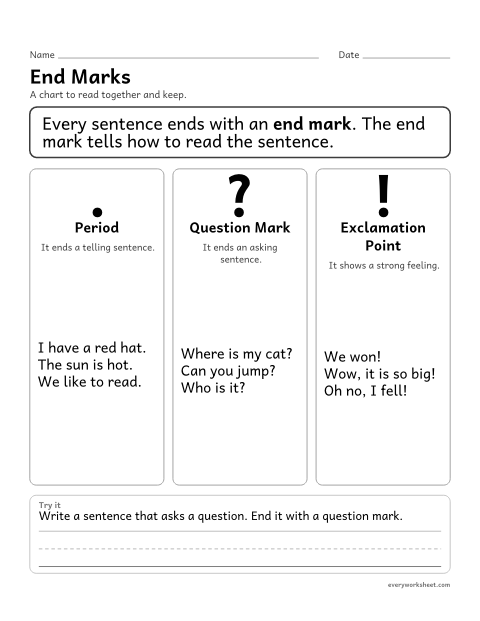
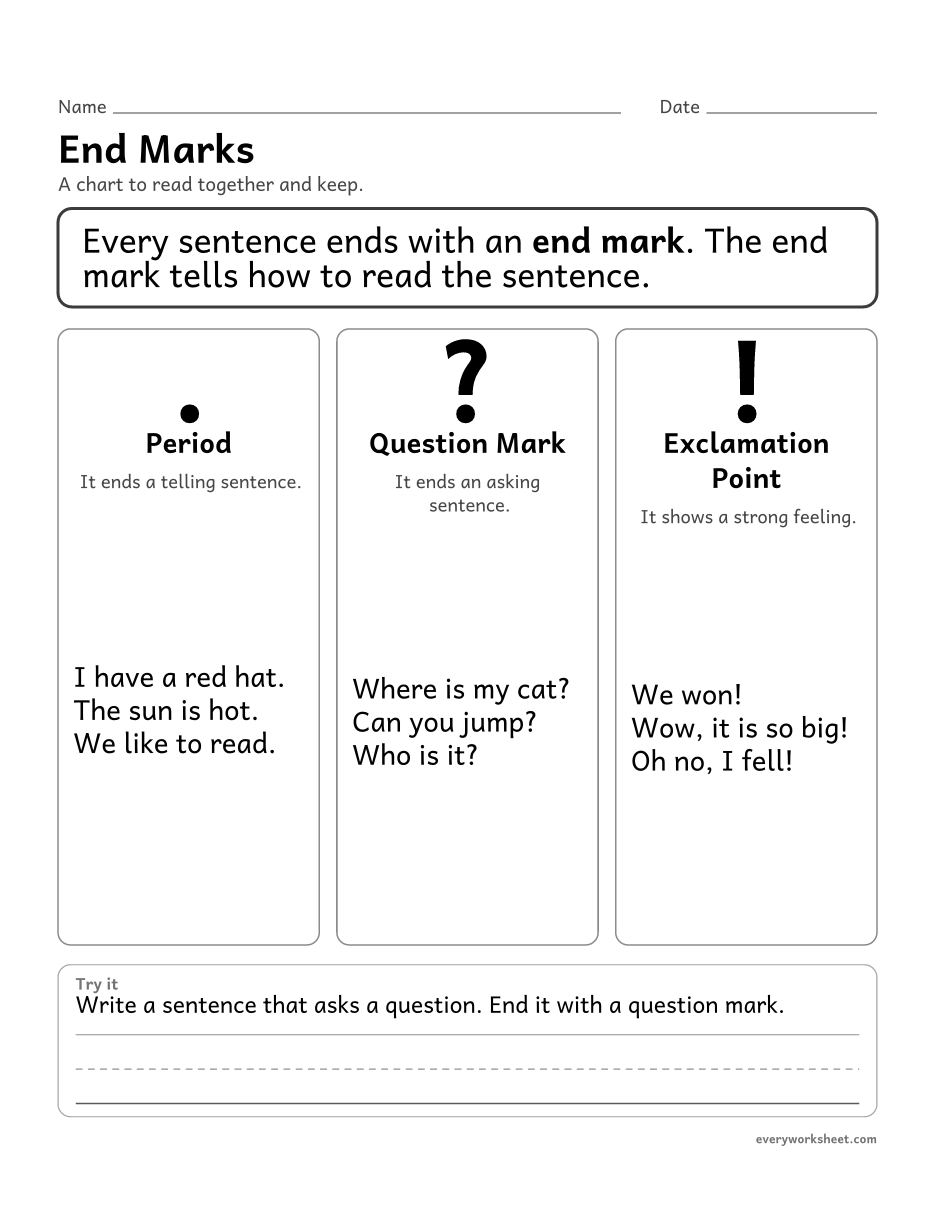
Knowing when to use a period, a question mark and an exclamation point
1 page30 KB
Choose the right end mark, tell telling from asking sentences, add commas in lists and dates, and fix the punctuation, with answer keys.
View largerKnowing when to use a period, a question mark and an exclamation point
1 page30 KB
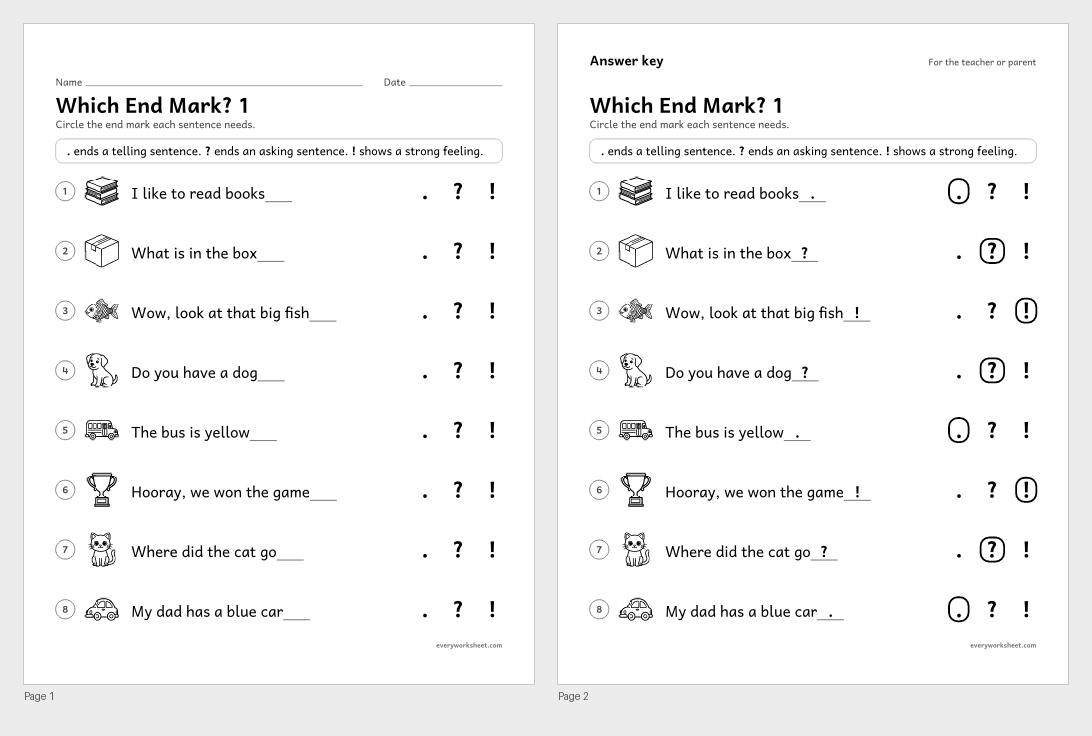 View all 2 pages
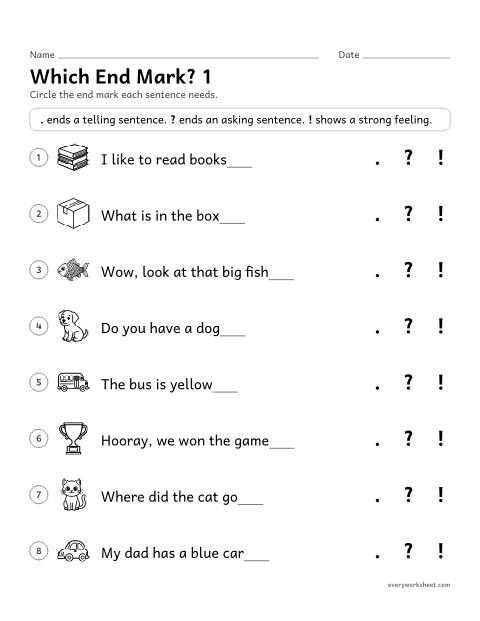
Choosing a period, question mark or exclamation point for a sentence
Answer key on page 2
2 pages375 KB
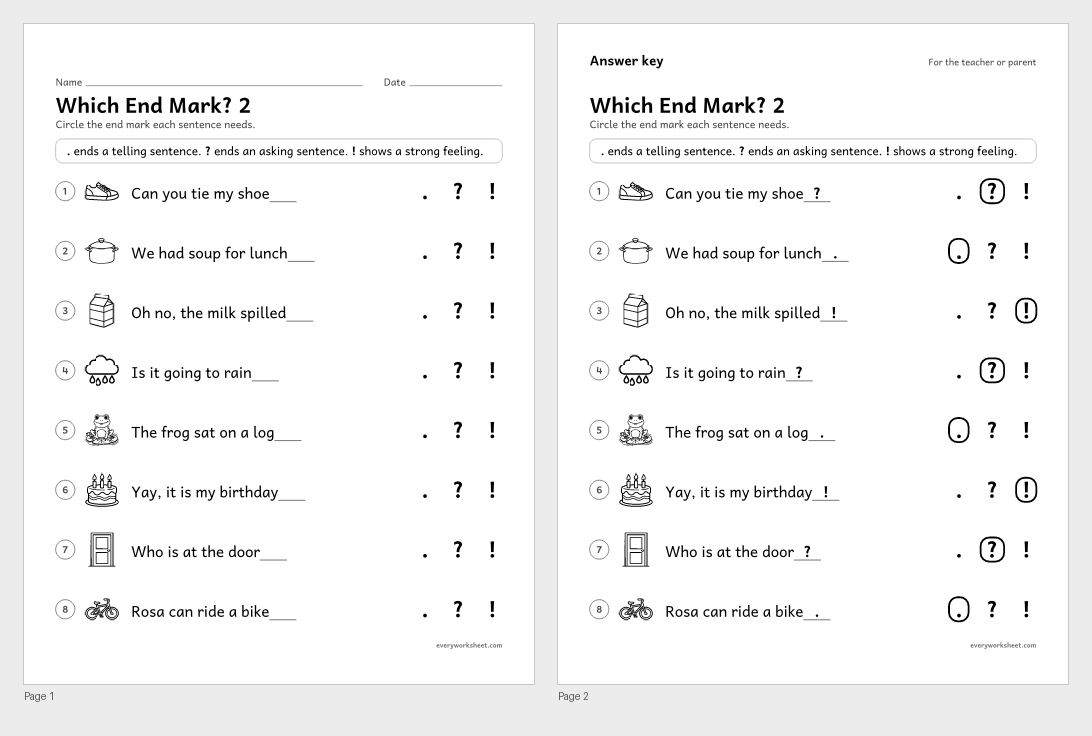 View all 2 pages
Choosing a period, question mark or exclamation point for a sentence
Answer key on page 2
2 pages279 KB
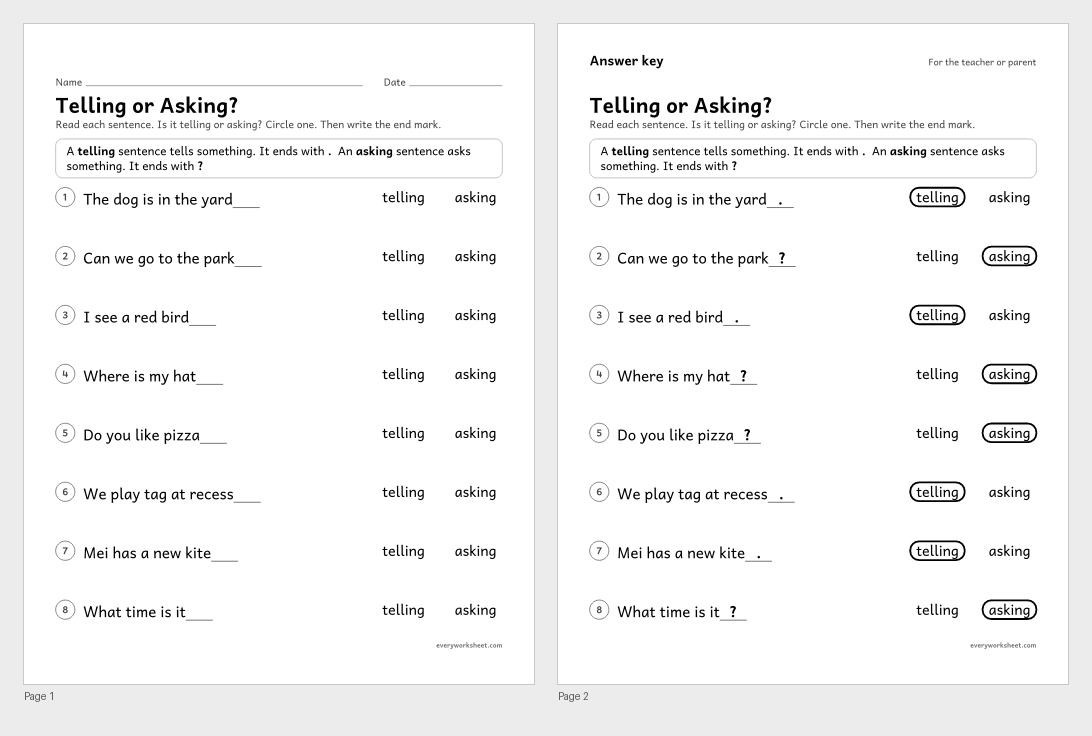 View all 2 pages
Telling statements from questions by their words, then adding the end mark
Answer key on page 2
2 pages47 KB
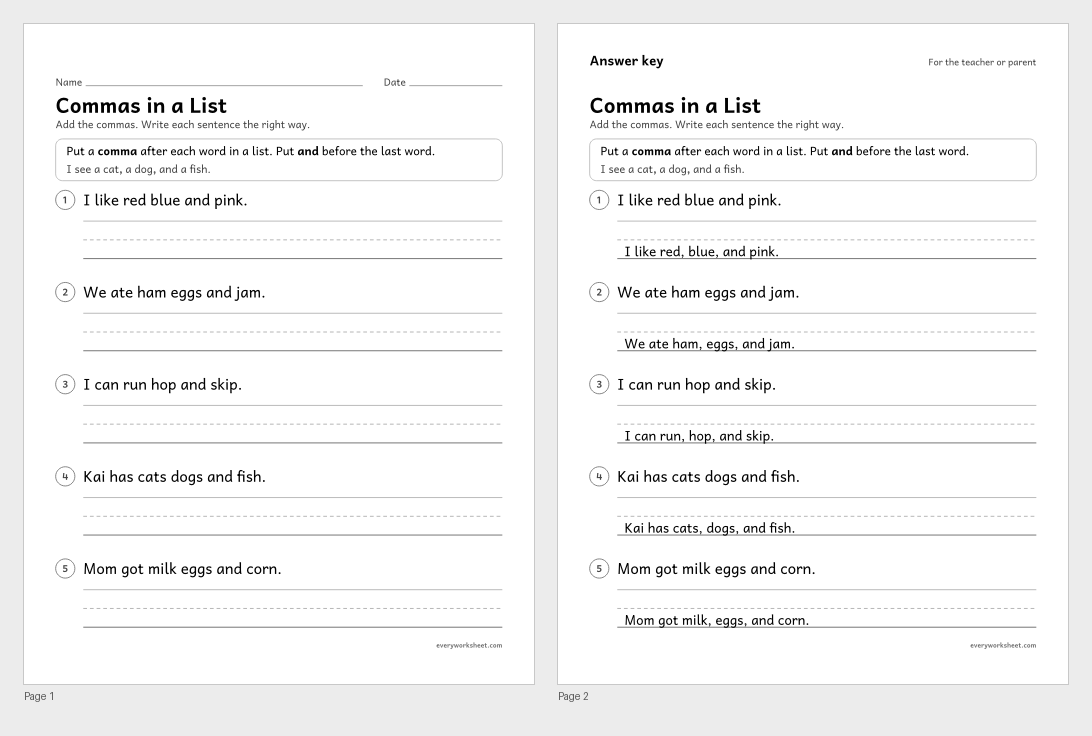 View all 2 pages
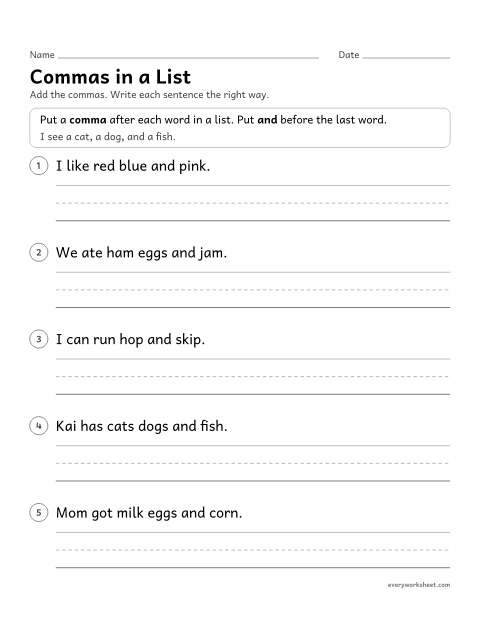
Using commas to separate single words in a series
Answer key on page 2
2 pages37 KB
 View all 2 pages
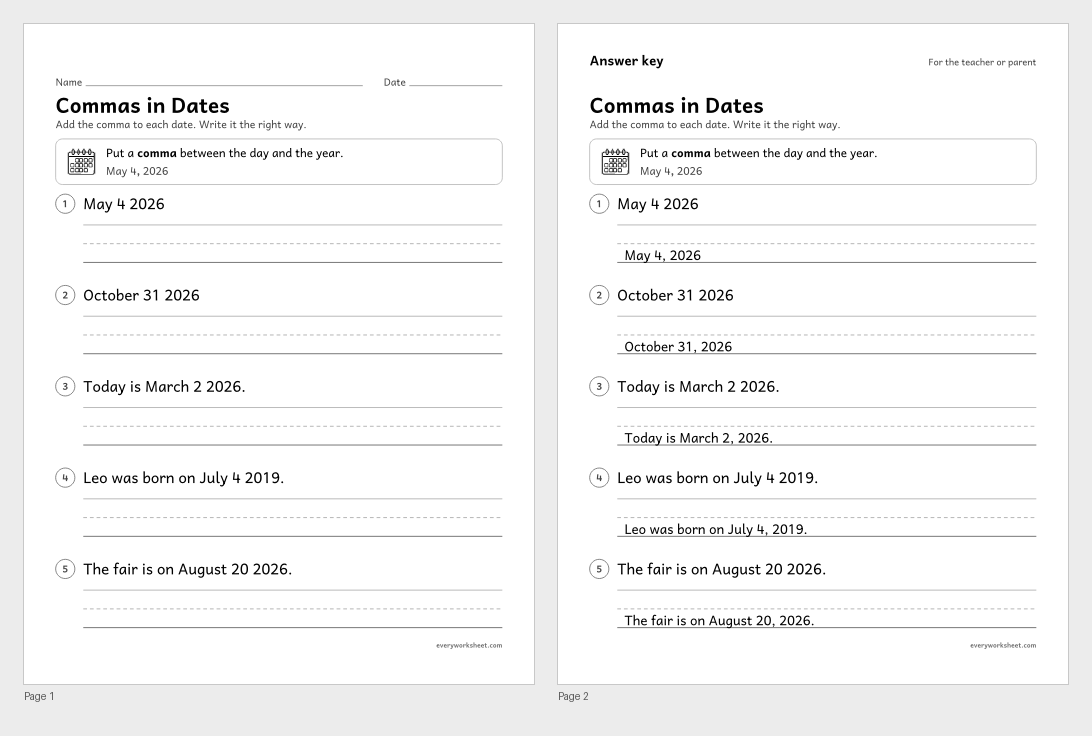
Using a comma between the day and the year in a date
Answer key on page 2
2 pages58 KB
 View all 2 pages
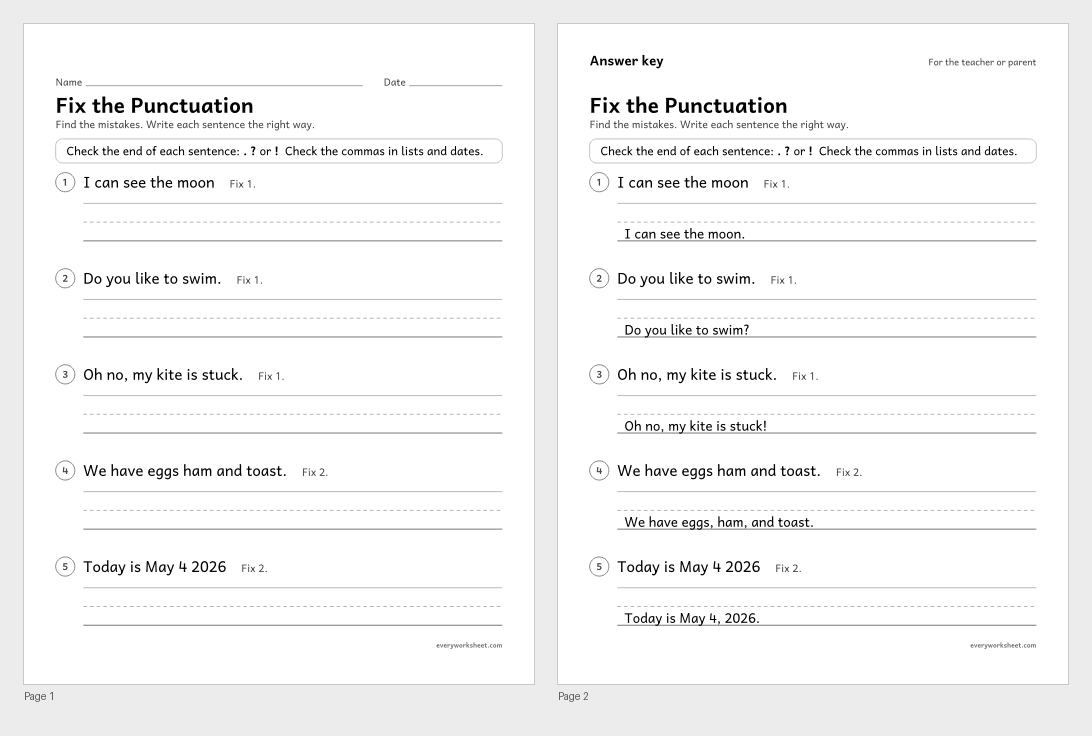
Correcting end marks and commas in sentences
Answer key on page 2
2 pages38 KB
 View all 2 pages
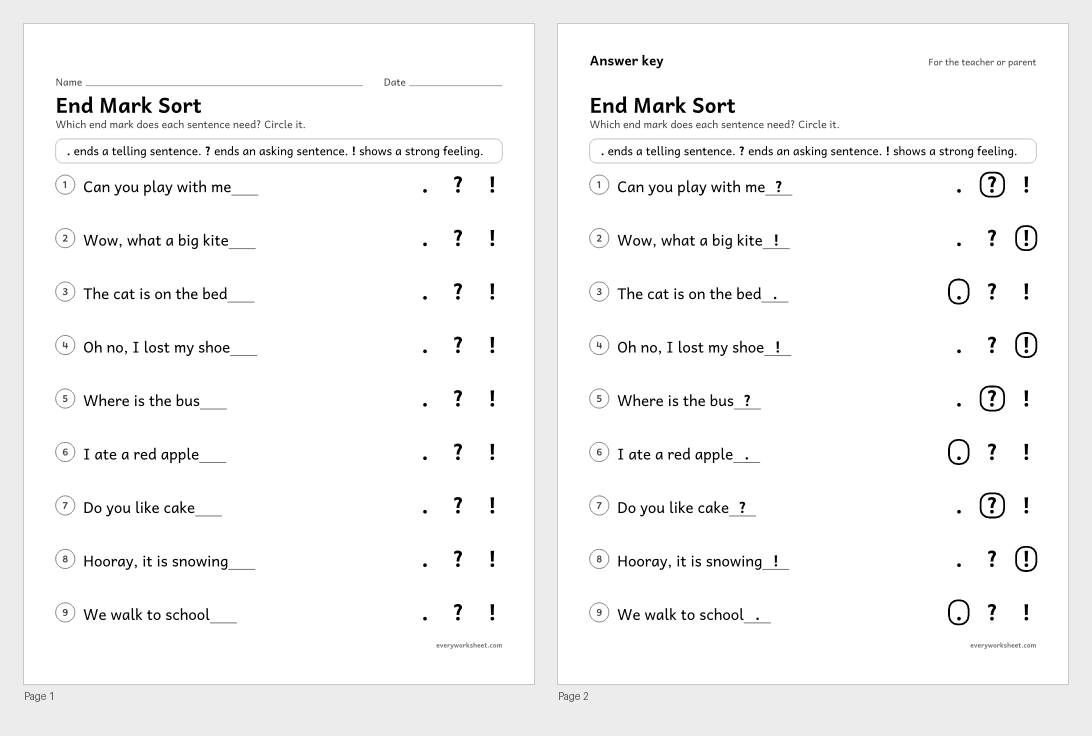
Sorting sentences by the end mark they need
Answer key on page 2
2 pages49 KB
 View all 2 pages
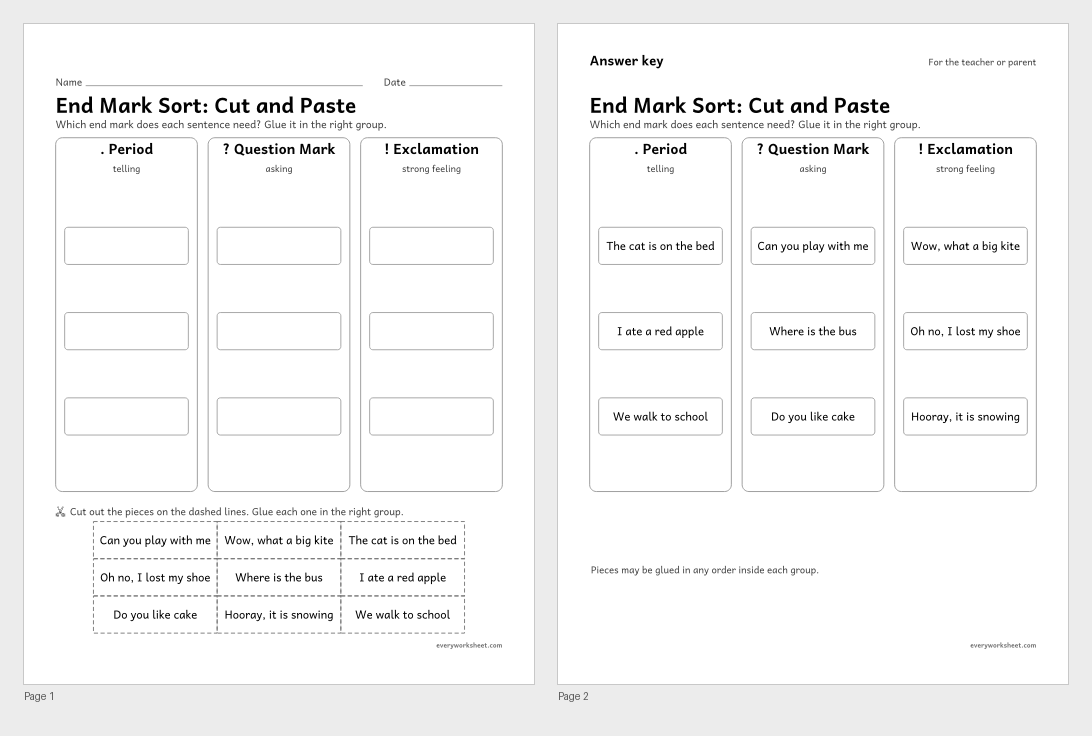
Sorting sentences by the end mark they need
Answer key on page 2
2 pages66 KB
Print at 100% (actual size) for the cleanest tracing lines.
Punctuation tells readers how to read a sentence. In first grade, children learn to end every sentence with a period, a question mark or an exclamation point, and to use commas in dates and between words in a list.
These punctuation worksheets begin with an end marks chart. Children then choose the end mark each sentence needs, tell telling sentences from asking sentences, add commas to lists and dates, and fix sentences with punctuation mistakes. An end mark sort comes as a cut and paste page and a no-cut twin.
Every page uses short sentences first graders can read, and every page with right answers has an answer key.
CCSS.ELA-LITERACY.L.1.2.BUse end punctuation for sentences.CCSS.ELA-LITERACY.L.1.2.CUse commas in dates and to separate single words in a series.CCSS.ELA-LITERACY.L.1.1.JProduce and expand complete simple and compound declarative, interrogative, imperative, and exclamatory sentences in response to prompts.CCSS.ELA-LITERACY.RF.1.1.ARecognize the distinguishing features of a sentence (e.g., first word, capitalization, ending punctuation).Periods, question marks and exclamation points at the end of sentences, and commas in dates and in lists of words.
A period ends a telling sentence, a question mark ends an asking sentence, and an exclamation point shows a strong feeling.
Between the day and the year, as in October 31, 2026.
Yes, every page with right answers has an answer key on page 2.