 View larger
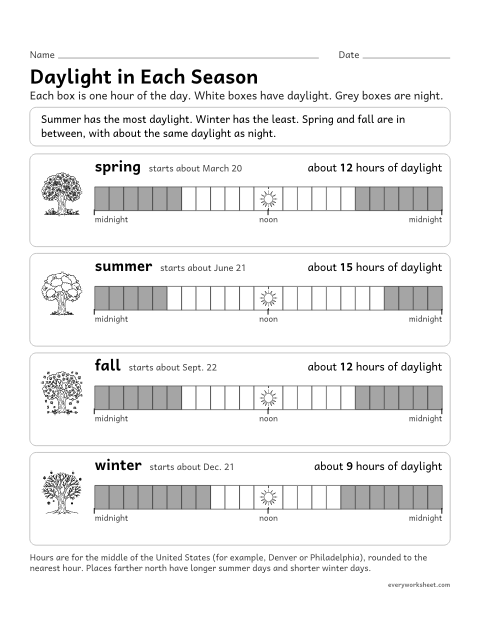
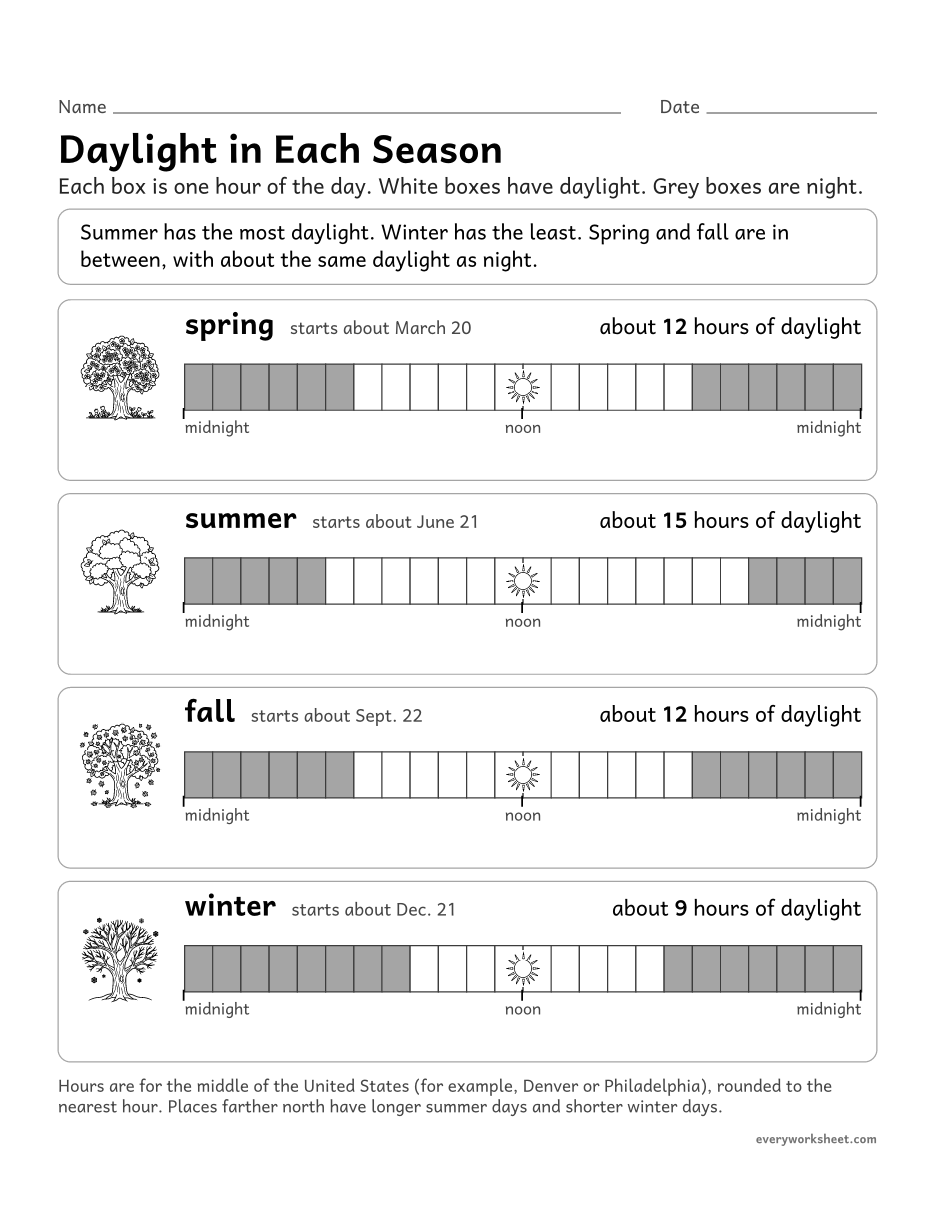
Daylight in each season chart
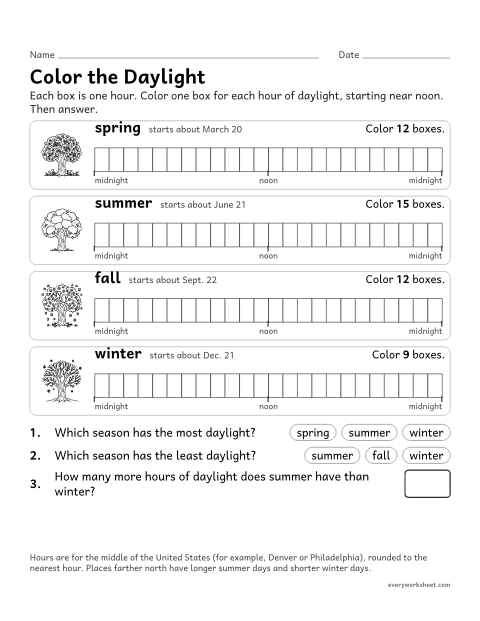
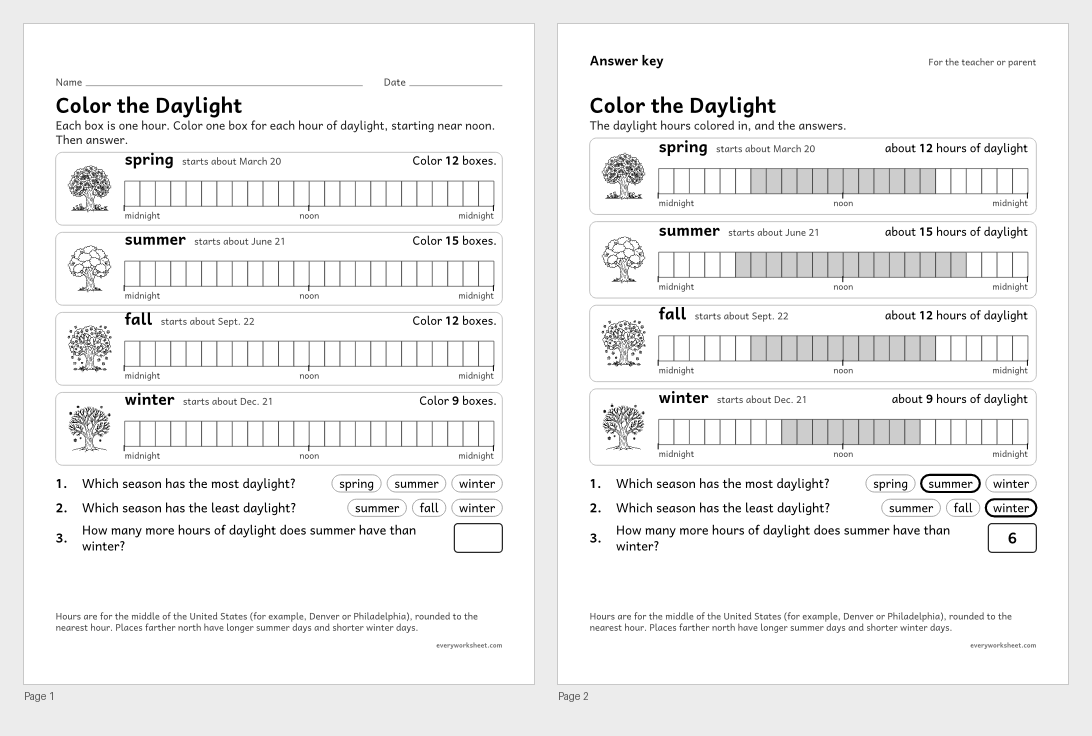
Comparing the hours of daylight in each season
1 page261 KB
Hours of daylight in each season, coloring the daylight hours, a daylight bar graph, a year-long daylight record, sorts and a reading passage.
View largerComparing the hours of daylight in each season
1 page261 KB
 View all 2 pages
Showing and comparing hours of daylight in each season
Answer key on page 2
2 pages466 KB
 View all 2 pages
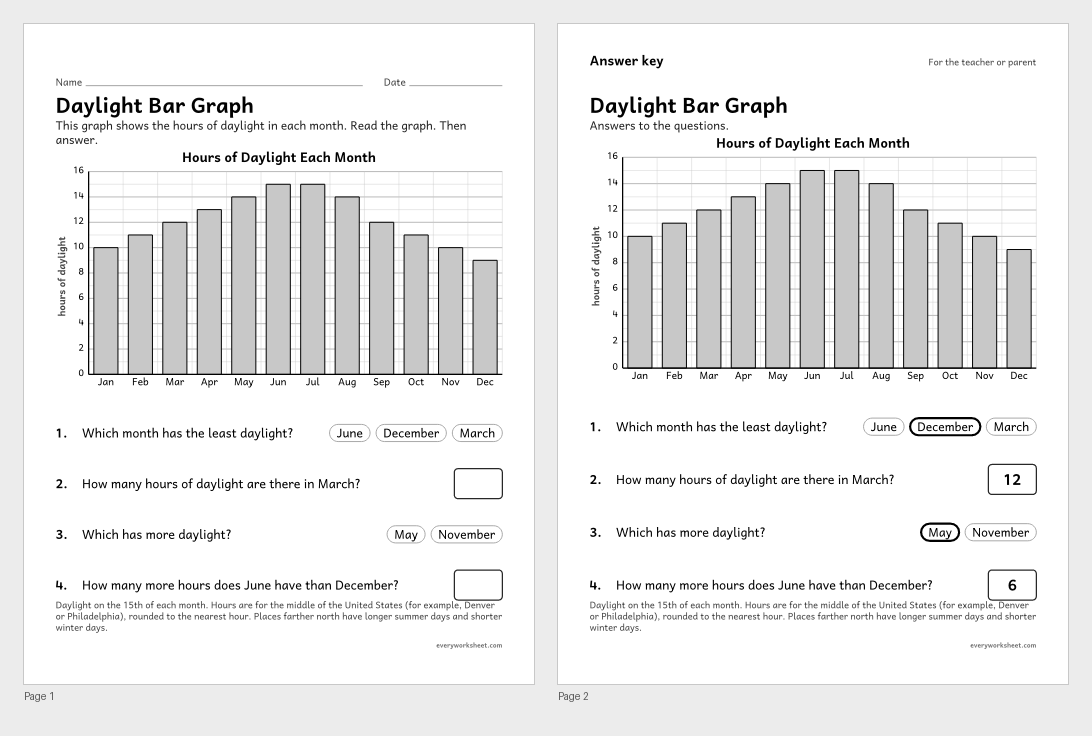
Reading a bar graph of daylight hours through the year
Answer key on page 2
2 pages41 KB
 View larger
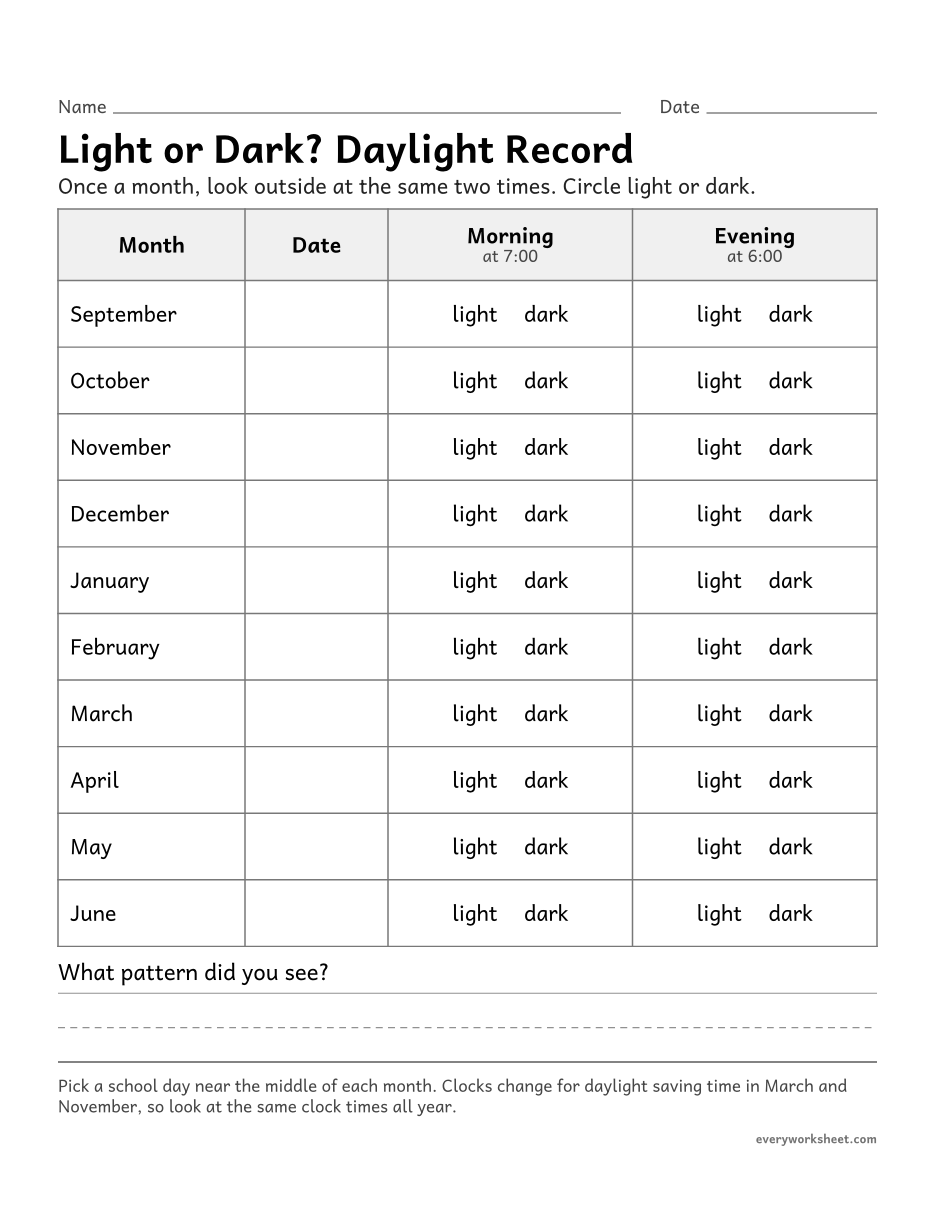
Observing and recording daylight at different times of the year
1 page35 KB
 View all 2 pages
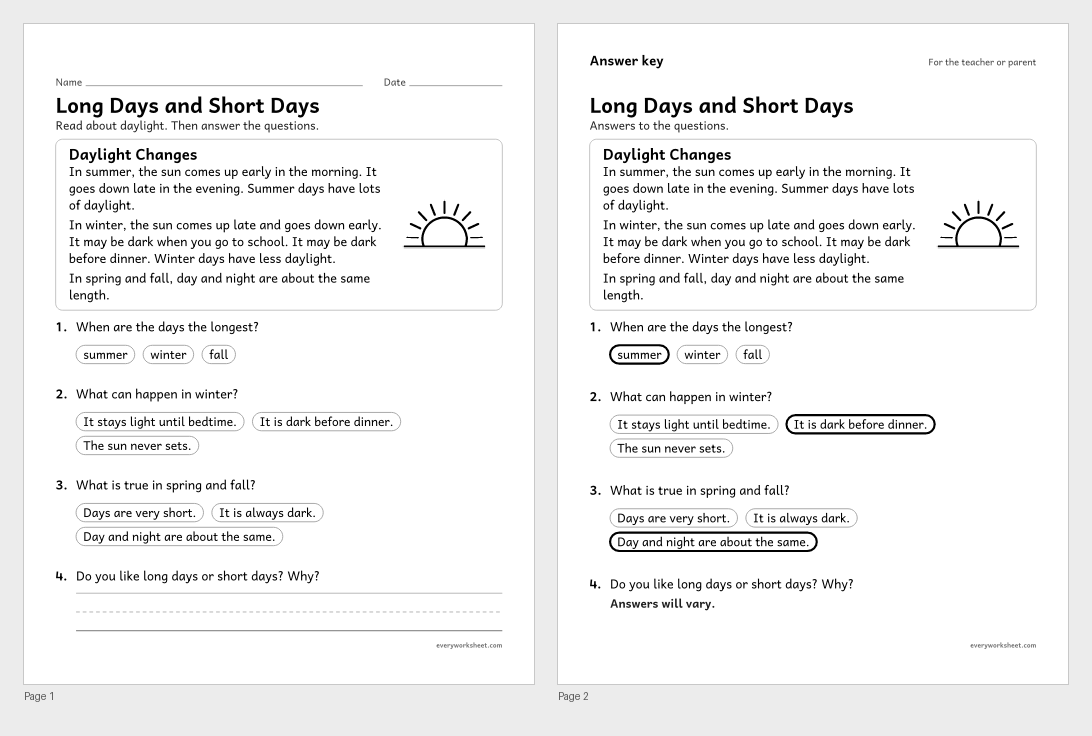
Reading how the amount of daylight changes with the seasons
Answer key on page 2
2 pages54 KB
 View all 2 pages
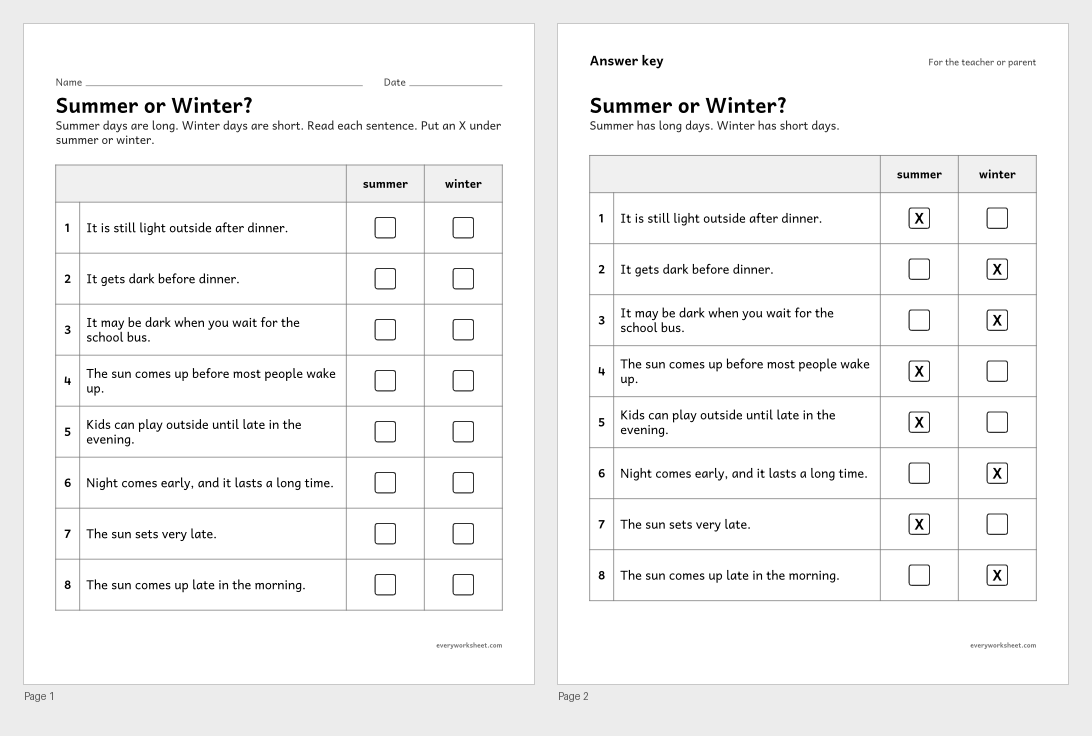
Relating everyday observations to the amount of daylight in summer and winter
Answer key on page 2
2 pages42 KB
 View all 2 pages
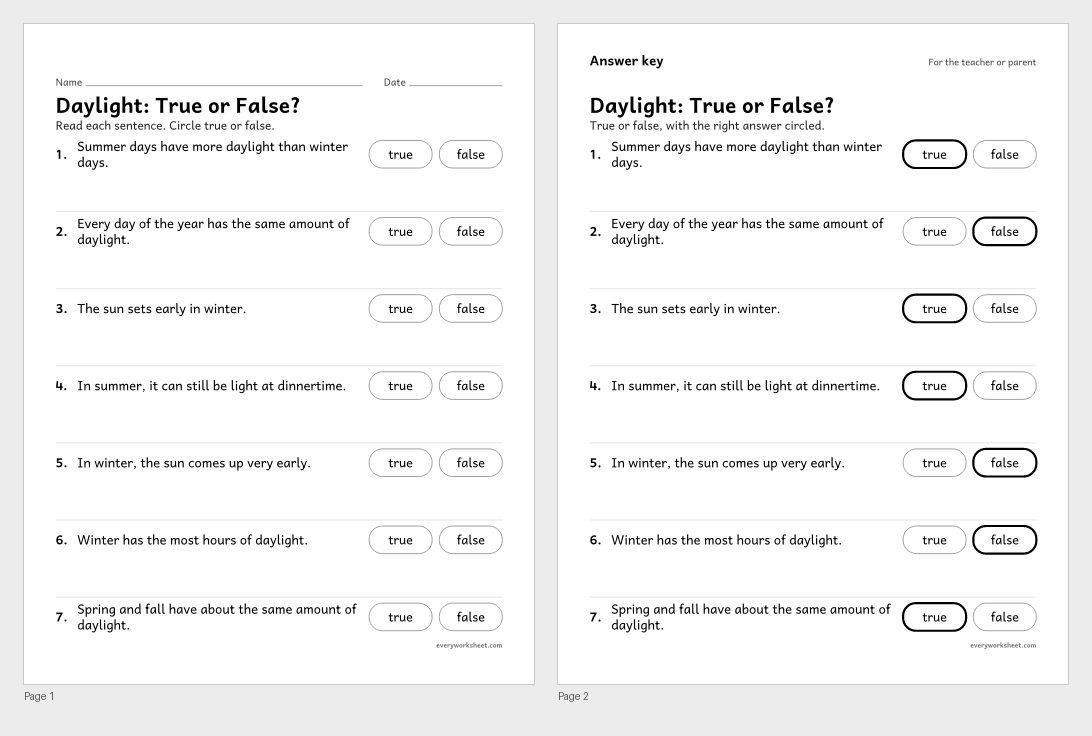
Checking facts about daylight in different seasons
Answer key on page 2
2 pages42 KB
 View larger
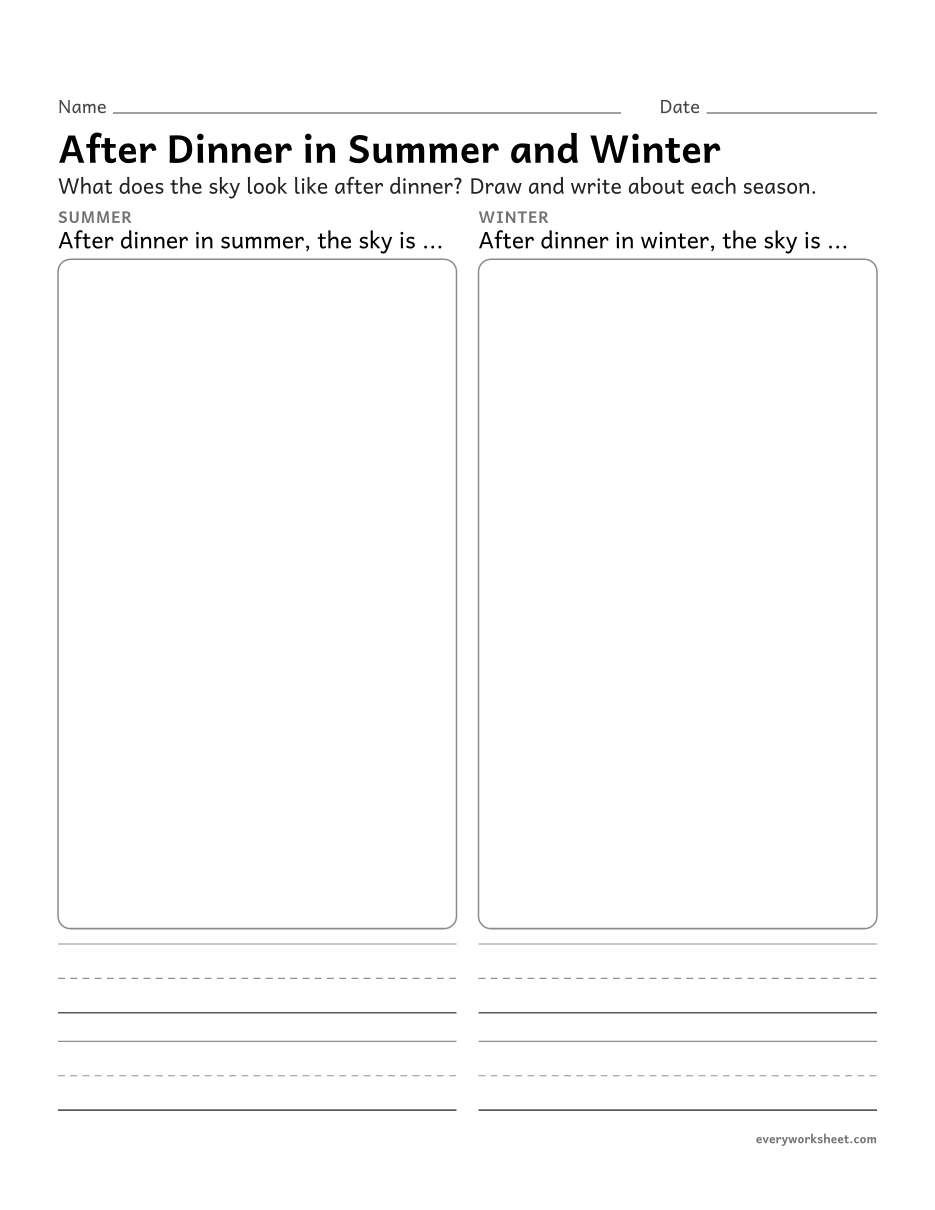
Comparing daylight in summer and winter evenings
1 page26 KB
Print at 100% (actual size) for the cleanest tracing lines.
In 1st grade, children connect the seasons to something they can notice for themselves: how long it stays light. In summer it can still be light after dinner. In winter it may be dark when they wait for the bus.
These seasons and daylight worksheets make that pattern easy to see. A chart shows a day as 24 boxes, one for each hour, with the daylight hours white and the night hours grey. Children color the daylight hours for each season, read a bar graph of daylight through the year, and keep a record of light and dark at the same two times each month.
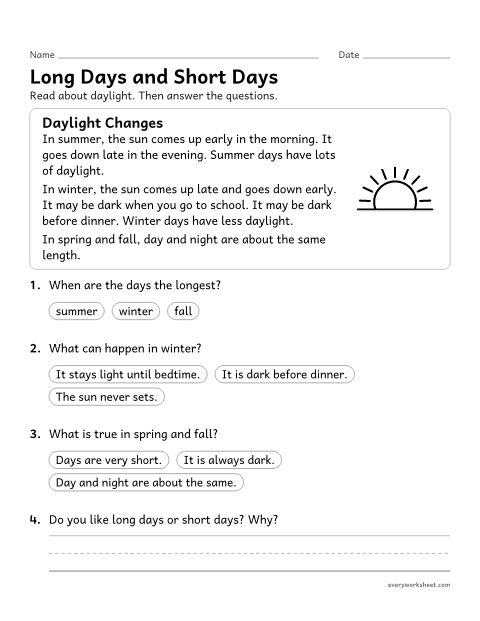
A short reading passage, a summer or winter sort, a true or false page and a drawing page round out the topic. Pages print on US Letter or A4, and pages with right answers have an answer key on page 2.
NGSS 1-ESS1-2Make observations at different times of year to relate the amount of daylight to the time of year.CCSS.MATH.CONTENT.1.MD.C.4Organize, represent, and interpret data with up to three categories; ask and answer questions about the total number of data points, how many in each category, and how many more or less are in one category than in another.CCSS.ELA-LITERACY.RI.1.1Ask and answer questions about key details in a text.CCSS.ELA-LITERACY.W.1.8With guidance and support from adults, recall information from experiences or gather information from provided sources to answer a question.Summer. In the middle of the United States, the first day of summer has about 15 hours of daylight and the first day of winter has about 9. Spring and fall have about 12 hours, about the same as the night.
Daylight changes a little every day and depends on where you live. The pages round to the nearest hour for the middle of the United States so the pattern is easy to see.
Kindergarten pages name the four seasons and what changes in each. These 1st grade pages focus on how the amount of daylight changes through the year.