 3 pagesView all 3 pages
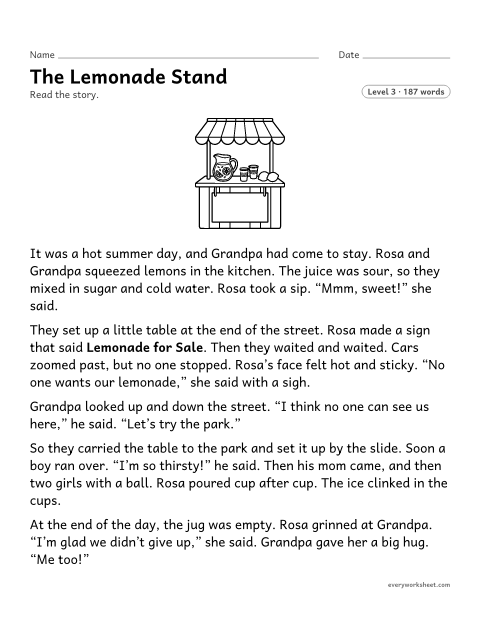
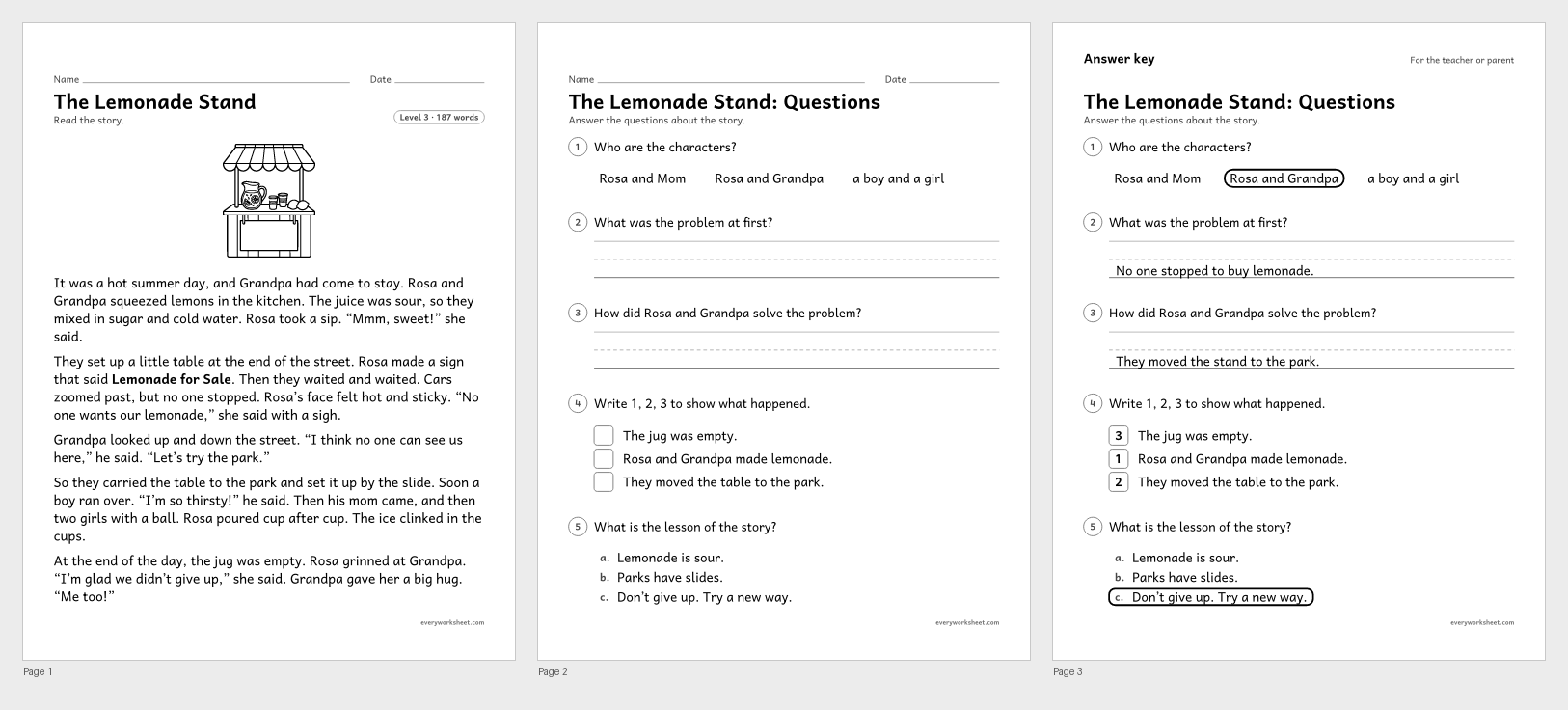
The lemonade stand
Retelling a story and finding its problem, solution and lesson
Answer key on page 3
3 pages64 KB
Eight original illustrated stories and two poems, each with a page of questions and an answer key.
3 pagesView all 3 pagesRetelling a story and finding its problem, solution and lesson
Answer key on page 3
3 pages64 KB
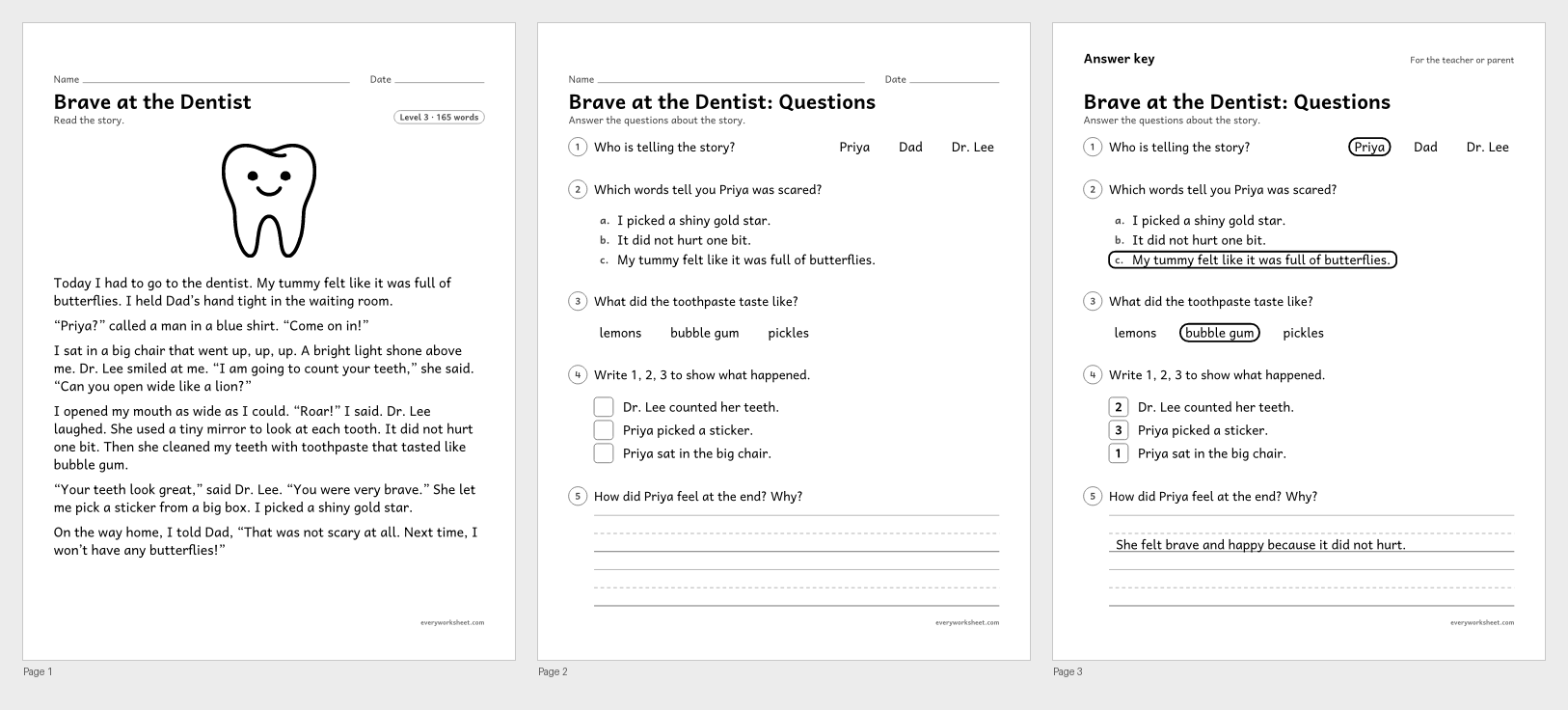 3 pagesView all 3 pages
Finding words that show feelings and senses in a story told by "I"
Answer key on page 3
3 pages62 KB
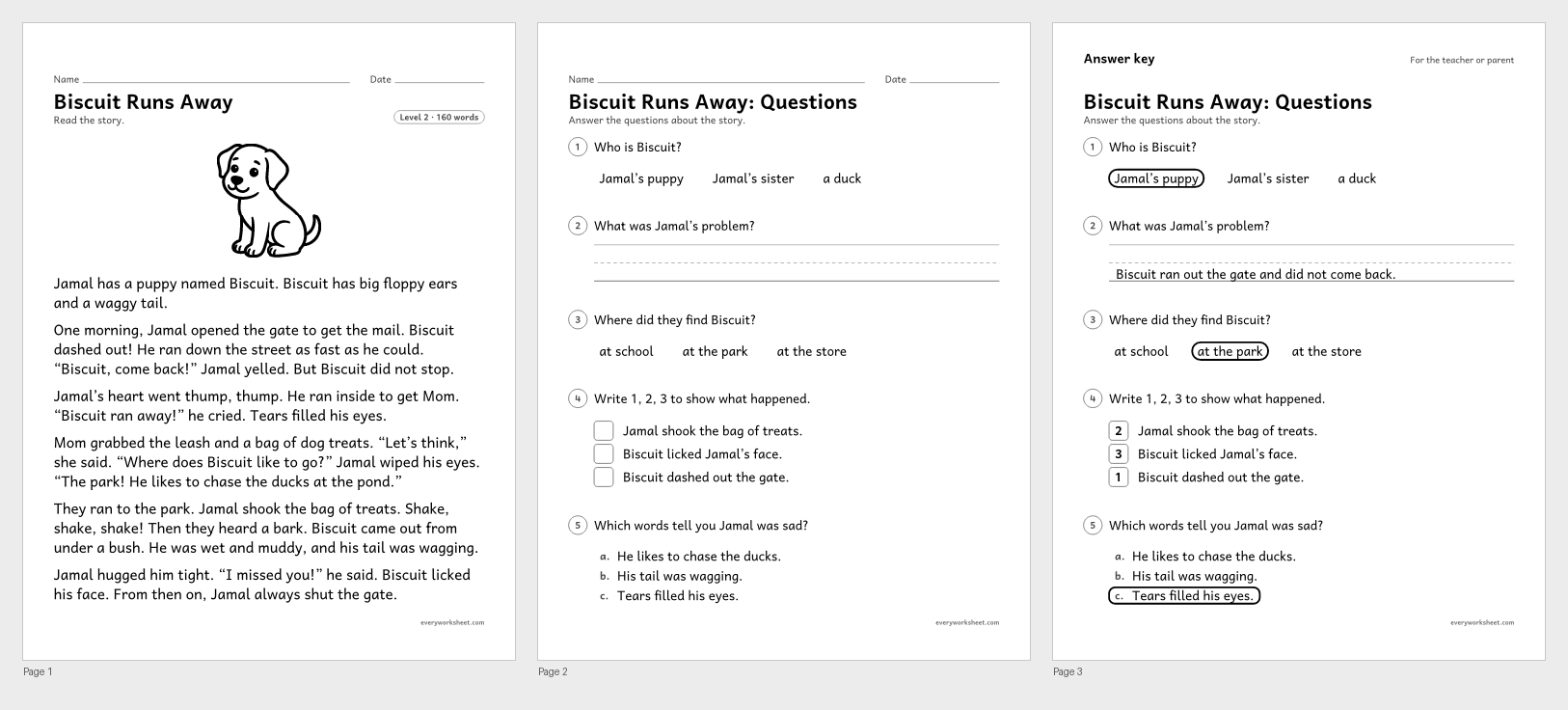 3 pagesView all 3 pages
Describing the characters, setting, problem and events of a story
Answer key on page 3
3 pages61 KB
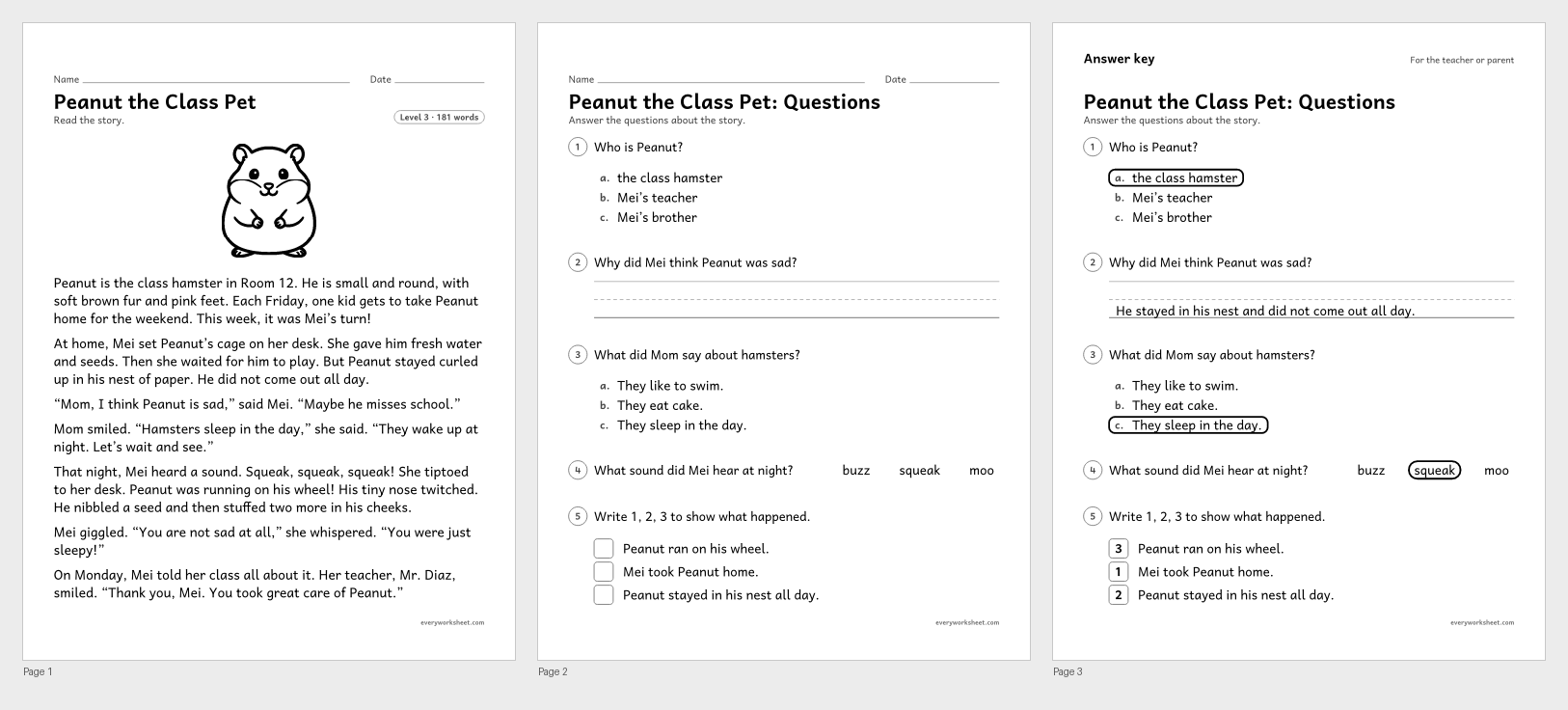 3 pagesView all 3 pages
Describing characters and major events in a story, using key details
Answer key on page 3
3 pages74 KB
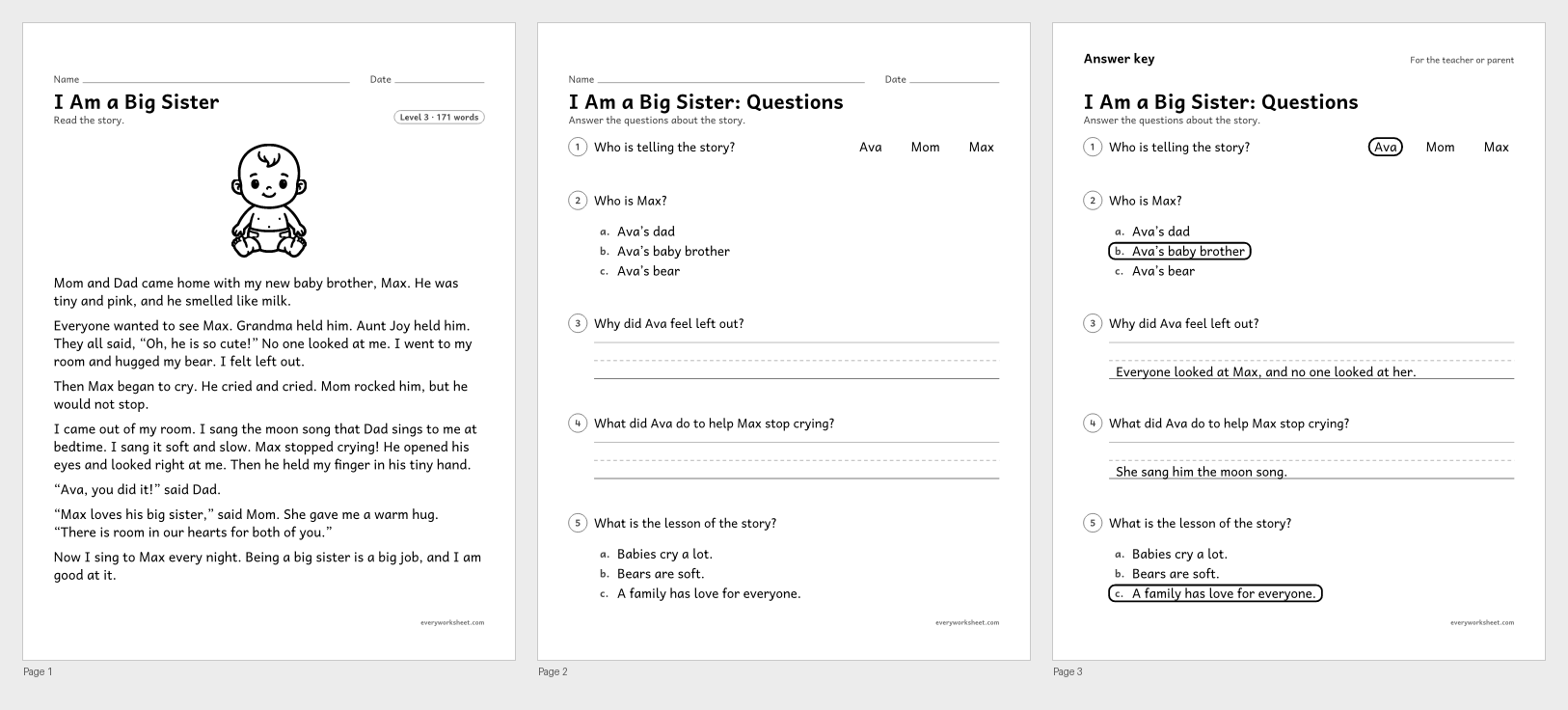 3 pagesView all 3 pages
Telling who is telling a story and finding its central message
Answer key on page 3
3 pages71 KB
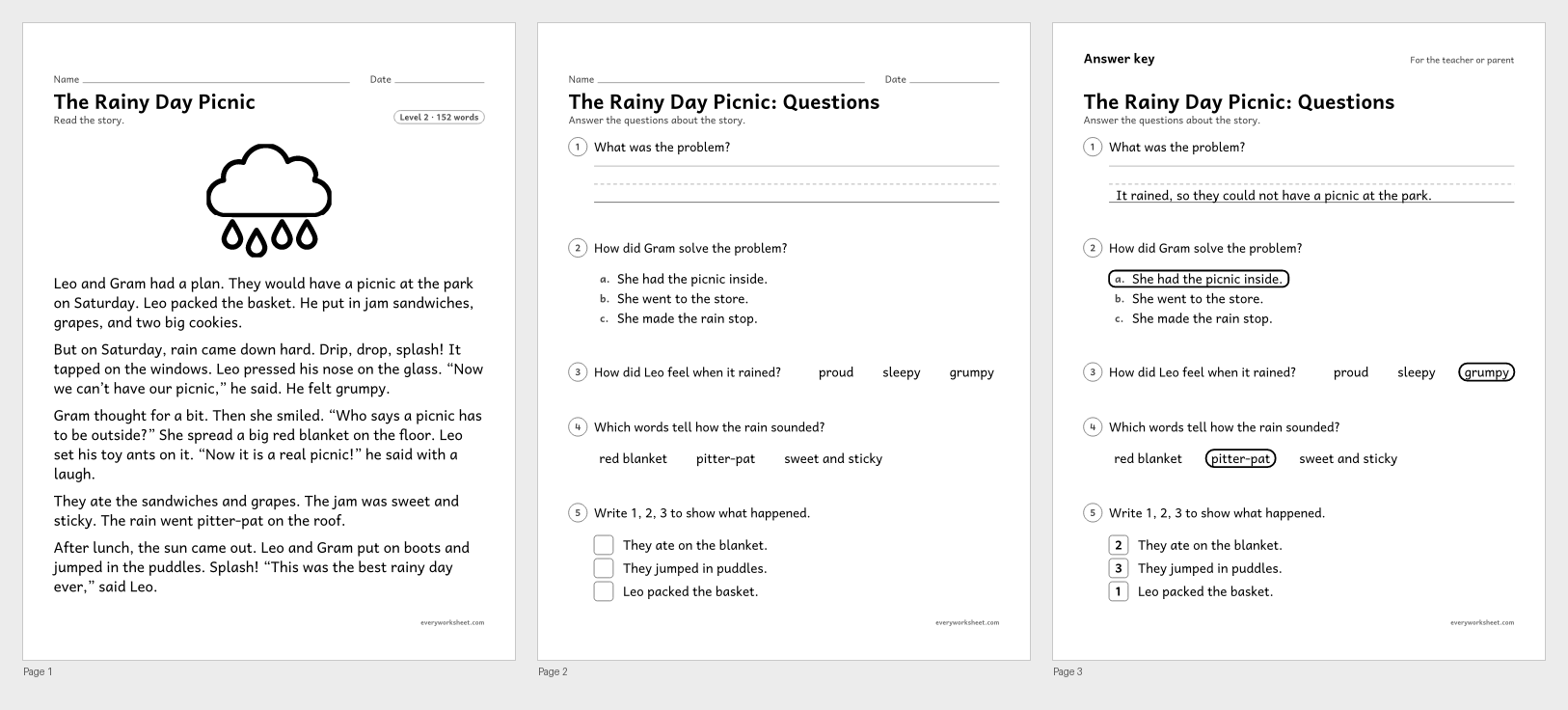 3 pagesView all 3 pages
Finding words in a story that show feelings or appeal to the senses
Answer key on page 3
3 pages50 KB
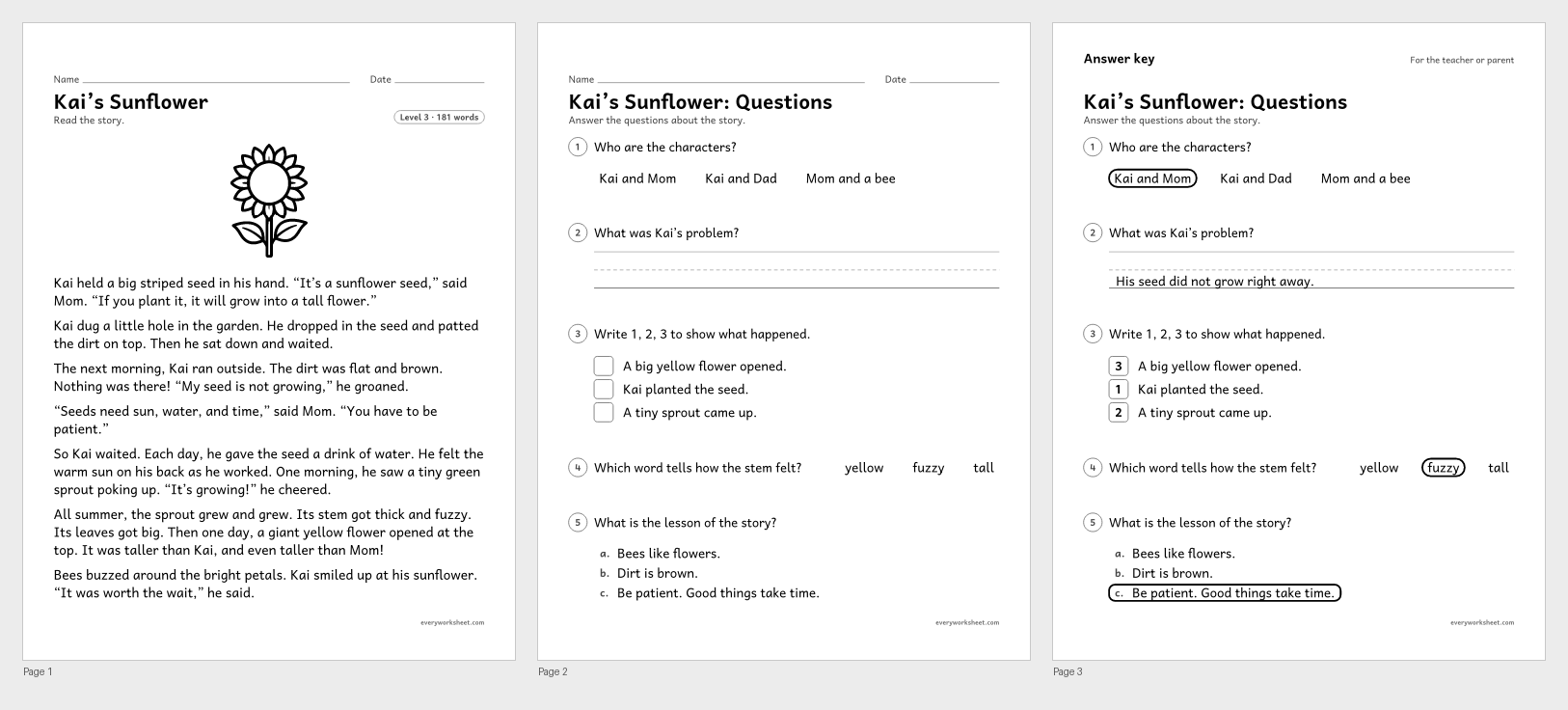 3 pagesView all 3 pages
Retelling a story and finding its central message
Answer key on page 3
3 pages61 KB
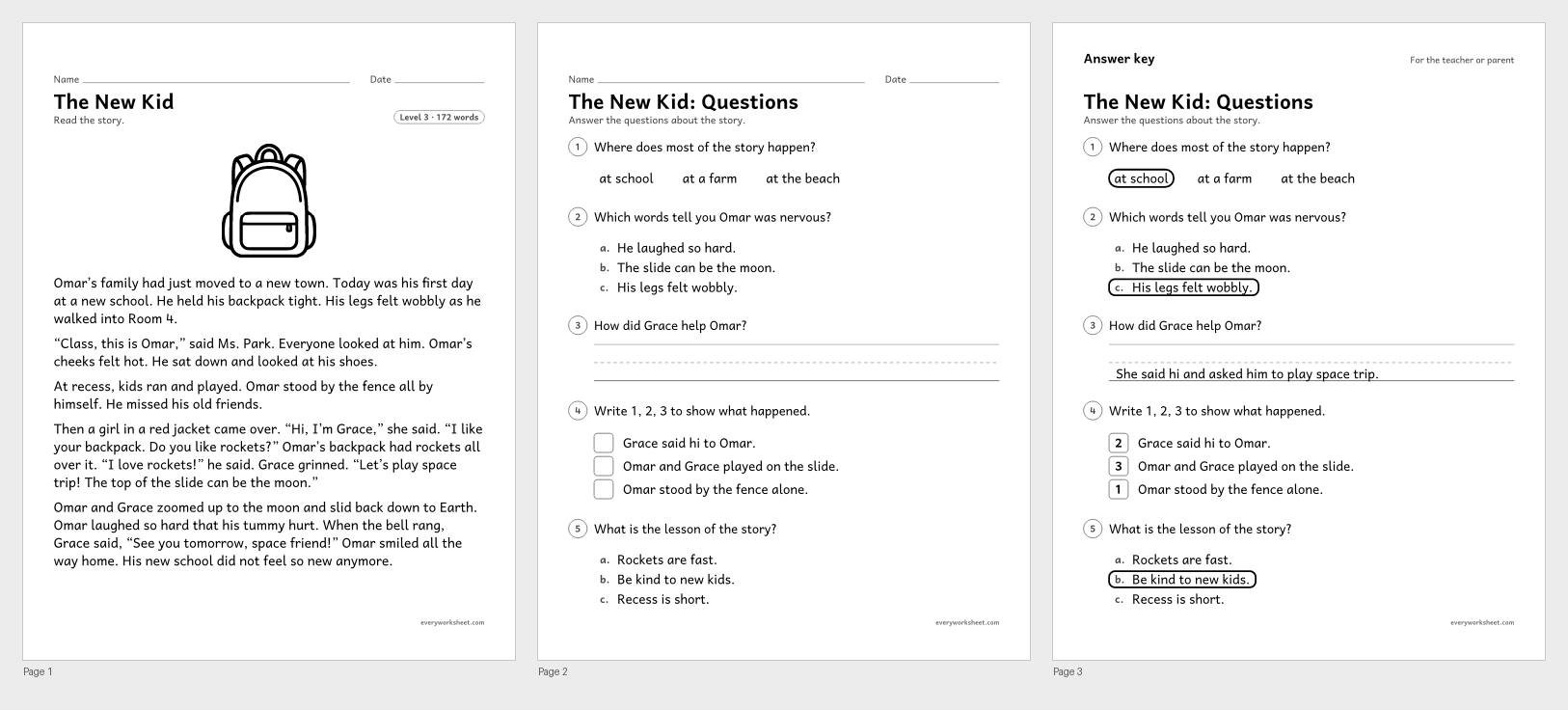 3 pagesView all 3 pages
Retelling a story about friendship and finding its lesson
Answer key on page 3
3 pages68 KB
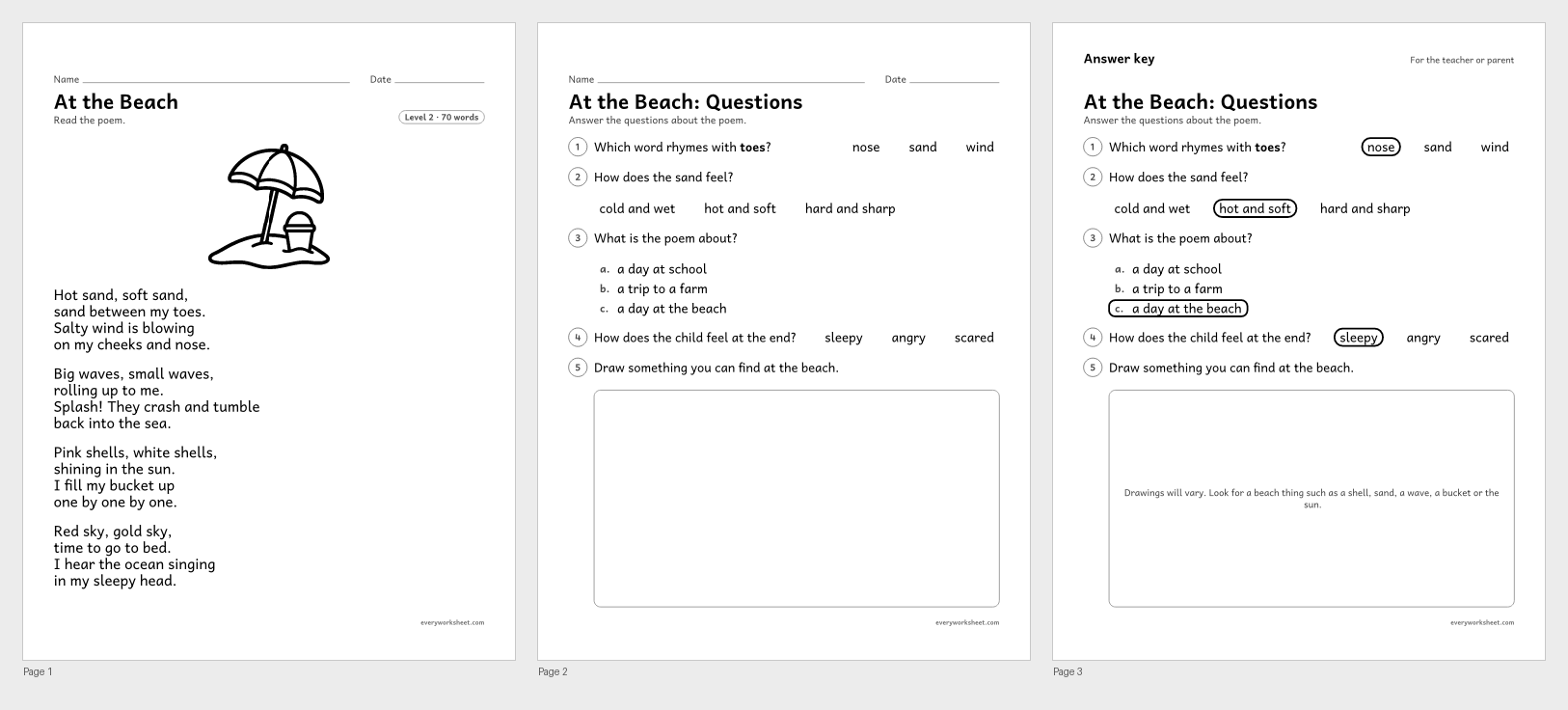 3 pagesView all 3 pages
Finding rhyming words and words for the senses in a poem
Answer key on page 3
3 pages66 KB
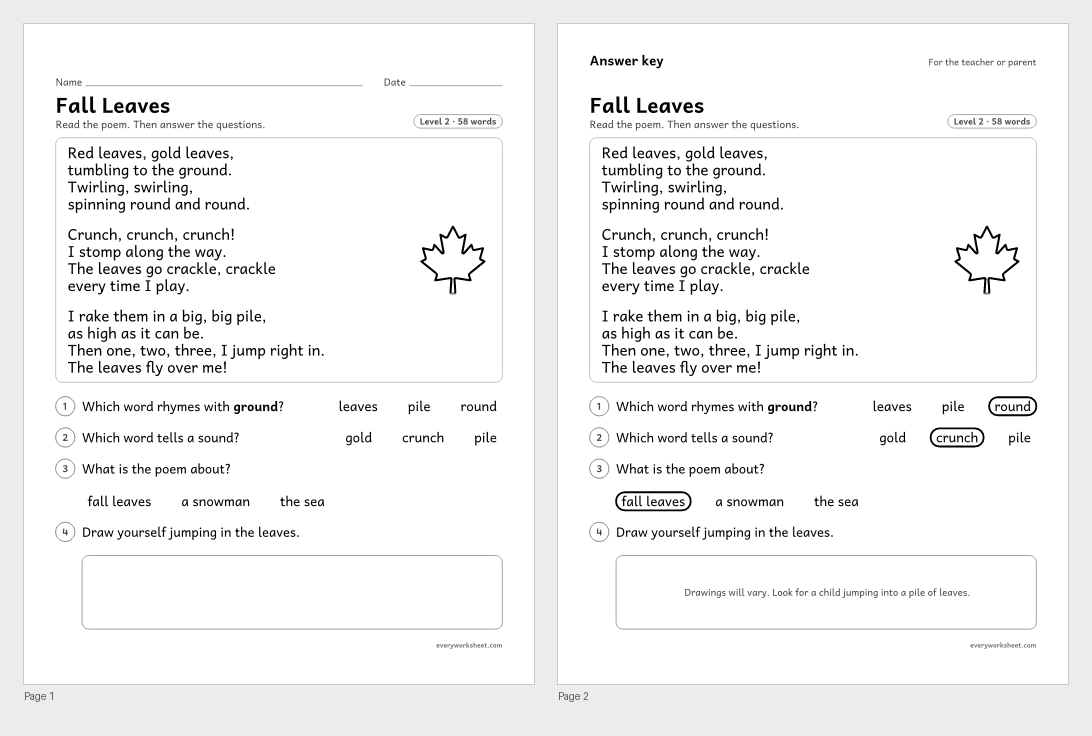 View all 2 pages
Reading a poem and finding its rhymes and sound words
Answer key on page 2
2 pages65 KB
Print at 100% (actual size) for the cleanest tracing lines.
Short stories give first graders a reason to keep reading: a character they care about, a small problem and an ending that feels right. These short stories for 1st graders are original and written at a late first grade level, about 150 to 190 words each.
Each story fills page 1 with a big picture and the text. Page 2 asks about the characters, the setting, the problem and how it was solved, what happened in order, and the lesson or the feeling words in the story. Two stories are told by the main character in their own voice, so children can practice telling who is telling the story. Page 3 is the answer key.
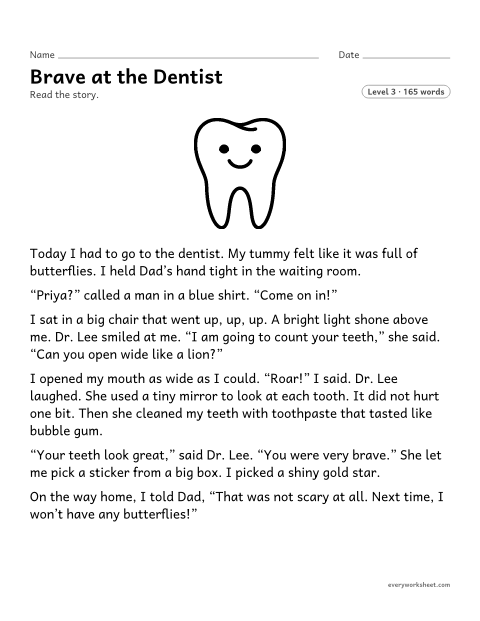
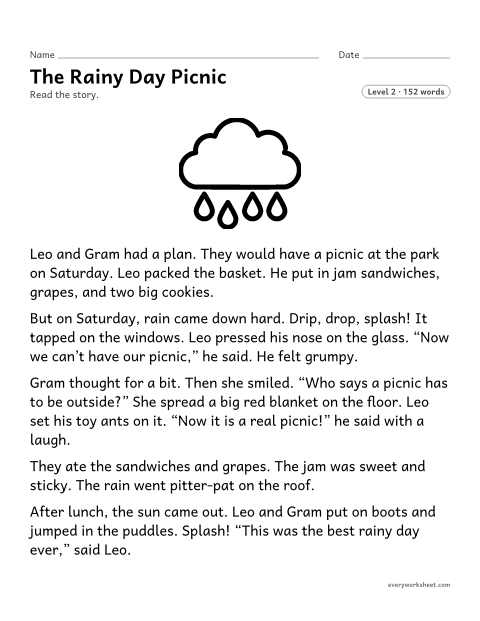
The two poems are short and rhyming, with questions about rhyming words and words for the senses. All the stories are about things children know well: a runaway puppy, a first visit to the dentist, a new baby, a class pet, a lemonade stand, a rainy day picnic, a sunflower and the first day at a new school.
CCSS.ELA-LITERACY.RL.1.1Ask and answer questions about key details in a text.CCSS.ELA-LITERACY.RL.1.2Retell stories, including key details, and demonstrate understanding of their central message or lesson.CCSS.ELA-LITERACY.RL.1.3Describe characters, settings, and major events in a story, using key details.CCSS.ELA-LITERACY.RL.1.4Identify words and phrases in stories or poems that suggest feelings or appeal to the senses.CCSS.ELA-LITERACY.RL.1.6Identify who is telling the story at various points in a text.CCSS.ELA-LITERACY.RL.1.10With prompting and support, read prose and poetry of appropriate complexity for grade 1.Most are 150 to 190 words, about one page. They suit readers at the end of first grade, or younger children listening to an adult read.
Yes. Each story has a page of questions about characters, setting, events, feelings and the lesson, plus an answer key.
Yes. All the stories are original and free to print for home or classroom use.
A character children can relate to, a clear problem, a few events in order and an ending that solves the problem. Simple dialogue and feeling words help too.