 View larger
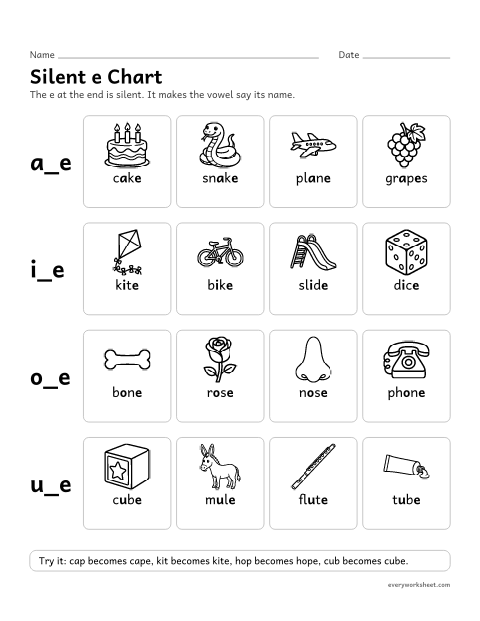
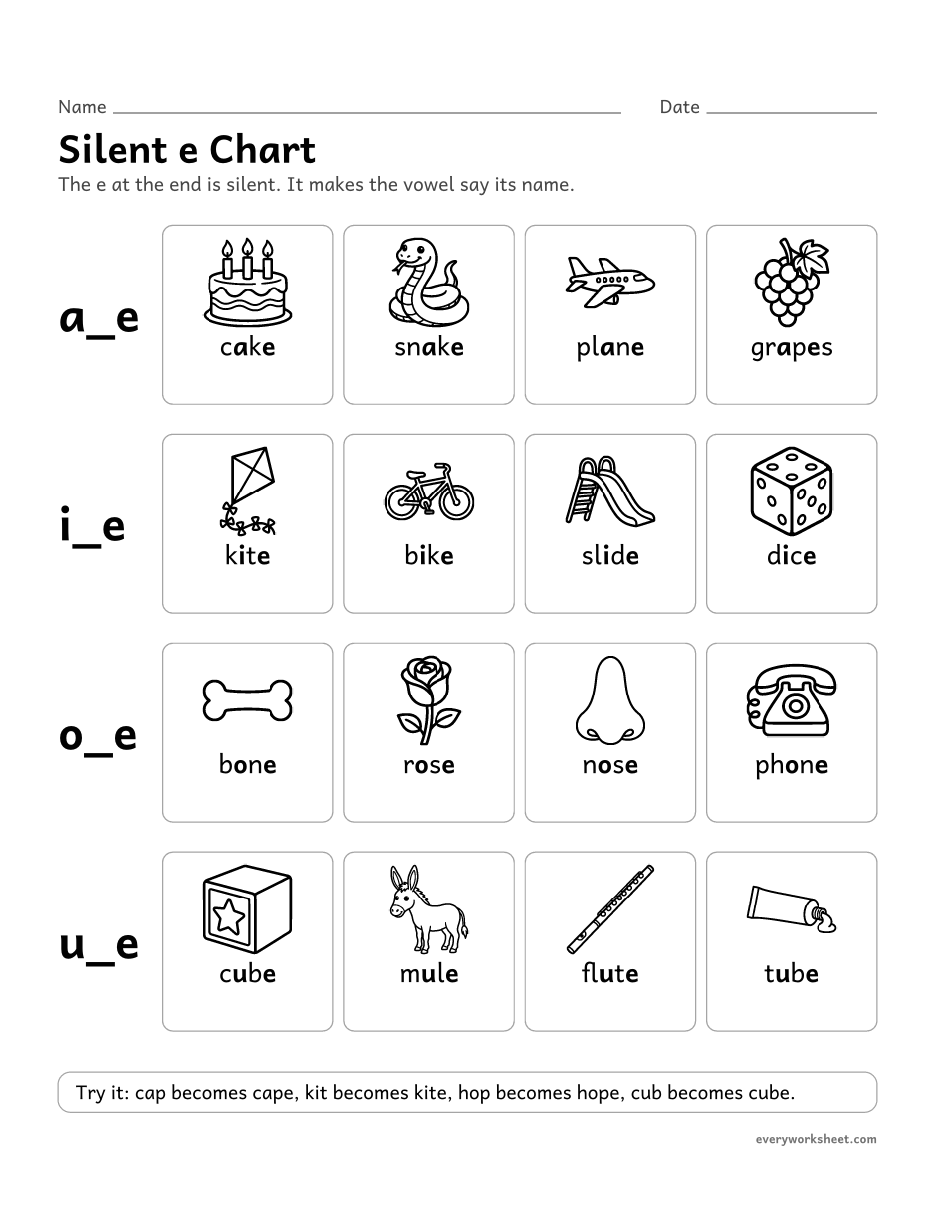
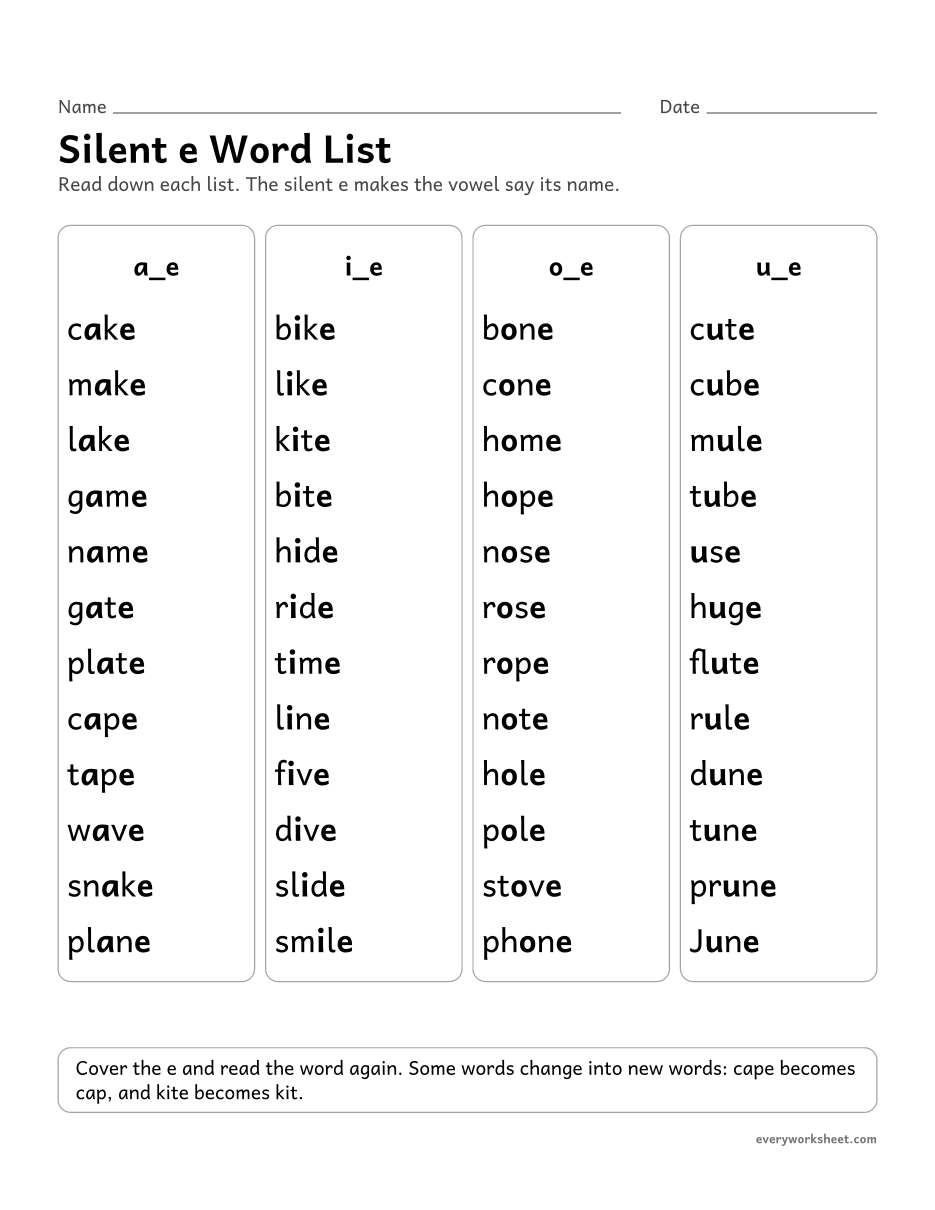
Silent e chart
Reading a_e, i_e, o_e and u_e words with a picture for each
1 page341 KB
A silent e chart and word list, add-the-e word building, sorts, fill-ins, pick-the-word, matching, sentences and a short story, with answer keys.
View largerReading a_e, i_e, o_e and u_e words with a picture for each
1 page341 KB
 View larger
 View all 2 pages
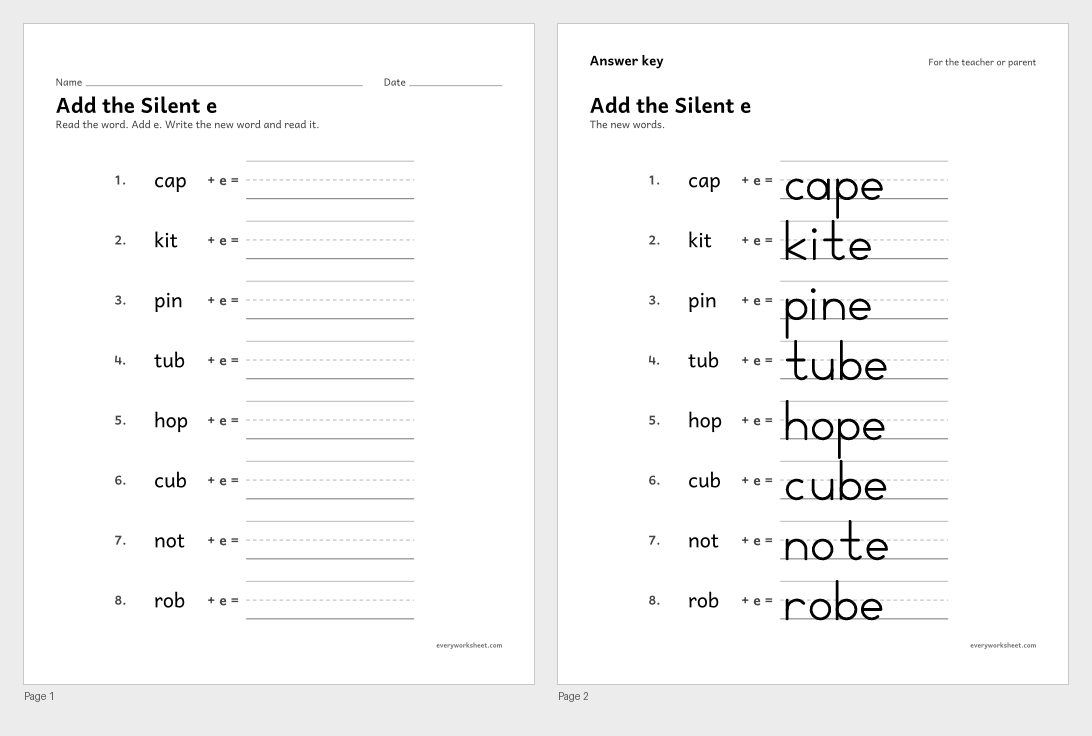
Adding a silent e to change a short vowel word into a long vowel word (cap, cape)
Answer key on page 2
2 pages46 KB
 View all 2 pages
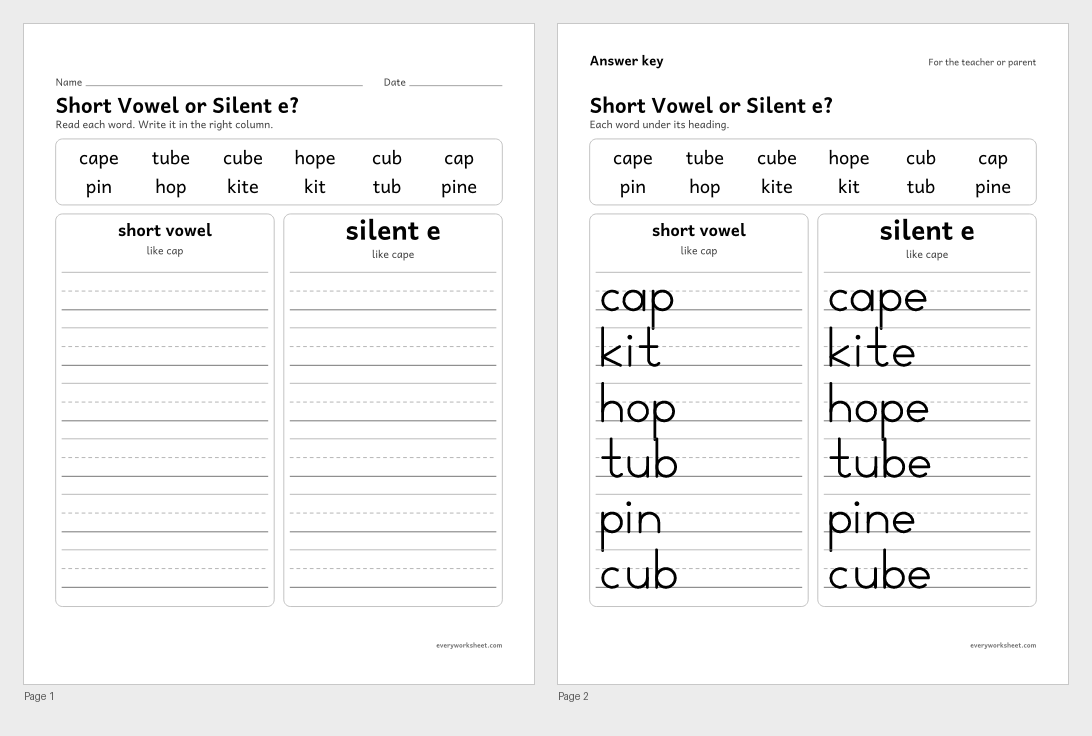
Sorting short vowel words and silent e words
Answer key on page 2
2 pages34 KB
 View all 2 pages
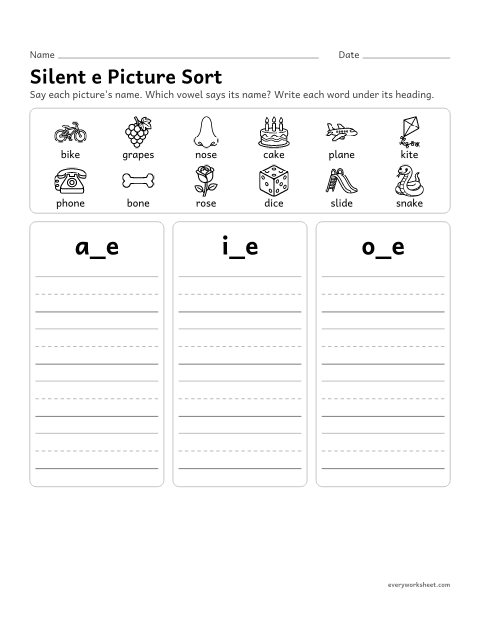
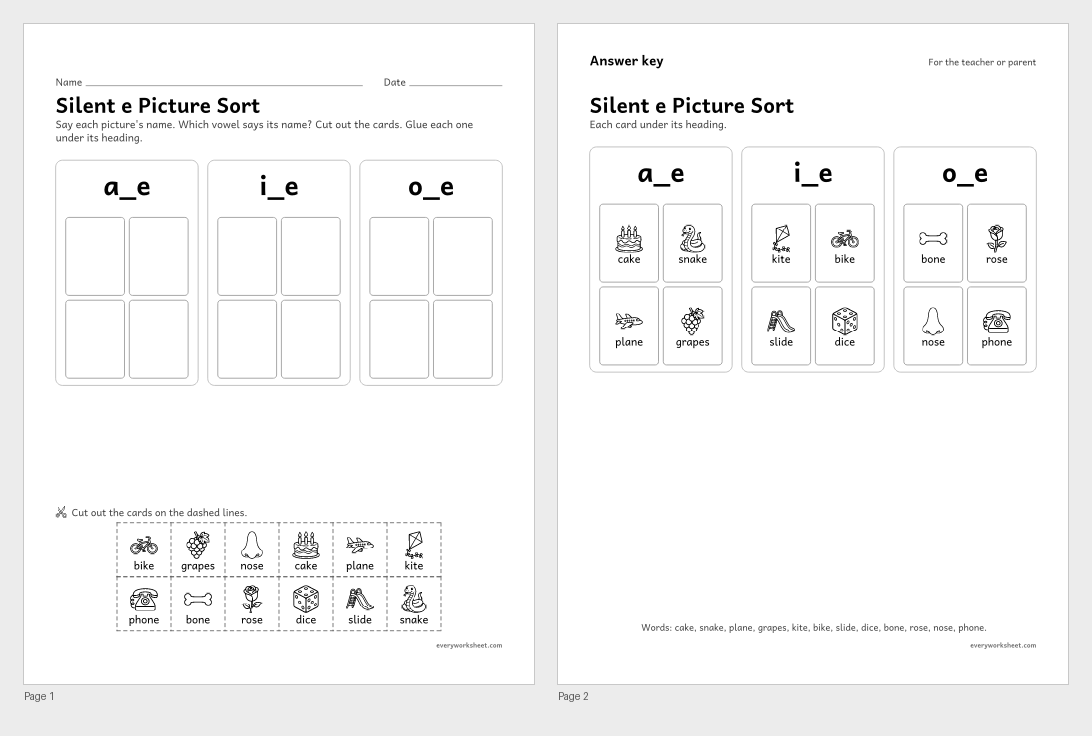
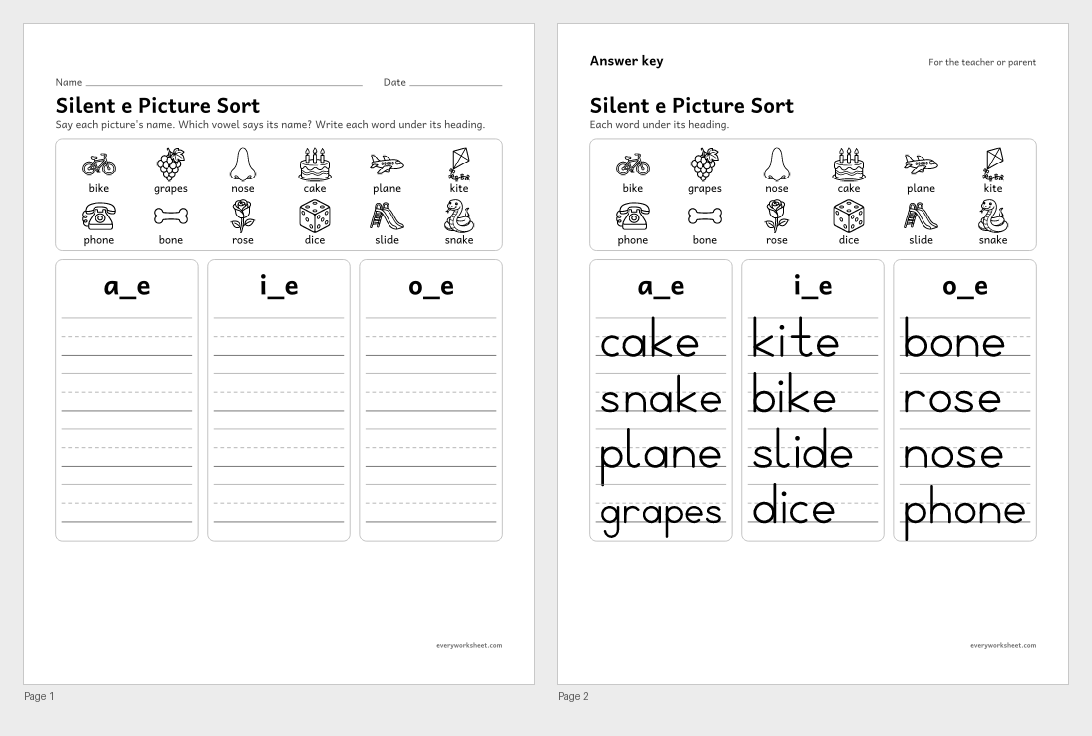
Sorting a_e, i_e and o_e pictures
Answer key on page 2
2 pages554 KB
 View all 2 pages
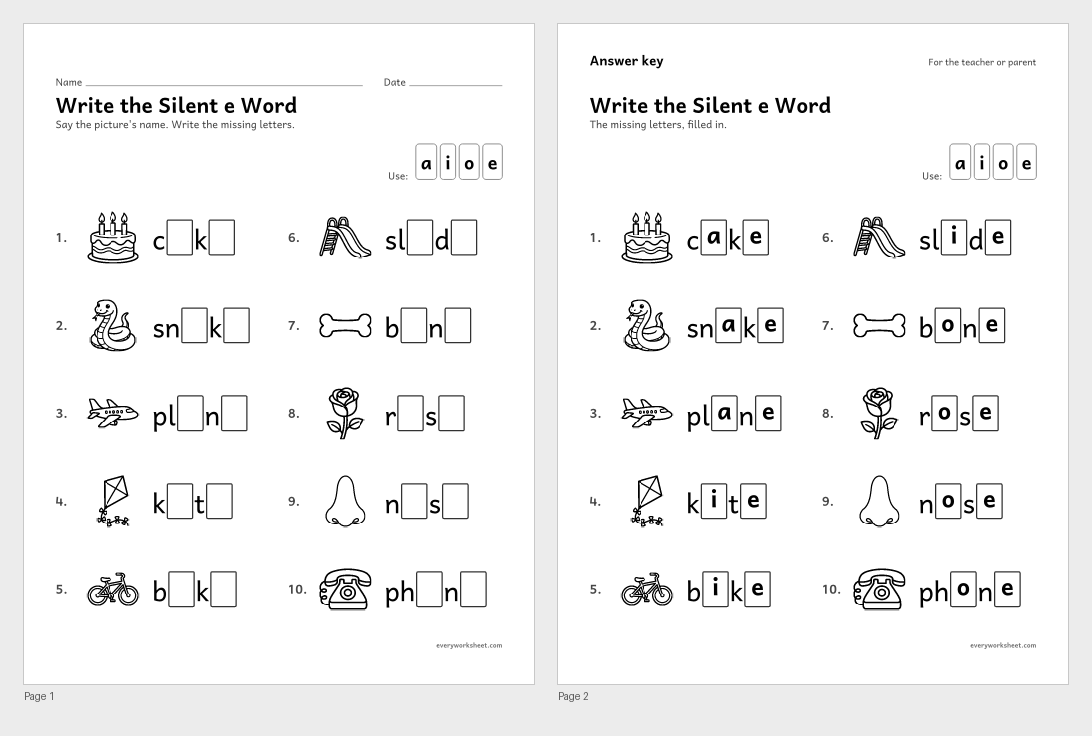
Sorting a_e, i_e and o_e words by writing them
Answer key on page 2
2 pages526 KB
 View all 2 pages
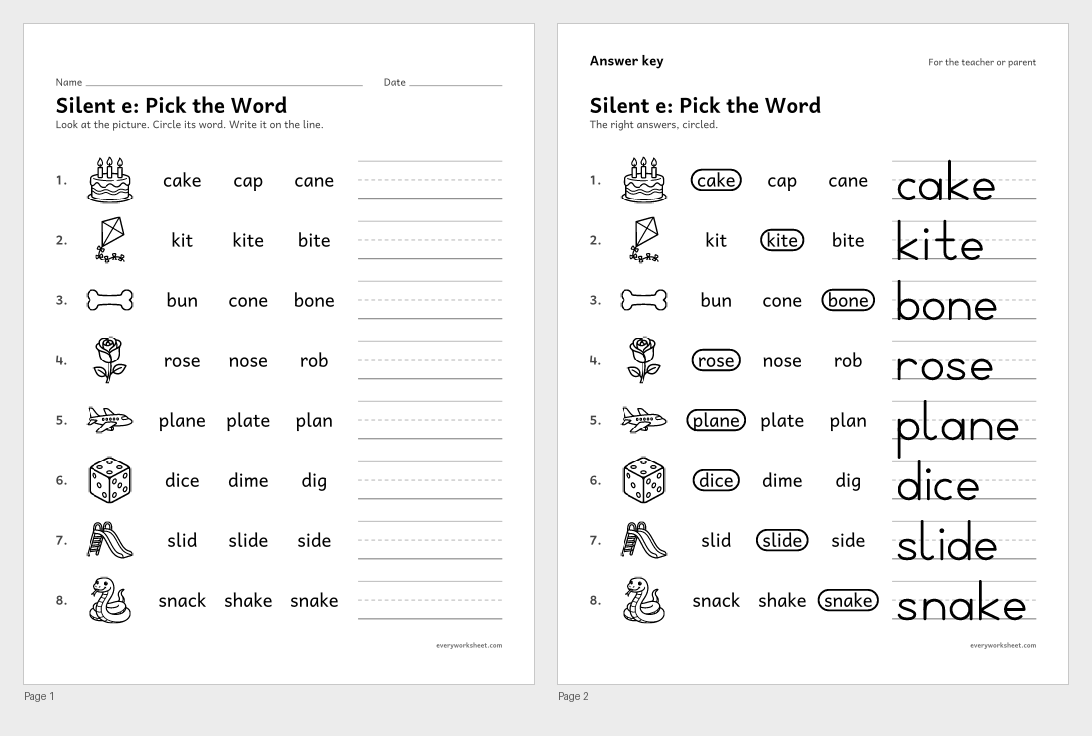
Writing the vowel and silent e in picture words
Answer key on page 2
2 pages432 KB
 View all 2 pages
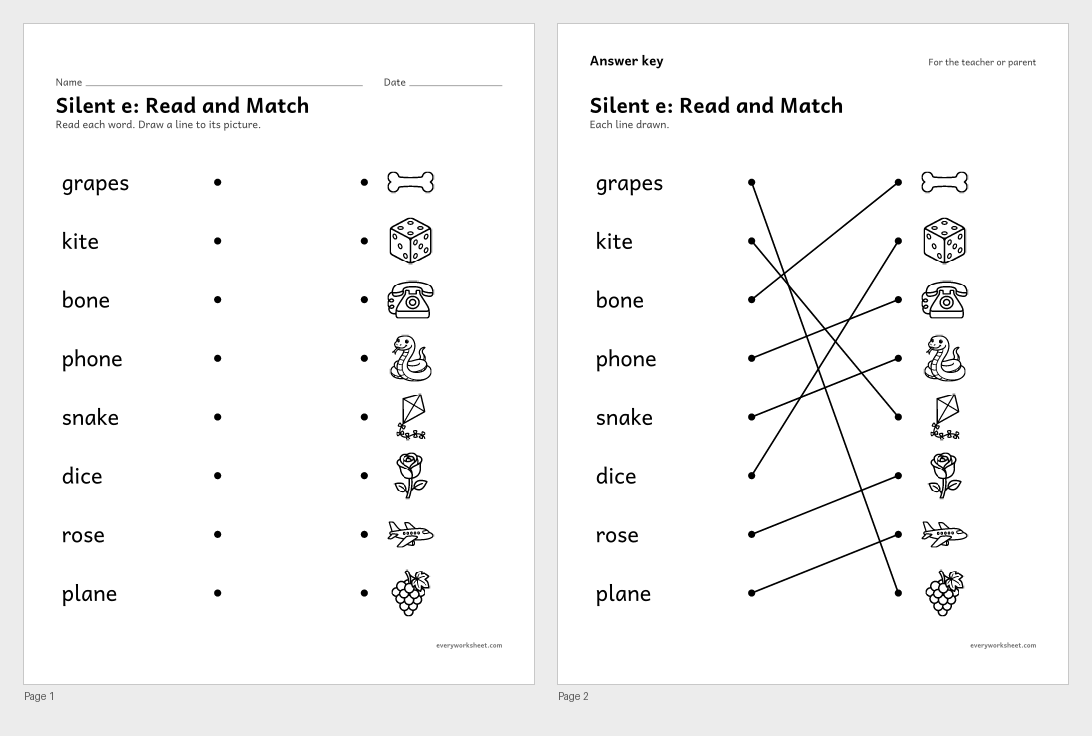
Choosing and writing the silent e word for a picture
Answer key on page 2
2 pages390 KB
 View all 2 pages
Reading silent e words and matching them to pictures
Answer key on page 2
2 pages358 KB
 View all 2 pages
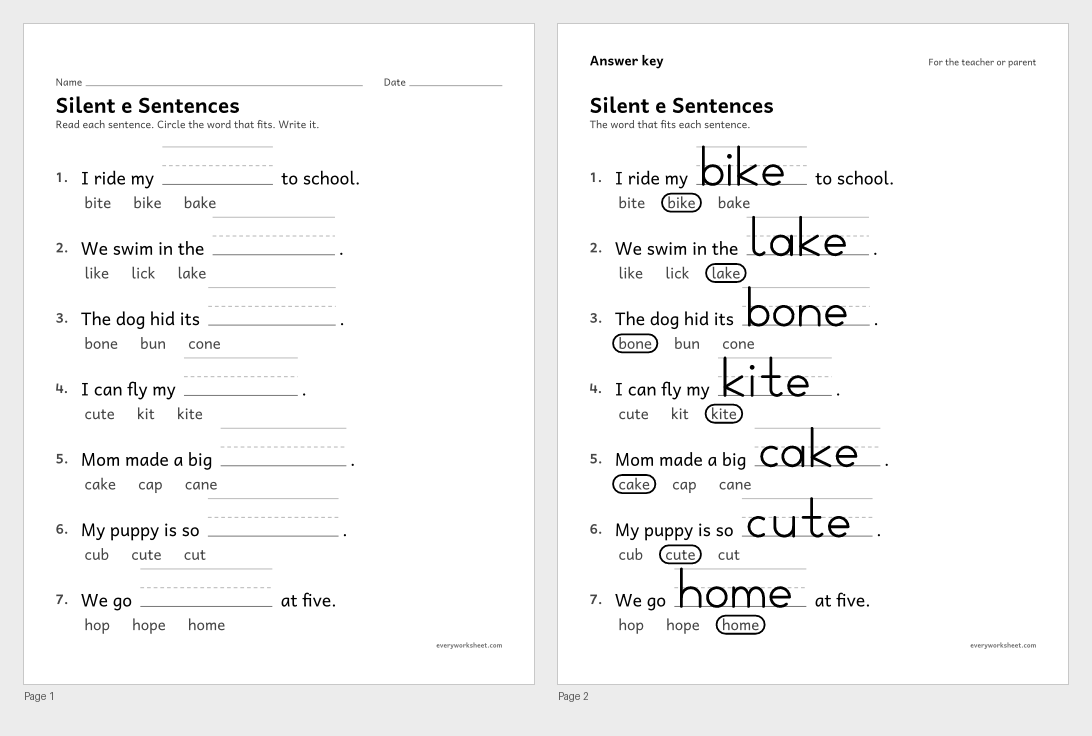
Choosing the silent e word that fits a sentence
Answer key on page 2
2 pages40 KB
 View all 2 pages
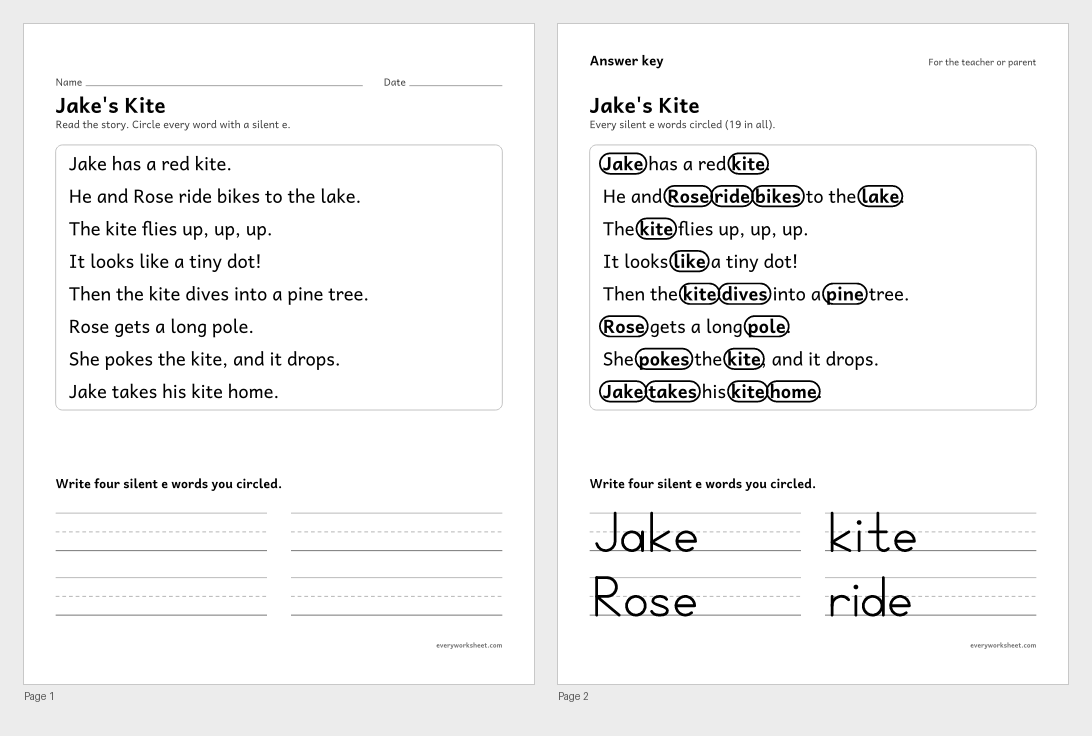
Finding silent e words in a short story
Answer key on page 2
2 pages33 KB
Print at 100% (actual size) for the cleanest tracing lines.
Silent e is the e at the end of a word like cake, kite, bone and cube. It makes no sound of its own, but it changes the vowel before it: cap becomes cape, kit becomes kite and hop becomes hope. Many teachers call it magic e or bossy e, and words built this way are often called CVCe words (consonant, vowel, consonant, e).
These silent e worksheets start with a chart and a word list for a_e, i_e, o_e and u_e. Then children add the e to change short vowel words into long vowel words, sort short vowel and silent e words, sort pictures by vowel (with a cut and paste version and a no-cut version), write the missing letters, pick the right word for a picture and read silent e words in sentences and a short story.
Silent e is a core 1st grade phonics skill. Children are ready for it once they read short vowel words like cap and pin easily. All pages print in black and white on US Letter or A4, and every page with right answers has an answer key on page 2.
CCSS.ELA-LITERACY.RF.1.3.CKnow final -e and common vowel team conventions for representing long vowel sounds.CCSS.ELA-LITERACY.RF.1.2.ADistinguish long from short vowel sounds in spoken single-syllable words.CCSS.ELA-LITERACY.RF.1.3.BDecode regularly spelled one-syllable words.CCSS.ELA-LITERACY.L.1.2.DUse conventional spelling for words with common spelling patterns and for frequently occurring irregular words.CCSS.ELA-LITERACY.RF.1.4.ARead grade-level text with purpose and understanding.CCSS.ELA-LITERACY.RF.1.4.CUse context to confirm or self-correct word recognition and understanding, rereading as necessary.When a word ends in a vowel, a consonant and then an e, the e is silent and the first vowel usually says its name: cape, kite, rope, cube. Without the e, the vowel is short: cap, kit, hop, cub.
Magic e is another name for silent e. It is called magic because adding it changes the sound of the vowel and makes a new word, like pin to pine.
Silent e is a 1st grade skill. Most children learn it after they can read short vowel words with blends and digraphs, usually around the middle of 1st grade.
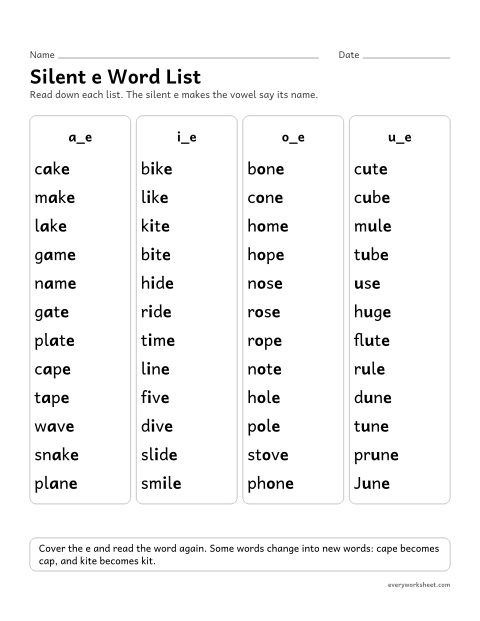
a_e: cake, game, lake, name, snake, plane. i_e: bike, kite, five, ride, time, slide. o_e: bone, home, nose, rope, phone. u_e: cube, cute, mule, tube, flute.
Yes. Every page with right answers has an answer key on page 2.