 View all 2 pages
Subtraction Worksheets
Subtraction facts to 10 and 20 for 1st grade, with counting back, number lines, think addition, get to 10 and subtracting tens. Every page has an answer key.
Download the subtraction worksheets
Subtraction facts to 10
 View all 2 pages
 View all 2 pages
 View all 2 pages
 View all 2 pages
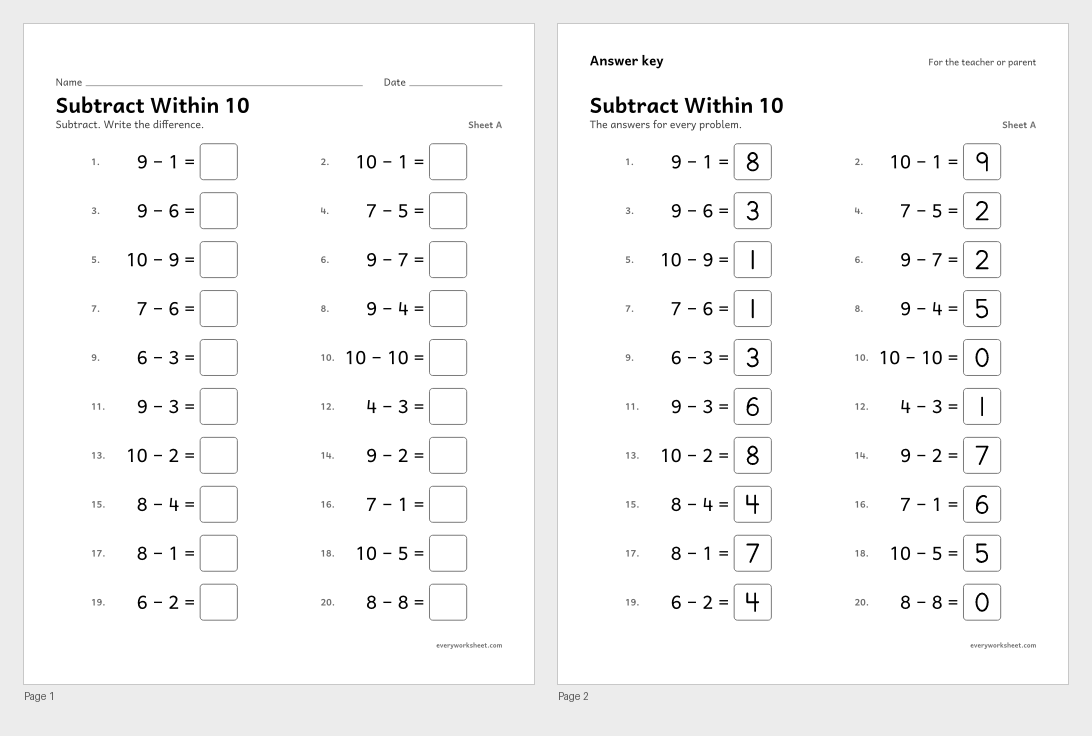
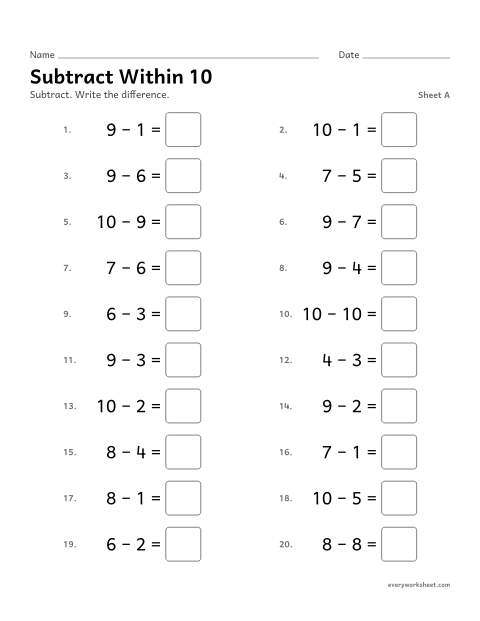
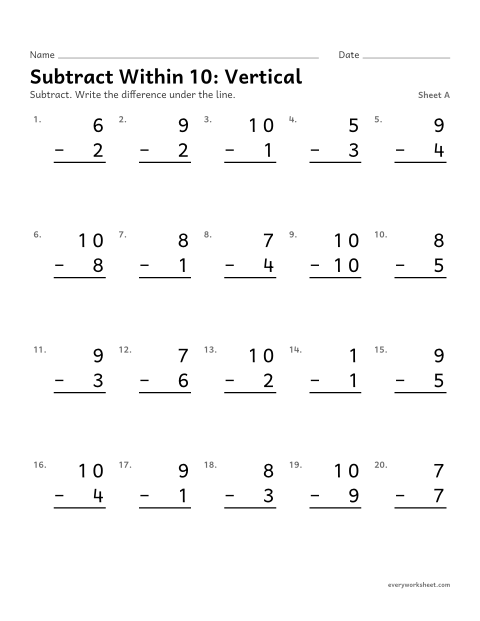
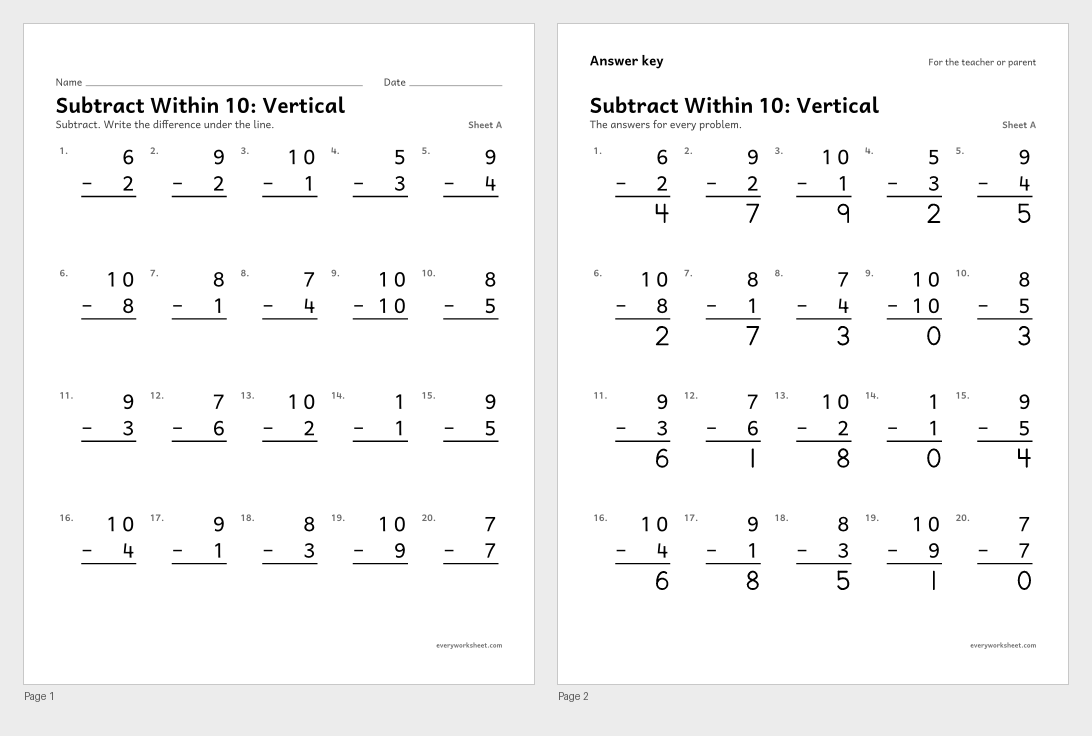
Subtract within 10: Vertical, sheet A
Subtracting within 10 in vertical form
Answer key on page 2
2 pages58 KB
 View all 2 pages
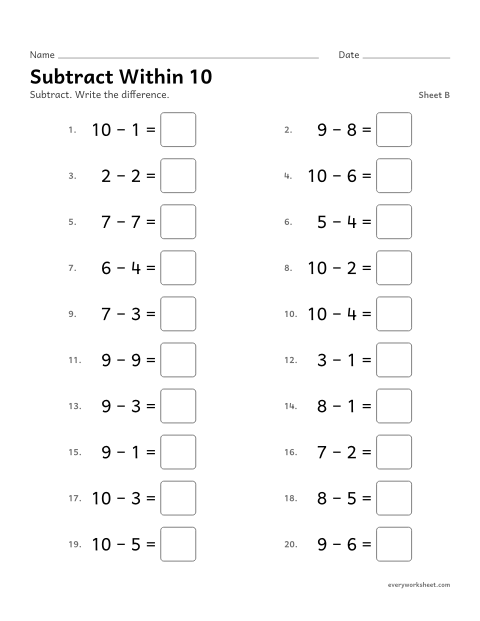
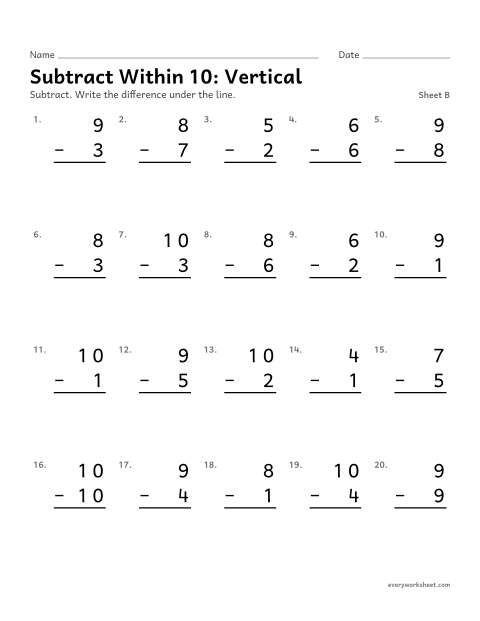
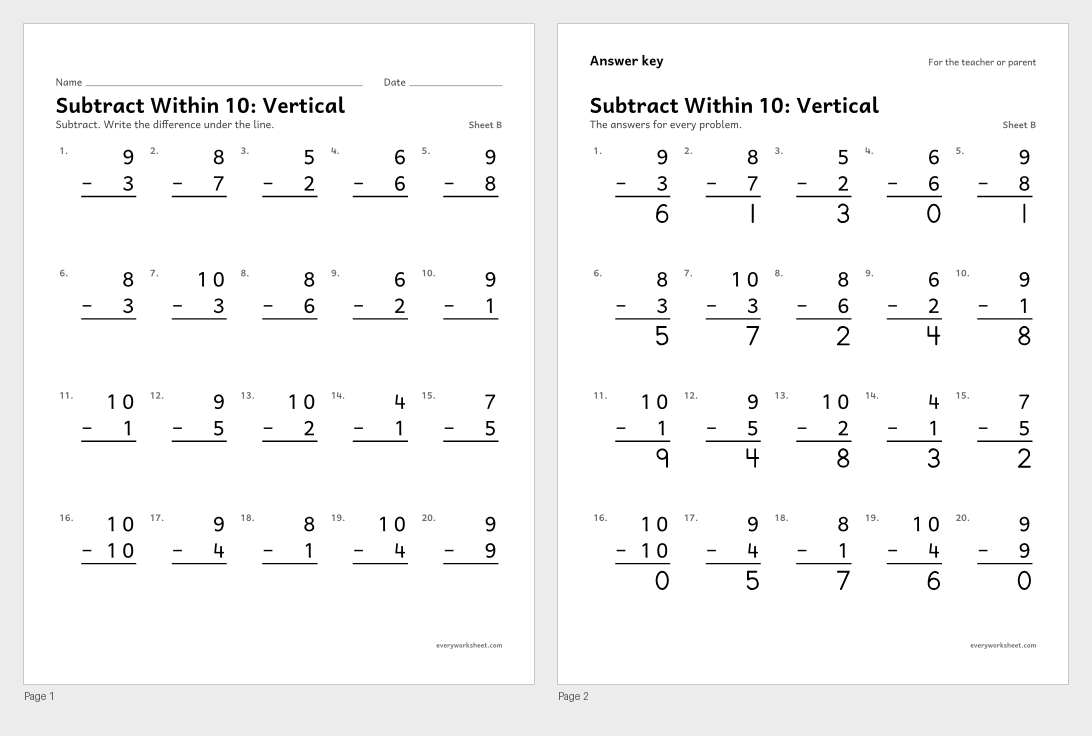
Subtract within 10: Vertical, sheet B
Subtracting within 10 in vertical form
Answer key on page 2
2 pages58 KB
 View all 2 pages
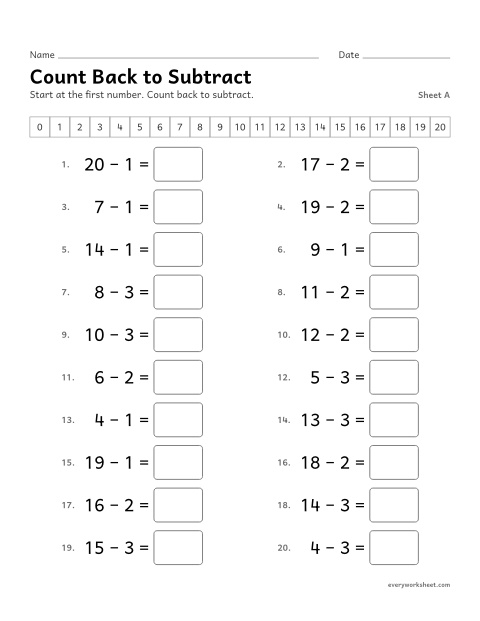
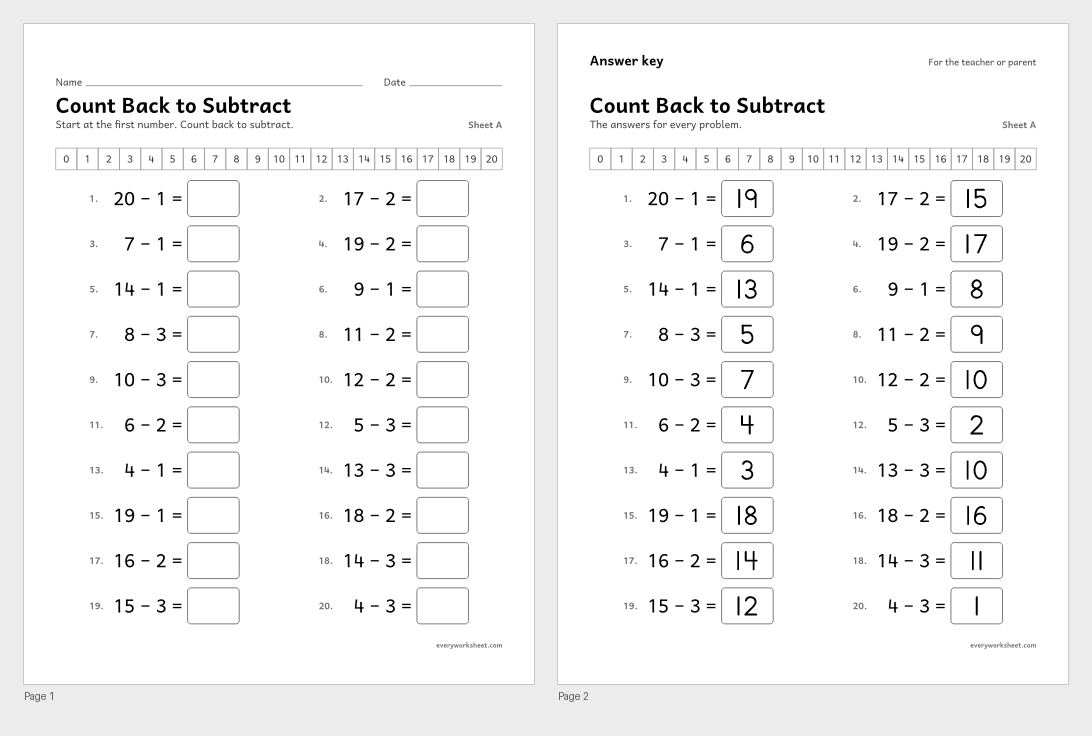
Count back to Subtract, sheet A
Counting back 1, 2 or 3 to subtract
Answer key on page 2
2 pages96 KB
 View all 2 pages
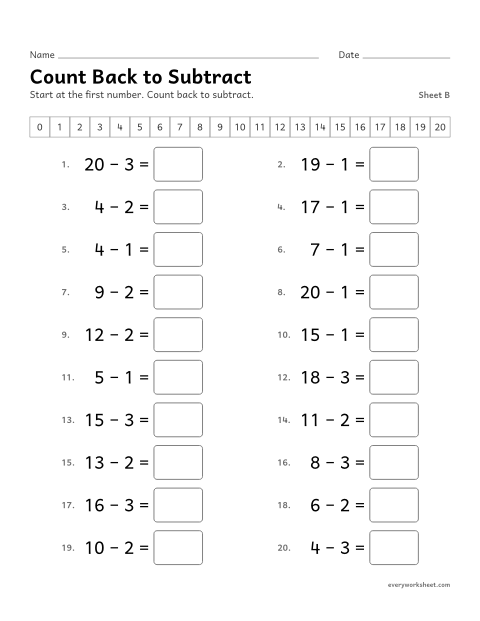
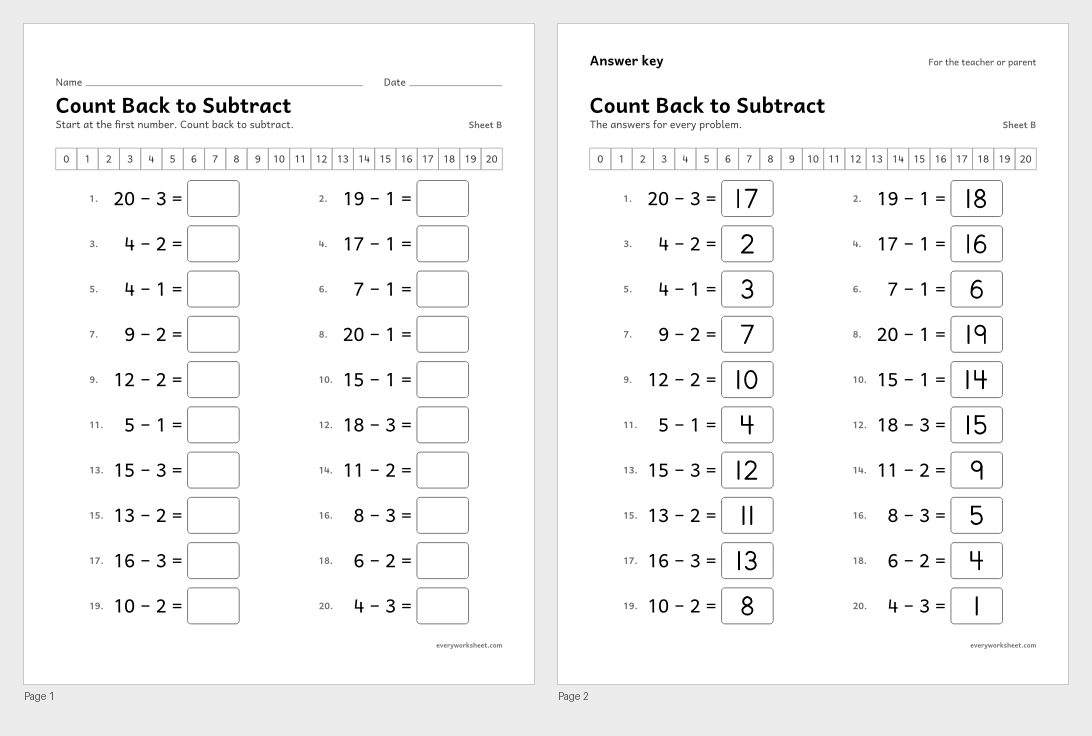
Count back to Subtract, sheet B
Counting back 1, 2 or 3 to subtract
Answer key on page 2
2 pages97 KB
 View all 2 pages
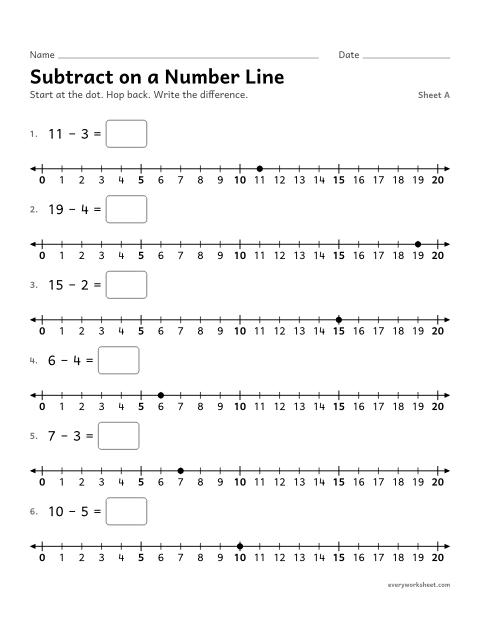
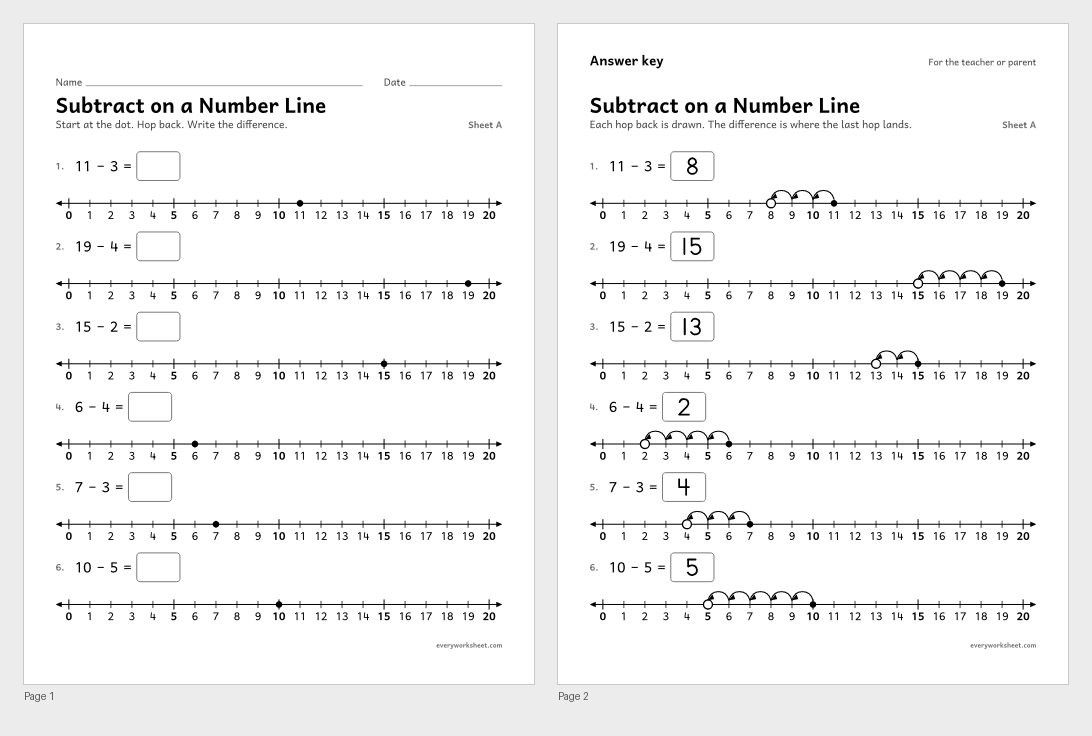
Subtract on a number Line, sheet A
Subtracting within 20 by hopping back on a number line
Answer key on page 2
2 pages57 KB
 View all 2 pages
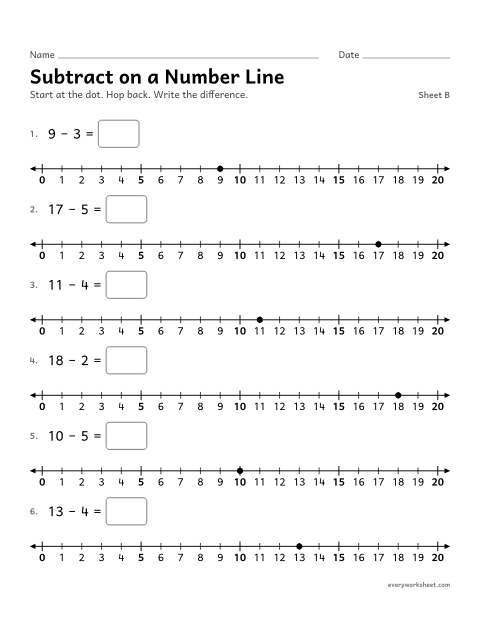
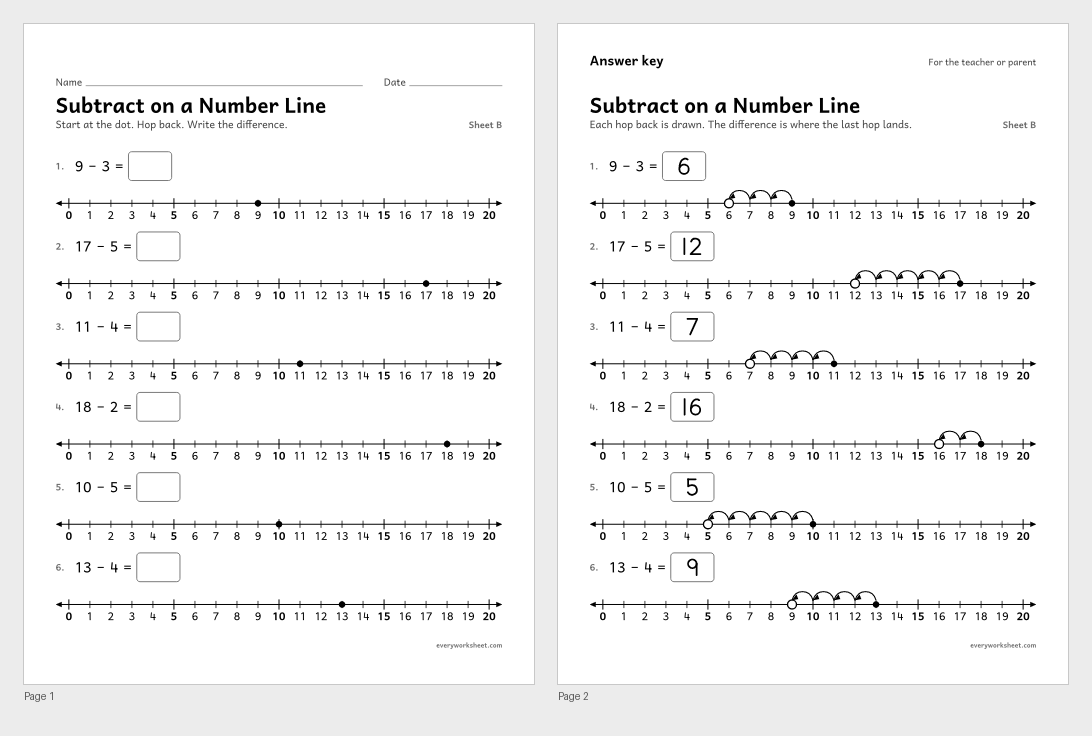
Subtract on a number Line, sheet B
Subtracting within 20 by hopping back on a number line
Answer key on page 2
2 pages57 KB
Subtraction facts to 20
 View all 2 pages
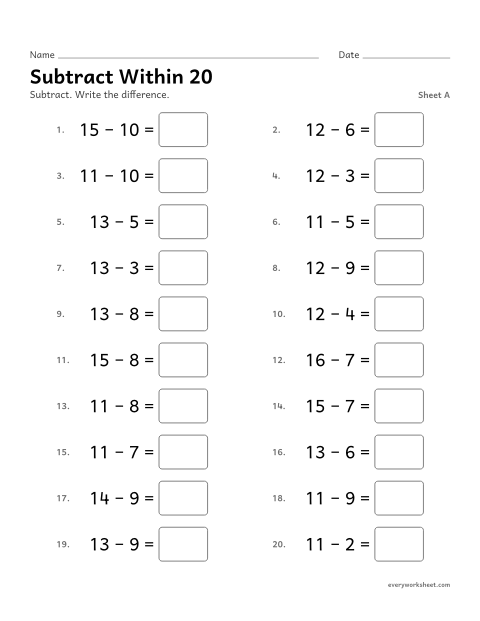
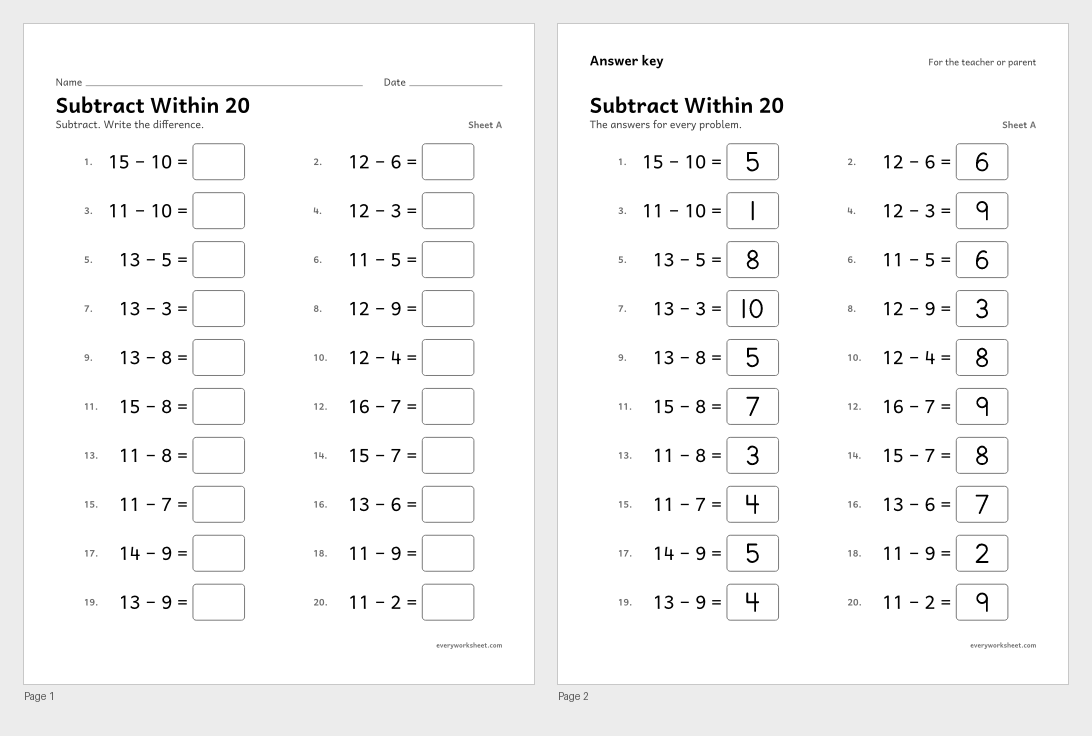
Subtract within 20, sheet A
Subtracting from 11 to 20
Answer key on page 2
2 pages95 KB
 View all 2 pages
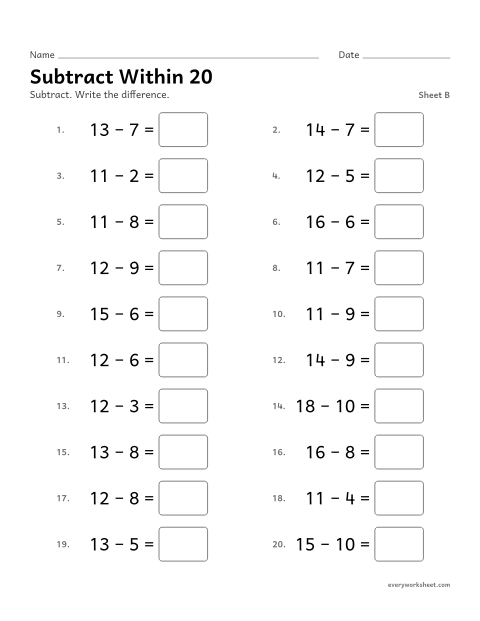
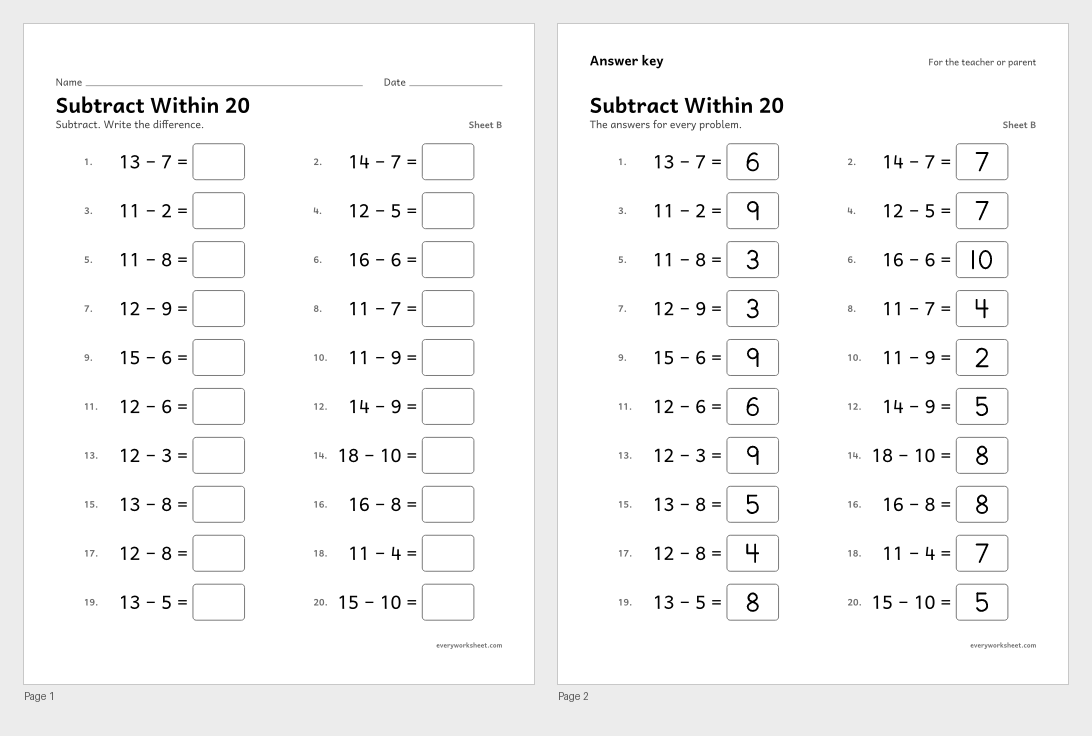
Subtract within 20, sheet B
Subtracting from 11 to 20
Answer key on page 2
2 pages95 KB
 View all 2 pages
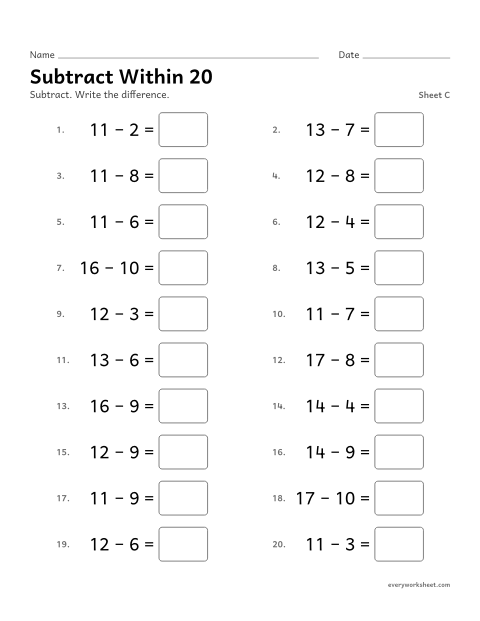
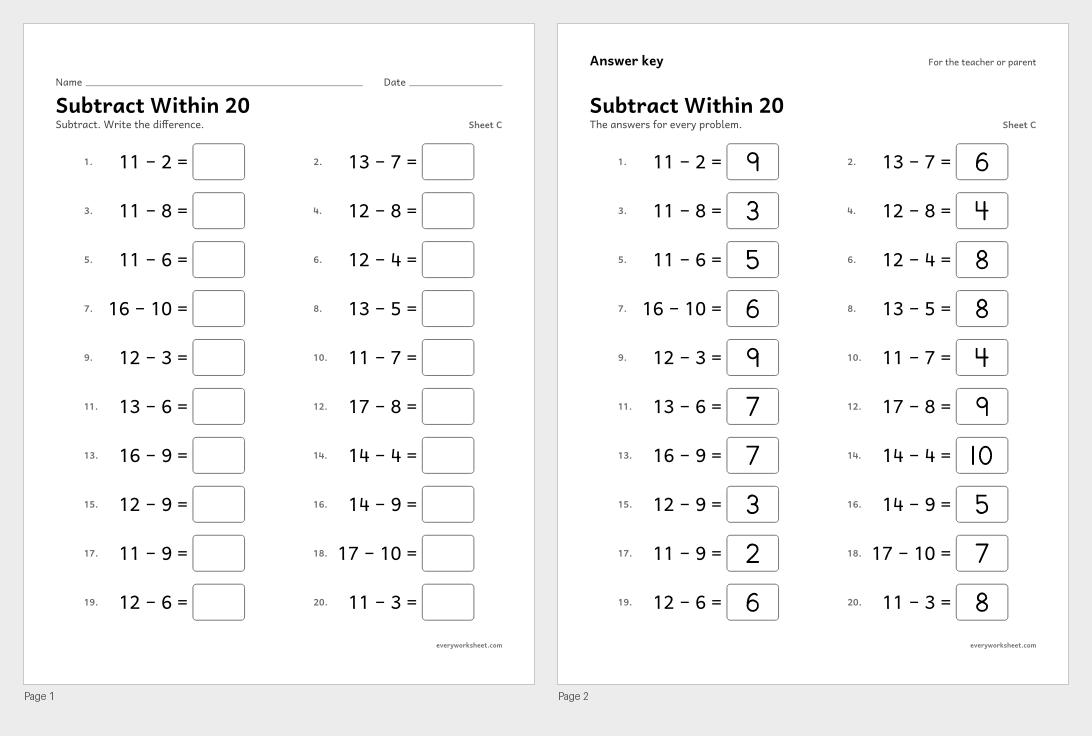
Subtract within 20, sheet C
Subtracting from 11 to 20
Answer key on page 2
2 pages95 KB
 View all 2 pages
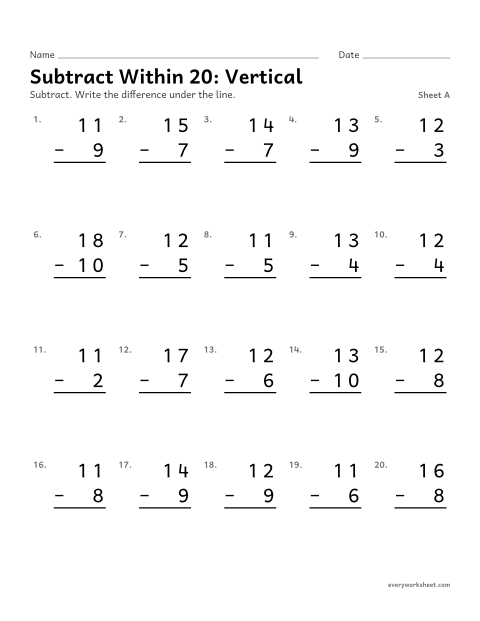
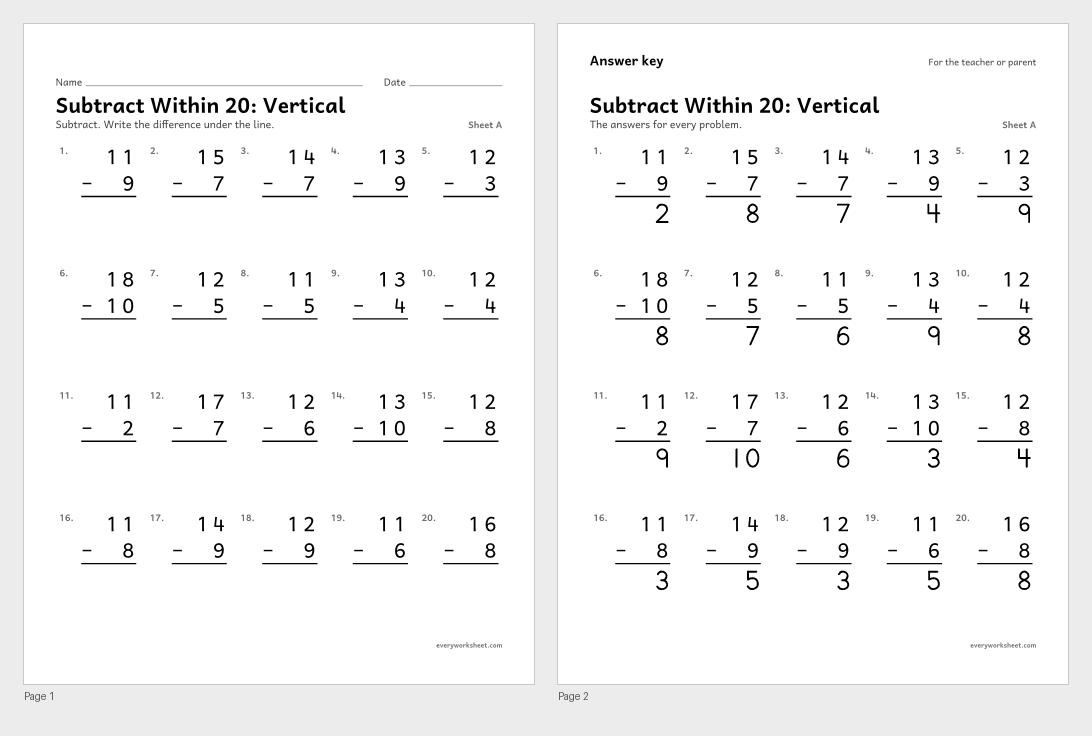
Subtract within 20: Vertical, sheet A
Subtracting within 20 in vertical form
Answer key on page 2
2 pages59 KB
 View all 2 pages
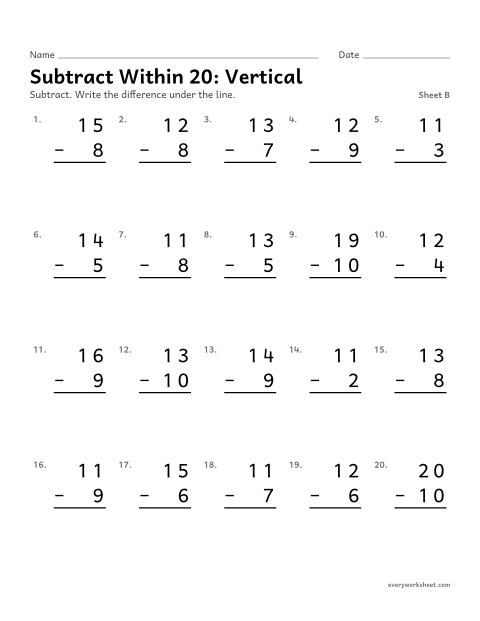
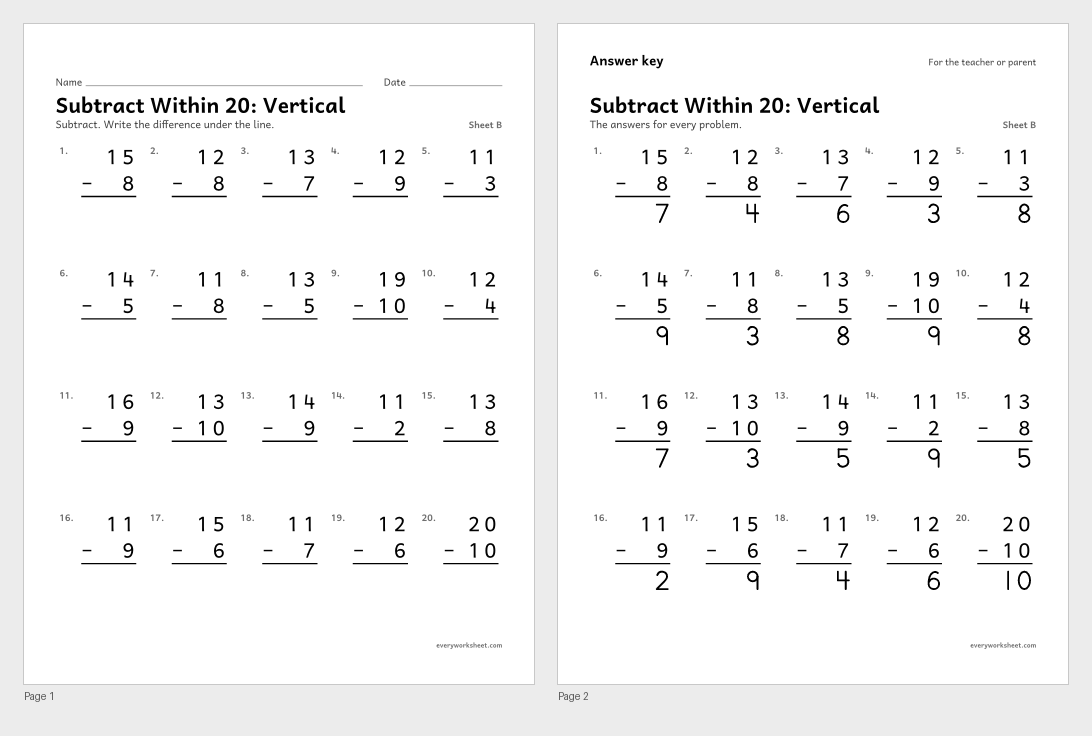
Subtract within 20: Vertical, sheet B
Subtracting within 20 in vertical form
Answer key on page 2
2 pages59 KB
Subtraction strategies
 View all 2 pages
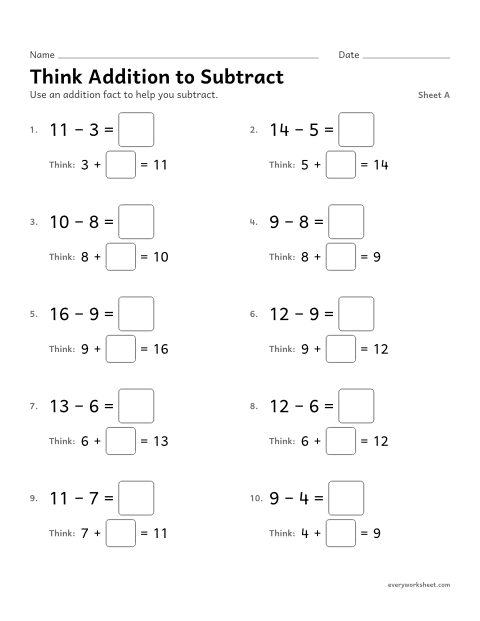
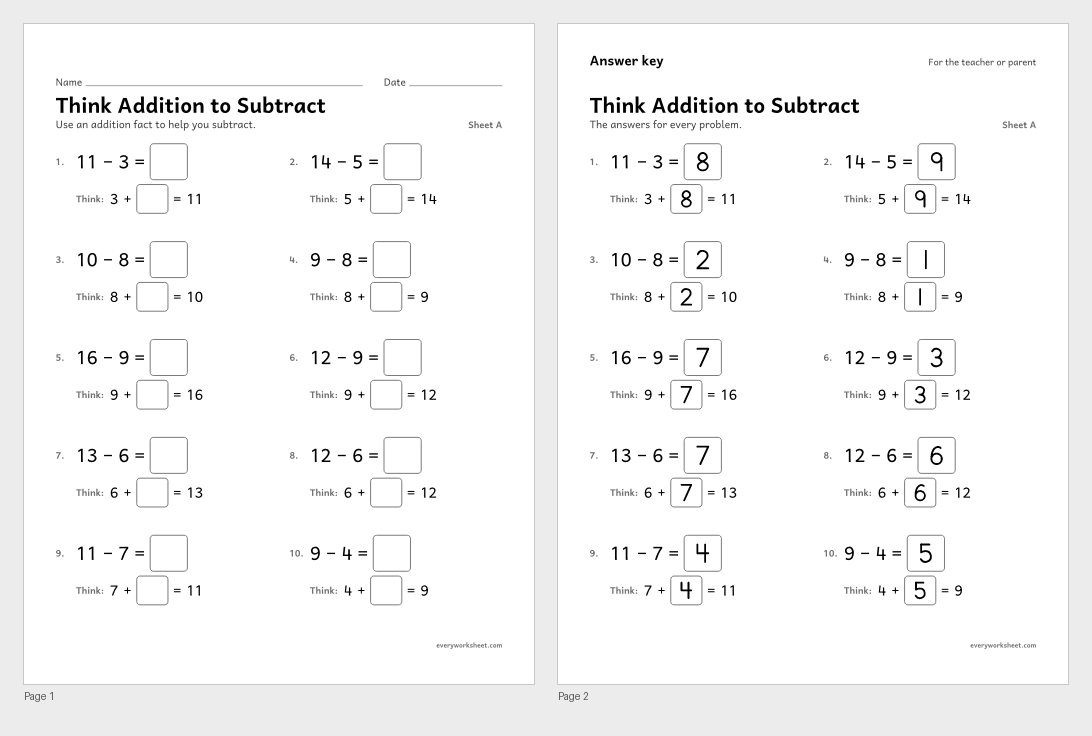
Think addition to Subtract, sheet A
Subtracting by finding the missing addend
Answer key on page 2
2 pages97 KB
 View all 2 pages
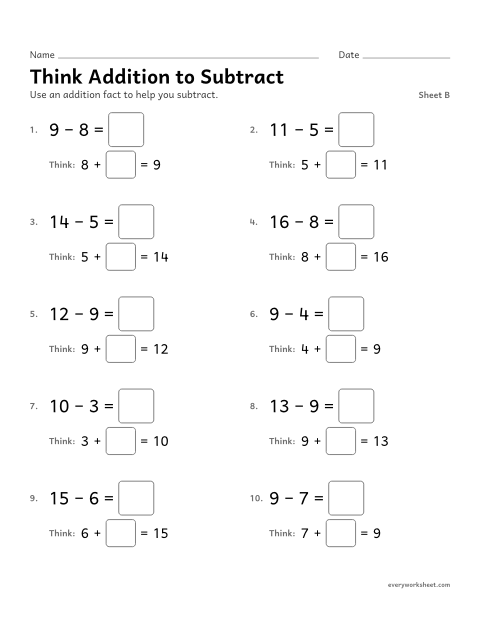
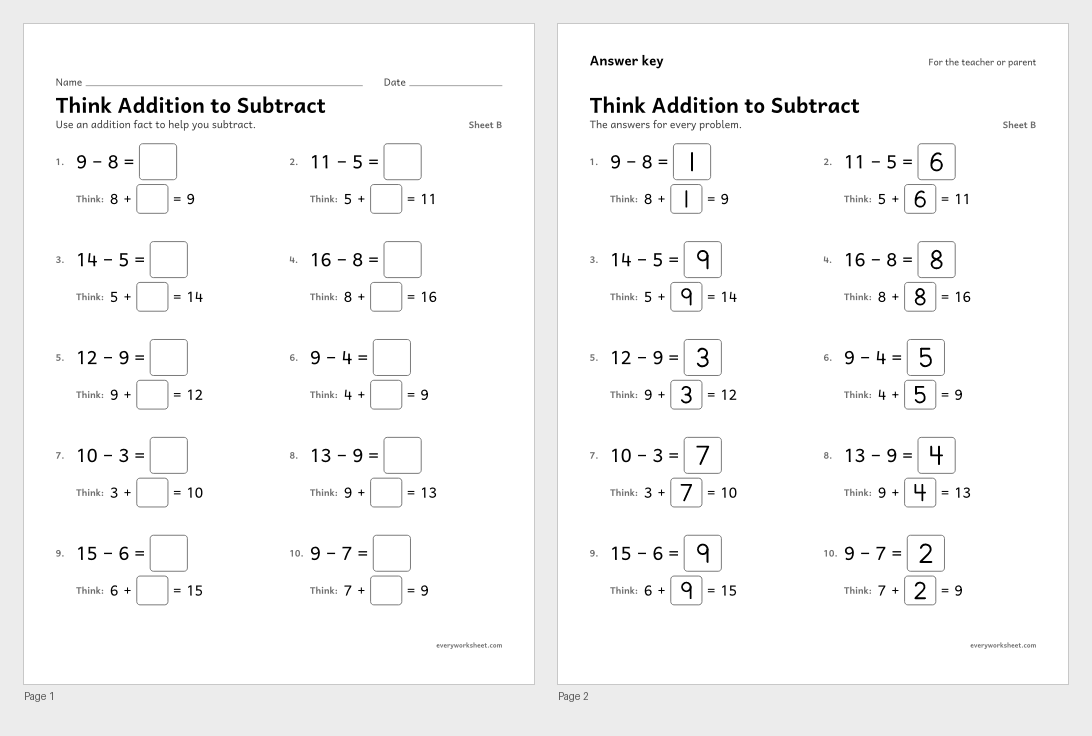
Think addition to Subtract, sheet B
Subtracting by finding the missing addend
Answer key on page 2
2 pages97 KB
 View all 2 pages
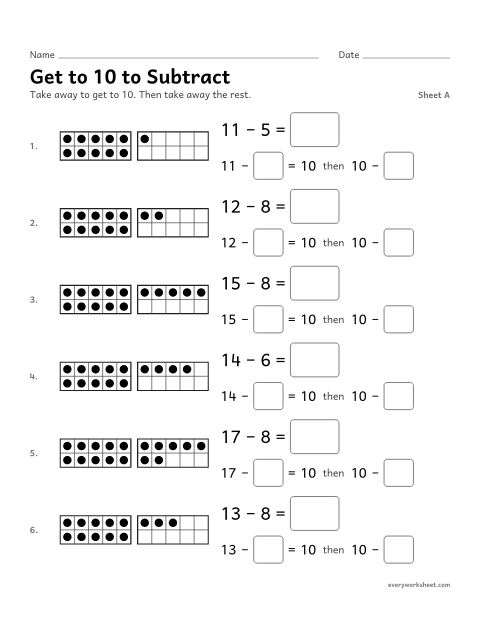
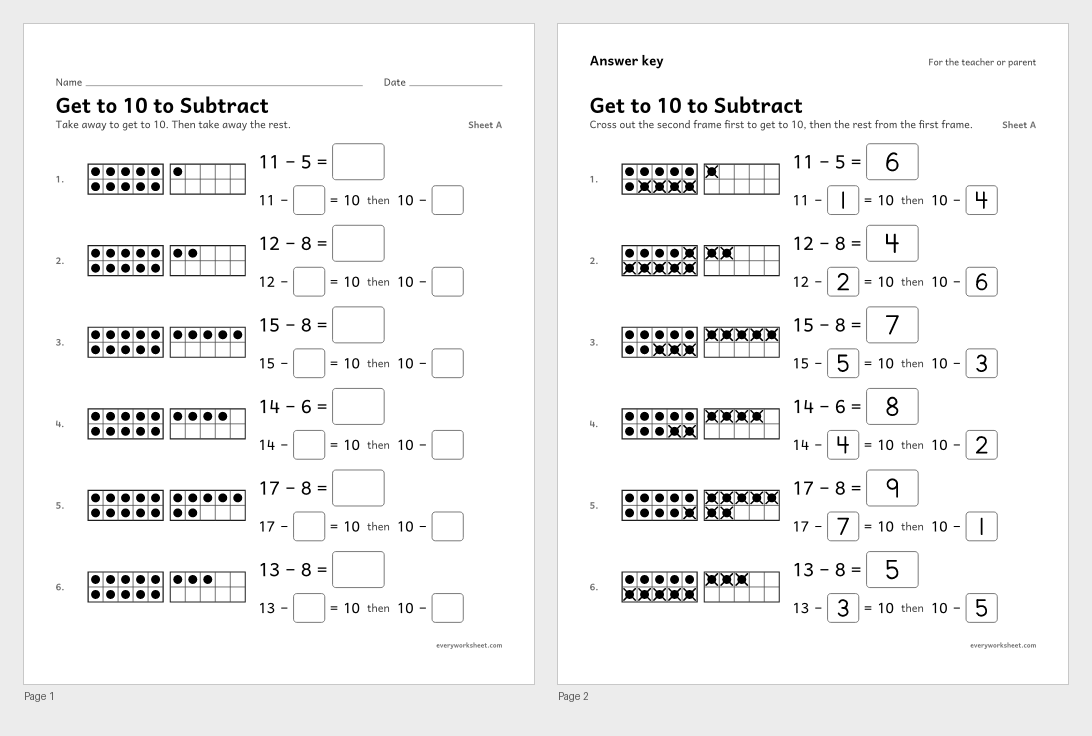
Get to 10 to Subtract, sheet A
Subtracting through 10 (13 − 4 = 13 − 3 − 1)
Answer key on page 2
2 pages78 KB
 View all 2 pages
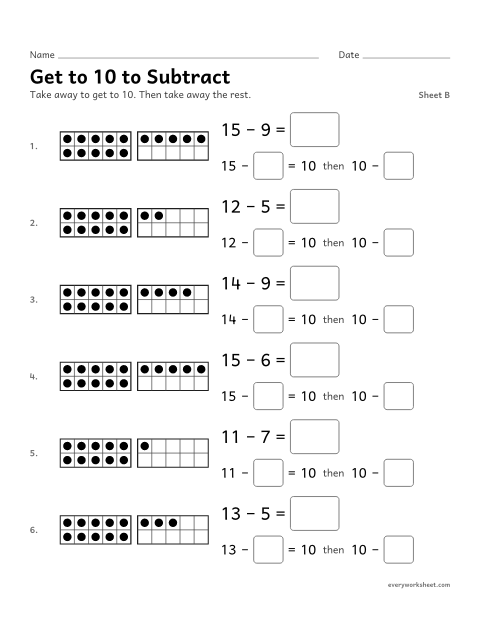
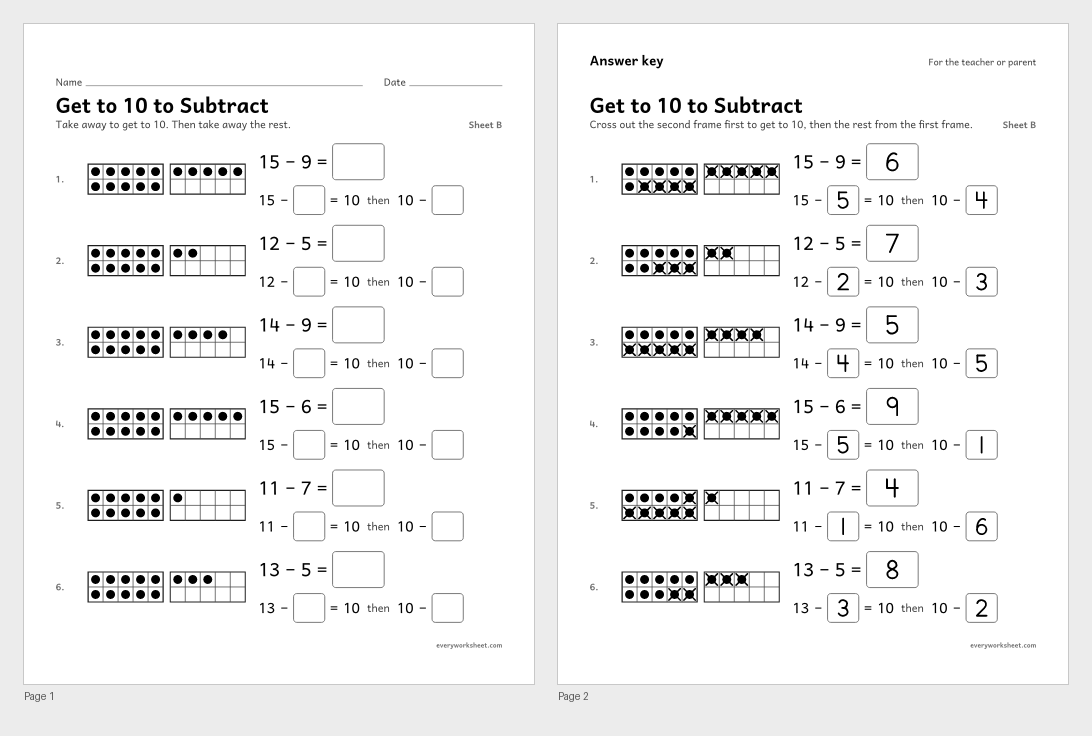
Get to 10 to Subtract, sheet B
Subtracting through 10 (13 − 4 = 13 − 3 − 1)
Answer key on page 2
2 pages78 KB
Subtract tens
 View all 2 pages
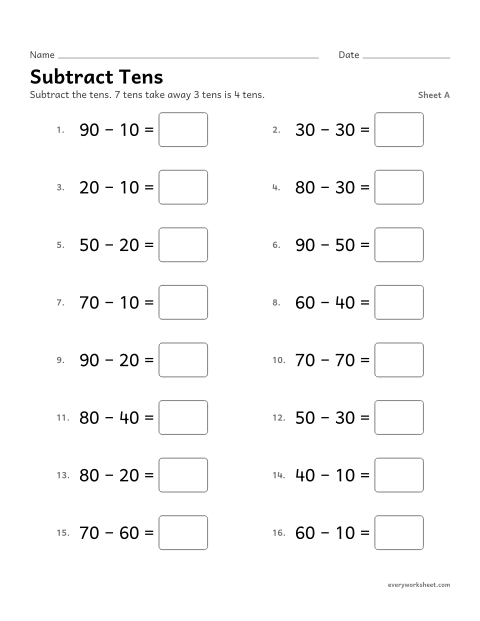
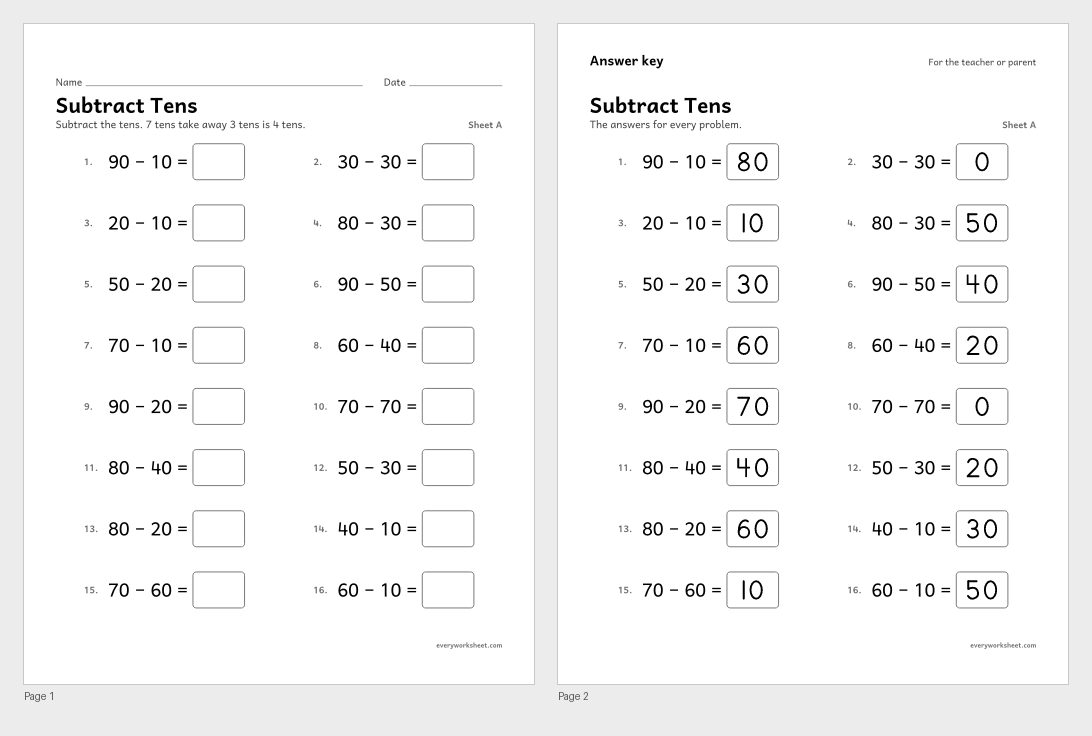
Subtract Tens, sheet A
Subtracting multiples of 10 from 10 to 90
Answer key on page 2
2 pages81 KB
 View all 2 pages
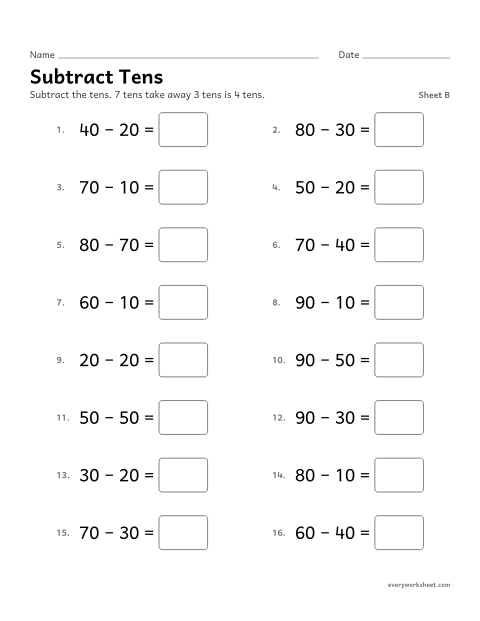
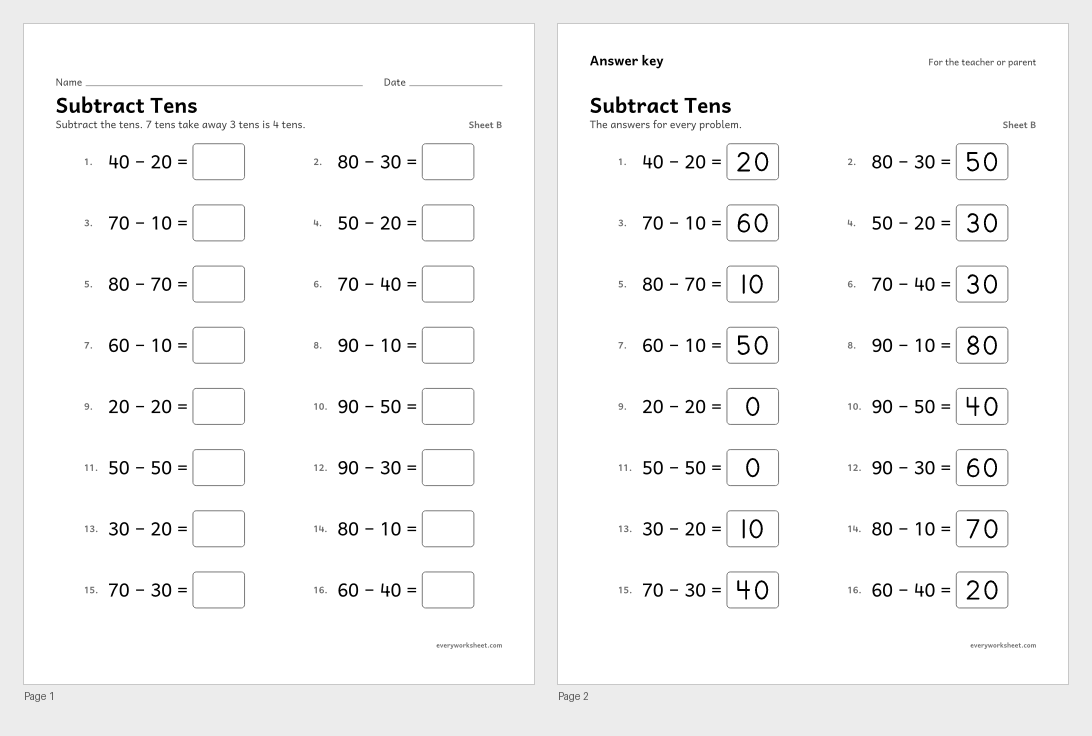
Subtract Tens, sheet B
Subtracting multiples of 10 from 10 to 90
Answer key on page 2
2 pages81 KB
Fluency checks
 View all 2 pages
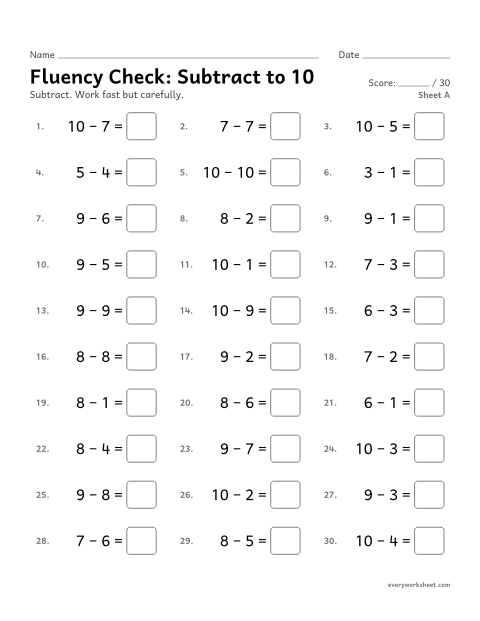
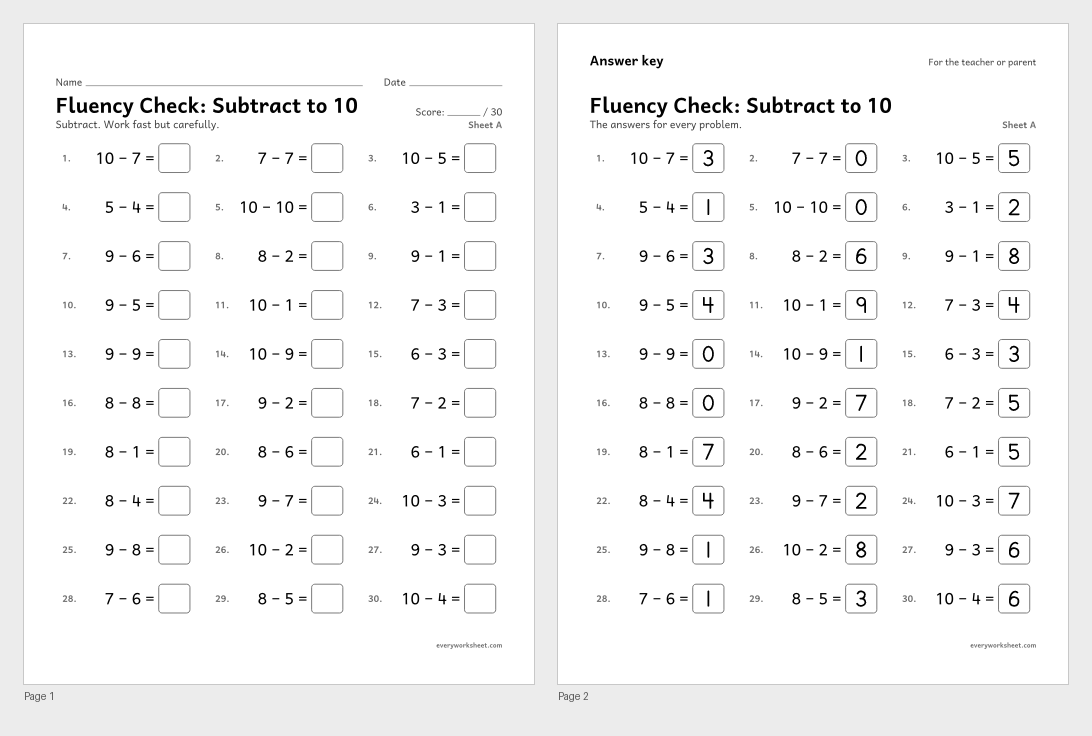
Fluency Check: subtract to 10, sheet A
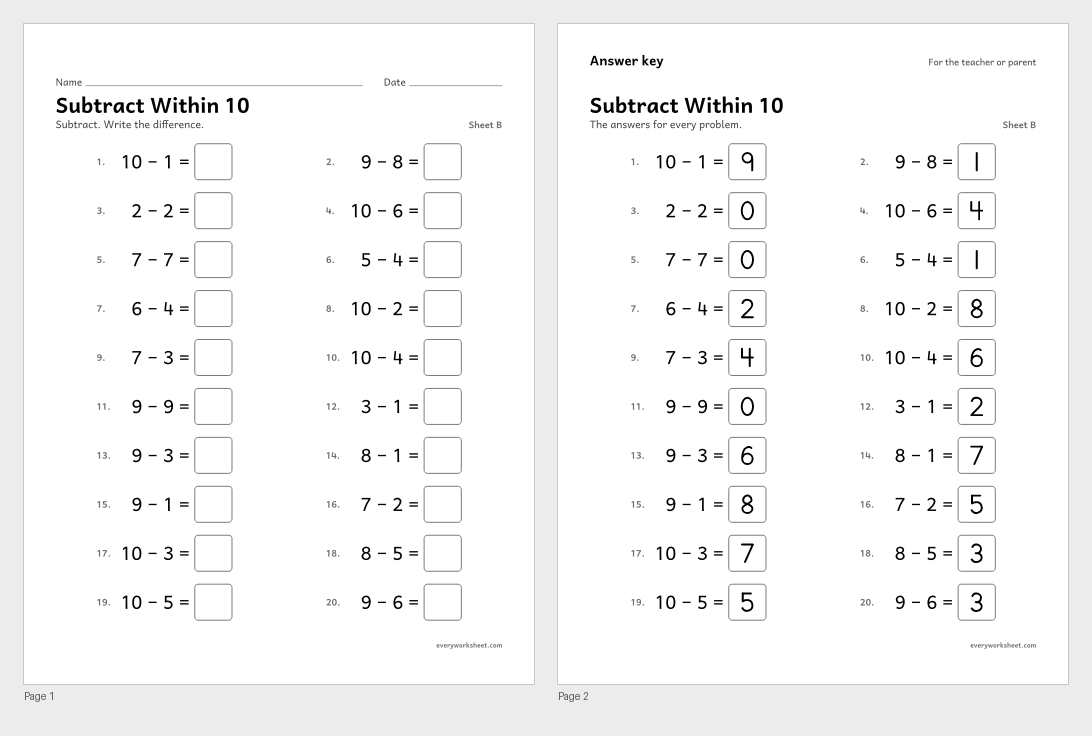
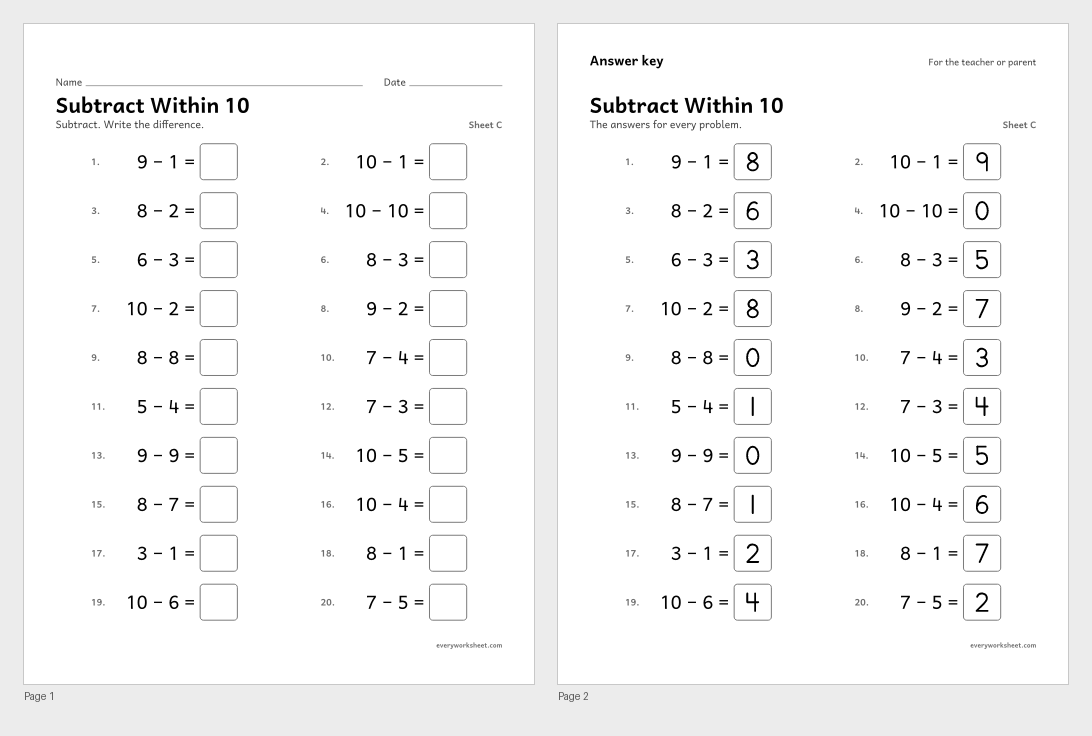
Subtracting within 10 fluently
Answer key on page 2
2 pages127 KB
 View all 2 pages
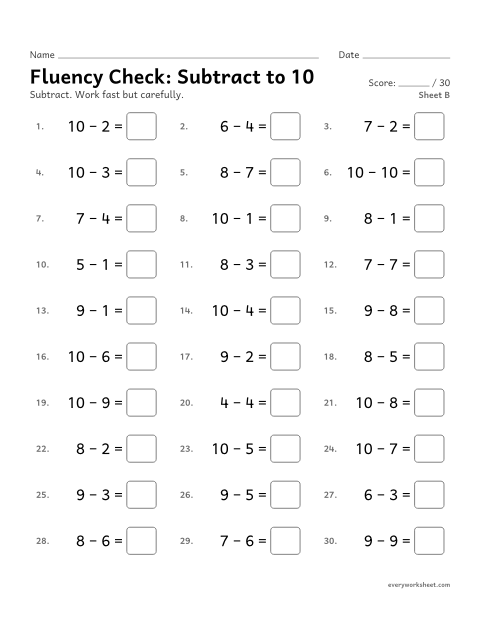
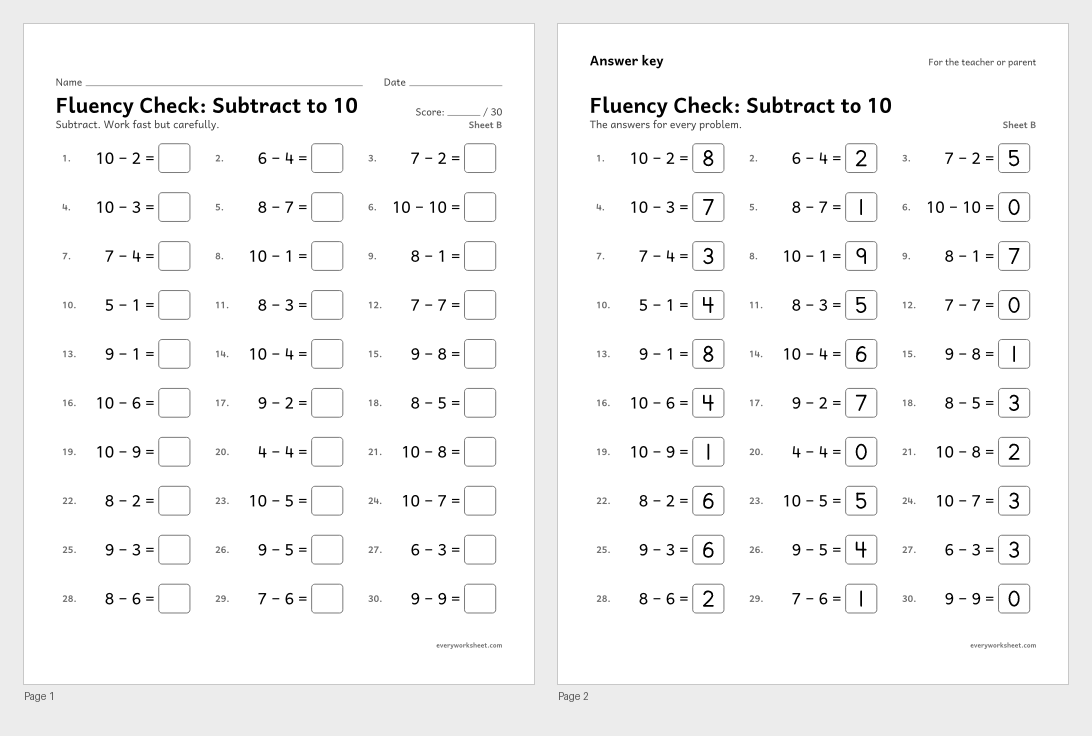
Fluency Check: subtract to 10, sheet B
Subtracting within 10 fluently
Answer key on page 2
2 pages127 KB
Print at 100% (actual size) for the cleanest tracing lines.
About these subtraction worksheets
These subtraction worksheets follow the first grade year: subtracting within 10 until it is quick, then subtracting from the teen numbers with strategies children can understand and explain.
Facts to 10 come in rows and stacked form, with counting back and number line pages for children who still count. For facts to 20 there are think addition pages (12 − 8 is the same question as 8 + ? = 12) and get to 10 pages, where children take away down to 10 and then the rest, with two ten frames to cross out. There are also pages for subtracting tens, like 70 − 30.
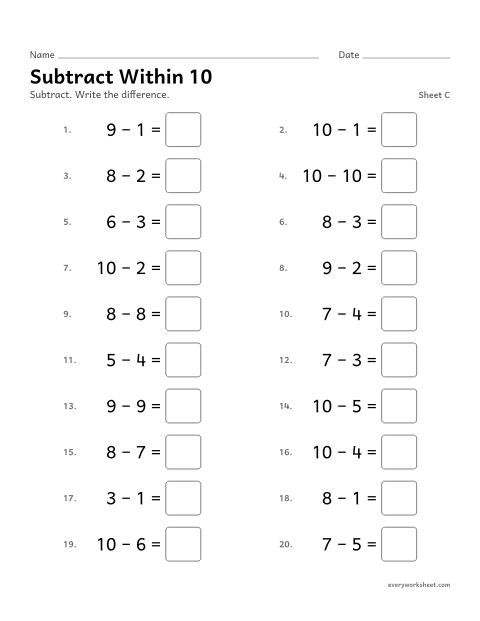
Most pages come as Sheet A, B and C with the same skill and different problems. Every page has an answer key on page 2, and prints in black and white on US Letter or A4.
Standards
CCSS.MATH.CONTENT.1.OA.B.4Understand subtraction as an unknown-addend problem. For example, subtract 10 - 8 by finding the number that makes 10 when added to 8.CCSS.MATH.CONTENT.1.OA.C.5Relate counting to addition and subtraction (e.g., by counting on 2 to add 2).CCSS.MATH.CONTENT.1.OA.C.6Add and subtract within 20, demonstrating fluency for addition and subtraction within 10. Use strategies such as counting on; making ten (e.g., 8 + 6 = 8 + 2 + 4 = 10 + 4 = 14); decomposing a number leading to a ten (e.g., 13 - 4 = 13 - 3 - 1 = 10 - 1 = 9); using the relationship between addition and subtraction (e.g., knowing that 8 + 4 = 12, one knows 12 - 8 = 4); and creating equivalent but easier or known sums (e.g., adding 6 + 7 by creating the known equivalent 6 + 6 + 1 = 12 + 1 = 13).CCSS.MATH.CONTENT.1.NBT.C.6Subtract multiples of 10 in the range 10-90 from multiples of 10 in the range 10-90 (positive or zero differences), using concrete models or drawings and strategies based on place value, properties of operations, and/or the relationship between addition and subtraction; relate the strategy to a written method and explain the reasoning used.
How to use them
- Start with Subtract Within 10. Children who count back on fingers will get a lot from the number path and number line pages.
- Teach think addition early. Once a child knows 8 + 4 = 12, they can use it for 12 − 8 and 12 − 4.
- Use the get to 10 pages for facts like 13 − 4: take away 3 to get to 10, then 1 more.
- Use the fluency checks every week or two to see how quick the facts within 10 have become.
- Use the subtract tens pages once children understand that 70 is 7 tens.
Teaching tips
- Count back only for small numbers. Taking away 1, 2 or 3 by counting back is quick; for bigger numbers, think addition is faster.
- On a number line, start on the first number and hop back. The last hop lands on the answer.
- Get to 10: for 15 − 7, take 5 to get to 10, then take 2 more to get 8.
- Subtract tens like ones: 7 tens take away 3 tens is 4 tens, so 70 − 30 = 40.
- Read the sign aloud before each problem. Many mistakes on mixed pages come from adding by habit.
Questions teachers and parents ask
How do 1st graders learn subtraction?
They start by taking away objects and counting back, then learn faster strategies: thinking of the addition fact, getting to 10, and using doubles. By the end of the year they subtract within 20, and within 10 quickly.
What does think addition mean?
To find 12 − 8, ask what number goes with 8 to make 12. Children who know 8 + 4 = 12 can answer 4 right away. Each think addition page has a helper line for this.
Do these sheets have negative answers?
No. Every problem is checked so the answer is 0 or more and stays within the range of the sheet.
Are there answer keys?
Yes. Every page has an answer key on page 2 of the PDF, including the hops on number lines and the crossed-out dots on the get to 10 pages.