 View larger
Verbs Worksheets
Find action verbs, sort nouns and verbs, use past, present and future, add -ed and -ing, match verbs to one or more, and choose verbs with just the right meaning.
Download the verbs worksheets
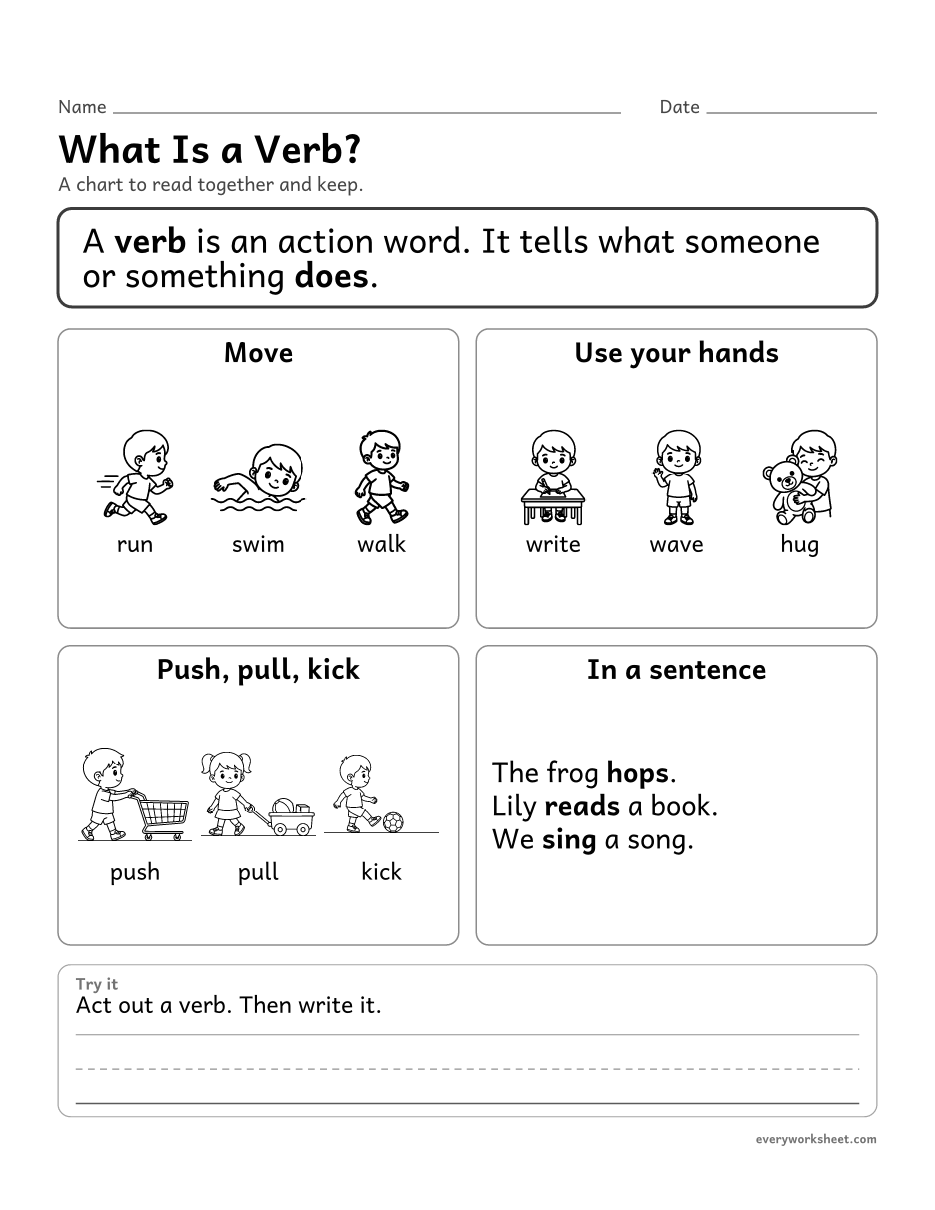
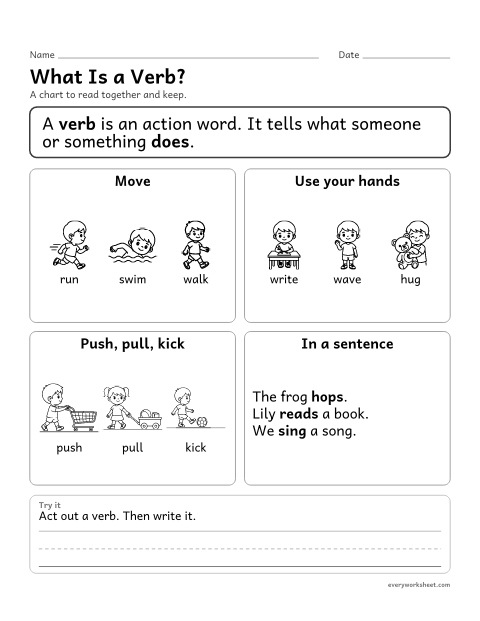
What is a verb?
 View larger
Find the verbs
 View all 2 pages
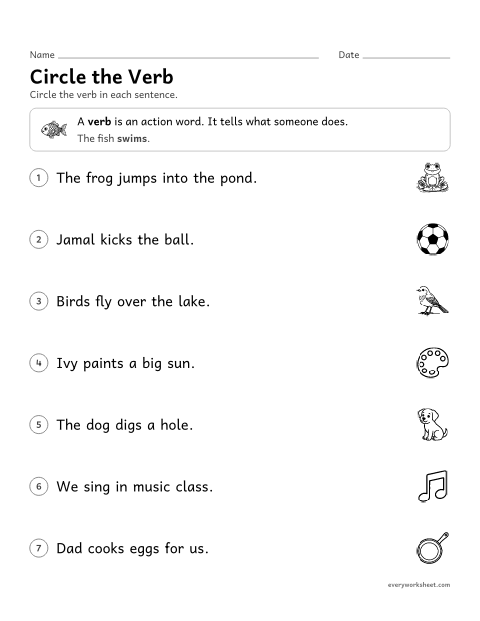
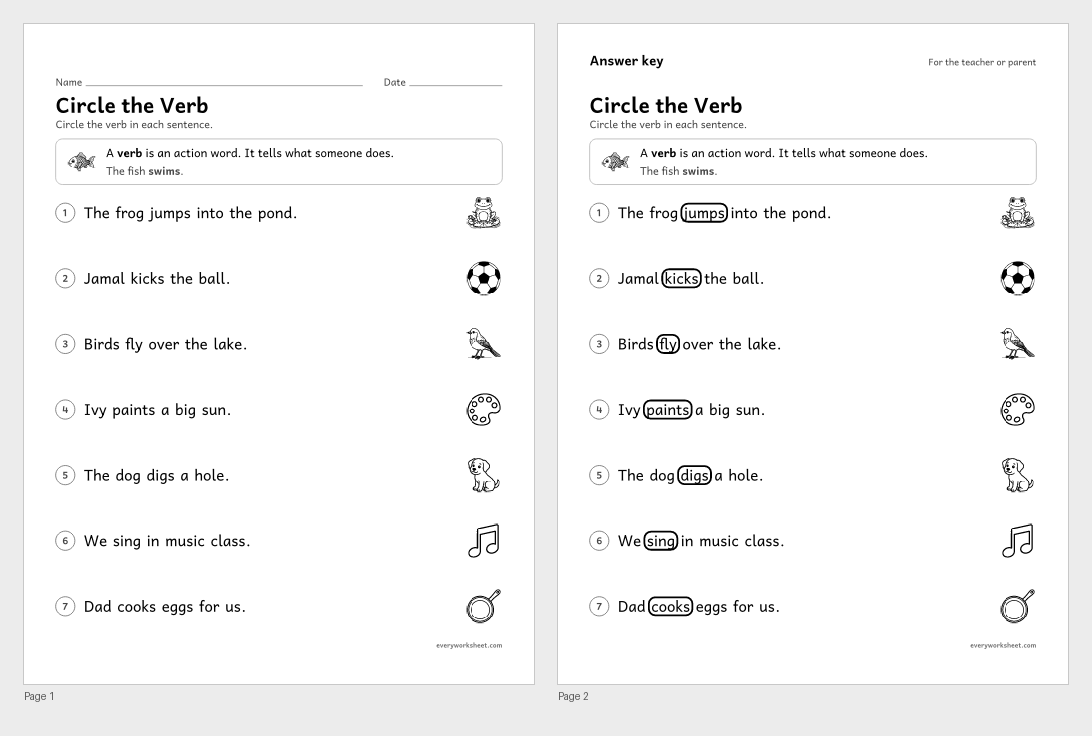
Circle the verb
Finding the action word in a sentence
Answer key on page 2
2 pages274 KB
 View all 2 pages
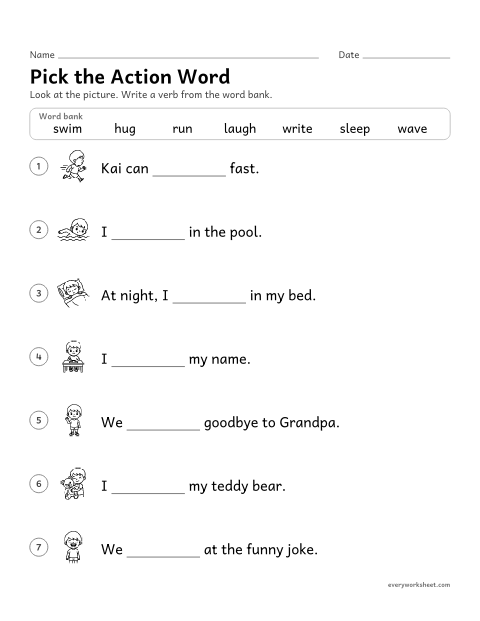
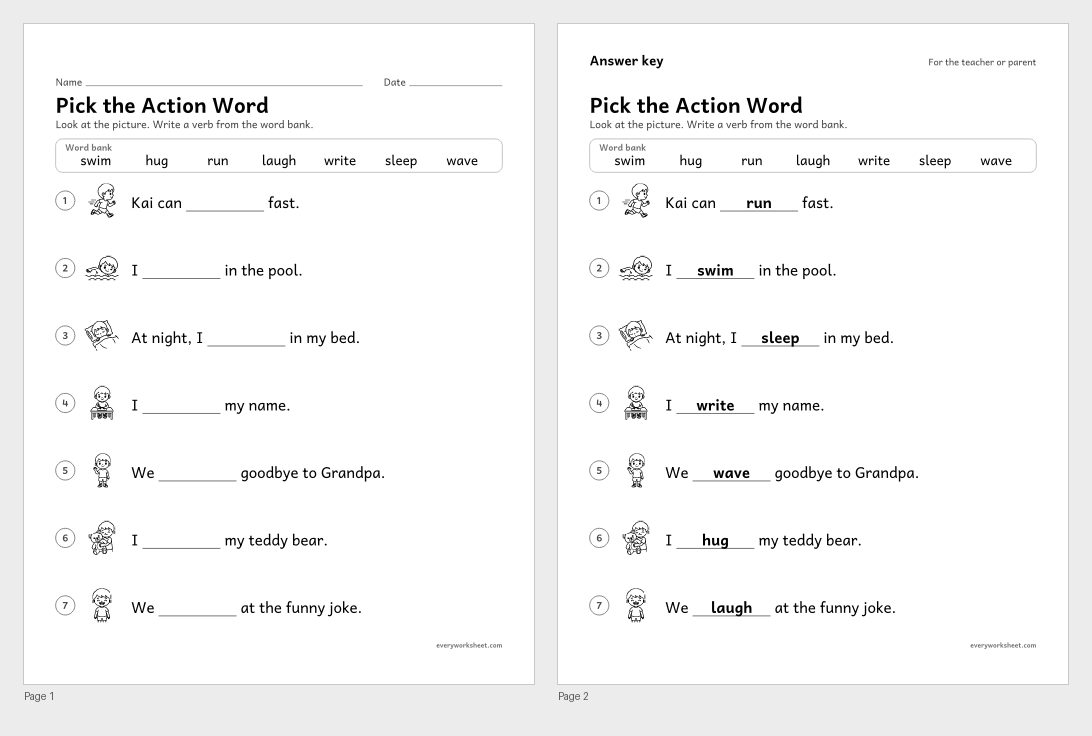
Pick the action word
Using action verbs that match a picture
Answer key on page 2
2 pages369 KB
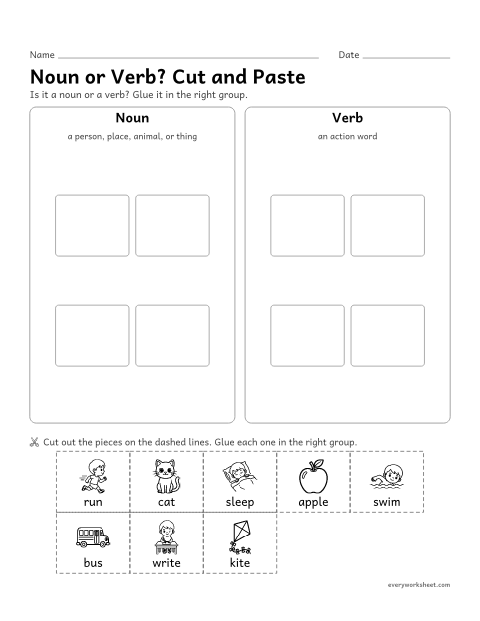
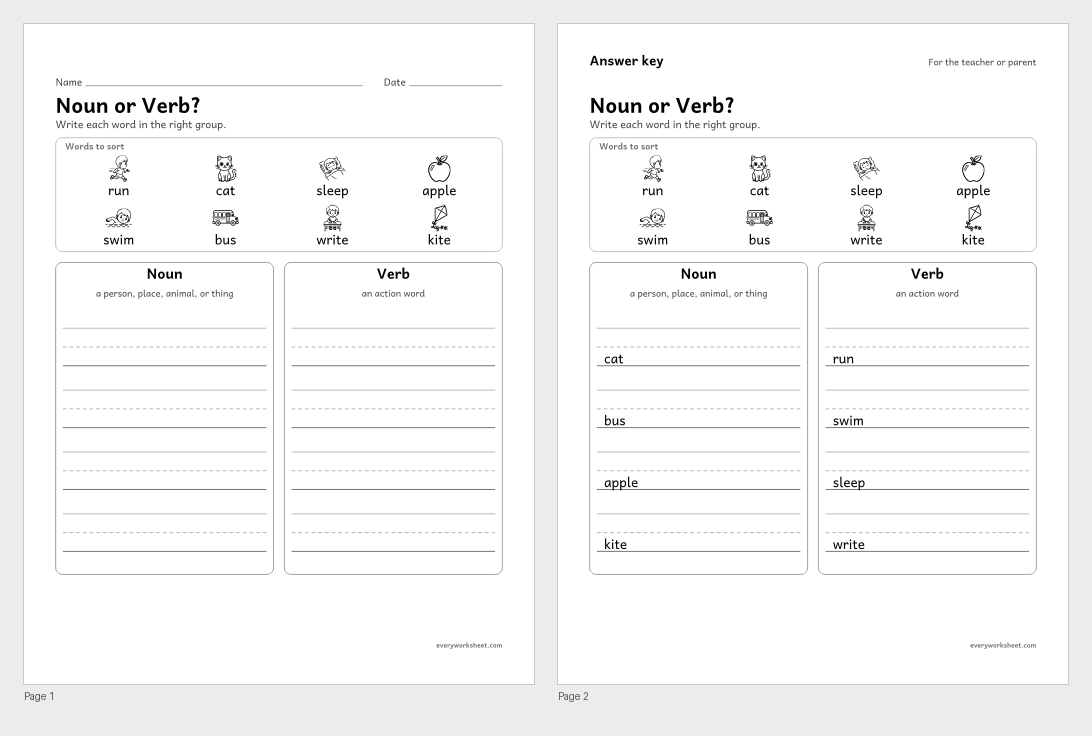
Noun or verb?
 View all 2 pages
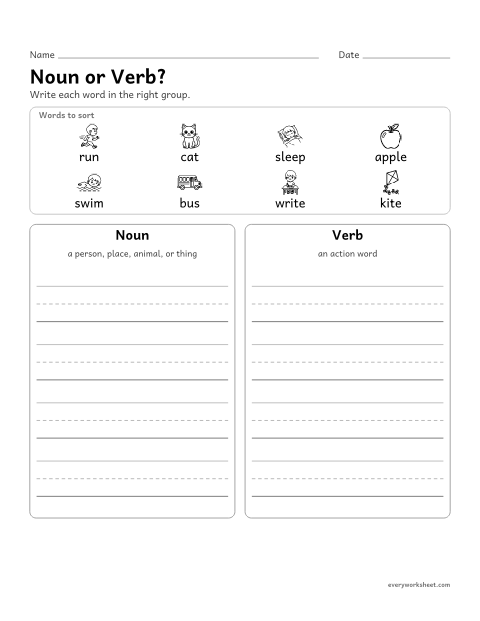
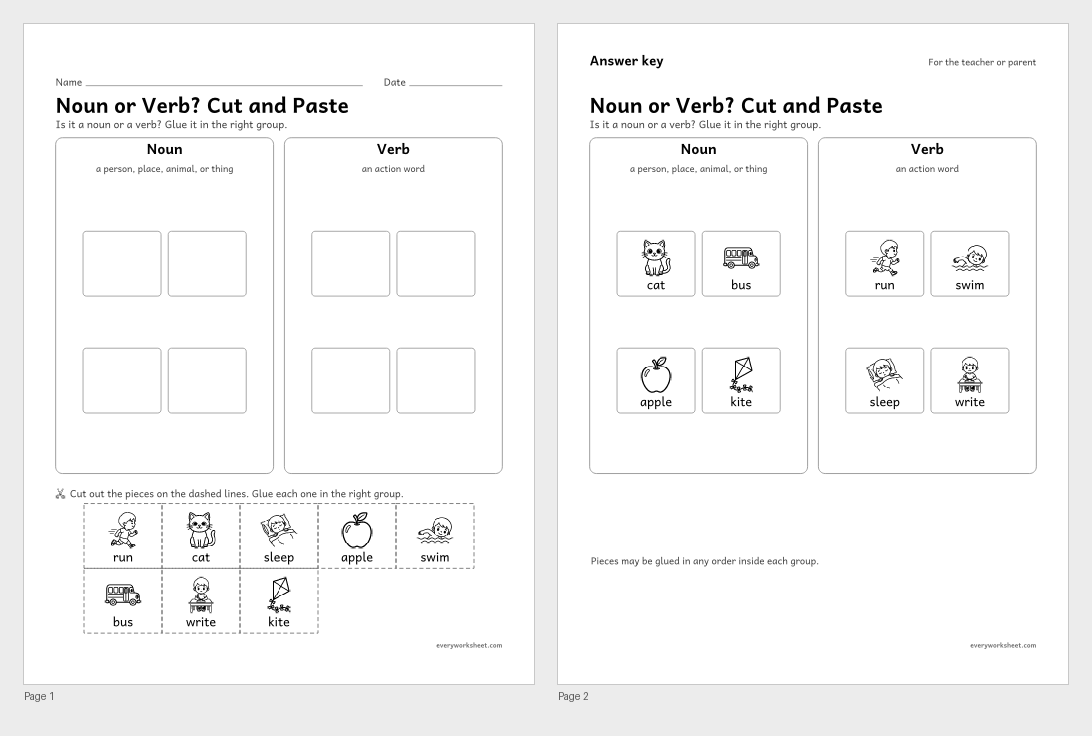
Noun or Verb? cut and paste
Sorting nouns and verbs
Answer key on page 2
2 pages407 KB
 View all 2 pages
Past, present and future
 View all 2 pages
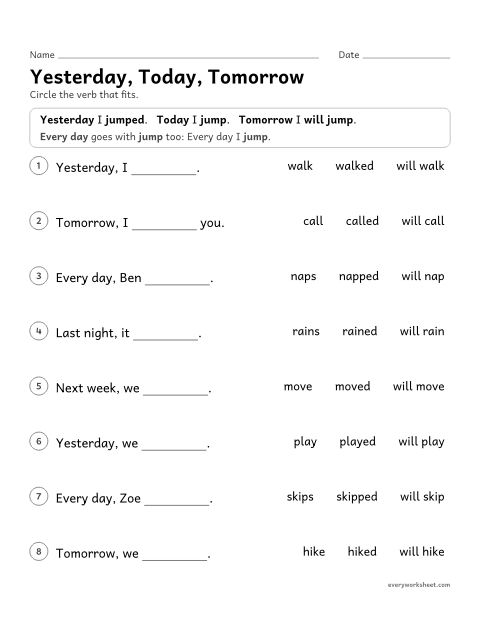
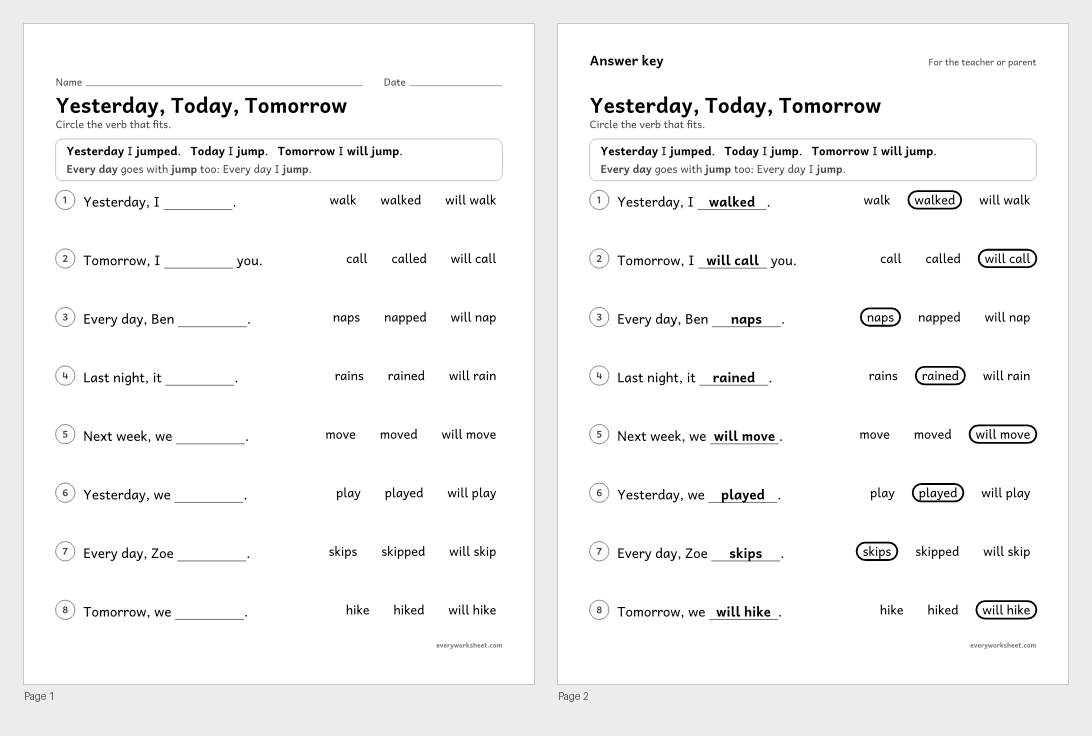
Yesterday, Today, tomorrow
Using verbs for the past, present and future
Answer key on page 2
2 pages50 KB
Adding -ed and -ing
 View all 2 pages
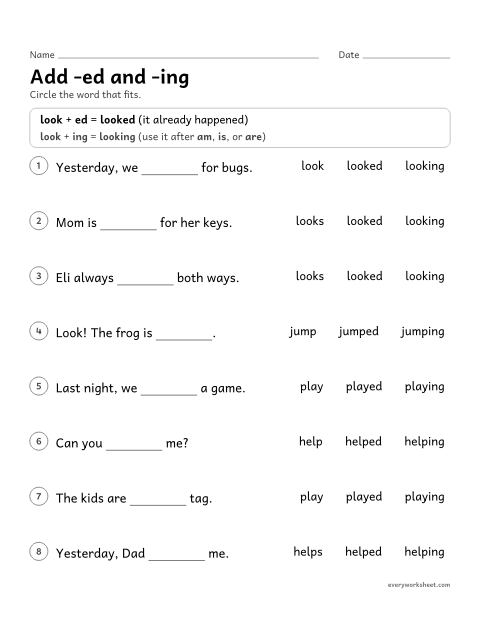
Add -ed and -ing
Reading verbs with the endings -s, -ed and -ing
Answer key on page 2
2 pages50 KB
Verbs for one or more
 View all 2 pages
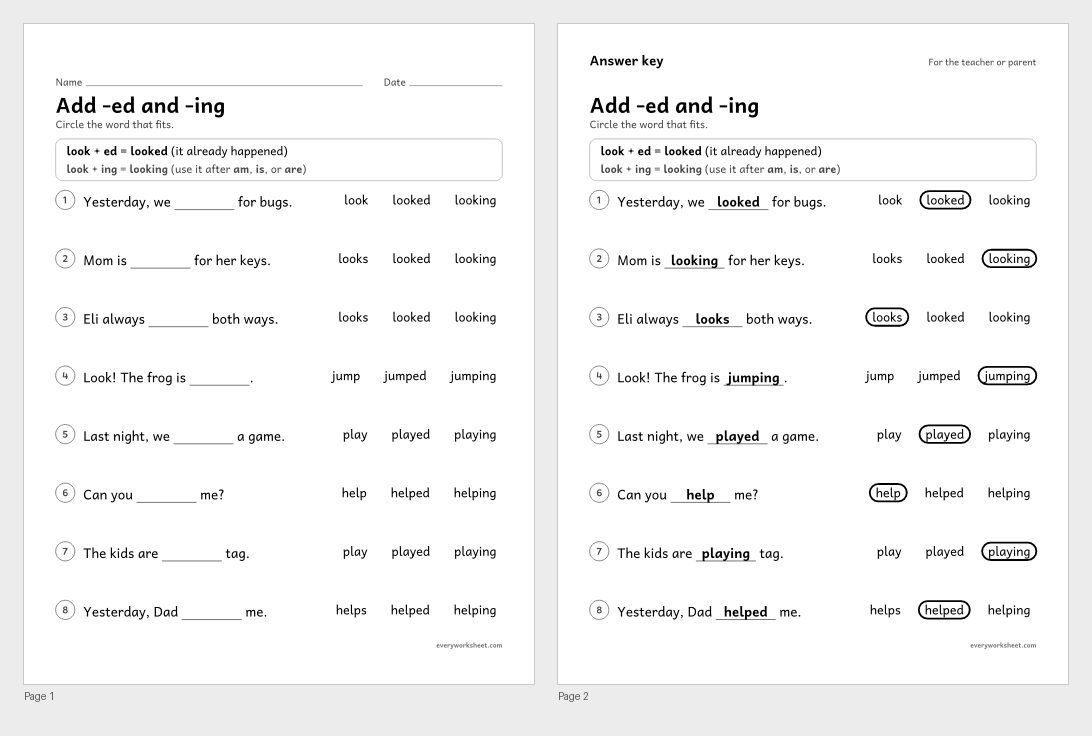
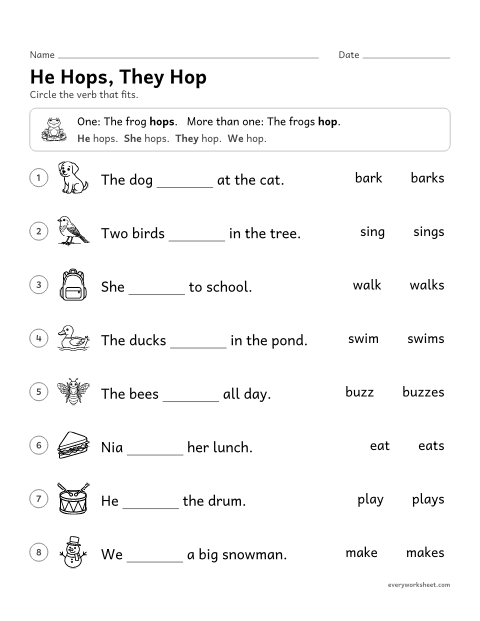
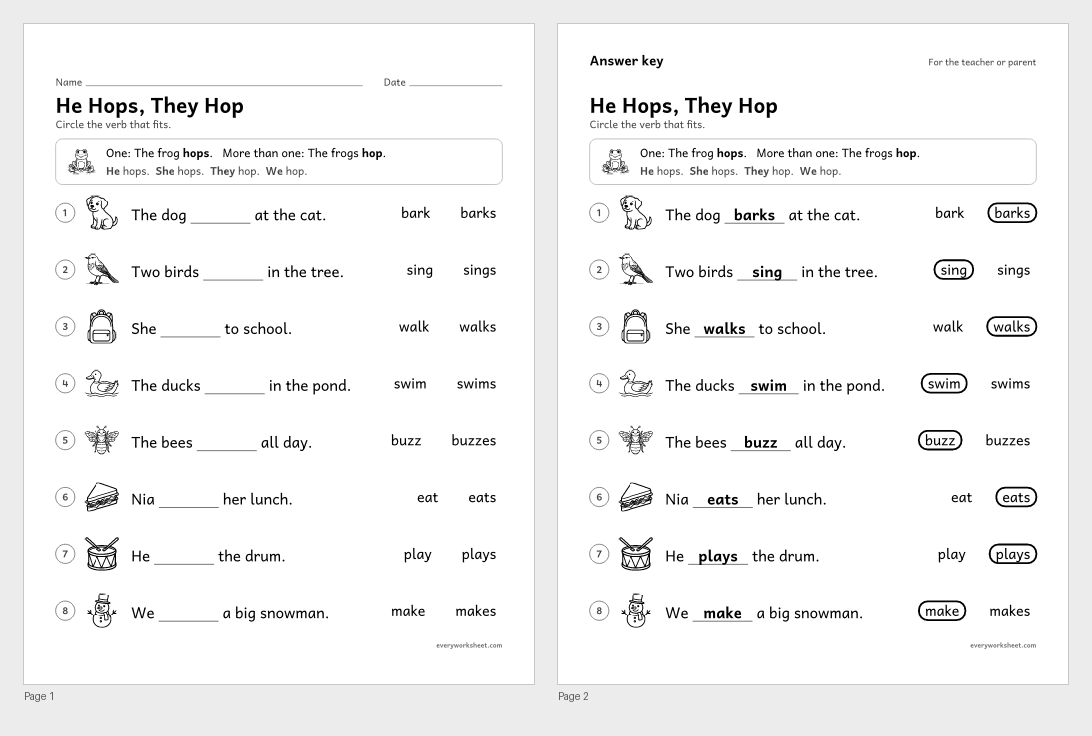
He Hops, they hop
Matching the verb to one or more than one
Answer key on page 2
2 pages363 KB
 View all 2 pages
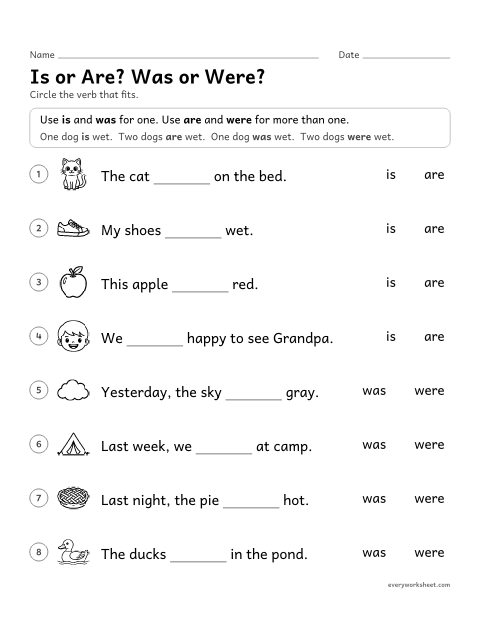
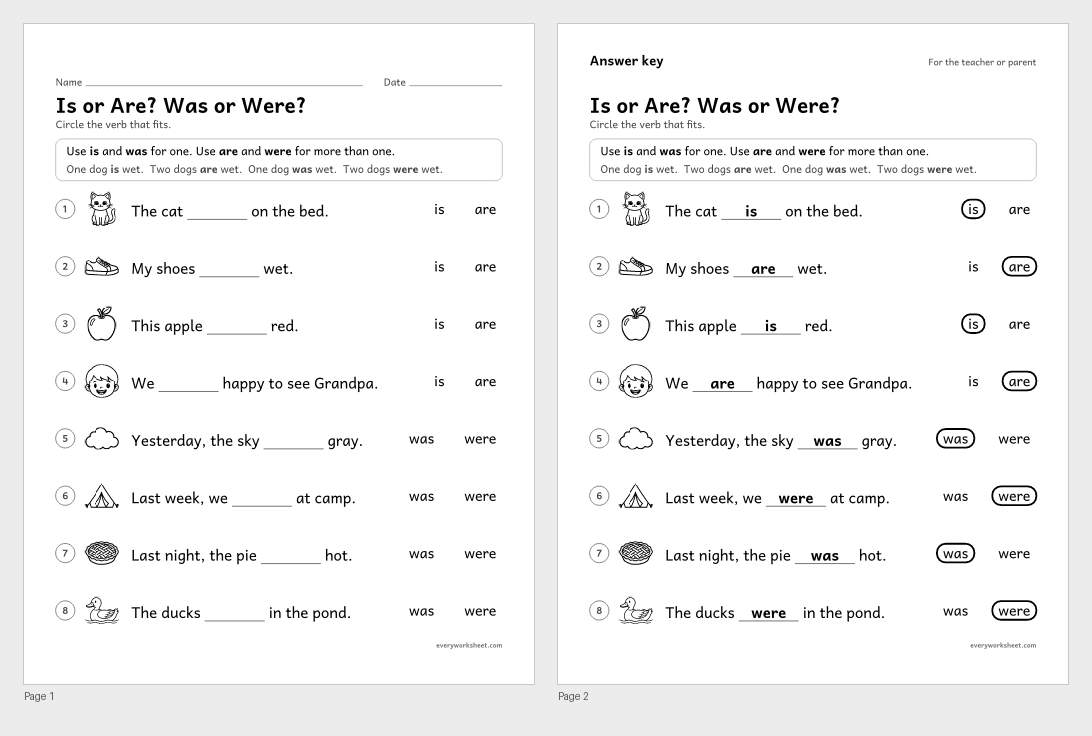
Is or Are? was or Were?
Using is, are, was and were
Answer key on page 2
2 pages354 KB
Shades of meaning
 View all 2 pages
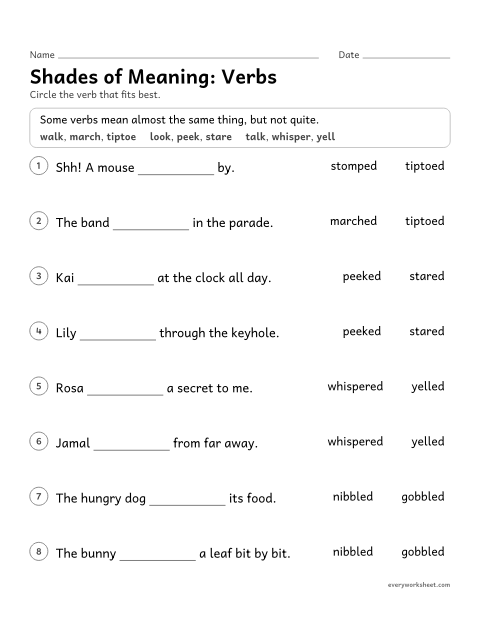
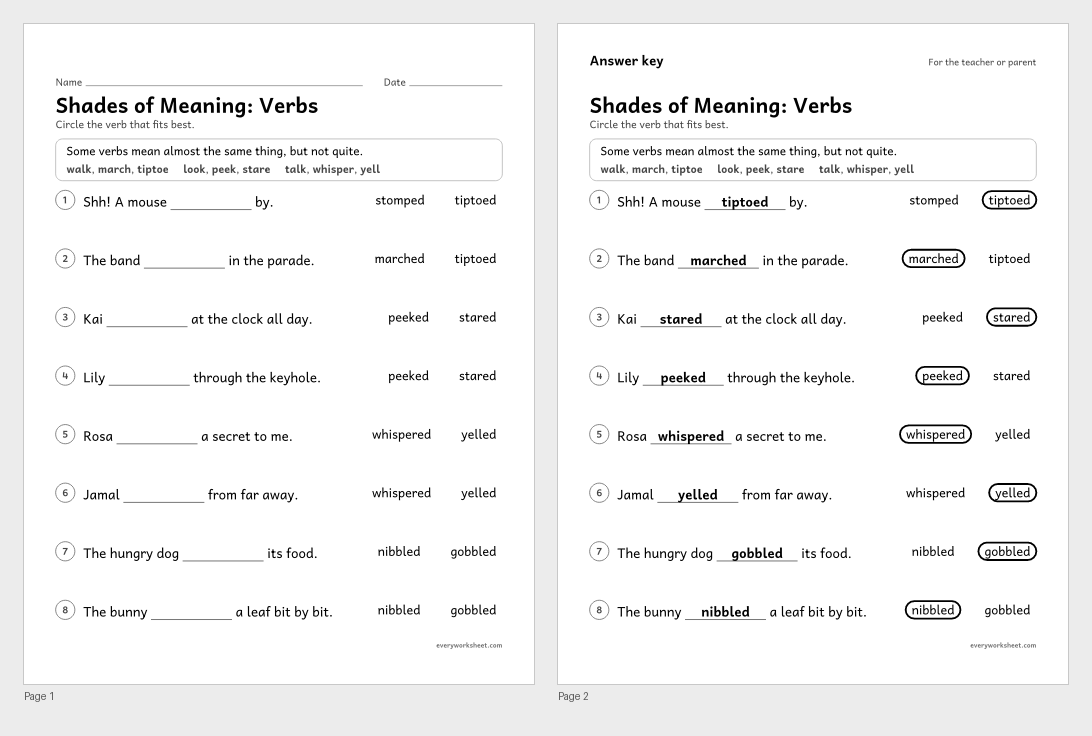
Shades of Meaning: verbs
Choosing between verbs that mean almost the same thing
Answer key on page 2
2 pages50 KB
Print at 100% (actual size) for the cleanest tracing lines.
About these verbs worksheets
A verb is an action word. It tells what someone or something does: run, jump, read, sing. In first grade, children learn to find verbs, use them to show past, present and future, add endings like -ed and -ing, match verbs to one or more (he hops, they hop) and choose between verbs that mean almost the same thing (walk, march, tiptoe).
These verbs worksheets begin with a chart of action words with pictures, then move to circling verbs, picking the action word, sorting nouns and verbs, yesterday, today and tomorrow, adding -ed and -ing, and is, are, was and were. A shades of meaning page has children choose the verb that fits best.
The noun or verb sort comes as a cut and paste page and a no-cut twin. Every page with right answers has an answer key.
Standards
CCSS.ELA-LITERACY.L.1.1Demonstrate command of the conventions of standard English grammar and usage when writing or speaking.CCSS.ELA-LITERACY.L.1.1.CUse singular and plural nouns with matching verbs in basic sentences (e.g., He hops; We hop).CCSS.ELA-LITERACY.L.1.1.EUse verbs to convey a sense of past, present, and future (e.g., Yesterday I walked home; Today I walk home; Tomorrow I will walk home).CCSS.ELA-LITERACY.L.1.4.CIdentify frequently occurring root words (e.g., look) and their inflectional forms (e.g., looks, looked, looking).CCSS.ELA-LITERACY.L.1.5.ASort words into categories (e.g., colors, clothing) to gain a sense of the concepts the categories represent.CCSS.ELA-LITERACY.L.1.5.DDistinguish shades of meaning among verbs differing in manner (e.g., look, peek, glance, stare, glare, scowl) and adjectives differing in intensity (e.g., large, gigantic) by defining or choosing them or by acting out the meanings.
How to use them
- Act out verbs before starting: hop, clap, wave. If you can do it, it is probably a verb.
- Use the chart and Circle the Verb page first.
- Teach yesterday, today and tomorrow with your child's own day: Yesterday I played. Tomorrow I will play.
- Use the -ed and -ing page to show how one root word can change: look, looks, looked, looking.
- Save shades of meaning for last and act each verb out.
Teaching tips
- Some verbs are not actions, like is, are, was and were. They tell what something is.
- Add s to a verb for one (he runs) and no s for more than one (they run).
- -ed often shows something already happened.
- Ask: which word paints a better picture? tiptoed or walked?
- Cut and paste sorts have a no-cut twin with the same words.
Questions teachers and parents ask
What is a verb for kids?
A verb is a word that tells what someone or something does, like run, eat or sing. Is, are, was and were are verbs too.
How do first graders learn past and future verbs?
Use time words: yesterday I walked, today I walk, tomorrow I will walk. These pages give a time word in each sentence.
What does shades of meaning mean?
It means words that are alike but not the same, like look, peek and stare. Choosing the best one makes writing clearer.
Do these pages have answer keys?
Yes, every page with right answers has an answer key on page 2.