 View all 2 pages
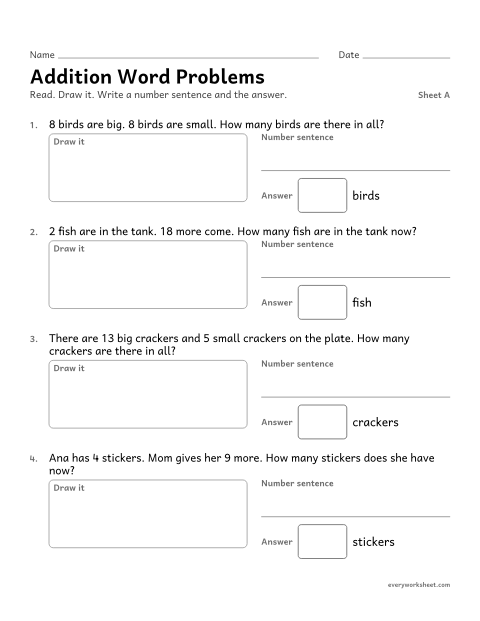
Addition word Problems, sheet A
Solving add to and put together word problems within 20
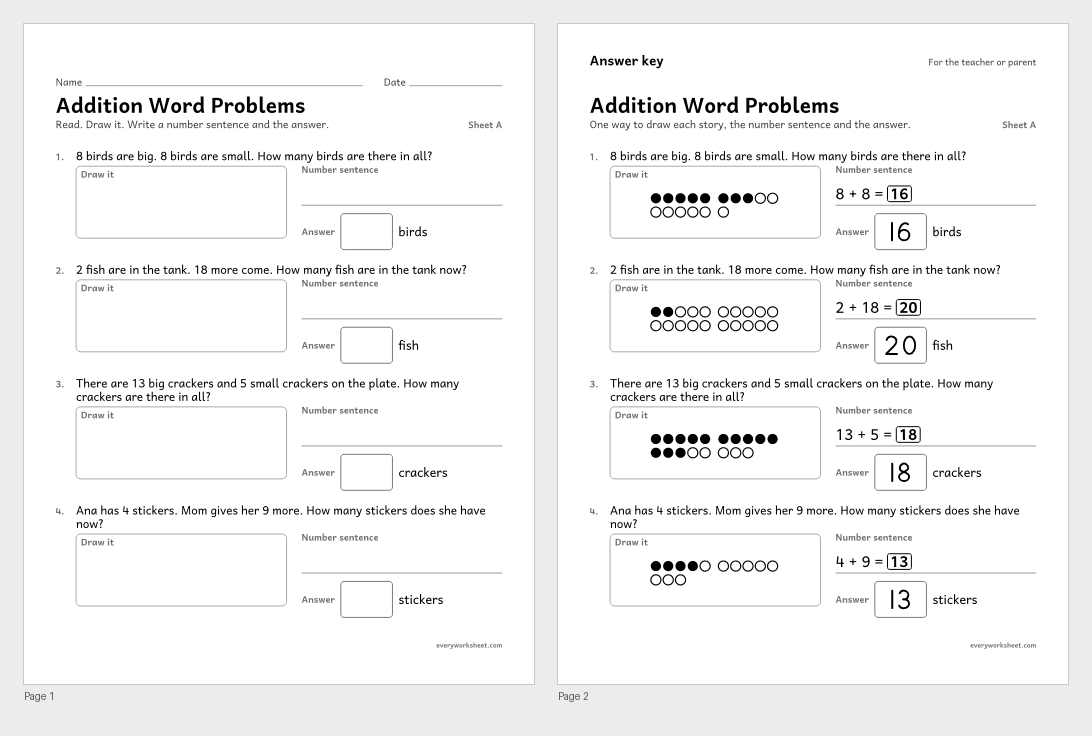
Answer key on page 2
2 pages51 KB
Short addition and subtraction stories within 20 with space to draw, write a number sentence and answer: add to, take from, put together, compare and three addends.
View all 2 pagesSolving add to and put together word problems within 20
Answer key on page 2
2 pages51 KB
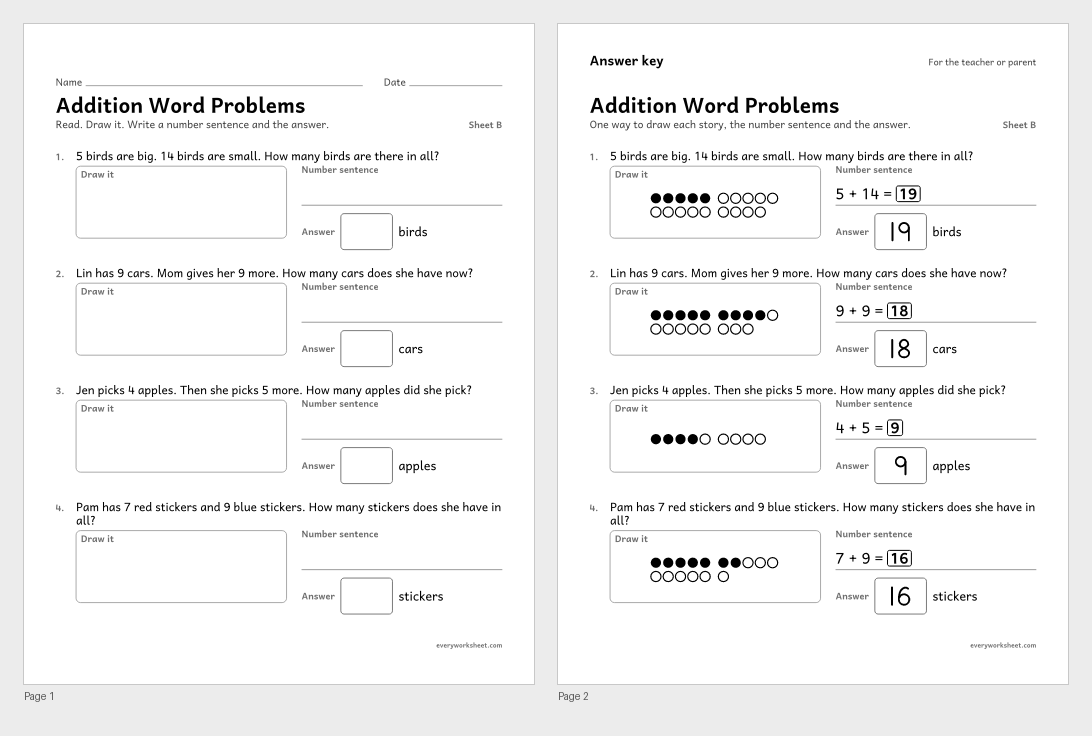 View all 2 pages
Solving add to and put together word problems within 20
Answer key on page 2
2 pages51 KB
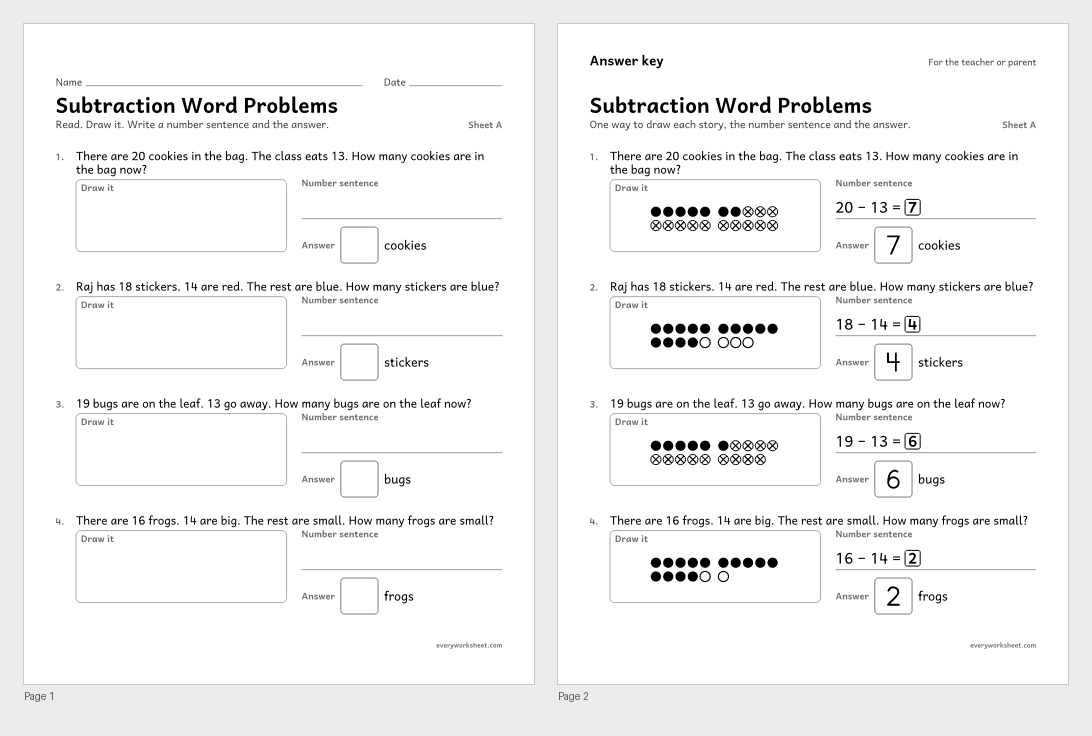 View all 2 pages
Solving take from and take apart word problems within 20
Answer key on page 2
2 pages51 KB
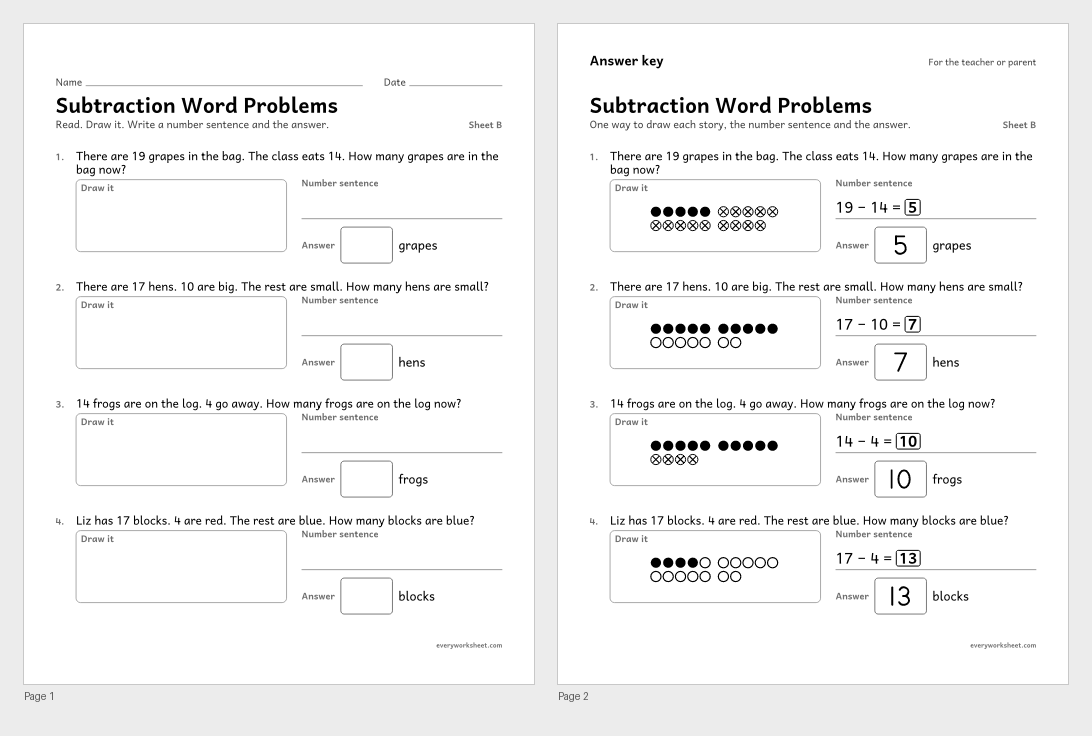 View all 2 pages
Solving take from and take apart word problems within 20
Answer key on page 2
2 pages51 KB
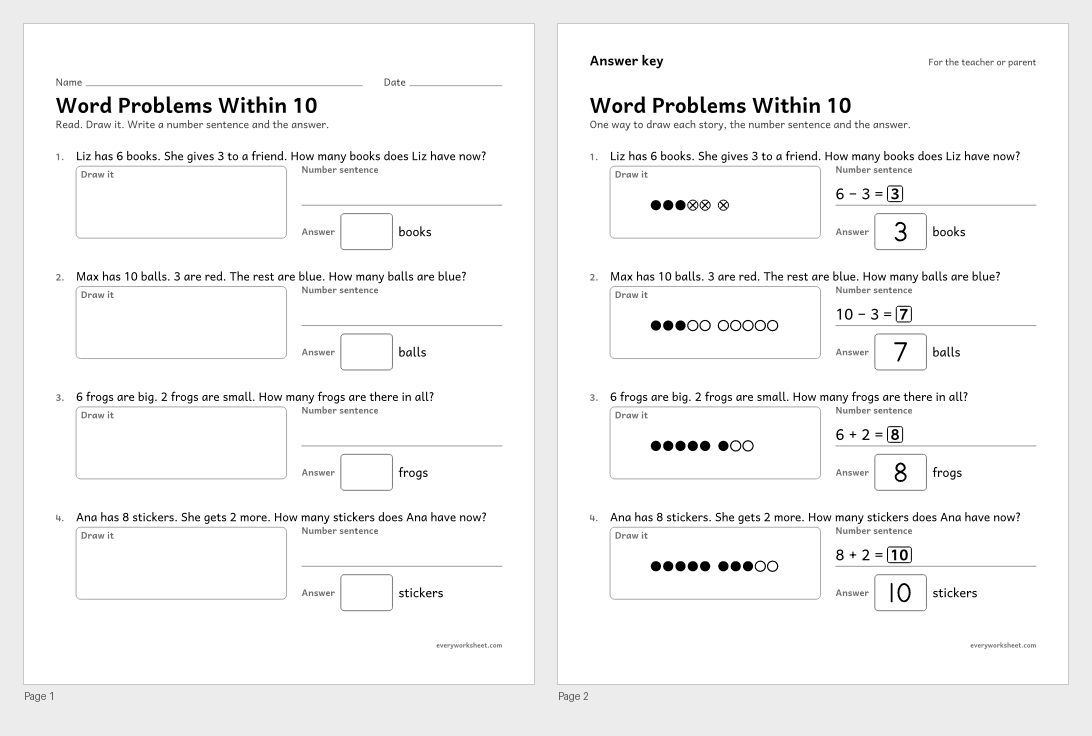 View all 2 pages
Solving addition and subtraction word problems within 10
Answer key on page 2
2 pages51 KB
 View all 2 pages
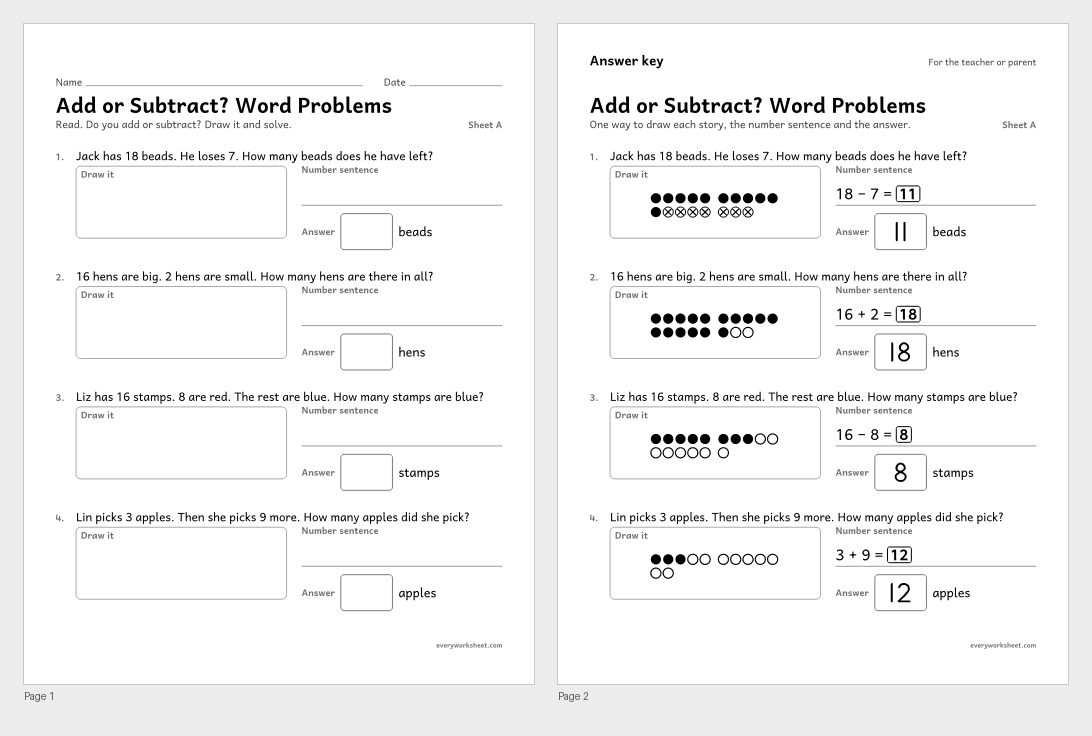
Choosing to add or subtract in word problems within 20
Answer key on page 2
2 pages51 KB
 View all 2 pages
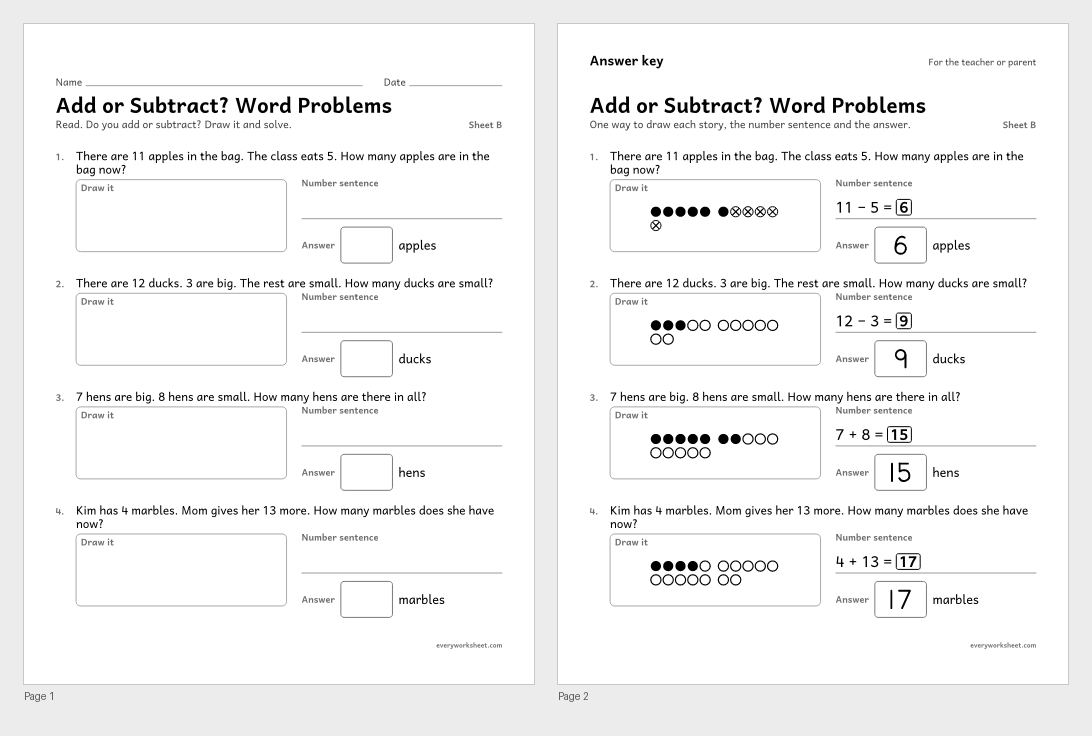
Choosing to add or subtract in word problems within 20
Answer key on page 2
2 pages51 KB
 View all 2 pages
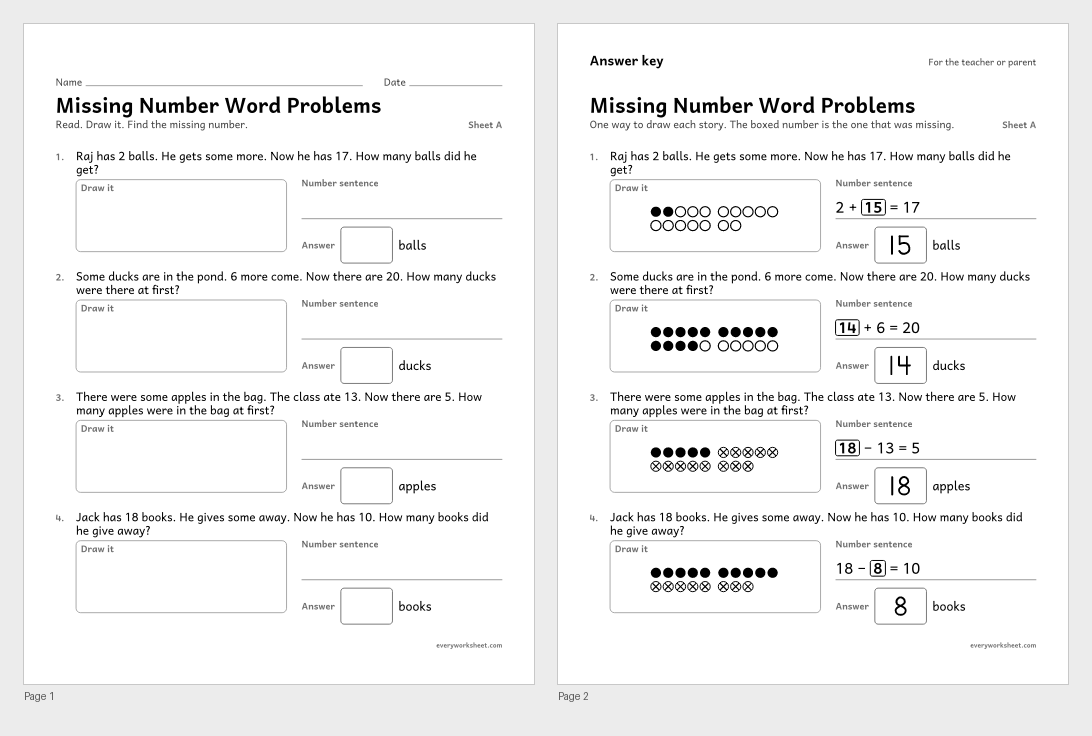
Solving word problems with the change or the start unknown
Answer key on page 2
2 pages52 KB
 View all 2 pages
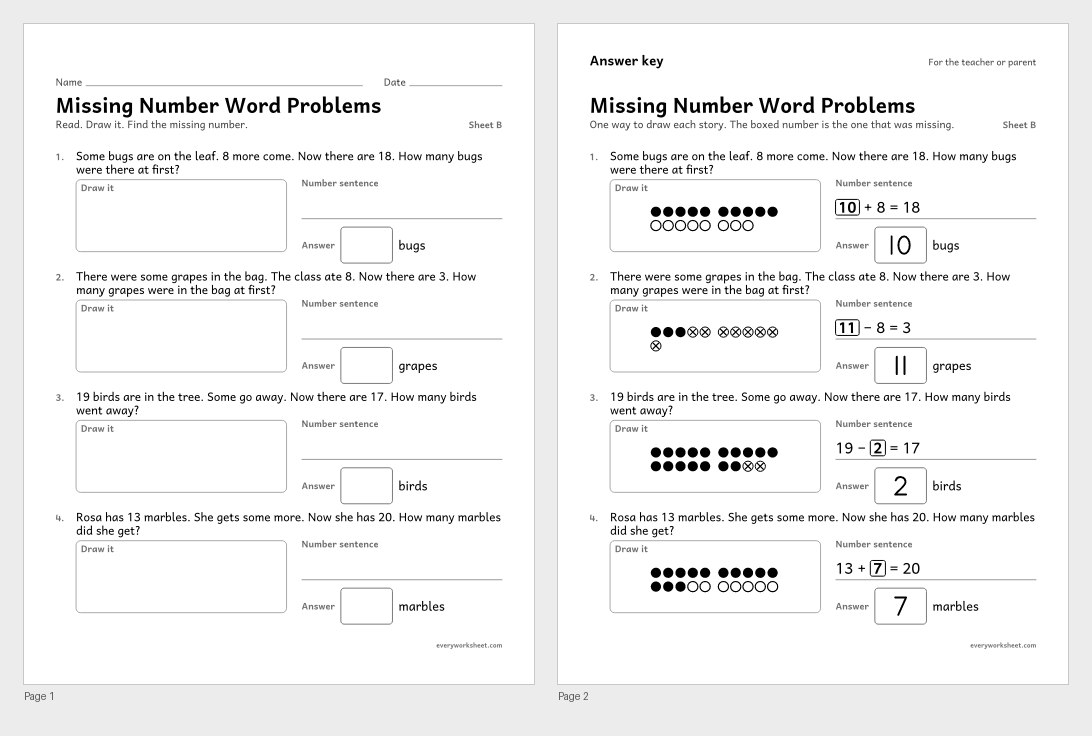
Solving word problems with the change or the start unknown
Answer key on page 2
2 pages51 KB
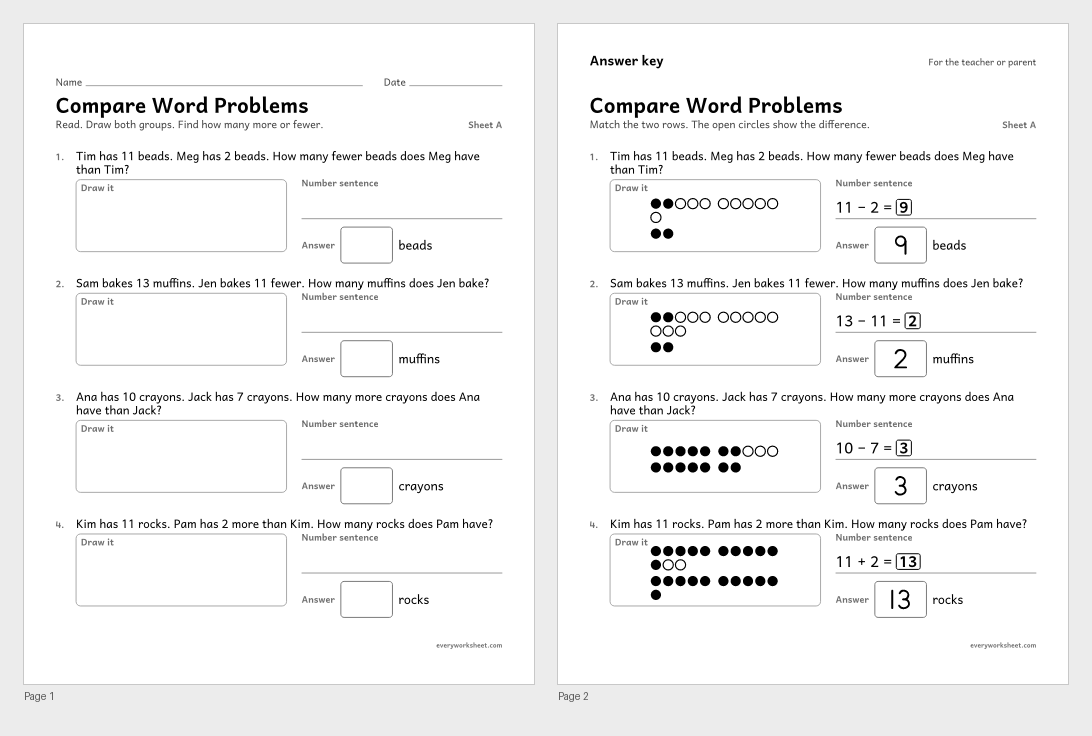 View all 2 pages
Solving how many more and how many fewer word problems
Answer key on page 2
2 pages51 KB
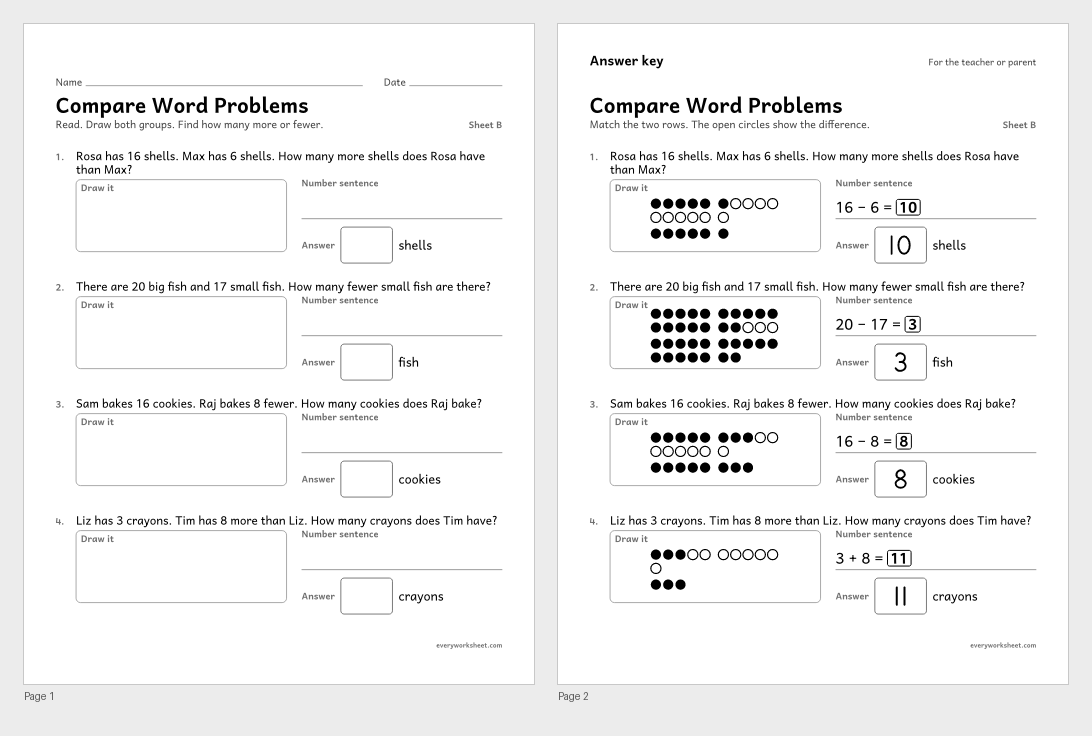 View all 2 pages
Solving how many more and how many fewer word problems
Answer key on page 2
2 pages52 KB
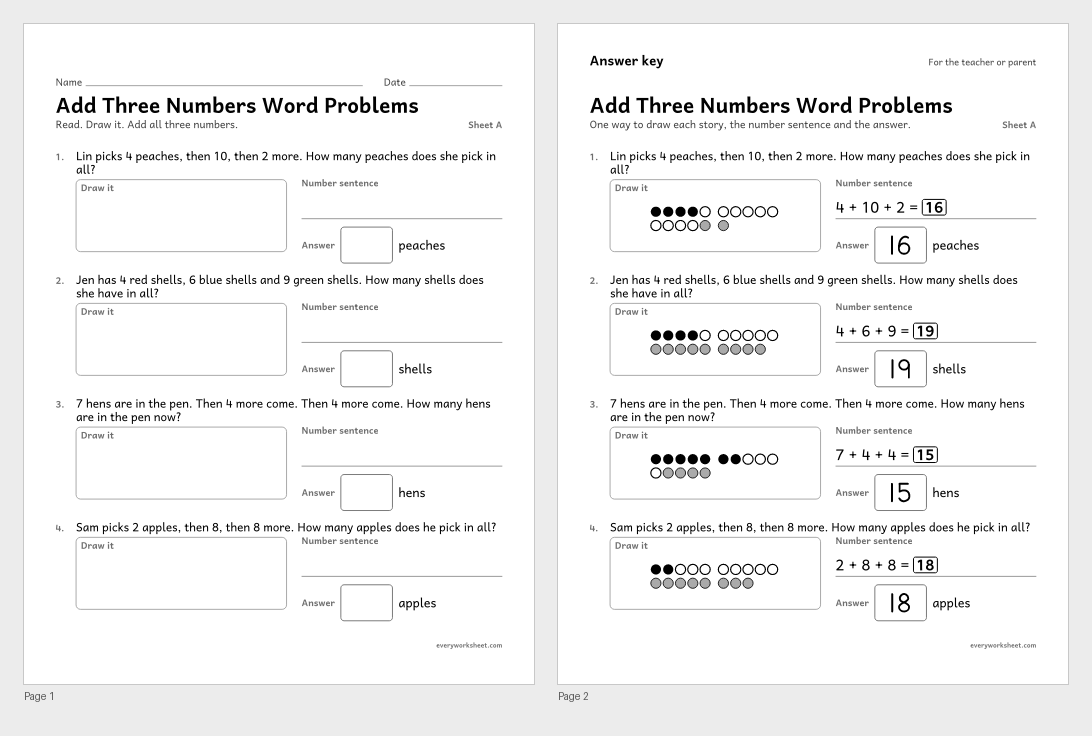 View all 2 pages
Solving word problems with three addends within 20
Answer key on page 2
2 pages53 KB
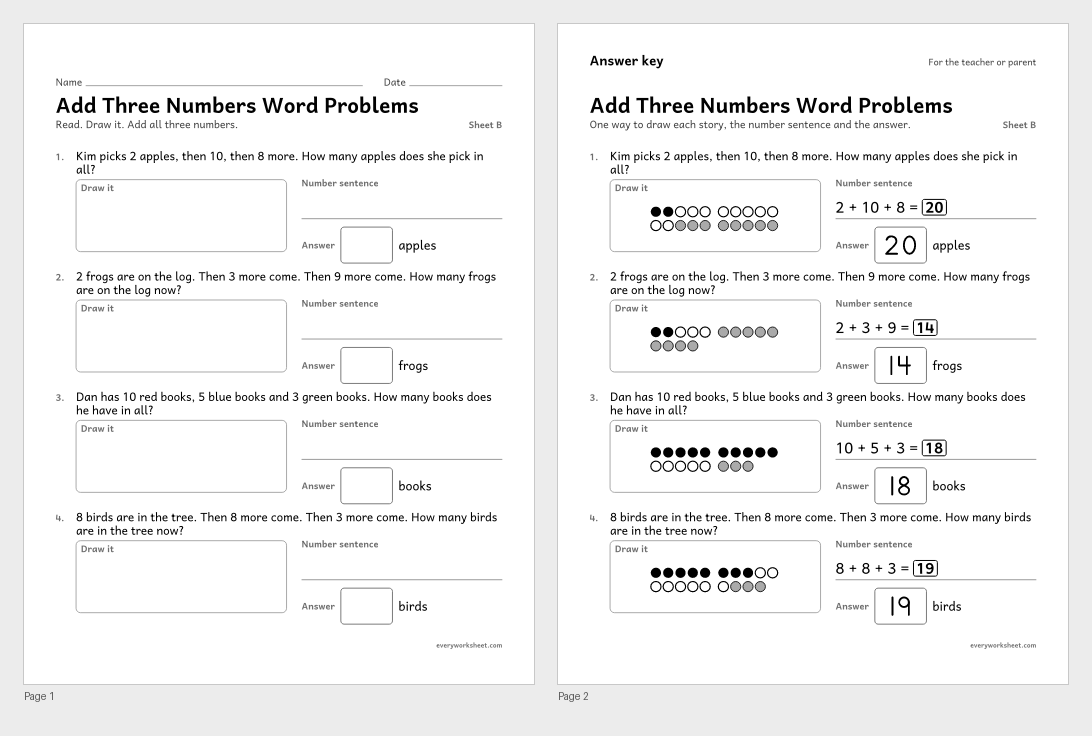 View all 2 pages
Solving word problems with three addends within 20
Answer key on page 2
2 pages53 KB
Print at 100% (actual size) for the cleanest tracing lines.
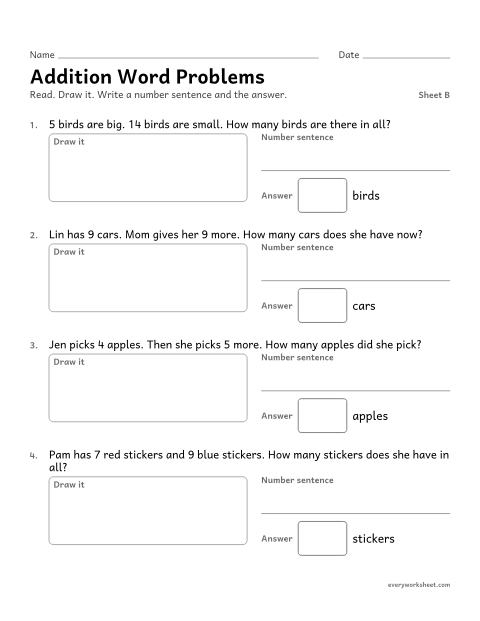
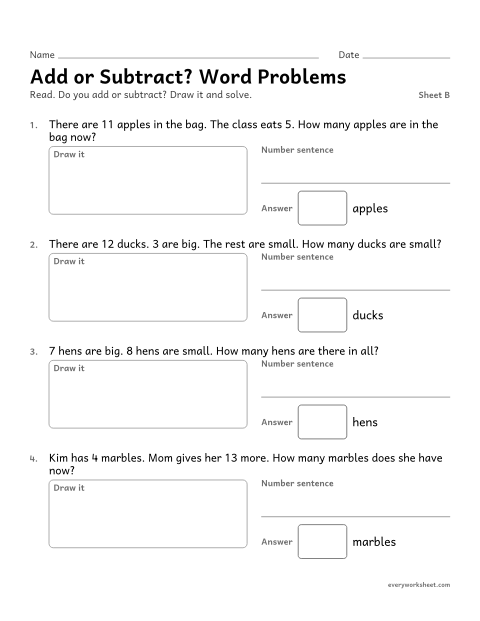
These word problems for 1st graders use short stories with easy words, so children can read them on their own or with a little help. Each problem has a box to draw the story, a line for the number sentence and an answer box with the unit, like 13 birds.
The stories cover every kind of first grade problem: adding to, taking away, putting two groups together, taking a group apart, and comparing (how many more, how many fewer). The missing number pages put the unknown at the start or in the middle (Sam had some cars, then got 4 more), and the three number pages add three groups with a sum up to 20.
Every sheet has four stories and an answer key on page 2. The key shows one way to draw each story with simple counters, the number sentence and the answer. Pages print in black and white on US Letter or A4.
CCSS.MATH.CONTENT.1.OA.A.1Use addition and subtraction within 20 to solve word problems involving situations of adding to, taking from, putting together, taking apart, and comparing, with unknowns in all positions, e.g., by using objects, drawings, and equations with a symbol for the unknown number to represent the problem.CCSS.MATH.CONTENT.1.OA.A.2Solve word problems that call for addition of three whole numbers whose sum is less than or equal to 20, e.g., by using objects, drawings, and equations with a symbol for the unknown number to represent the problem.They add to, take from, put together, take apart and compare, with the unknown number at the end, in the middle or at the start. They also add three numbers with a total up to 20.
Most can. The sentences are short and use easy words. Read the first one together, then let your child try the rest.
Drawing helps children see what the story is asking, so each problem has a box for it. Circles or tally marks are enough; the key shows one simple way to draw each story.
Yes. Page 2 of every PDF shows one way to draw each story, the number sentence with the missing number boxed, and the answer.