 View larger
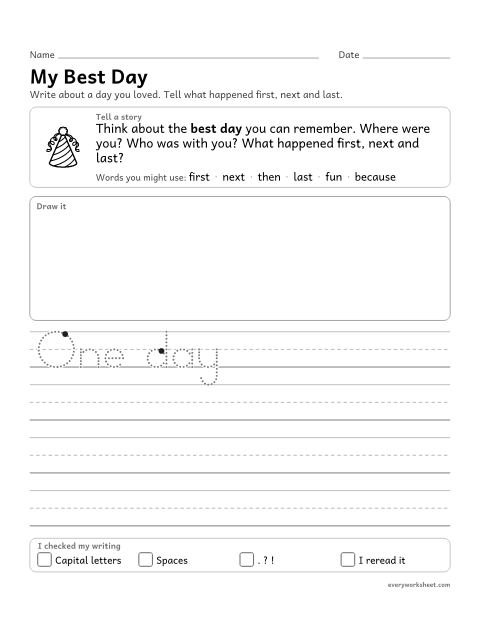
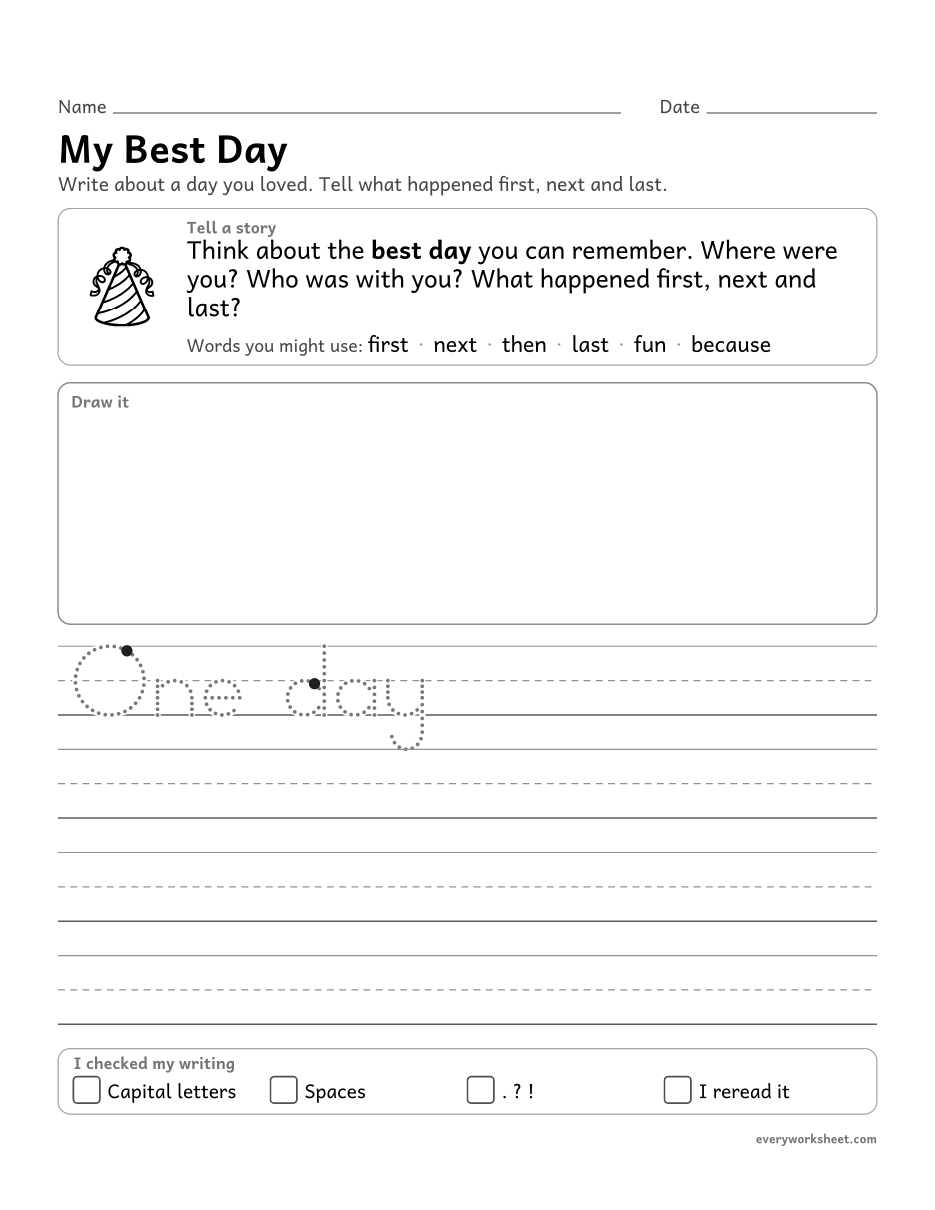
My best day
Writing a short story with events in order, details and an ending
1 page62 KB
Story, opinion and informative prompts with a picture box, a word bank and first grade lines, plus planners, journal pages and research pages.
View largerWriting a short story with events in order, details and an ending
1 page62 KB
 View larger
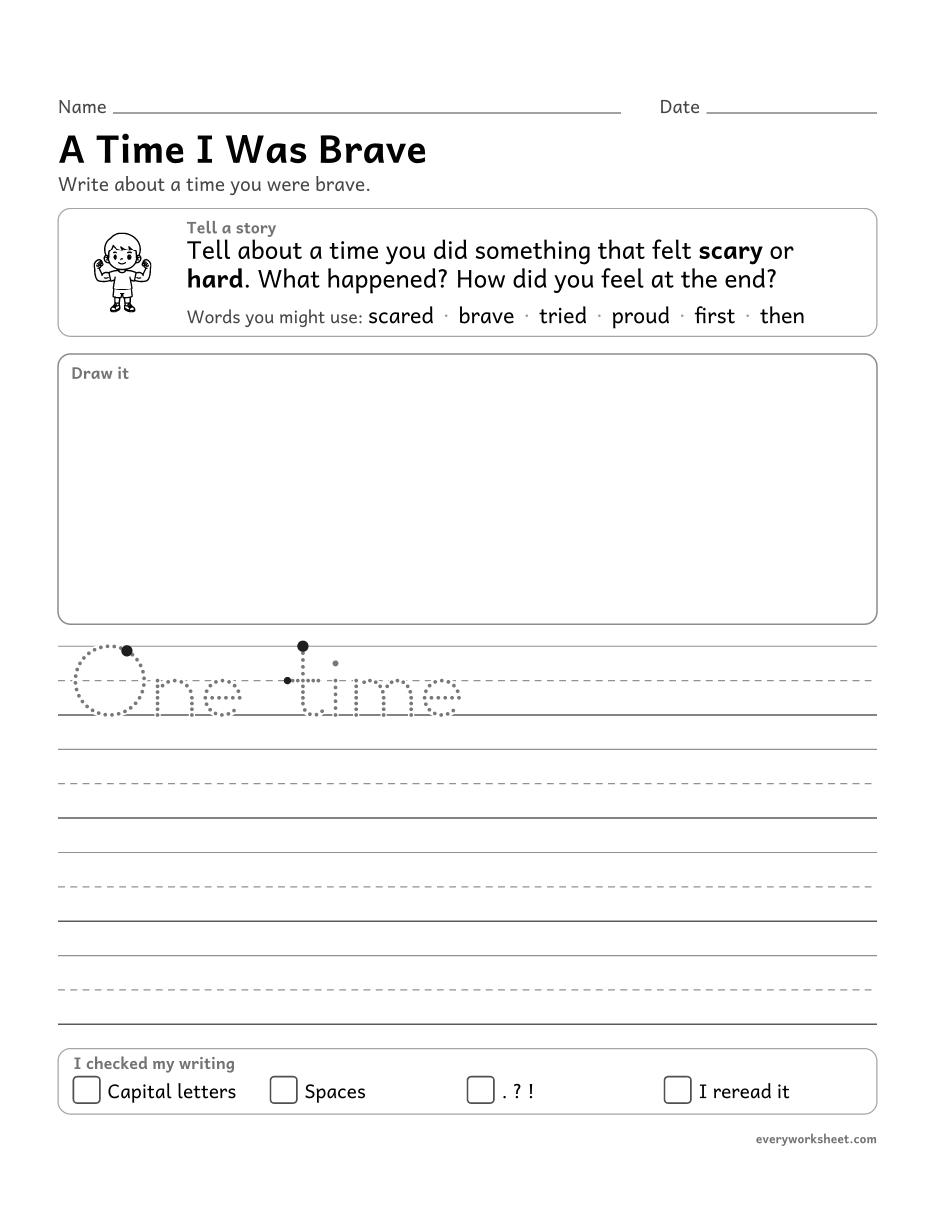
Writing a short story with events in order, details and an ending
1 page54 KB
 View larger
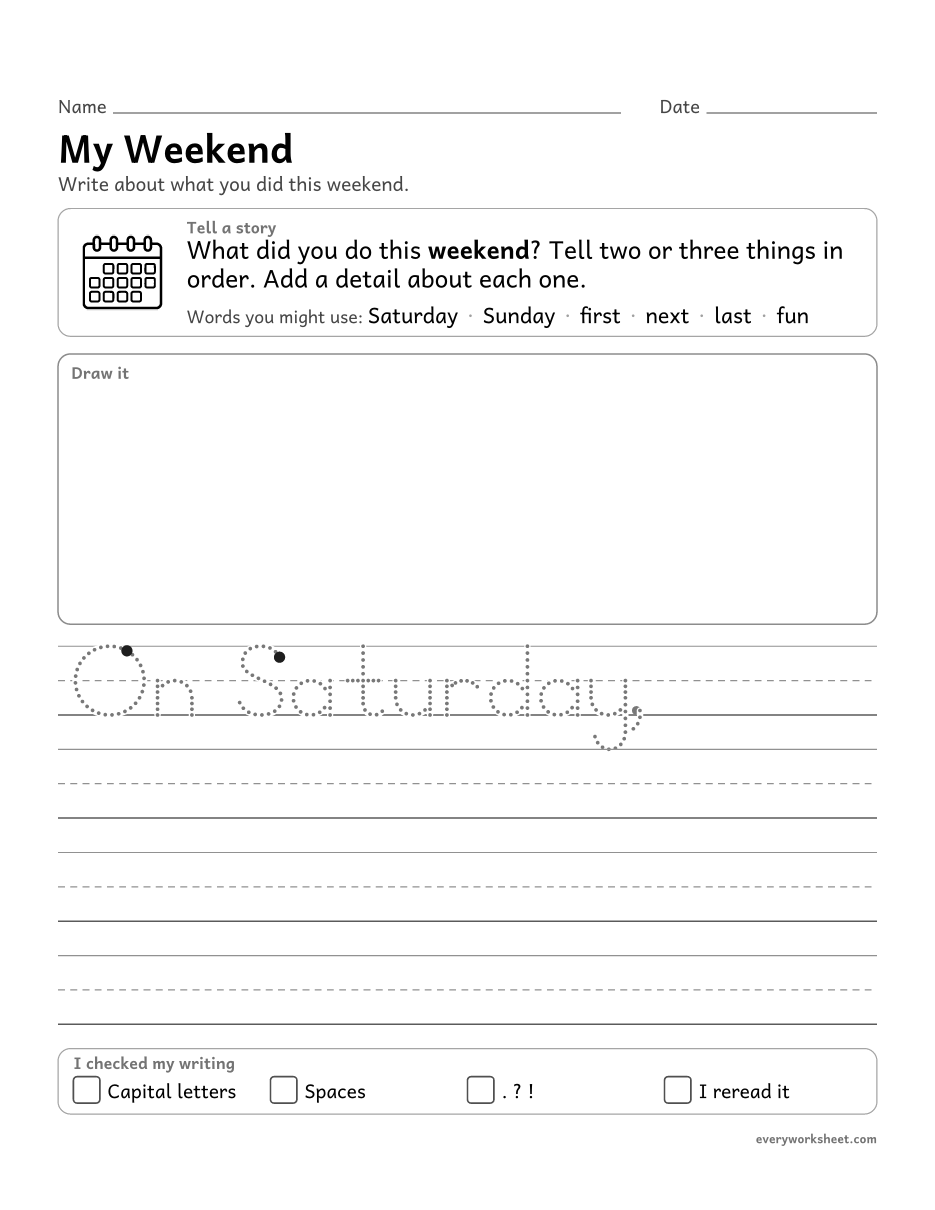
Writing a short story with events in order, details and an ending
1 page42 KB
 View larger
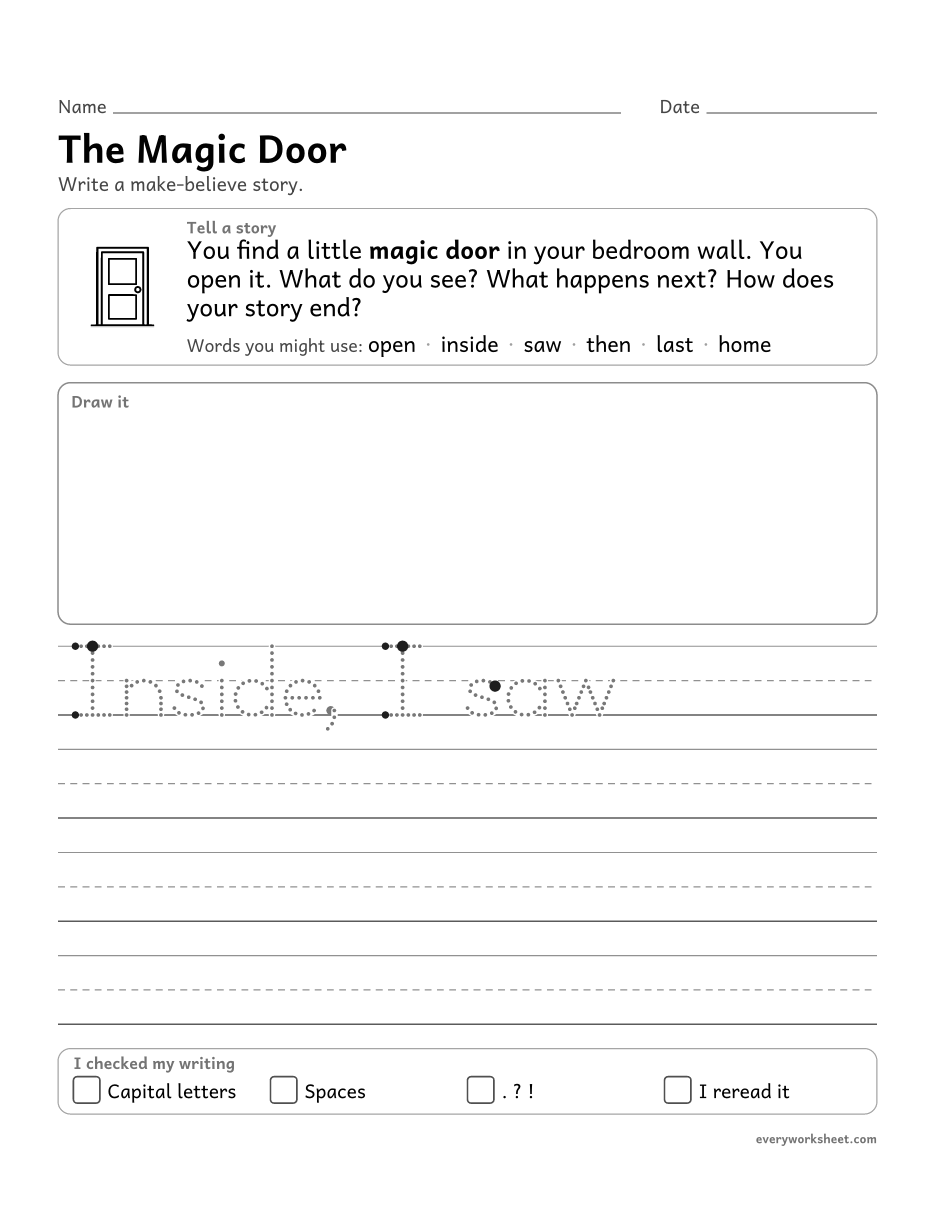
Writing a make-believe story with a beginning, middle and end
1 page33 KB
 View larger
 View larger
 View larger
 View larger
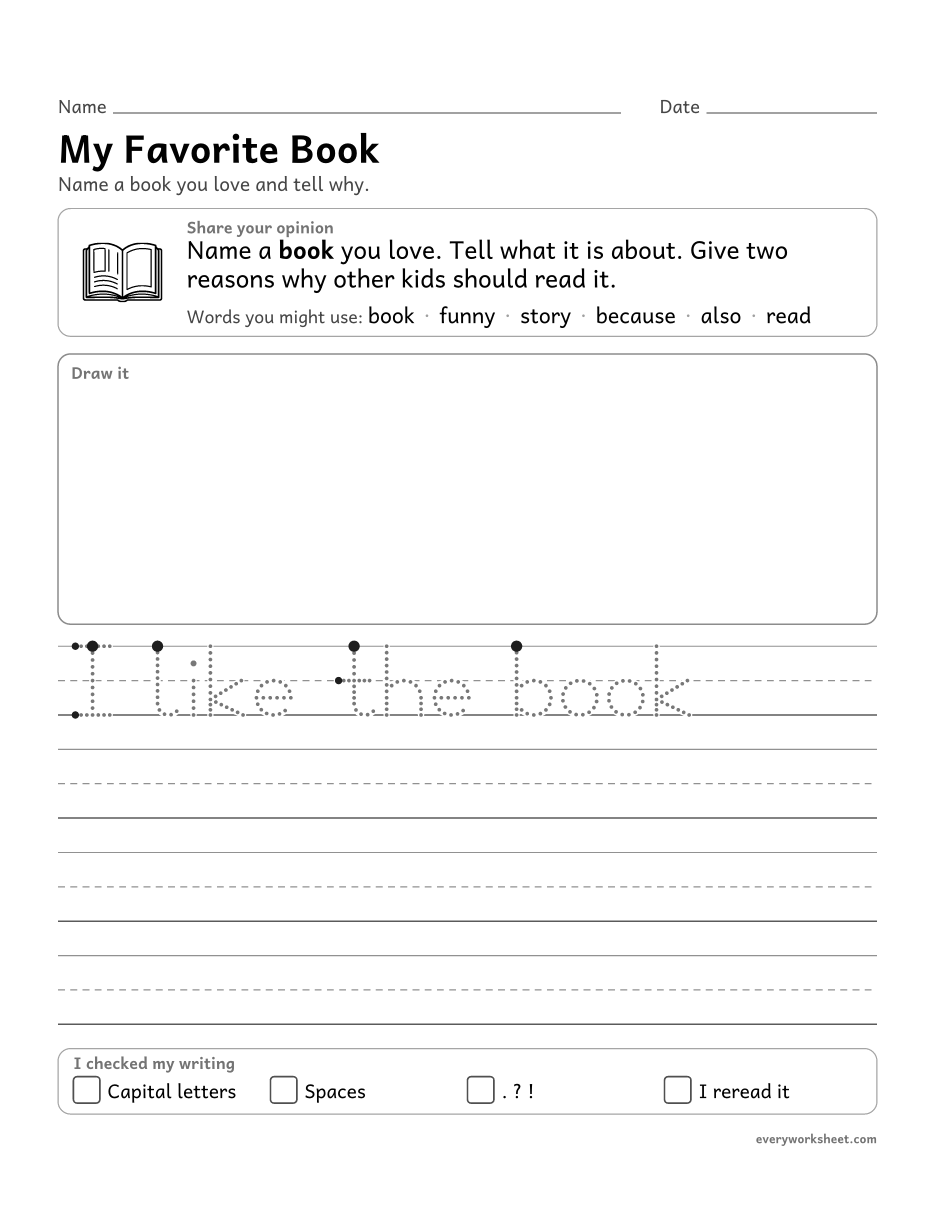
Naming a book and giving reasons for an opinion about it
1 page47 KB
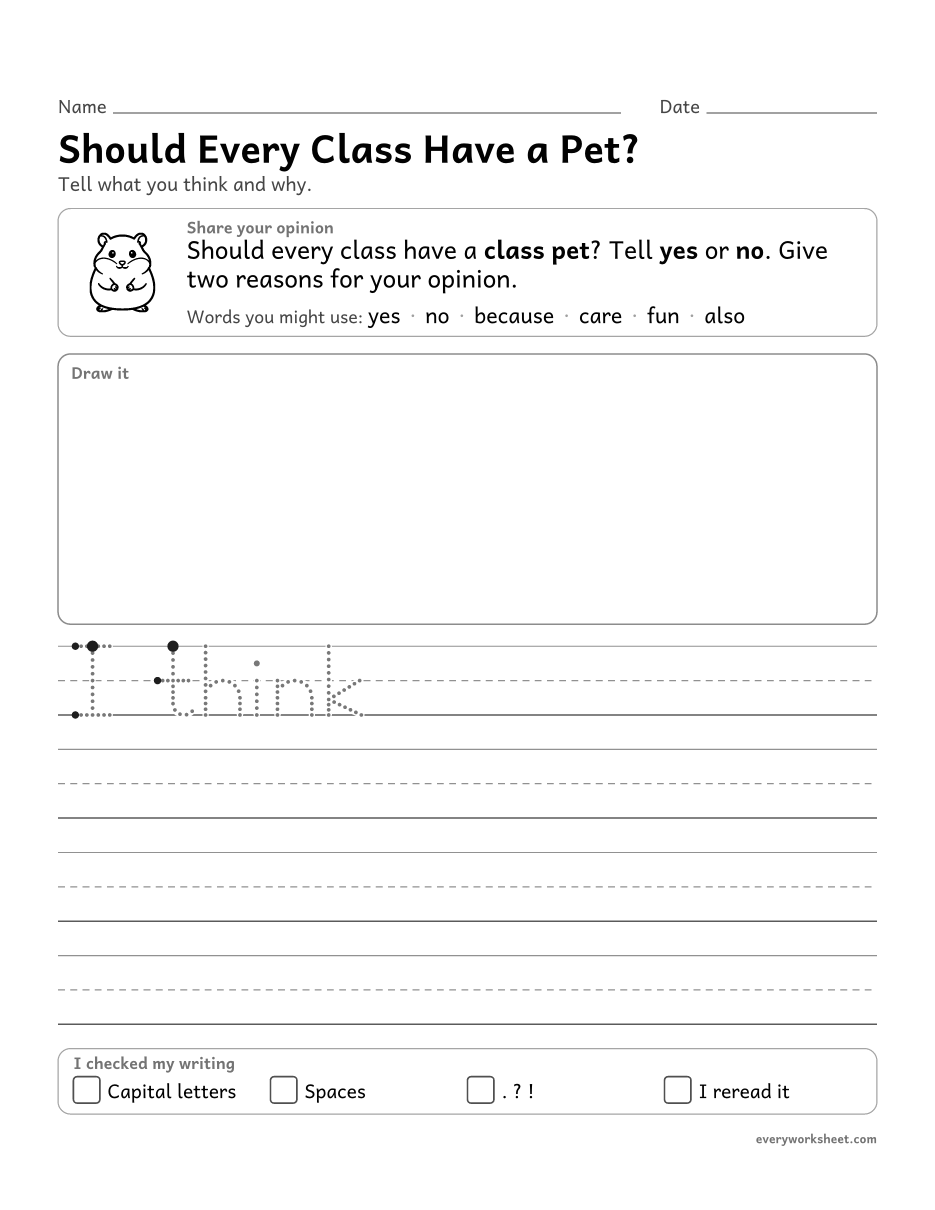 View larger
Writing an opinion with a reason and an ending
1 page54 KB
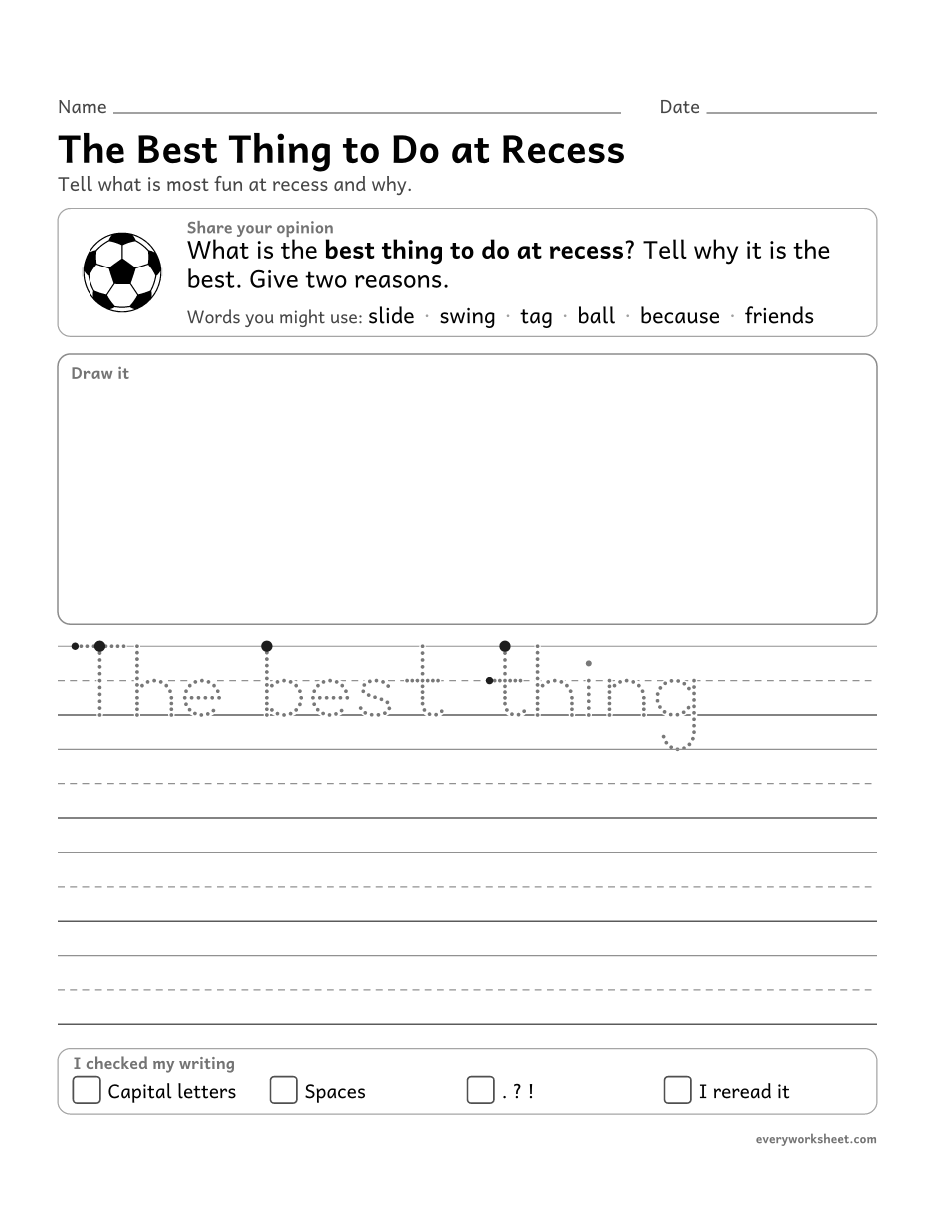 View larger
Writing an opinion with a reason and an ending
1 page34 KB
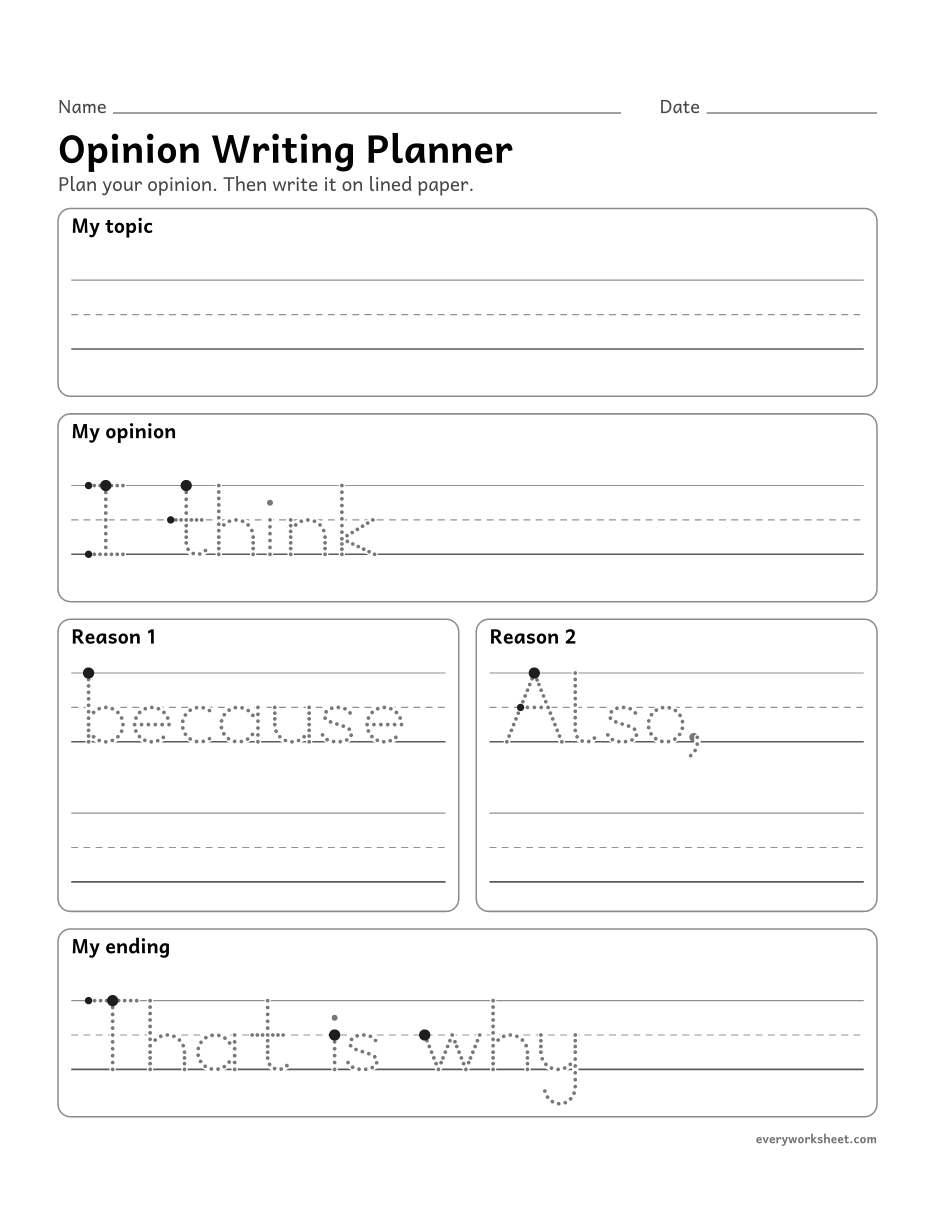 View larger
Planning an opinion piece with a topic, an opinion, reasons and an ending
1 page30 KB
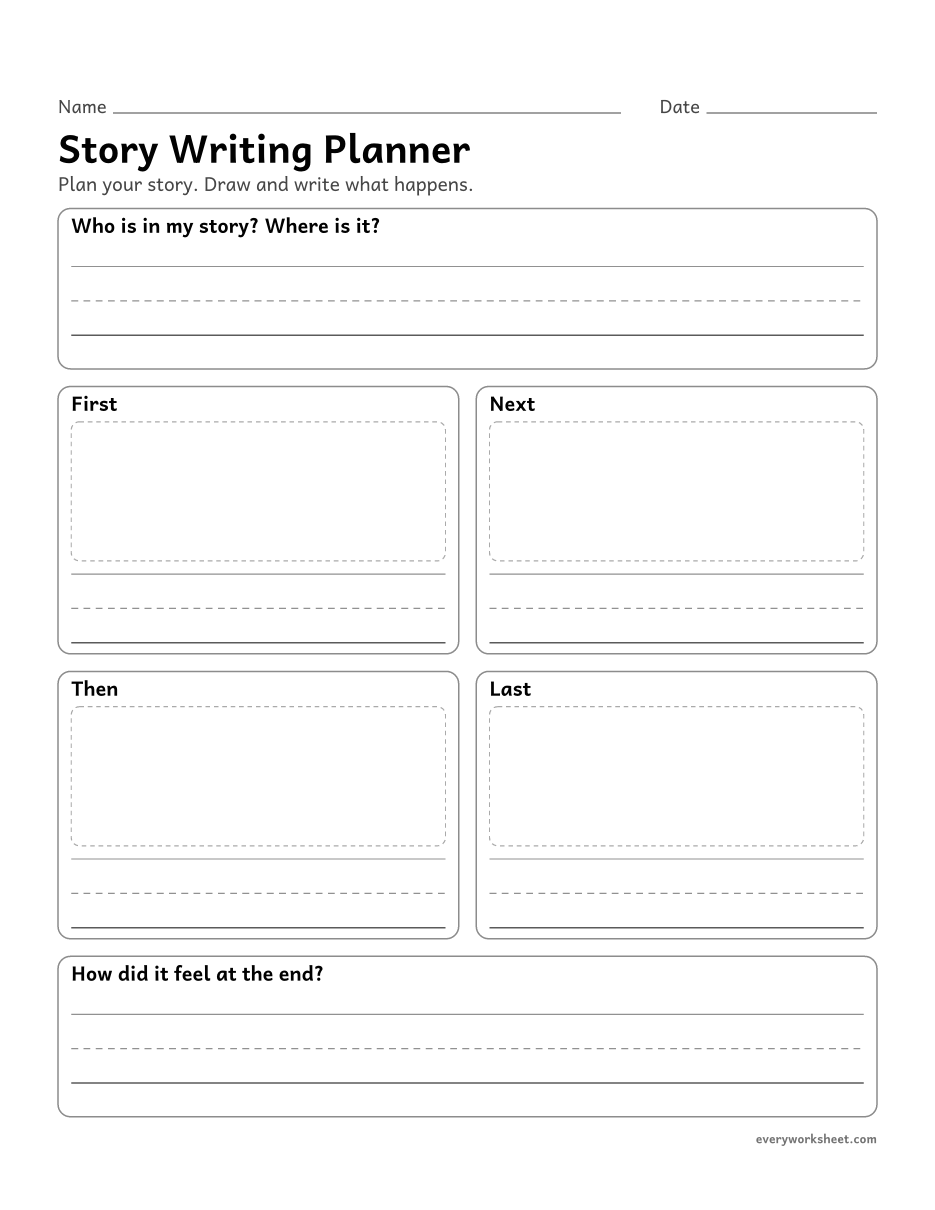 View larger
Planning a story with events in order and an ending
1 page27 KB
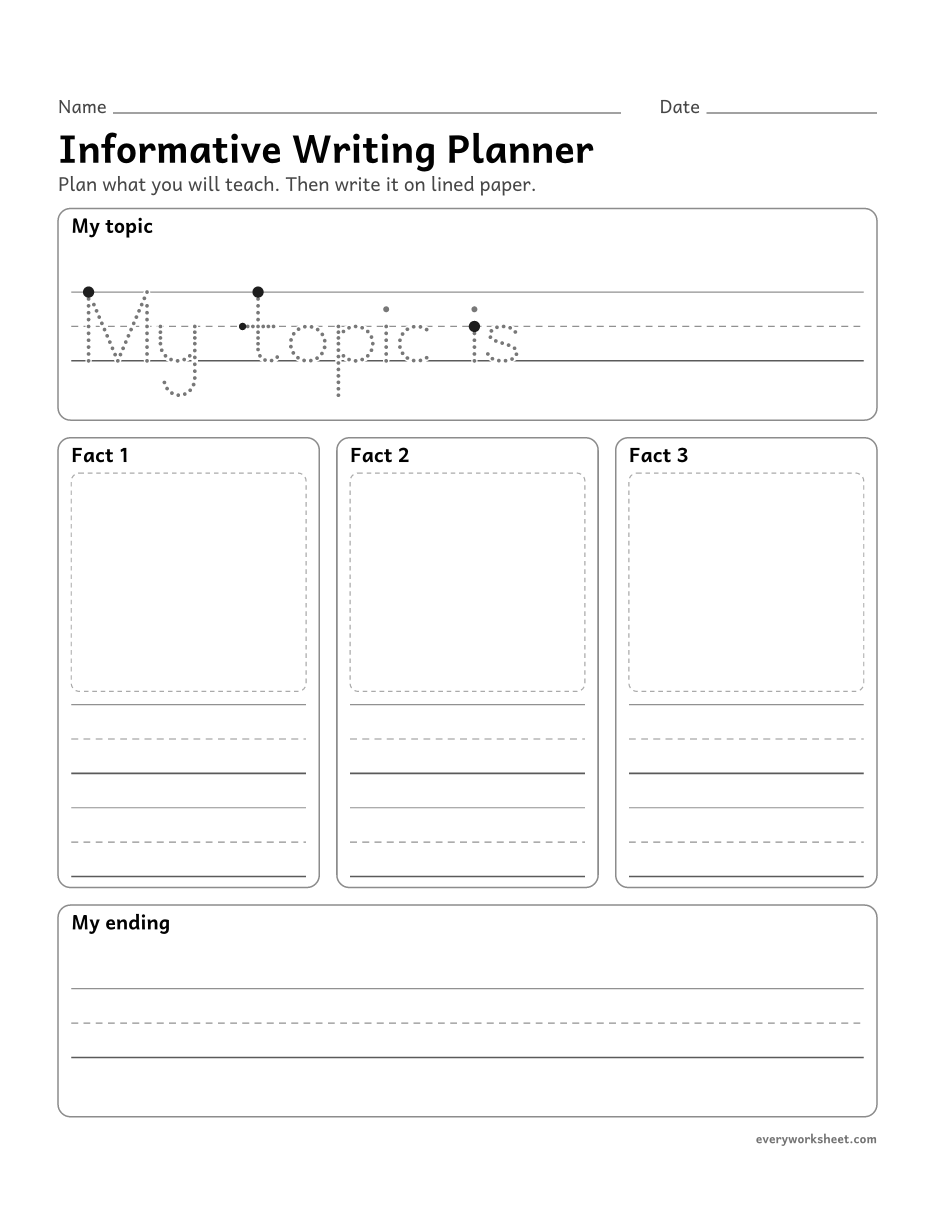 View larger
Planning an informative piece with a topic, facts and an ending
1 page29 KB
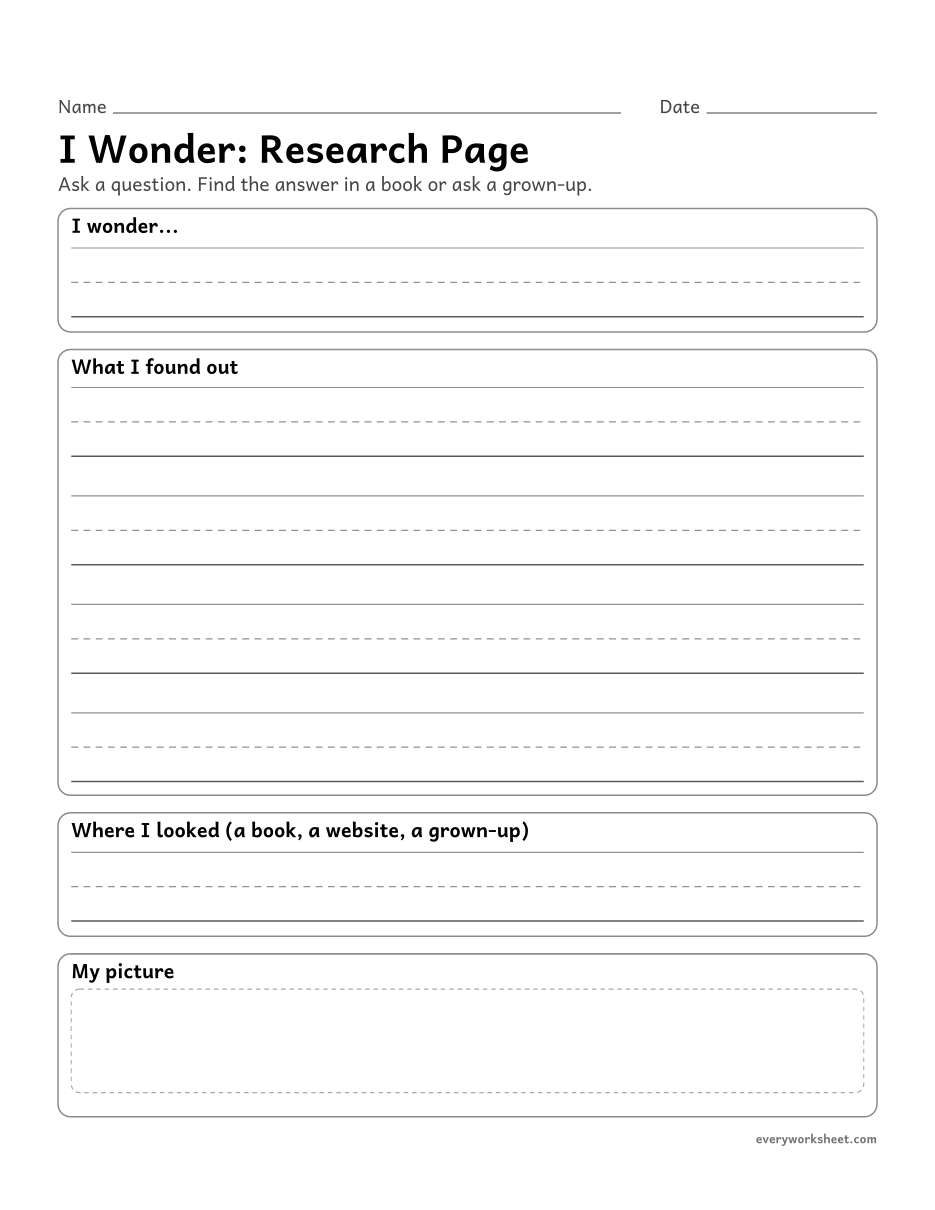 View larger
Gathering information from books and grown-ups to answer a question
1 page27 KB
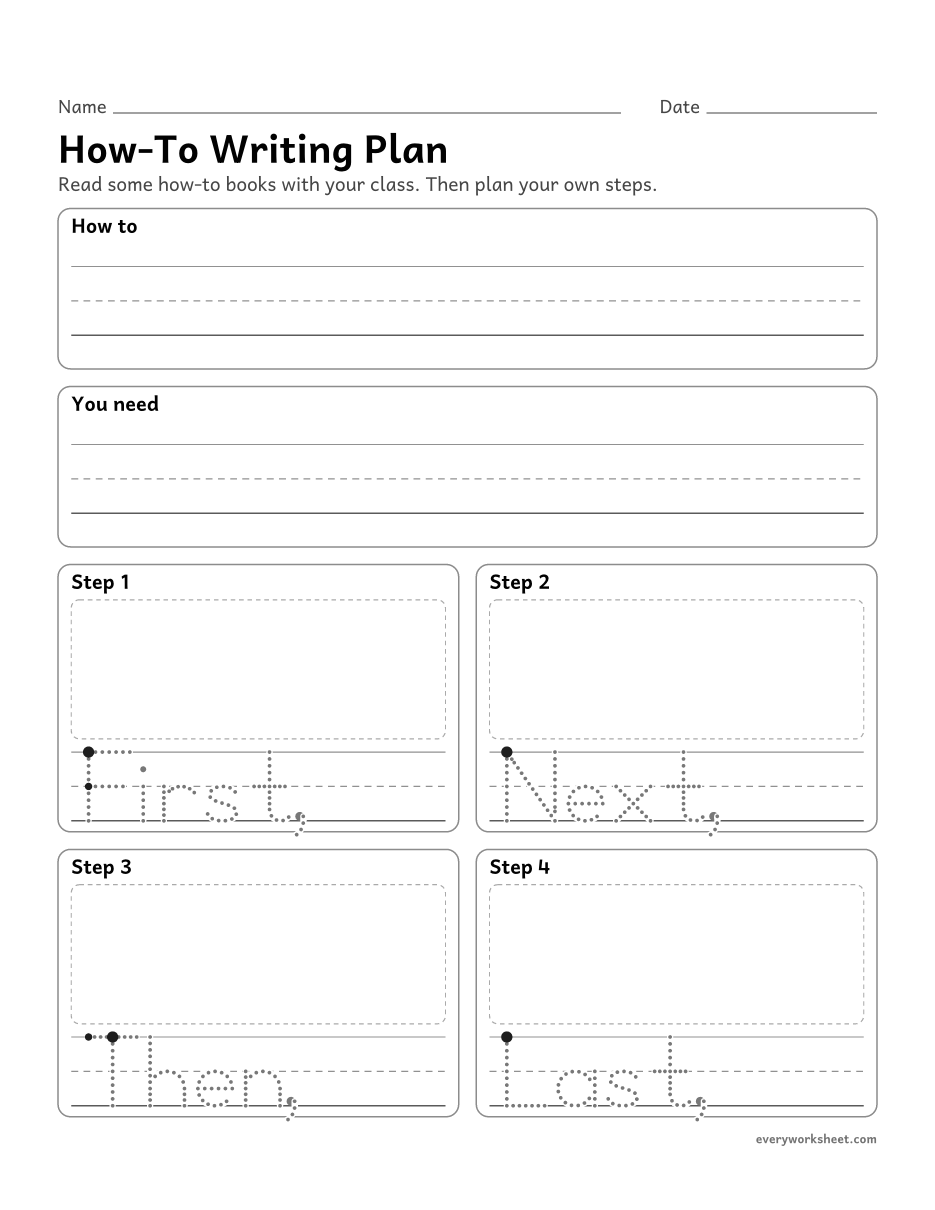 View larger
Writing a sequence of steps for a how-to piece after reading how-to books
1 page31 KB
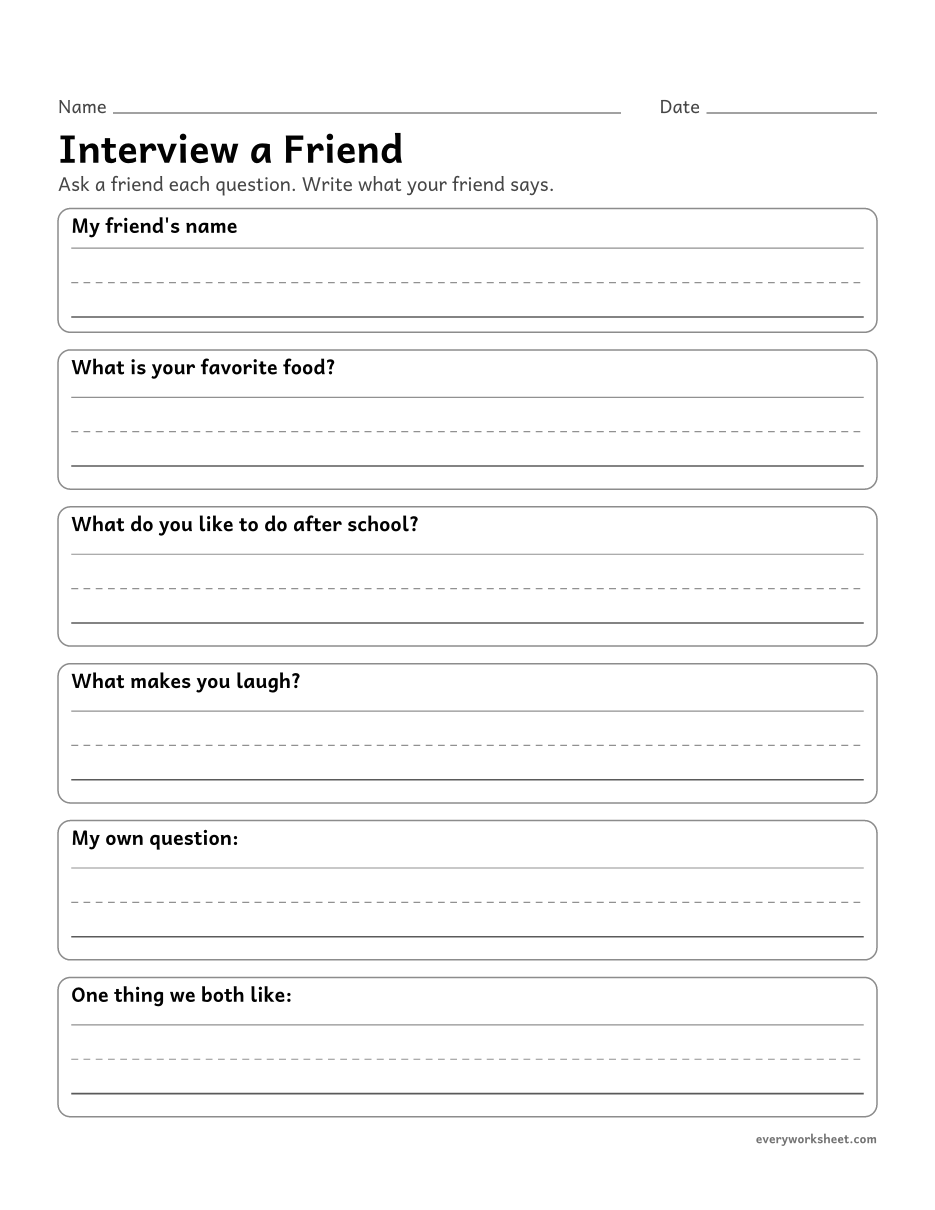 View larger
Asking a partner questions and writing down the answers
1 page27 KB
 View larger
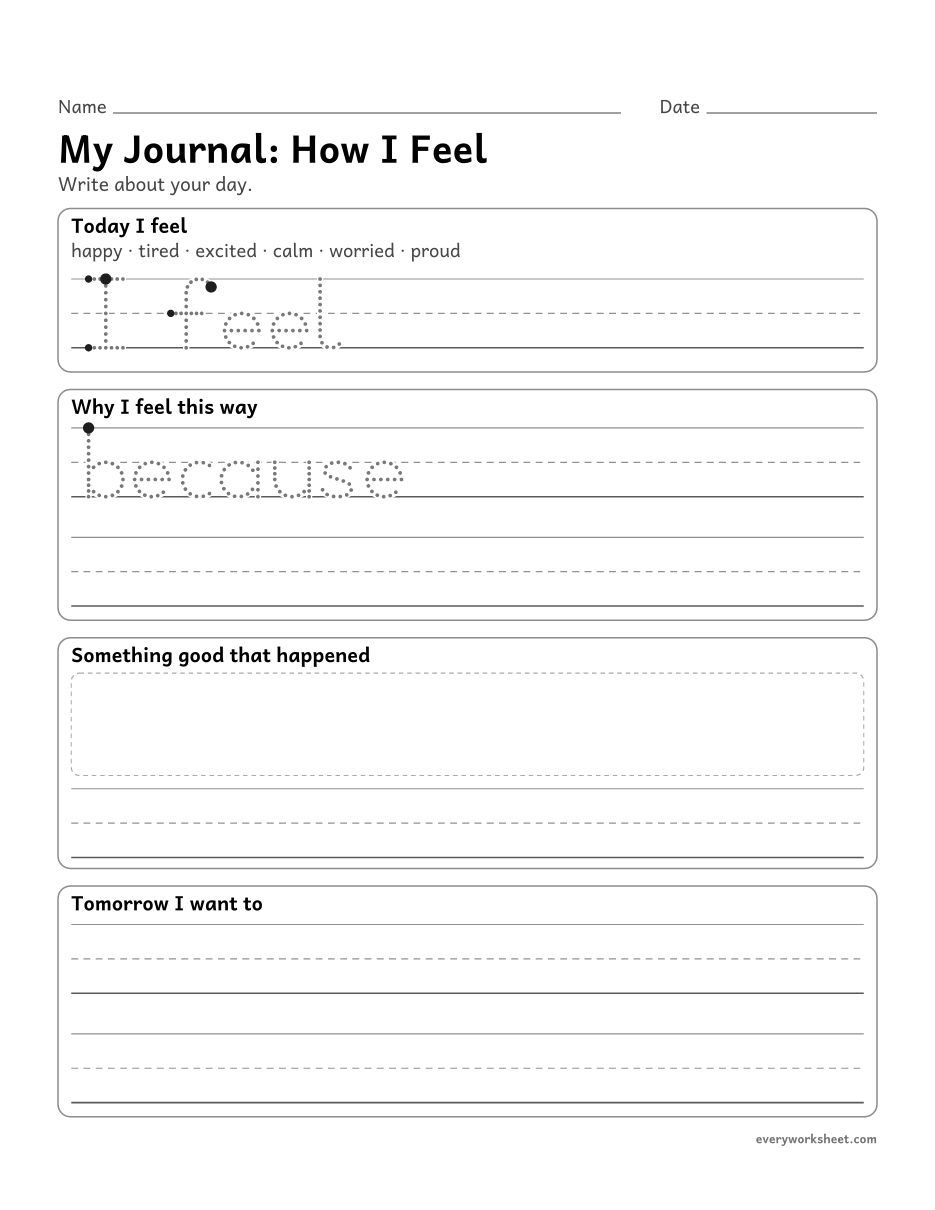
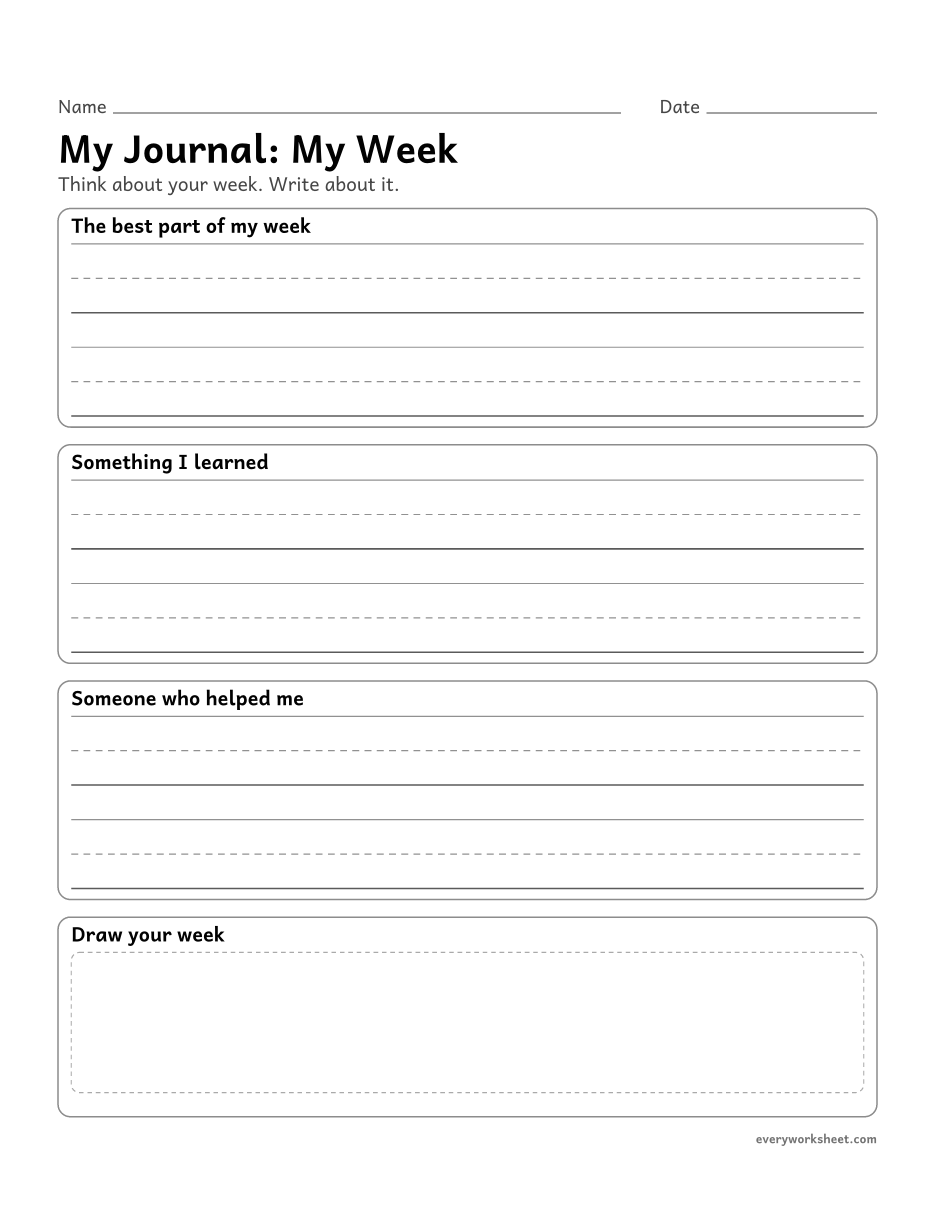
Writing about feelings and experiences in a journal
1 page29 KB
 View larger
 View all 2 pages
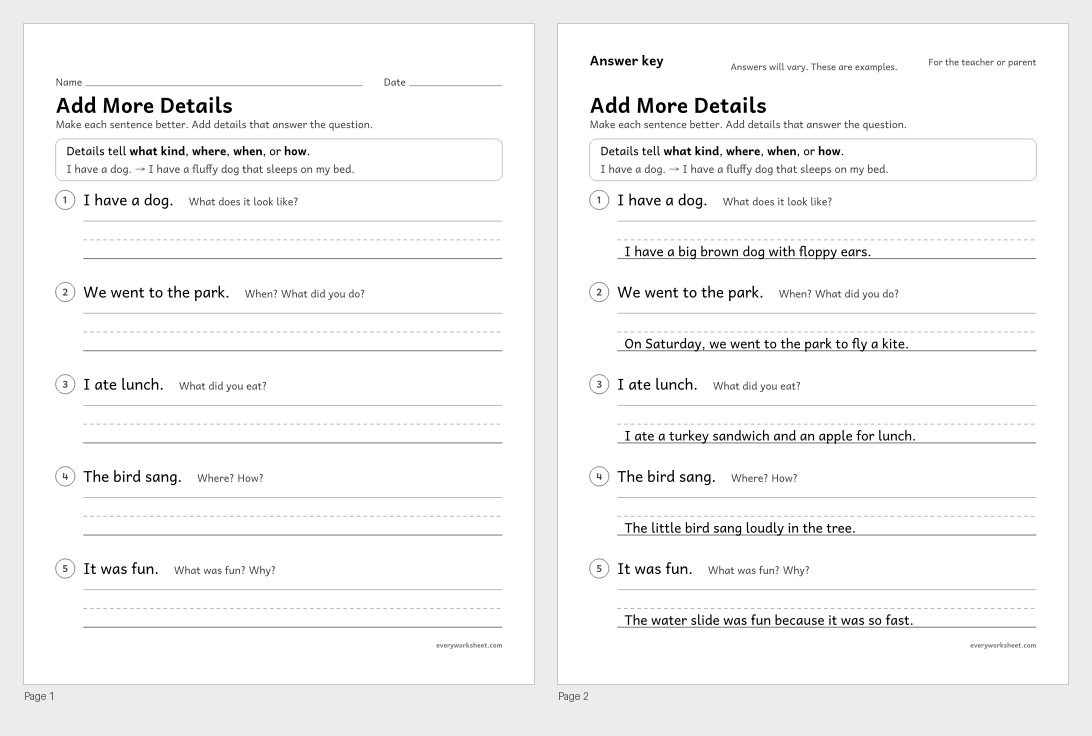
Adding details to make a sentence stronger
Answer key on page 2
2 pages38 KB
Print at 100% (actual size) for the cleanest tracing lines.
First graders write in three ways: telling a story about something that happened, giving an opinion with a reason, and teaching facts about a topic. These writing prompts for 1st graders cover all three, five prompts each, plus pages that help children plan, revise and gather facts.
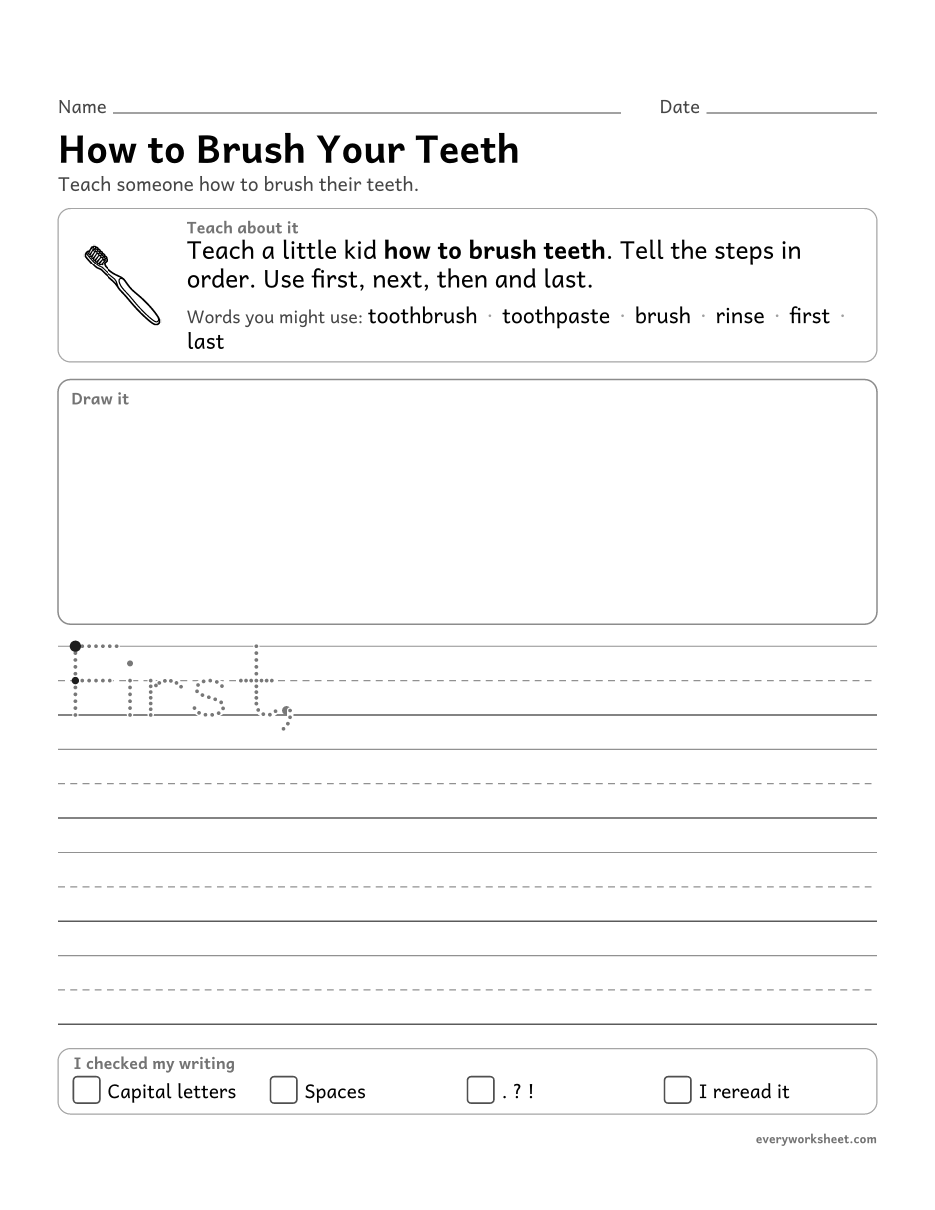
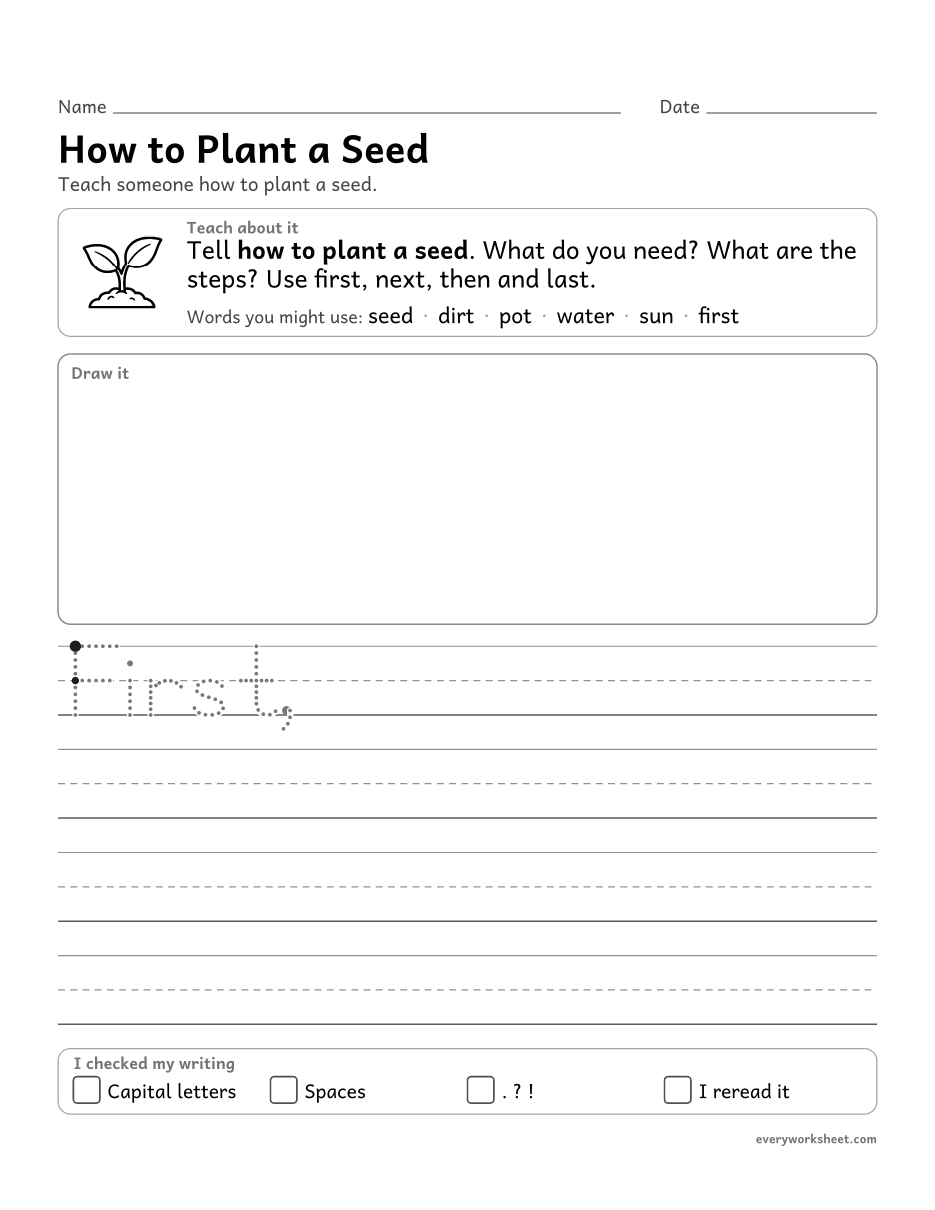
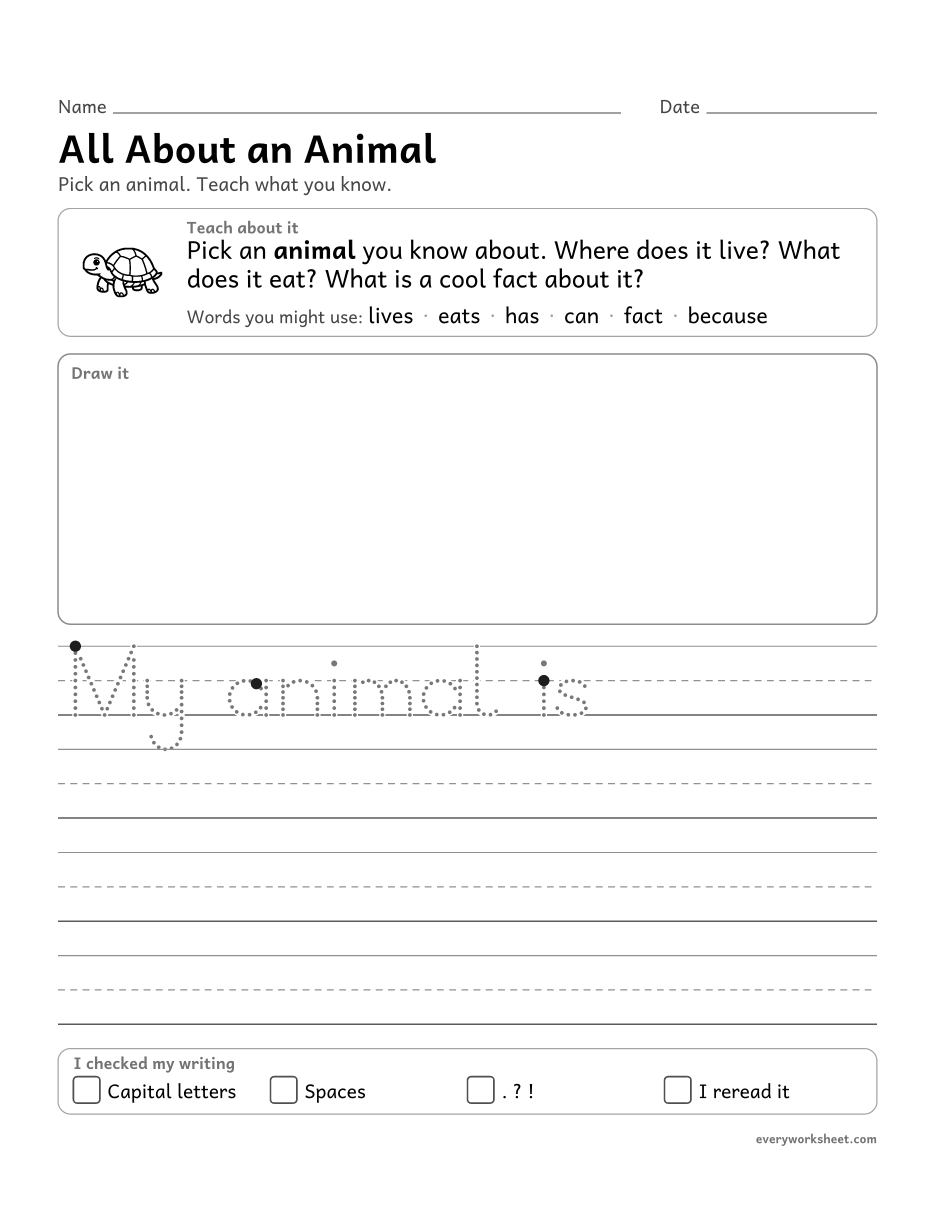
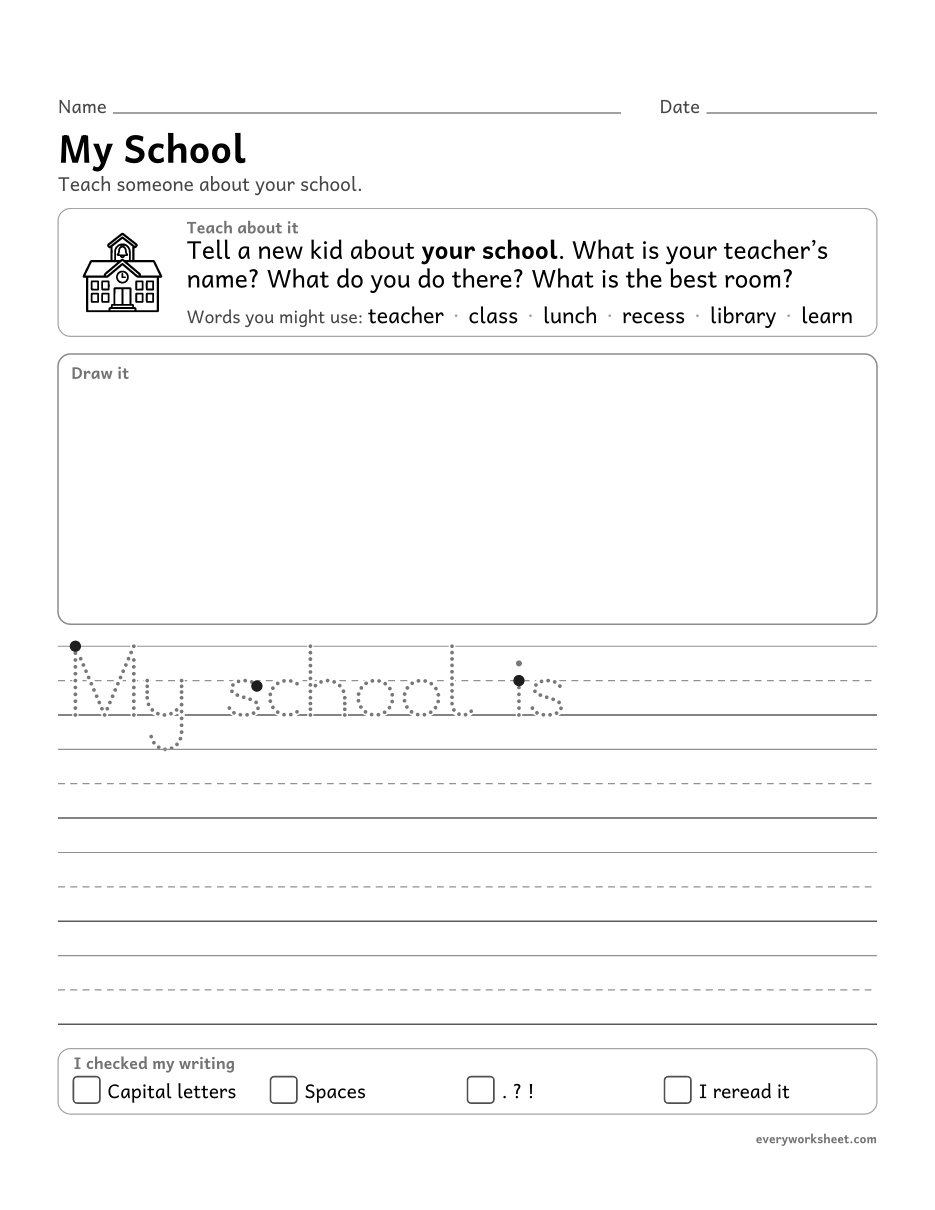
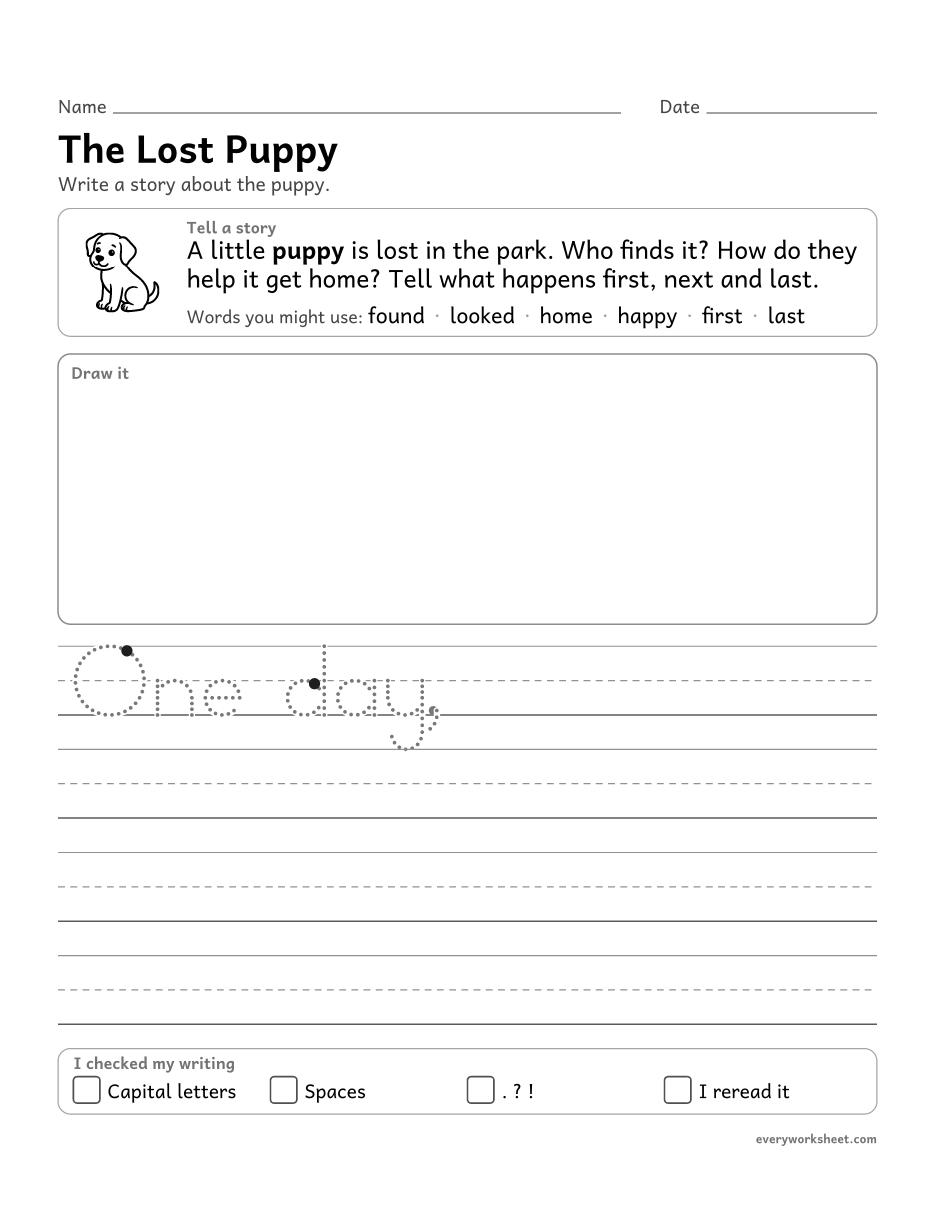
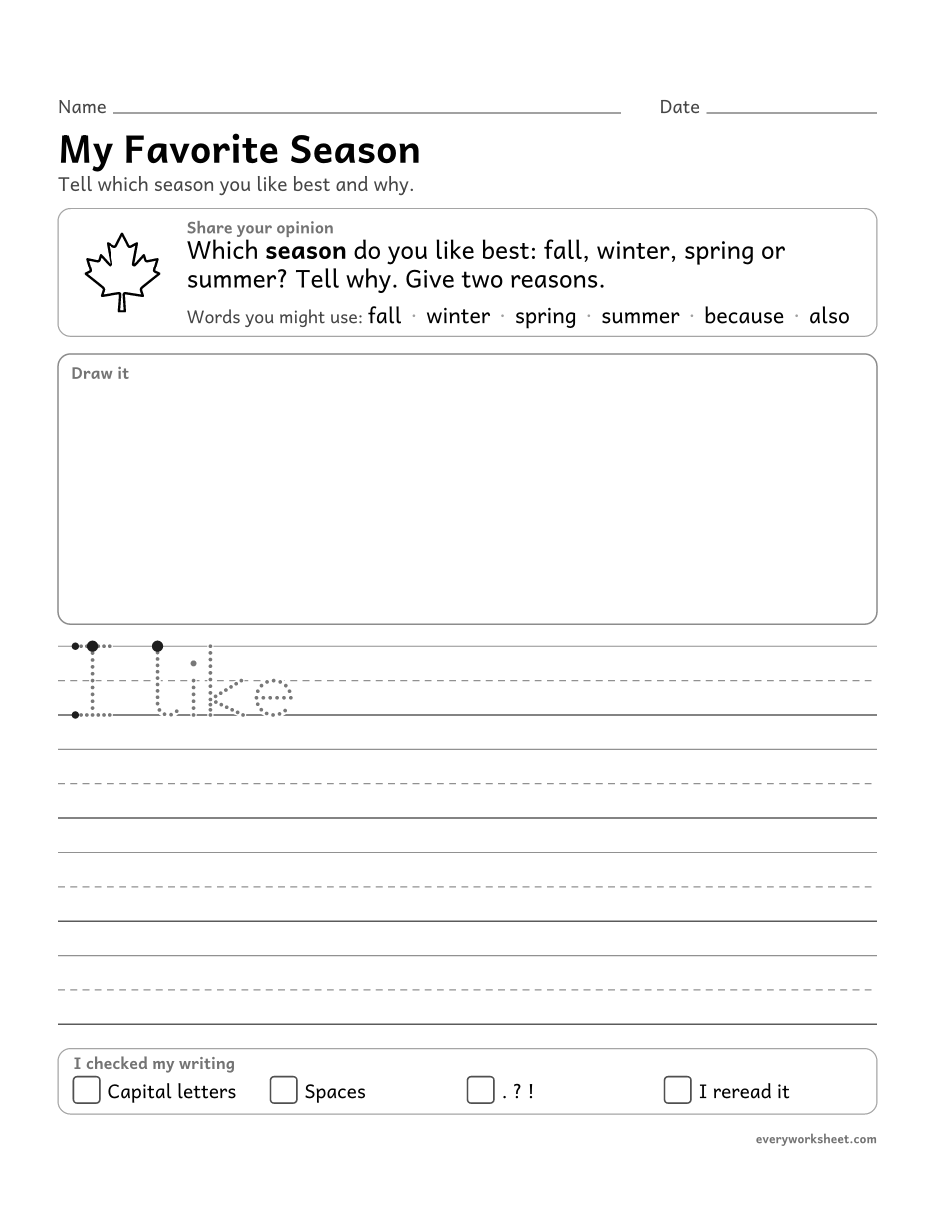
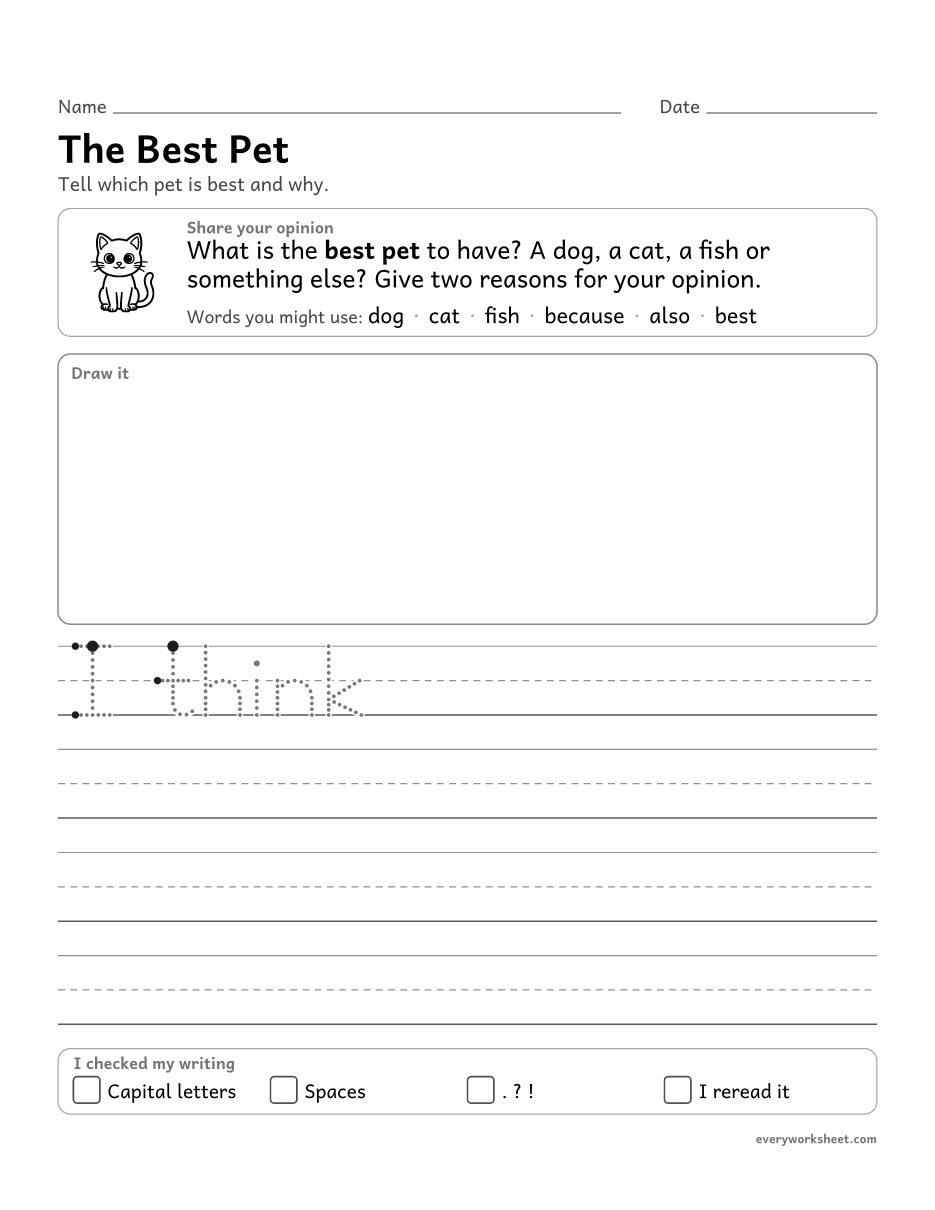
Each prompt page has a short prompt children can read, a picture, a few words they might want to spell, a box to draw a picture or plan, four lines ruled for first grade (5/8 inch with a dotted middle line) and a check box strip: capital letters, spaces, end marks and I reread it. The first line starts with a few traceable words so no child stares at a blank page.
Three planners help children organize an opinion, a story and an informative piece before they write. An I Wonder research page, a how-to plan, an interview page, two journal pages and an add more details page round out the set.
CCSS.ELA-LITERACY.W.1.1Write opinion pieces in which they introduce the topic or name the book they are writing about, state an opinion, supply a reason for the opinion, and provide some sense of closure.CCSS.ELA-LITERACY.W.1.2Write informative/explanatory texts in which they name a topic, supply some facts about the topic, and provide some sense of closure.CCSS.ELA-LITERACY.W.1.3Write narratives in which they recount two or more appropriately sequenced events, include some details regarding what happened, use temporal words to signal event order, and provide some sense of closure.CCSS.ELA-LITERACY.W.1.5With guidance and support from adults, focus on a topic, respond to questions and suggestions from peers, and add details to strengthen writing as needed.CCSS.ELA-LITERACY.W.1.7Participate in shared research and writing projects (e.g., explore a number of "how-to" books on a given topic and use them to write a sequence of instructions).CCSS.ELA-LITERACY.W.1.8With guidance and support from adults, recall information from experiences or gather information from provided sources to answer a question.CCSS.ELA-LITERACY.SL.1.3Ask and answer questions about what a speaker says in order to gather additional information or clarify something that is not understood.CCSS.ELA-LITERACY.SL.1.5Add drawings or other visual displays to descriptions when appropriate to clarify ideas, thoughts, and feelings.CCSS.ELA-LITERACY.L.1.2.ESpell untaught words phonetically, drawing on phonemic awareness and spelling conventions.By the end of first grade, most children can write three to five connected sentences on a topic, with a beginning and an ending.
Narrative (telling a story in order), opinion (stating what you think and why) and informative (teaching facts or steps).
The lines are ruled for first grade: 5/8 inch from the top line to the baseline with a dotted middle line.
No. Writing answers vary. The add more details page shows example answers.