 View larger
Cursive Alphabet
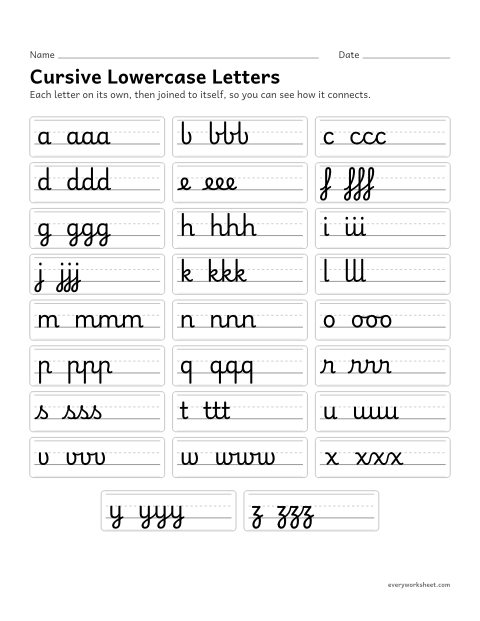
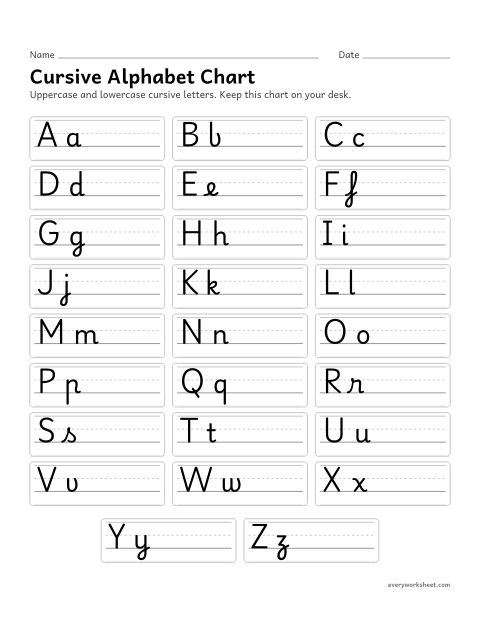
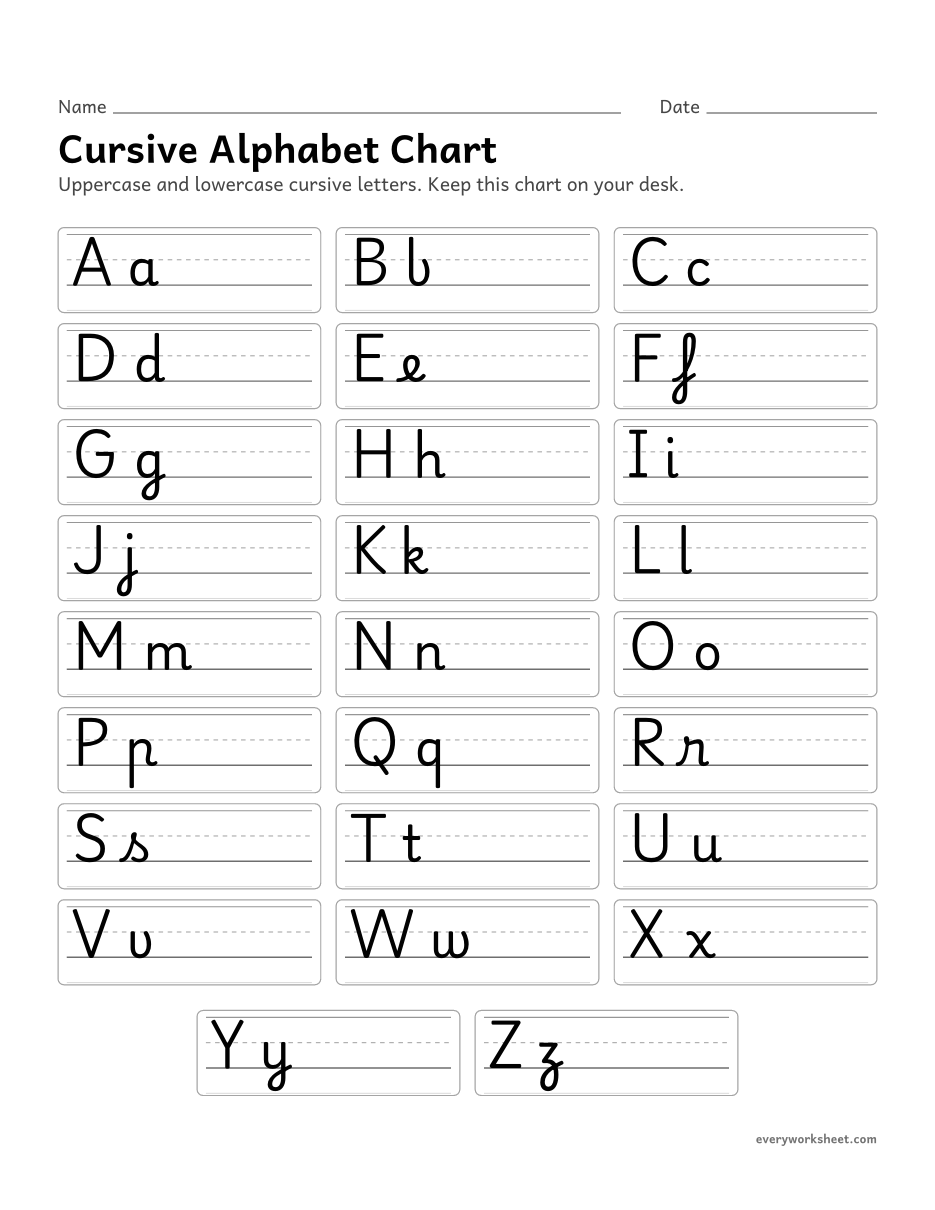
Cursive alphabet charts, desk strips, a wall chart, an A–Z tracing packet, cursive writing paper, numbers, and a page for every letter.
Download the cursive alphabet worksheets
Cursive alphabet charts
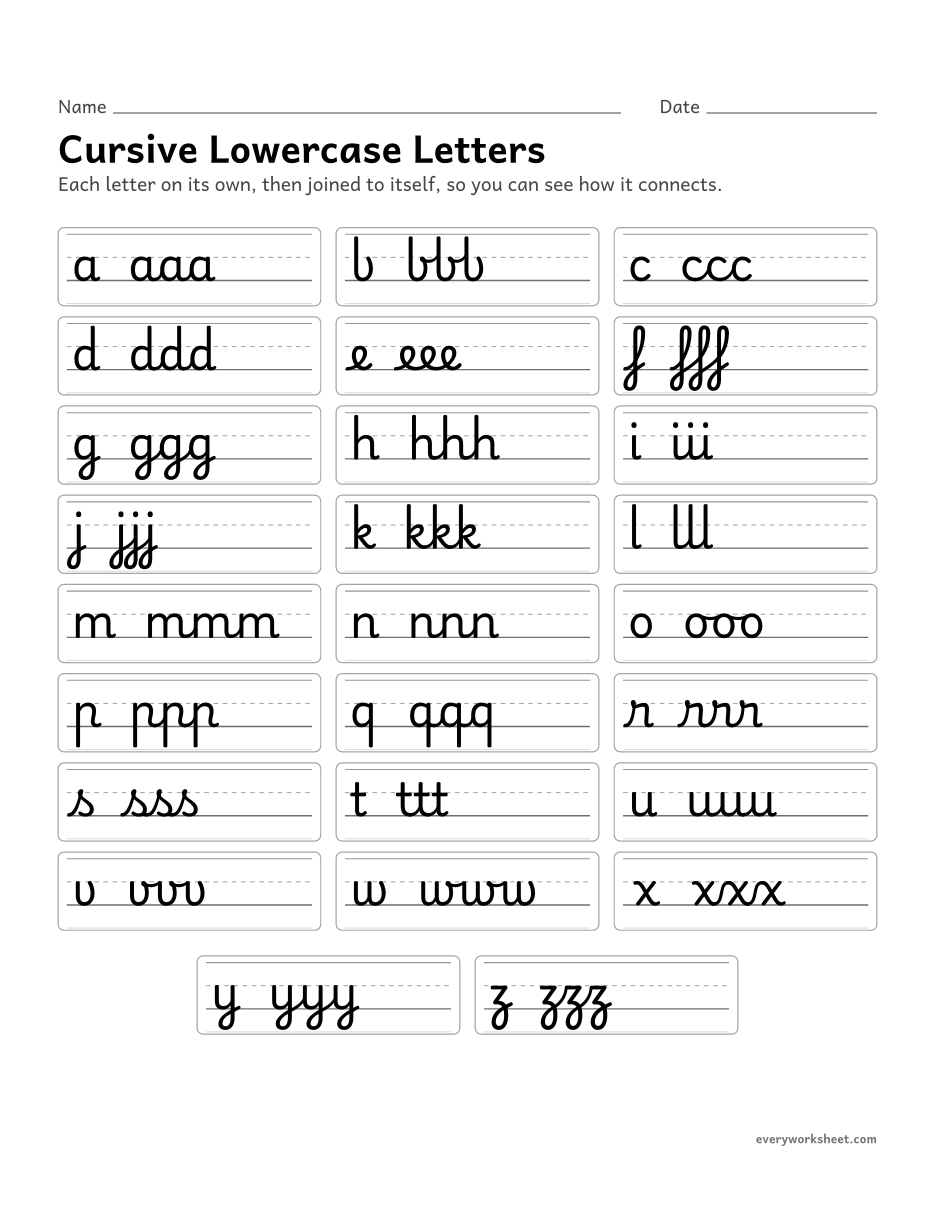
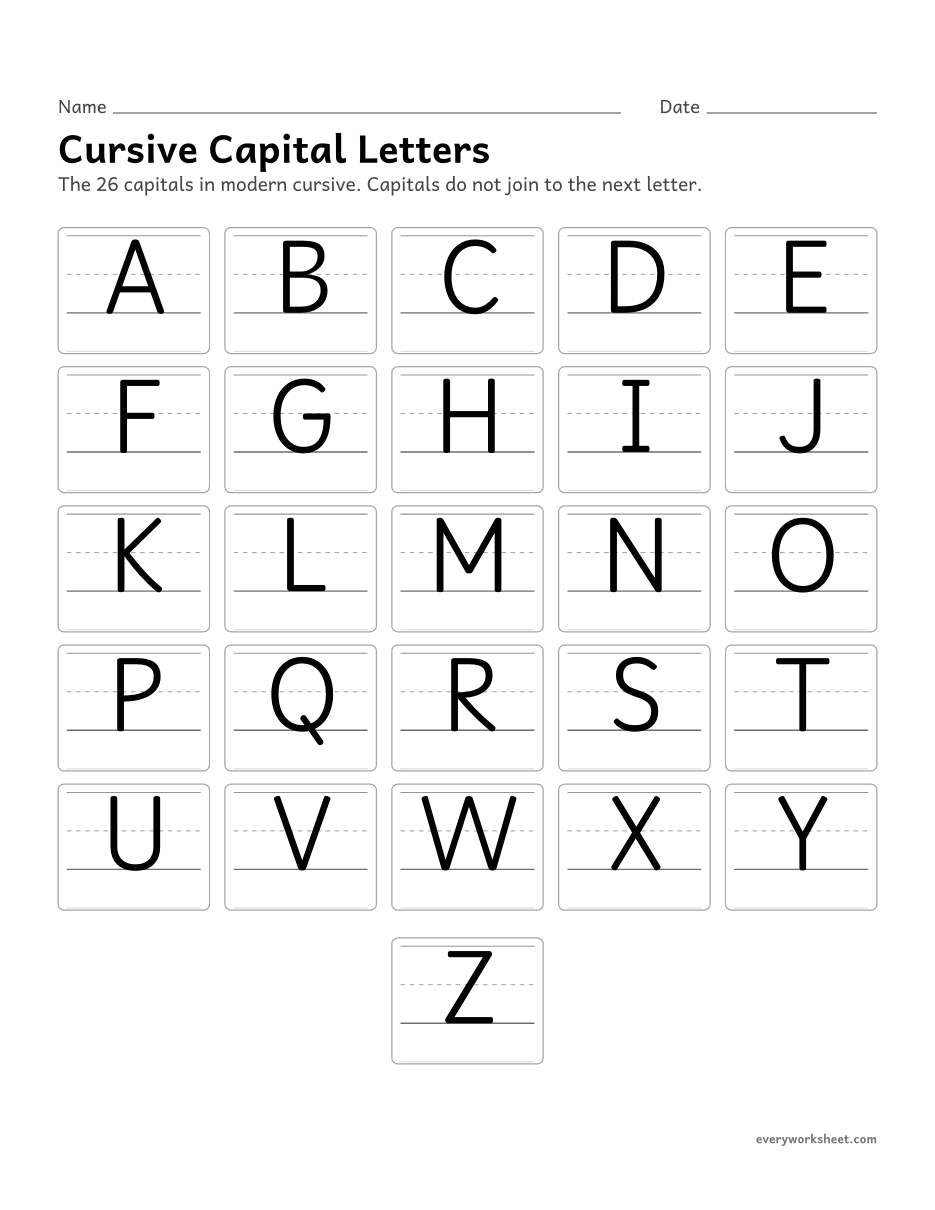
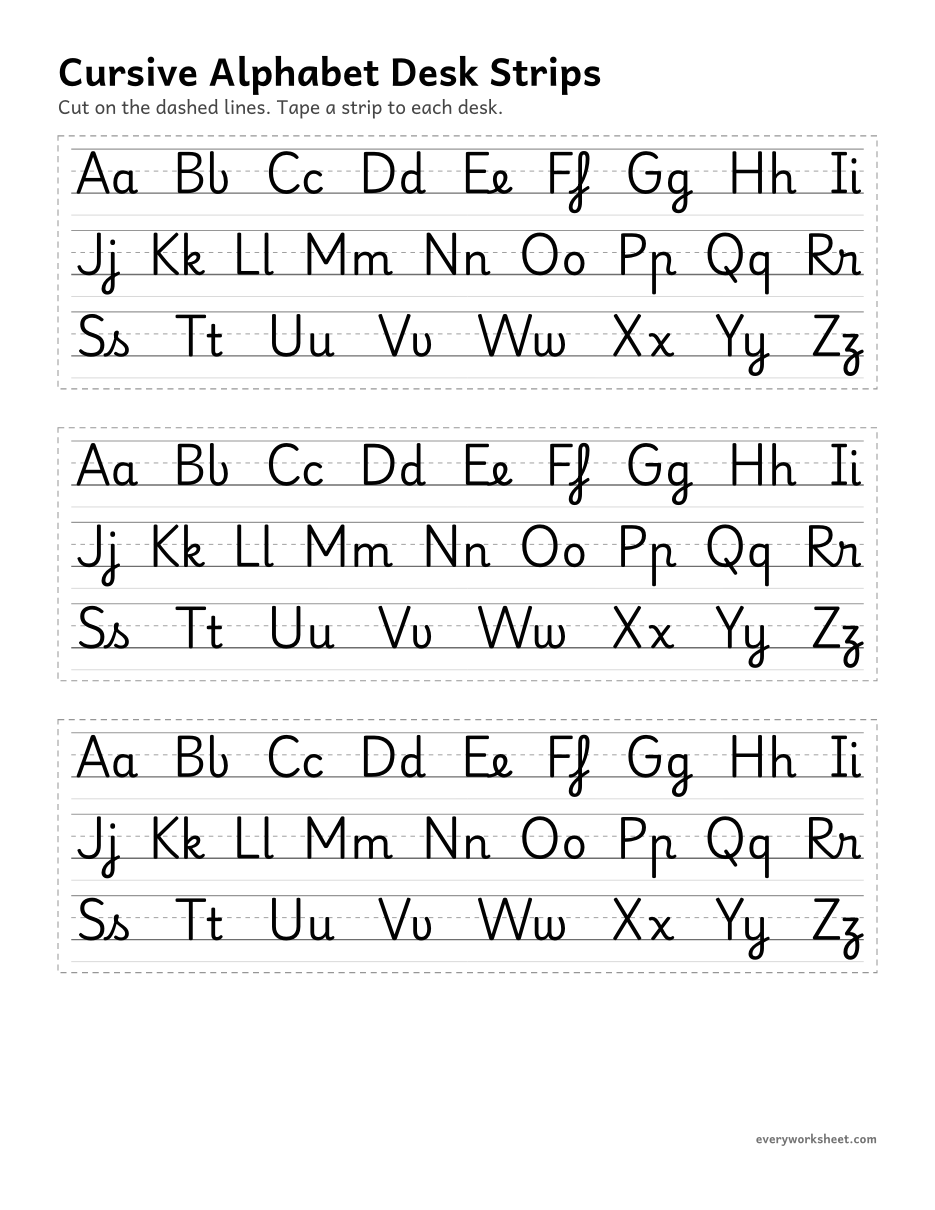
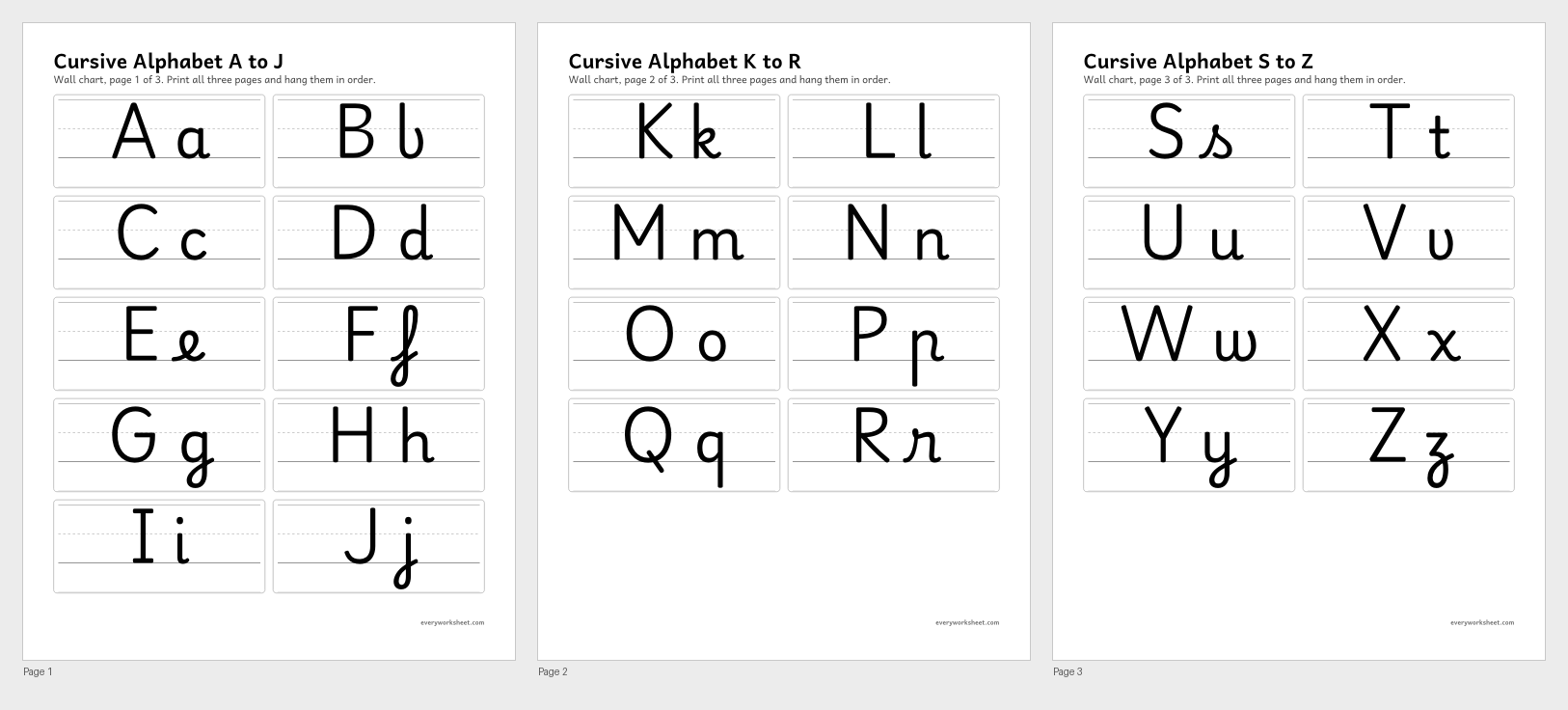
A–Z tracing packet
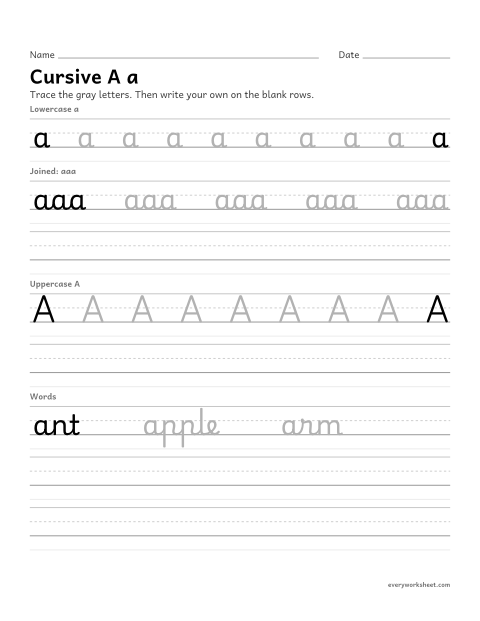 26 pagesView all 26 pages
Cursive alphabet tracing packet A to Z (26 Pages)
Forming cursive letters A to Z
26 pages119 KB
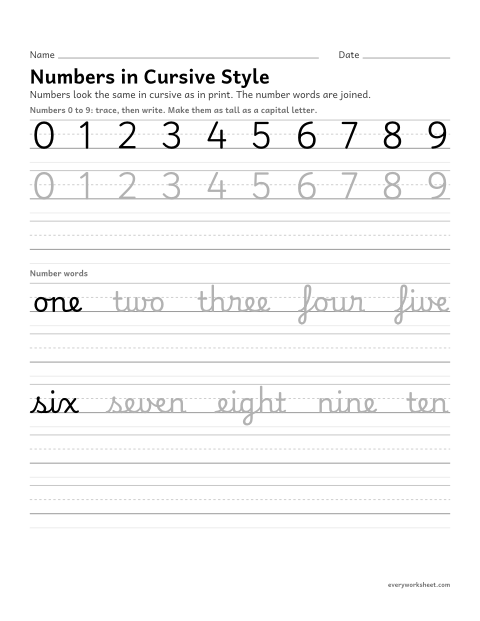
Cursive writing paper and numbers
 View larger
 View larger
 View larger
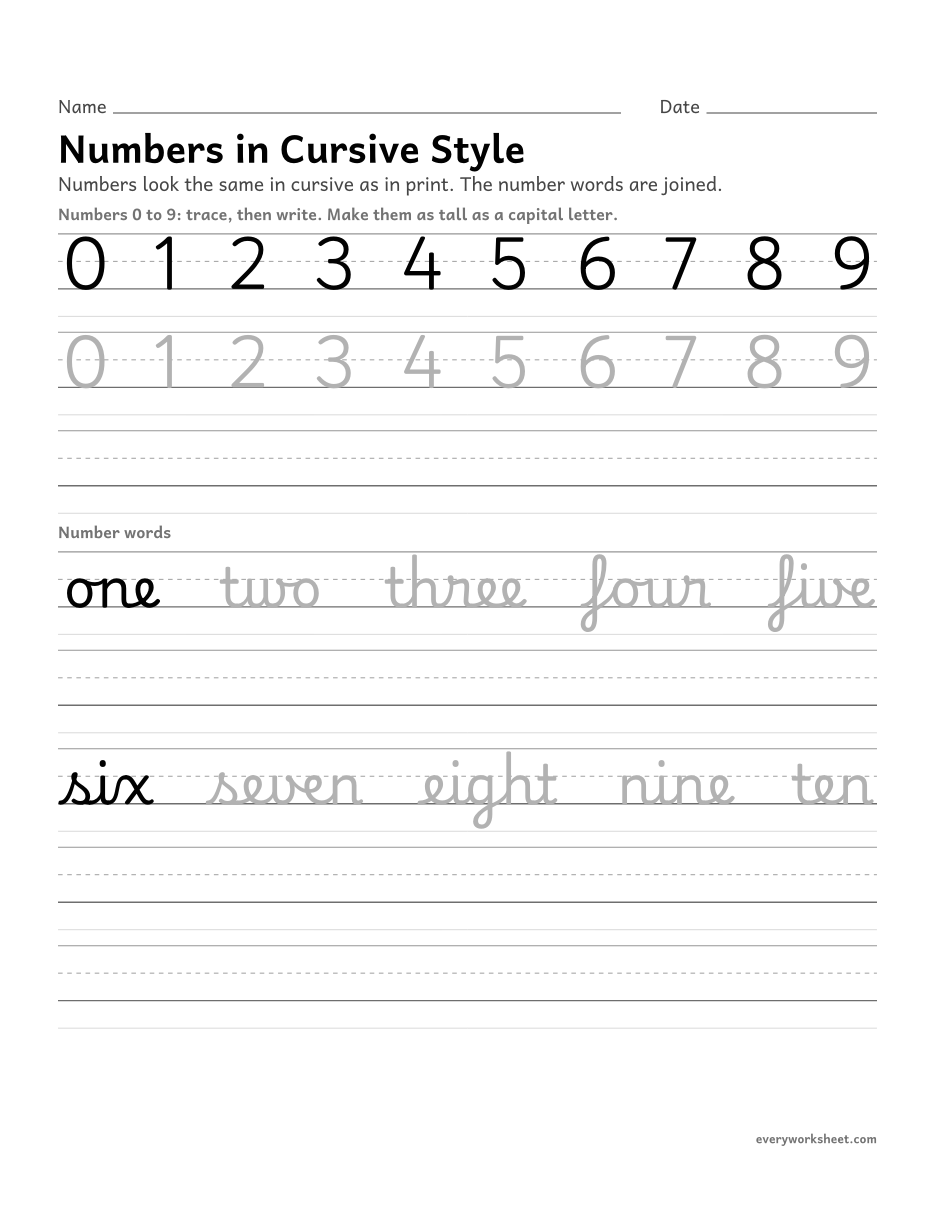
Cursive numbers 0 to 9 and number words
Writing numbers and number words in cursive
1 page33 KB
Print at 100% (actual size) for the cleanest tracing lines.
About these cursive alphabet worksheets
Cursive is joined handwriting: the pencil flows from one letter into the next, so a whole word is written in one smooth movement. The cursive alphabet on these pages is modern cursive: joined lowercase letters with simple capitals. Each lowercase letter ends with a small flick or curl that leads into the next letter, and the capitals look much like print, which makes this style quick for children who already print well.
Cursive is usually taught in a set order rather than A to Z. Children first practice the basic strokes (undercurve, downcurve, overcurve and a straight pull down), then learn the lowercase letters in groups that start the same way: the undercurve letters i, t, u, w, e, l, b, h, f, k, r, s, j and p; the downcurve letters a, d, g, o, c and q; and the overcurve letters n, m, x, y, v and z. Next come the joins, then the capitals, and finally words, sentences and short passages.
Start with the cursive alphabet chart, then pick a letter below to see it large with step-by-step directions. For daily practice, the A–Z tracing packet gives every letter its own page, and the cursive writing paper comes in a 3rd grade size and a larger starter size.
Standards
Texas TEKS Grade 2 (handwriting)develop handwriting by accurately forming all cursive letters using appropriate strokes when connecting lettersTexas TEKS Grade 3 (handwriting)write complete words, thoughts, and answers legibly in cursive leaving appropriate spaces between words
How to use them
- Print the cursive alphabet chart or a desk strip and keep it where your child writes, so every letter can be checked at a glance.
- Teach the letters in groups, not A to Z: use the sequenced cursive writing worksheets, or the letter pages in this order: i t u w e l b h f k r s j p, then a d g o c q, then n m x y v z.
- Use one page of the A–Z tracing packet a day. Trace slowly, then write on the blank rows without looking at the model.
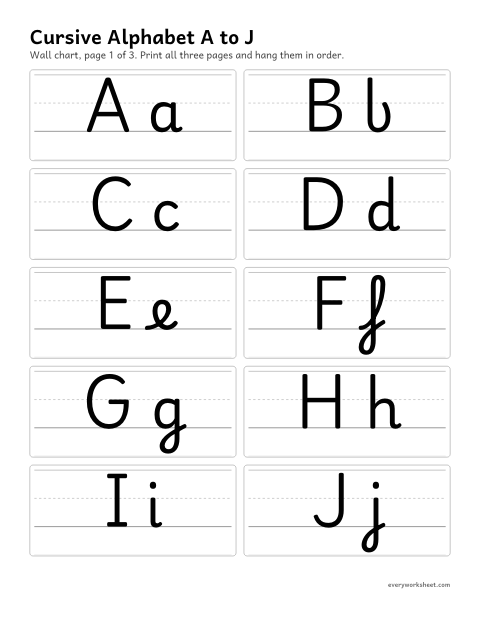
- Hang the three-page wall chart at eye level so the whole class can see each letter and how it joins.
Teaching tips
- Print at actual size (100%). The sheets are black and white with solid gray letters to trace, so they copy well on a school photocopier.
- Name the lines and use the same words every time: top line, dashed midline, baseline, and the light line below for tails.
- Small letters fill the space between the baseline and the dashed midline. Tall letters and capitals reach the top line. Tails on f, g, j, p, q, y and z drop to the line below.
- Every lowercase letter joins. Most joins swing up from the baseline; b, o, v and w join along the midline; and f, g, j, y and z loop below the baseline before they join.
- Numbers are written the same way in cursive as in print. Practice them at the height of a capital letter.
Questions teachers and parents ask
When do kids learn cursive?
Most children start cursive in 2nd or 3rd grade, once they print letters well. Common Core doesn't include cursive, but many states require it, most often by the end of 3rd grade or 5th grade.
How should my child start learning cursive?
Start with the basic strokes and a few easy lowercase letters such as i, t, u and e. Then learn the rest of the lowercase letters in groups that start the same way, practice joining them, and only then move on to capitals and whole words.
Should kids learn lowercase or uppercase cursive first?
Lowercase first. Lowercase letters make up almost all of what we write, and they are the letters that join. Capitals come after the lowercase letters and joins are secure.
What style of cursive is this?
Modern cursive: joined lowercase letters with simple capitals. In this style the capitals are simple, print-like letters that don't join to the next letter, so children who print well pick them up quickly.
Are there cursive numbers?
Numbers are written the same way in cursive as in print. The cursive numbers page practices the numerals 0 to 9 and the number words one to ten, which are joined.